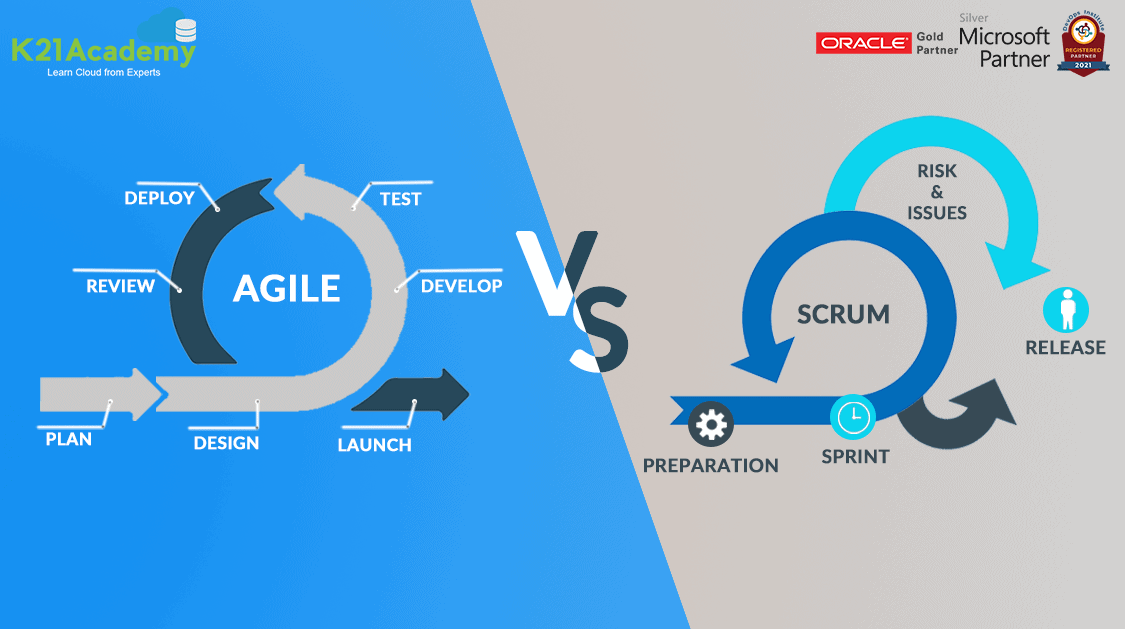




Whether you’re new to software development or have some experience in the field, you’re likely familiar with the terms Agile and Scrum. While these two process management methodologies share similar approaches, there are key differences (agile vs scrum) as well that are helpful to know if you’re pursuing a career in software development, project management, or both.
Agile is an approach to project management, while Scrum is one type of Agile methodology.
In this blog, we are going to look at some of the most common differences between Agile & Scrum and which methodology to use when.
Agile Methodology
Agile methodology is a practice that helps continuous iteration of development and testing in the SDLC process. It breaks the product into smaller builds.
Agile is an approach or philosophy to project management that aims to achieve a goal in small increments. So instead of having one large reveal or launch, an Agile project comprises smaller chunks of tasks that can be delivered in shorter time frames continuously. This makes it easier for project teams to adapt to changing priorities, respond to problems that arise, and cut down on cost, time, and inefficiencies.

There are four values that drive the Agile philosophy also known as the Agile Manifesto of project management
- Individuals and interactions over processes and tools
- Working software over comprehensive documentation
- Customer collaboration over contract negotiation
- Responding to change over following a plan

When To Use Agile?
Agile has its roots in software development but is now used in many different industries, including tech, marketing, design, and finance. Even many industries that have relied on traditional project management styles like construction have begun to incorporate Agile practices into their work.
Agile is well-suited for ongoing projects and projects where certain details aren’t clear from the start. This makes Agile good for industries that deal with constant or unpredictable change, or teams creating a new product. More traditional project management styles such as Waterfall might work better for projects that have strict constraints—like a firm time or fixed budget—such as event planning.
Agile Implementation Approaches
Here are a few ways to implement Agile methodology:
- Scrum
- Kanban
- Feature Driven Development (FDD)
- Extreme Programming (XP)
- Lean Software Development (LSD)
- Adaptive System Development (ASD)
- Dynamic Systems Development Method (DSDM)
- Crystal Clear

Also Read: Our blog post on Agile SDLC.
Scrum Methodology
Scrum is an Agile methodology that is designed to develop products in an environment susceptible to change.
Scrum is another project management methodology that comes under the broader umbrella of Agile project management. Like Agile, Scrum promotes accountability, teamwork, and function in an iterative and incremental approach.
Scrum projects are driven by Scrum master along with product managers and developers. The time frame for each built which are released into production is denoted as a sprint in a Scrum system, normally a sprint will be 10 days to 4 weeks longer.
Scrum is by far the most commonly used Agile methodology. About 78 percent of Agile users implement Scrum or a hybrid Scrum methodology, according to the State of Agile report released in 2020 [1]. Some common hybrid Scrum methodologies include Scrumban and Scrum/XP.
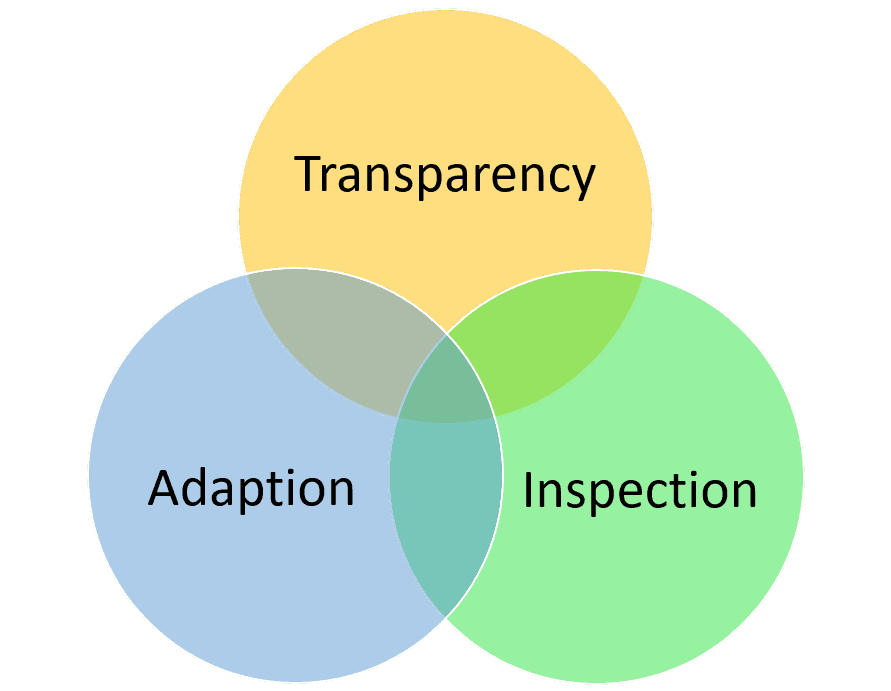
Scrum is built on three pillars:
- Transparency: All players involved have complete access to information, including progress and goals.
- Adaptation: The project and work can change to mirror new priorities.
- Inspection: The team strives to continuously improve the product and the process.
And five values:
- Courage
- Focus
- Commitment
- Respect
- Openness

Scrum Applications
Scrum is excellent for dealing with complex projects in changing environments. Like many Agile methodologies, Scrum is good for industries that are constantly in flux, or for pioneering new projects. If you’re dealing with fixed requirements, or an organization that doesn’t allow for smooth cross-functional collaboration, a more traditional approach may be better.
Difference Between Agile and Scrum
While Agile and Scrum follow the same system, there are some differences when compared. Agile describes a set of principles in the Agile Manifesto for building software through iterative development. On the other hand, Scrum is a specific set of rules to follow when practicing Agile software development. Agile is the philosophy and Scrum is the methodology to implement the Agile philosophy. So here is a table depicting the scrum vs agile points.

Because Scrum is one way to implement Agile, they both share many similarities. They both focus on delivering software early and often, are iterative processes, and accommodate change. They also encourage transparency and continuous improvement.
Here are the key similarities between Scrum and Agile that make Scrum a distinctly Agile process:
- Short-term development cycles
- Focus on people, collaboration, and communication
- Capacity to adapt to changes and feedback
Conclusion
The line between when to use Agile versus when to use Scrum (scrum vs agile) is blurry. Scrum is one framework in the Agile process, so they both have a lot in common. A good place to start is to first understand if you should use Agile in general. Then, if an Agile methodology seems like it would work for you, you could choose which framework of Agile to use (Scrum being one framework).
- CSM and PSM Certification: Everything You Need to Know
- Agile Methodology and DevOps | DevOps and Agile Relationship
- Scrum Master: Roles & Responsibilities
- Agile Software Development Lifecycle
Next Task for You
If you are considering in-depth learning about Scrum Master Certification in the upcoming days, join our Free Class and don’t miss an opportunity to attend a Free Class and gain a plethora of insights about Certified Scrum Master.


![Microsoft Agentic AI Business Solutions Architect [AB-100] | K21 Academy](https://test.k21academy.com/wp-content/uploads/2025/11/Microsoft-Agentic-AI-Business-Solutions-Architect-AB-100-Exam-Overview1.png)