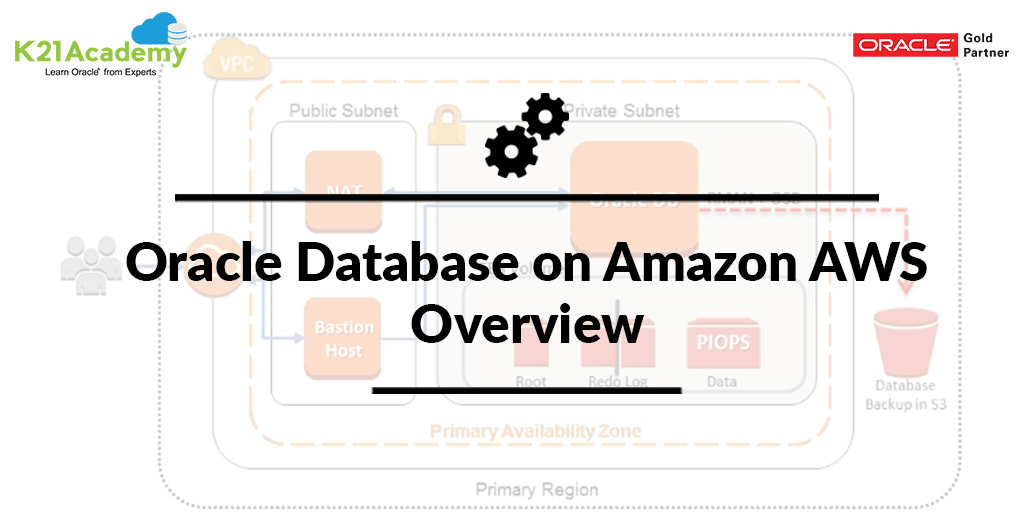



As technology changes very quickly and evolution is always imminent. This post gives you an overview of the Oracle Database on Amazon AWS.
Amazon AWS is great for providing an IaaS platform and Oracle is well-known for its platform solutions. Oracle on the AWS platform is a strong choice for customers to consider. The AWS IaaS platform offers a scalable, secure, highly available and secure infrastructure for Oracle platform solutions such as Database, Middleware, and applications.
Also, Oracle allows customers to choose IaaS solutions for their platform technology. Interestingly, AWS also offers solid platform solutions on Database on which Oracle Database workloads can be migrated. There are a lot of options, but they all come with complexity regarding choice, commercial and contractual positions.
Things Need To Be Consider When Moving Oracle Database To Amazon AWS:
1.) Flavors available on AWS for Oracle, there are two options:
- Using Amazon Relational Database Service (Amazon RDS) for Oracle
- Running a self–managed Oracle Database directly on Amazon Elastic Compute Cloud (Amazon EC2)
2.) Understanding the technical limitations of your options:
- Amazon RDS can support up to 6TB and a maximum of 30,000 IOPS
- Amazon RDS is not suitable for functionalities of managing backups or point in time recoveries
- AWS does not currently enable Oracle Real Application Clusters (RAC) natively on either Amazon RDS or EC2
- AWS does allow all major version instances of Oracle products to be deployed on AWS.
- AWS offers its best of breed solutions for scalability, security and high availability
3.) Understanding the licensing and commercial implications:
- Except for one option of Amazon RDS for Oracle database (standard one), all other options on AWS requires to Bring Your Own License (BYOL) of Oracle
- With the recent changes of Oracle licensing policies since April 2017, the BYOL Oracle license requirement on AWS has doubled, however, the customer needs to adhere to Oracle support policy restrictions for such scenarios. Oracle’s own PaaS (DBaaS and other flavors) don’t require BYOL
Choosing The Right Solution (Amazon RDS for Oracle vs Oracle on Amazon EC2)
Amazon RDS for Oracle
- AWS recommends RDS first
- Focus on tasks that bring value
to your business - Focus on high-level tuning
tasks and schema optimization - Lack of in-house expertise
managing databases
Oracle on Amazon EC2
- You need full control over the DB instances
- Control over backups, replication, and clustering
- Use features and options not available in Amazon RDS
- Size and performance needs exceed Amazon RDS offering
Implementation Diagram of Oracle Database on Amazon AWS
This image gives you the high-level snapshot of deploying Oracle Database on various Services offered by Amazon AWS

References:
- Oracle and Amazon Web Services
- Best Practices for Running Oracle Database on Amazon Web Services
- Oracle Licensing Considerations
Related/References
- Oracle Cloud Database Services Specialist Certification[1Z0-1093]
- FREE CLASS: Transition from Oracle DBA to Cloud
- Step-By-Step Guide to Register for Oracle Cloud Trial Account
- If you are confused to pick Amazon AWS or Oracle Cloud then check this
- Check tasks performed by Oracle DBAs in Cloud here
What’s Next For You?
If you want to upgrade your career from an Oracle DBA to Oracle Cloud DBA, and want to clear Oracle Cloud Database Migration and Integration Specialist then register for our FREE class and don’t miss an opportunity to gain a plethora of insights on becoming a certified Oracle Cloud DBA.


![Microsoft Agentic AI Business Solutions Architect [AB-100] | K21 Academy](https://test.k21academy.com/wp-content/uploads/2025/11/Microsoft-Agentic-AI-Business-Solutions-Architect-AB-100-Exam-Overview1.png)