

Integration Cloud specialist is responsible for planning, coordinating, and supervising all activities related to the integration of enterprise information systems.
This blog post will go through some quick tips, including Q/A and related blog posts on the topics that we covered in the Oracle Integration Cloud Day 8 Live Session, which will help you gain a better understanding and make it easier for you to
This week’s Day 8 Live Session we started with Module 10: Process Cloud Service where we covered topics like Overview of PCS, Structured Processes, PCS Composer Page, Swim Lanes, Decision and Business Rules
We also covered hands-on, Lab 33, and Lab 34, out of our 30+ extensive labs.
On Day 7 we covered topics like VBCS Overview & Features, Business Object, Import Business Objects, Export Business Objects, Service Connections, Visual Builder Security
On Day 6 we covered Managing & Monitoring Errors, Versioning, Promoting Your Code, Administering Integrations, Import/Export Integrations
Process Cloud Service (PCS)
One of Oracle’s latest new cloud products is Process Cloud Service (PCS). It allows you to automate and manage business processes in an easy way. PCS originates from the on-premises Oracle BPM 12c and can be used to automate and monitor processes. One of the key features of PCS is also that it allows you to easily create processes and forms. This increased simplicity will allow business people to create the screens and processes they want without specific technical knowledge. This drastically increases the ability to adapt to changes in the organization or in the market. PCS also allows business users to change business rules to for example decrease the workload on a certain department or to comply with new regulations.
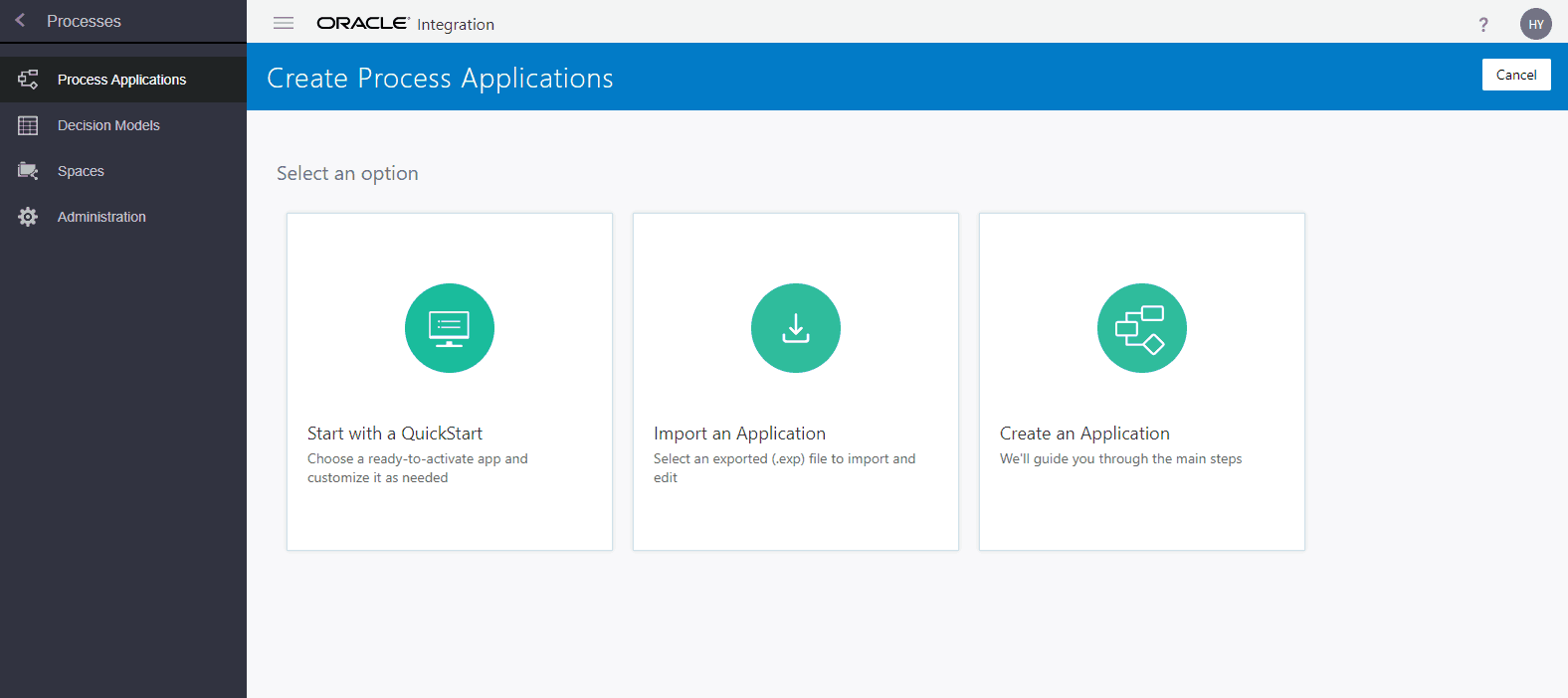
Question 1: What is Process Cloud Service (PCS) used for?
Answer: Process Cloud Service (PCS) is a cloud-based software development Platform as a Service (PaaS) that provides a hosted environment for your process applications. Allows you to develop workflows in minutes. Oracle Process Cloud Service is used for process automation, its a subscription-based cloud service for process automation. Allowing you to easily extend your existing SaaS and On-Premise. PCS offers insights and management of business processes, and a full lifecycle process management environment including development, test, and product
Question 2: What are the features of PCS?
Answer: The features of PCS are as under:
1. Rapid Process Automation & Change using starter patterns without needing to code.
2. Business Friendly Forms Design to create responsive, dynamic web forms.
3. Powerful Rules Design by simple If-Then statements
4. User-friendly Sandbox for testing of business applications
5. Full Lifecycle Management for managing application lifecycle
6. PCS uses BPM Mobile Apps to integrate with mobile features such as Contacts and Cameras. BPM Mobile Apps works in offline mode. BPM Mobile Apps can utilize REST APIs and Oracle Mobile Application Framework
Question 3: Is PCS a stand-alone application?
Answer: Yes, PCS is a stand-alone web application in Oracle Integration Cloud Service
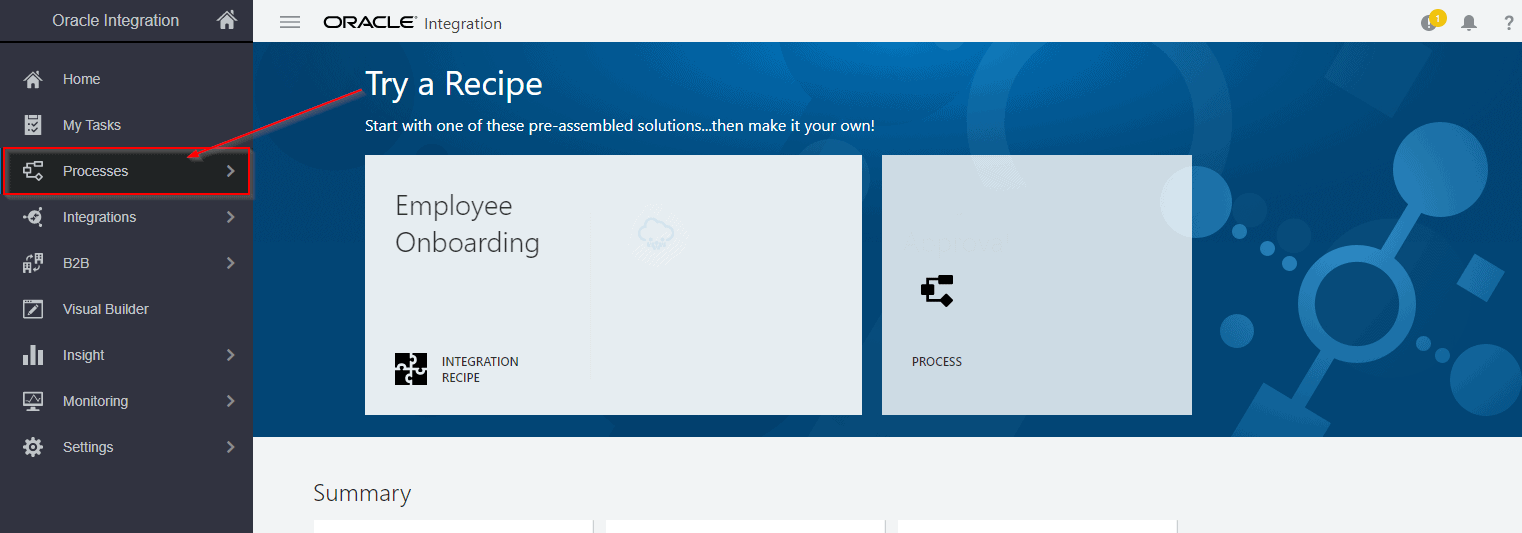
Key Benefits of PCS
1. Accelerate
- Business-led, Rapid Process Automation
- Responsive, Multi-channel Forms
- Integrate with Oracle and non-Oracle applications
- Play, Test & Validate
2. Engage
- Productive and Intuitive Task Management
- Work on the Go Across Devices
- Task Collaboration
- Right work to Right Person
3. Simplify
- Real-Time insights and Actionable Dashboards
- Operational Intelligence
- End to End Visibility & Self-service
4. Complete
- Full-blown security
- Full life cycle management
- Portability
Question 4: What is Design Time Environment?
Answer: Design Time Environment is a user-friendly UI for designing processes, rules, forms, data, and metrics. Includes QuickStart Apps to quickly create custom business applications. Provides test environments for refining and testing processes. Allows process applications (metadata and data) from cloud to on-premises.
Question 5: What is Run Time Environment?
Answer: The Runtime environment is the environment in which a program or application is executed. It makes it easy for you to view, complete, reassign, and delegate tasks. It lets you stay organized with filters and lets you share documents and collaborate with others on your team. Run time Environment Provides tools to track process flows, view detailed audit trails, troubleshoot, and fix processes
Question 6: What are the major operations of PCS Composer?
Answer: The major components of PCS Composer are:
- Creating a Business Process.
- Adding Roles and Swimlanes to the Travel Request Process.
- Designing the Travel Request Process.
Question 7: What are PCS Forms used for?
Answer: Oracle Process Cloud Service uses a standards-based technology called “Forms” for defining the user interface in business processes. It’s based on standards such as XHTML, CSS, and JavaScript and allows business analysts and developers to create an end-user interface by just using the browser

Question 8: What are Process Roles?
Answer: Roles are assigned to swimlanes and determine who or what in your business organization is responsible for performing the work of your process-based application.
The key to designing a business process is to determine the people and roles required to complete each task that requires user interaction. Some tasks may be performed by any user or handled automatically by the system. You use swimlanes to group flow elements based on the roles defined within your business process.
Question 9: What are Swimlanes?
Answer: Swimlanes are the horizontal lines that run across the process editor canvas. All flow elements must be placed within a swimlane. Swimlanes that contain user tasks must have roles assigned to them. Swimlanes visually display the role responsible for performing each flow element within your business process. Additionally, you can have multiple swimlanes that are assigned to the same role. You can also explicitly define a different role for a specific flow element if it needs to be different from the roles assigned to the swimlanes. Swimlanes can make your business process more readable when you must use the same role in different parts of the same business process.

Quiz Time (Sample Exam Questions)!
With our Oracle Integration Cloud Training Program, we cover 150+ sample exam questions to help you prepare for the OIC 1Z0-1042 Certification.
Check out one of the questions and see if you can crack this…
Ques: What options are available for escalation and expiration of human tasks in Process Cloud Service?
A. Escalate, Restart, Next or Previous
B. Renew, Start, End, or Error
C. Never Escalate, Skip, Hierarchy or New
D. Never Expire, Expire, Renew or Escalate
Here is the answer to the question shared last week (Scroll down at the end of this post for the question).
Ques: You can host web and mobile applications using Visual Builder?
A. True
B. False
Answer: A
Explanation: Oracle Visual Builder is the Software development PaaS (Platform as a service) service. Oracle Visual Builder provides an easy way to create and host web and mobile applications in a secure Cloud environment.
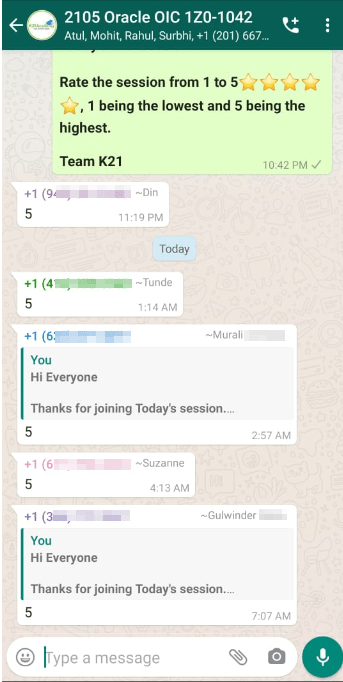
Feedback Received
Here is some positive feedback from our trainees who attended the session
To know more about the OIC 1z0-1042 certification, do check this blog on 1Z0-1042-21 Oracle Cloud Platform Application Integration Specialist
Related Links/References:
- Oracle Integration Cloud (OIC) For Beginners Overview
- 1Z0-1042-20 Oracle Cloud Platform Application Integration 2021 Specialist
- OIC Step By Step Activity Guides/Hands-On Lab Exercise
- Oracle Integration Cloud (OIC) Instance Edition, Message Pricing, and License Types
- OIC vs SOA CS
- SOAP vs REST API’s
- Process large files in OIC
- [Recap] Day 7: Visual Builder Cloud Service [Oracle Integration Cloud] [1Z0-1042]
Next Task For You:
Begin your journey towards becoming an Oracle [1Z0-1042] Certified Cloud Integration Expert by joining our FREE Masterclass.


![Microsoft Agentic AI Business Solutions Architect [AB-100] | K21 Academy](https://test.k21academy.com/wp-content/uploads/2025/11/Microsoft-Agentic-AI-Business-Solutions-Architect-AB-100-Exam-Overview1.png)