




Oracle Integration Cloud (OIC) is a powerful platform that allows organizations to seamlessly connect their applications, data, and processes across various environments, whether on-premises or in the cloud. Designed with both technical and non-technical users in mind, OIC simplifies integration tasks through its intuitive, low-code interface. It offers pre-built adapters, which facilitate quick connectivity to popular applications like Oracle SaaS, databases, and third-party services. For beginners, OIC presents an accessible way to automate workflows, manage APIs, and streamline business processes, making it an essential tool in modern digital transformation efforts.
This post covers the overview of Oracle Integration Cloud (OIC) For Beginners and contains key points that a beginner should know.
What is Oracle Integration Cloud ?
1. Oracle Integration Cloud 3 (OIC 3) is the latest iteration of Oracle’s Integration Cloud service, designed to provide enhanced capabilities for connecting, automating, and managing business processes across various applications and systems. OIC 3 builds upon the foundation of its predecessors with a more refined user interface, improved performance, and additional features tailored to modern enterprise needs.
In my opinion, the main differentiating factor of OIC from other integration cloud products is the rich variety of connectors that they offer (currently 50) that includes connections to other cloud products like RightNow, Eloqua, SalesCloud and various social media like Facebook, Twitter, LinkedIn and a lot more.
Check Out : Oracle Cloud Integration New Homepage.
2. Oracle Integration let you:
- Connects your applications, on-premise with Cloud (Integration Cloud Service) and helps in design, monitor, and manage connections between your applications
- Automate & Manage business Process (Process Cloud Service)
- Build Applications Visually (Visual Builder Cloud Service)
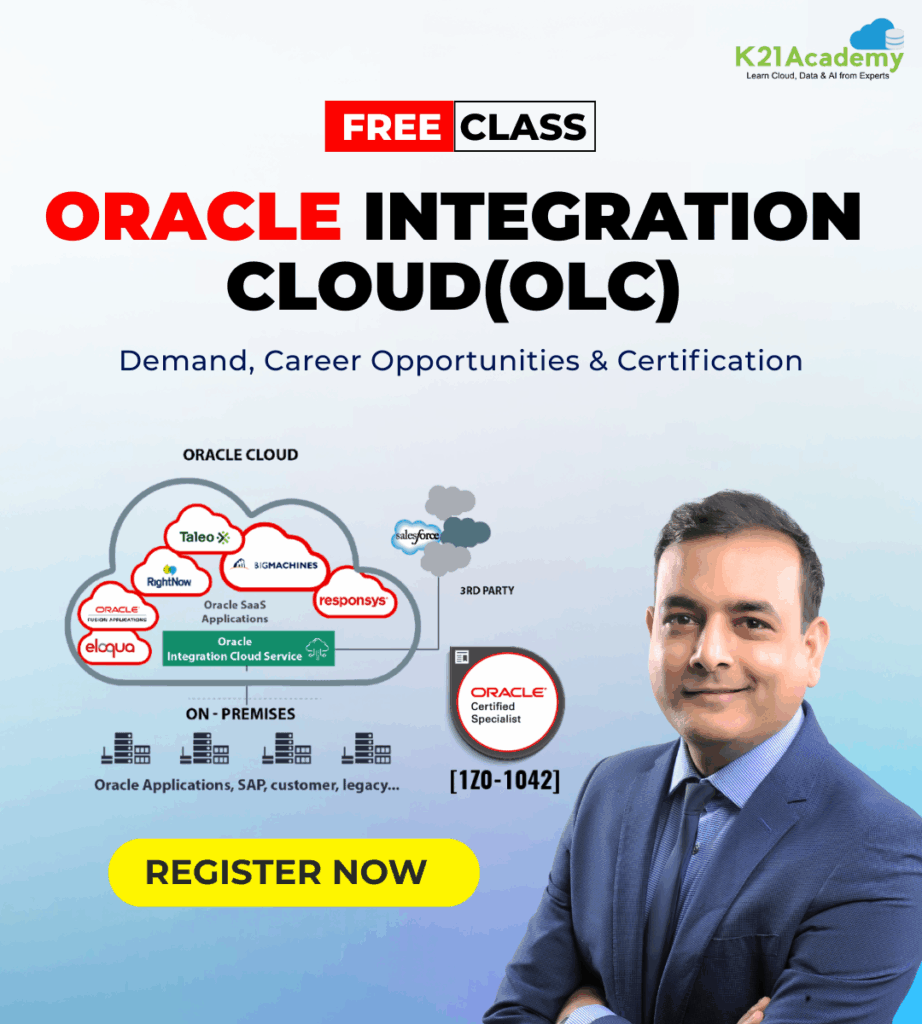
Note: In a nutshell, Oracle Integration is a combination of 3 Services (Integration Cloud Service + Process Cloud Service + Visual Builder Cloud Service) as shown in the below image.

3. You can register for FREE Oracle Cloud Trial Account using our step by step guide.
4. After registration, log in to Cloud Console and follow the below steps to navigate Oracle Cloud Integration Service.
- Log in to the Oracle Cloud Account.
- Click on the hamburger menu, then click on Developer Services. On the right side of the screen, under Application Integration click on Integration

To Know More About Oracle REST Data Service
5. The next task is to create an Instance of Oracle Integration.
Note: Stay Tuned for Step by Step instructions to create an Oracle Integration Instance in our next Post.
Also check our previous blog on how to Managing & Monitoring Integration Errors in Oracle Integration Cloud (OIC)

6. Once you have created an Instance of Oracle Integration, navigate the Oracle Integration home page and click on Integrations and it will show all the options available there.

An Introduction to the UI (User Interface) of Oracle Integration Cloud
There are a number of design options available in the integration menu. Here is a short introduction to each of these Tabs:

- Integrations: Integrations are processes that utilize connections (among other things) to implement a business process.
- Connections: Connections are the various connectors that can be utilized to communicate with external applications. Communication can be done with conventional systems like File, FTP, etc., and also with new social media and other applications, like LinkedIn, Facebook, Twitter, Evernote, etc.
- Lookups: A bit like DVMs in SOA Suite, can cross-reference values of the same attribute/element when mapping from one system to another.
- Packages: A bit like partitions in EM console, can be used to group together similar integrations. Useful in promotion and versioning.
- Agents: Agents are used to connecting to on-premise applications. For example, if you are using on-premise systems like ERP/SAP and also using Oracle OIC in the same implementation, you would have to use an agent to connect to the OIC application.
- Adapters: Adapters lists all the adapters that are available for external communication. Currently, about 68 adapters are offered. If you don’t find the desired adapter you can always use a technology adapter such as REST and SOAP to create a connection.
- Libraries: Functions are configured in the Library editor page to be used in the orchestration canvas and also to export/import metadata.
Stay tuned to learn more about these Integration components like Integrations, Connections, Adapters, etc.
This is all in nutshell about Oracle Cloud Integration . We cover this in the introduction module of our Oracle Integration Cloud Services Training (Get enrolled for FREE Masterclass), where we also cover about configuring Adaptors and connections, Configuring integrations, Data Mapping, Lookups, SaaS, On-premises integration agents, Security, Schedules, Versioning, Activating, Monitoring integrations and much more.
Frequently Asked Questions
What is Oracle Integration Cloud 3?
Oracle Integration Cloud 3 (OIC 3) is the latest version of Oracle's cloud-based integration platform. It enables organizations to connect various applications, data, and services across on-premises and cloud environments. OIC 3 offers enhanced features, such as an improved user interface, expanded adapter library, and advanced monitoring and analytics.
How does OIC 3 support low-code/no-code development?
OIC 3 supports low-code/no-code development through its intuitive drag-and-drop interface, pre-built integration templates, and wizards. This allows users with minimal coding experience to create, deploy, and manage integrations without extensive programming knowledge.
What types of applications can I integrate using OIC 3?
OIC 3 allows you to integrate a wide variety of applications, including Oracle SaaS applications (like ERP, HCM, and CX), on-premises systems, third-party cloud services, databases, and custom applications. Its extensive adapter library makes connecting to these systems quick and straightforward.
How does OIC 3 handle API management?
OIC 3 offers robust API management features, including API creation, deployment, security, and monitoring. It allows organizations to expose their APIs securely, manage access, and monitor API performance and usage with detailed analytics.
Can OIC 3 be used for process automation?
Yes, OIC 3 includes built-in tools for process automation. It allows users to create automated workflows that reduce manual tasks and increase operational efficiency. These tools are particularly useful for automating routine business processes across integrated systems.
Related Links:
- To apply for 1z0-1042-23 Oracle cloud platform integration 2023 certified professional
- Step by Step guide to get a FREE Oracle Cloud account.
- Oracle Integration Cloud (OIC) For Beginners Overview
- Create Oracle Integration Cloud Instance: Step by Step
Next Task For You
Do you want to learn more about Oracle and confuse where to start or which certification is right for you? Then, click on the register now button below to register for a Free Masterclass on Oracle Integration Job Oriented Program which will help you better understand and choose the right path and clear the certification exam.

![Microsoft Agentic AI Business Solutions Architect [AB-100] | K21 Academy](https://test.k21academy.com/wp-content/uploads/2025/11/Microsoft-Agentic-AI-Business-Solutions-Architect-AB-100-Exam-Overview1.png)