



In this blog post, I am going to cover the ERP Cloud Adapter using OIC and try to find out how this is useful in cloud operations.
Essentially, If you are new to Oracle Integration Cloud (OIC), then check out K21 Academy’s blog posts because they contain all the key points a beginner should know about Oracle Integration Cloud (OIC).
- Oracle Integration Cloud (OIC) For Beginners Overview
- Create Oracle Integration Cloud Instance: Step-by-Step
- Console Walkthrough of Oracle Integration Cloud (OIC) Service
- Oracle Integration Cloud Service with ERP Cloud Overview
ERP Cloud Adapter
- OIC (Oracle Integration Cloud Services) is the Platform as a service (PaaS), this Cloud offers by the Oracle that supports to provide the capabilities for integrating the different applications On-Cloud & On-Premise both.
- The Oracle Integration Cloud Services provides different connectors and Adapters which help to connect to the SaaS (software as a service) and also on On-premise applications.
- One of the connectors that are provided by Oracle Integration Cloud Services is an ERP Cloud Adapter that helps to connect Oracle’s SaaS and many other third-party clouds & On-Premise applications.
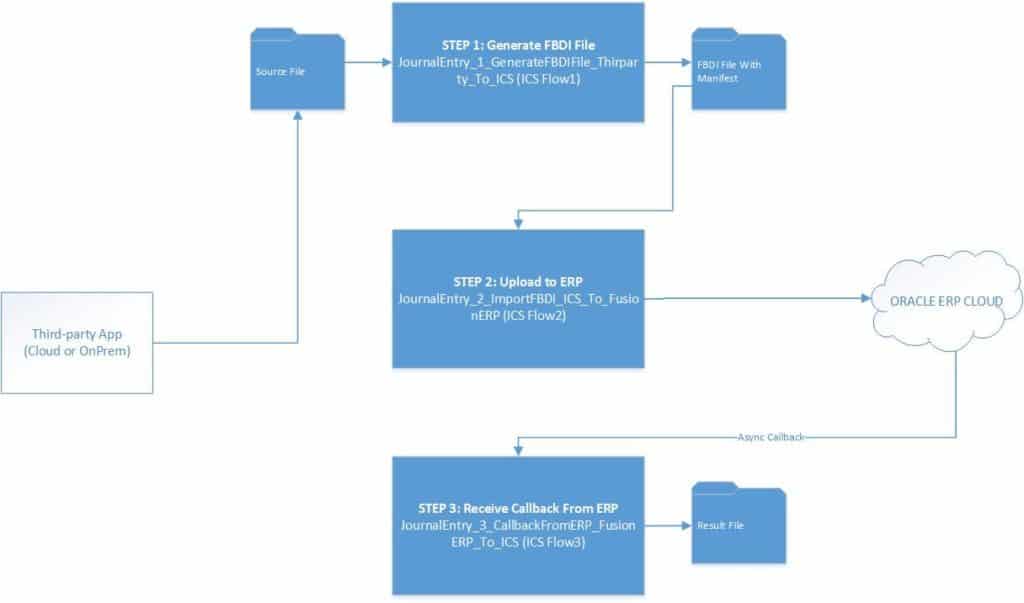
Check Out : New Homepage Of Oracle Integration Cloud.
What Is ERP Cloud Adapter?
- The ERP Cloud Adapter supports you to build an Integrations with ERP applications (Enterprise Resource Planning).
- ERP Adapter allows us to integrate SaaS & On-Premise applications with the support of ERP Cloud deprived of knowing about the precise details that are involved in the integration.
Benefits Of The ERP Cloud Adapters:
- It simply integrates with the WSDL file of Oracle ERP cloud applications to produce the integration Centric WSDL.
- Helps to generate mapping for the visible business objects, subscription of events and the Business REST API which we are select during the adapter configuration.
- Improves Developer Productivity.
- Improves the transformational aspect of the integration with the help of normalized web services.
- It provides Run time benefits and also increases security.
Note: to know more about Business Objects, Event Subscription, and Business REST API and other benefits then click here.
Using The ERP Cloud Adapter (Use Cases)
It can be used in different scenarios and one of them which is commonly used is:
FTP Adapter To ERP Cloud Adapter Integration
Oracle Integration Cloud Services includes the new Orchestration pattern which may allow the execution of the business process and Run Time activities (Long Running).
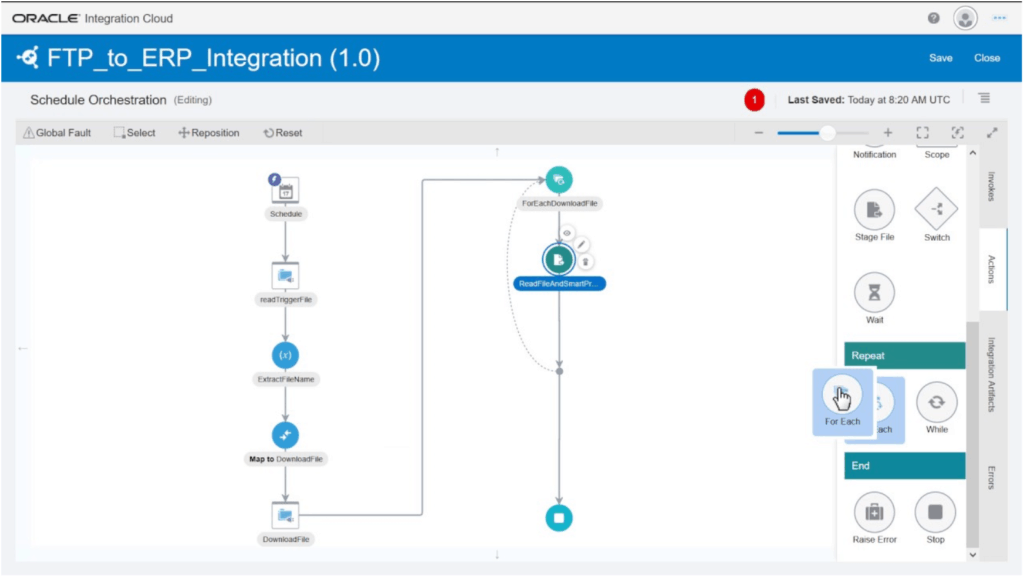
This section mainly tries to show, how to load some data from the FTP location to the Oracle ERP cloud with the help of the trigger file mechanism. It also has the ability to unzip or to decrypt the file.
How This ERP Cloud Adapter Works?
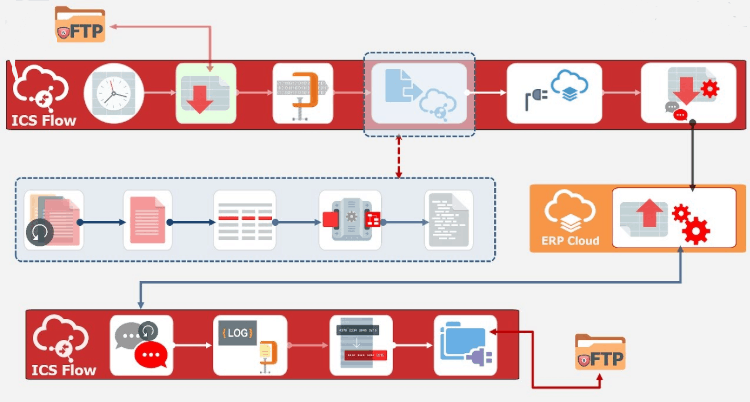
- In this integration data from the secure FTP or the central OIC for Orchestration and then it is uploaded to ERP cloud.
- The OIC can operate the Orchestration flow for pulling the trigger file and it also has the capability through which they unzip or decrypt the file.
- The Zip may contain multiple files and also each file may have multiple records due to which each loop is needed to process.
- Each file transforms the data into an ERP file and when the new ERP file is ready, it is uploaded to the ERP Cloud Adapter in OIC.
For more information about the trigger file mechanism and how it is work then click here.
This all, in a nutshell about ERP Cloud Adapter.
Related/References
- Create an Oracle Integration Instance
- Oracle Integration Cloud (OIC) For Beginners Overview
- Oracle Integration Cloud Services (OIC) Training: Step-By-Step Activity Guides/Hands-On Lab Exercise
Next Task For You
Do you want to learn more about Oracle and confuse where to start or which certification is right for you? Then, click on the register now button below to register for a Free Masterclass on Oracle [1Z0-1042] Certified Cloud Integration Expert, which will help you better understand and choose the right path and clear the certification exam.


![Microsoft Agentic AI Business Solutions Architect [AB-100] | K21 Academy](https://test.k21academy.com/wp-content/uploads/2025/11/Microsoft-Agentic-AI-Business-Solutions-Architect-AB-100-Exam-Overview1.png)


