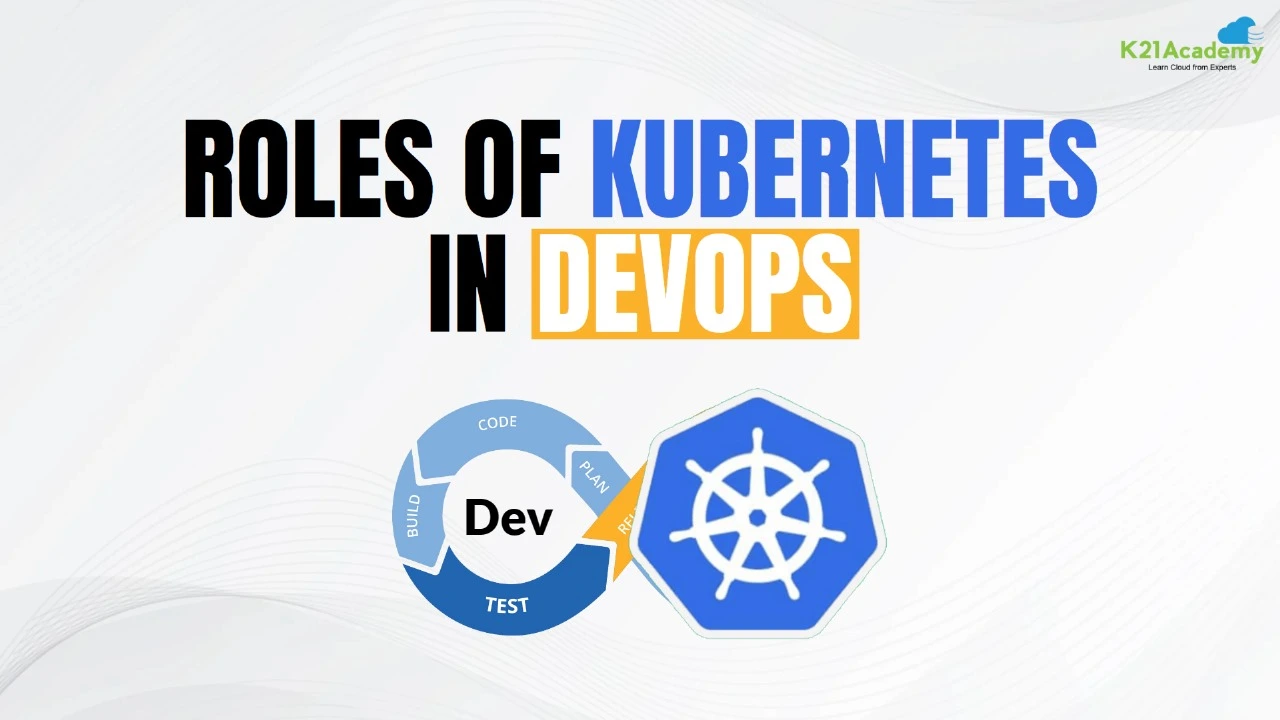



In the realm of modern software development, the amalgamation of DevOps practices with cutting-edge technologies has significantly revolutionized the way applications are built, deployed, and managed. Roles of Kubernetes in DevOps have emerged as a central theme, as this open-source container orchestration platform has become the cornerstone for DevOps teams seeking scalability, resilience, and agility in their operations.
In this blog, we will delve into the pivotal roles that Kubernetes plays in the DevOps landscape, exploring how its powerful features empower teams to streamline workflows, enhance efficiency, and embrace a new era of seamless application deployment and management.
Evolution of Enterprise DevOps
In the pre-DevOps era, individual teams operated in isolation, leading to conflicts, bottlenecks, and inefficiencies within the software development lifecycle (SDLC). The introduction of DevOps brought about cultural shifts, aligning workflows, and fostering collaboration. However, challenges persisted in tooling and infrastructure.
DevOps teams rely on pipelines that merge version control systems with automation, bridging the gap between developers and operations. These integrated toolchains allow seamless code submission, testing, and revisions, fostering a cohesive SDLC and early issue identification.

Learn more about What Is DevOps?
Role of Containers in Scalable CI/CD
While pipelines enhance agility, they often comprise disparate tools requiring intricate integrations. Containerization emerges as a solution, enabling teams to modularize toolchains into microservices. Each component runs independently, facilitating tool replacement or updates without disrupting the entire pipeline.
Containers, however, introduce management complexities, necessitating a platform like Kubernetes. This orchestrator efficiently manages containers, optimizing their deployment and scalability.
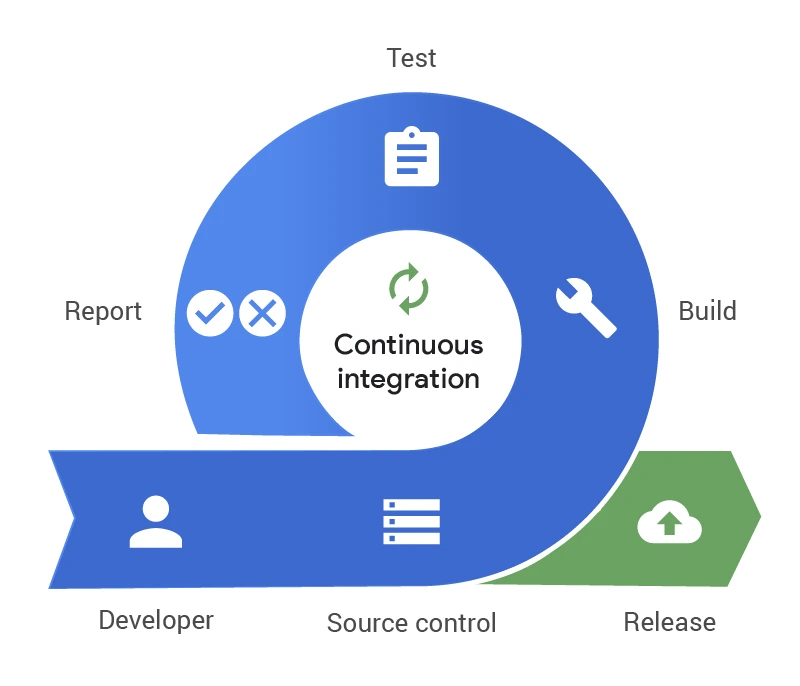
Learn more about What is CI/CD Pipeline?
Embracing Kubernetes in DevOps
Kubernetes presents a myriad of capabilities vital for constructing, deploying, and scaling enterprise-grade DevOps pipelines. Its automation capabilities streamline orchestration, enhancing productivity and quality.
Learn more about Kubernetes
Infrastructure and Configuration as Code
Kubernetes empowers infrastructure as code, allowing comprehensive control over application parts, configurations, and environments. Version-controlled configurations enable seamless modifications and automatic deployment through Kubernetes.
On-Demand Infrastructure and Cross-Functional Collaboration
Self-service catalog functionality in Kubernetes enables developers to create on-demand infrastructure, ensuring consistency and security through standardized configurations. Granular controls facilitate collaboration, defining specific roles and actions, maintaining resource consistency, and managing budgets.
Zero-Downtime Deployments and Reliability
Kubernetes’ rolling updates and rollback features ensure seamless deployment without downtime. It enables blue/green deployments, A/B testing, and enhances system reliability with health checks, preventing pod failures from impacting the entire system.
Why Kubernetes Reigns Supreme?
Kubernetes stands out as a top container orchestration platform for DevOps in enterprises due to:
- Flexibility of Pods: Pods enable running multiple containers and additional services alongside the main app, optimizing resource utilization.
- Reliability: Built-in health-check features ensure system stability, reducing pod failures and enhancing overall reliability.
- Updates and Rollbacks: Seamless updates without user impact and easy rollback mechanisms bolster CI/CD workflows.
Learn more about K8s Pods
Conclusion
DevOps, driven by continuous integration and development, thrives when workflows, automation, and scalability harmoniously operate in the production environment. Kubernetes seamlessly complements DevOps, accelerating processes from prototyping to release while ensuring reliability and scalability.
In summary, Kubernetes is pivotal in augmenting the agility and efficiency of DevOps methodologies, paving the way for accelerated software development and deployment in enterprise environments.
Frequently Asked Questions
What is Kubernetes, and how does it fit into the DevOps landscape?
Kubernetes is an open-source container orchestration platform that automates the deployment, scaling, and management of containerized applications. In DevOps, Kubernetes plays a pivotal role by providing a unified platform for efficient application deployment, scalability, and resilience.
How does Kubernetes simplify containerized application deployment in DevOps workflows?
Kubernetes simplifies container deployment by abstracting away the complexities associated with managing containers at scale. It provides a unified set of APIs and tools for deploying and managing containers, ensuring consistency across various environments.
What advantages does Kubernetes bring to DevOps teams in terms of container orchestration?
Kubernetes excels in orchestrating containers, allowing DevOps teams to efficiently manage and automate containerized application deployment, scaling, and load balancing. This streamlines the deployment process and ensures consistent performance across different environments.
How does Kubernetes contribute to scalability and efficiency in DevOps practices?
The design of Kubernetes enables horizontal scaling, effortlessly handling increased workloads by deploying additional containers as needed. This flexibility ensures optimal resource utilization and efficient management of varying traffic demands, enhancing overall efficiency.

![Microsoft Agentic AI Business Solutions Architect [AB-100] | K21 Academy](https://test.k21academy.com/wp-content/uploads/2025/11/Microsoft-Agentic-AI-Business-Solutions-Architect-AB-100-Exam-Overview1.png)