


In recent years, Kubernetes has emerged as the de facto standard for container orchestration, enabling developers to deploy and manage applications at scale. As the adoption of Kubernetes grows, so does the complexity of managing applications within the cluster. To address this challenge, Kubernetes Operators have become a powerful tool for automating the management and lifecycle of applications. In this blog post, we will delve into the world of Kubernetes Operators, exploring their definition, benefits, and use cases, and how they simplify application management in Kubernetes.
These are the following topics that I will be addressing in this post:
- Control Loop
- What is an Operator?
- How does a Kubernetes Operator work?
- Why Use Operator?
- When to Use Operator?
- Stateless Application on Kubernetes
- Stateful Application without Operator
- Stateful Application with Operator
- Benefits of Kubernetes Operators
- Best Practices for Working with Kubernetes Operators
- The Future of Kubernetes Operators
- Conclusion
Before we hop on to Operators, let’s first understand what a Control Loop is.
Control Loop
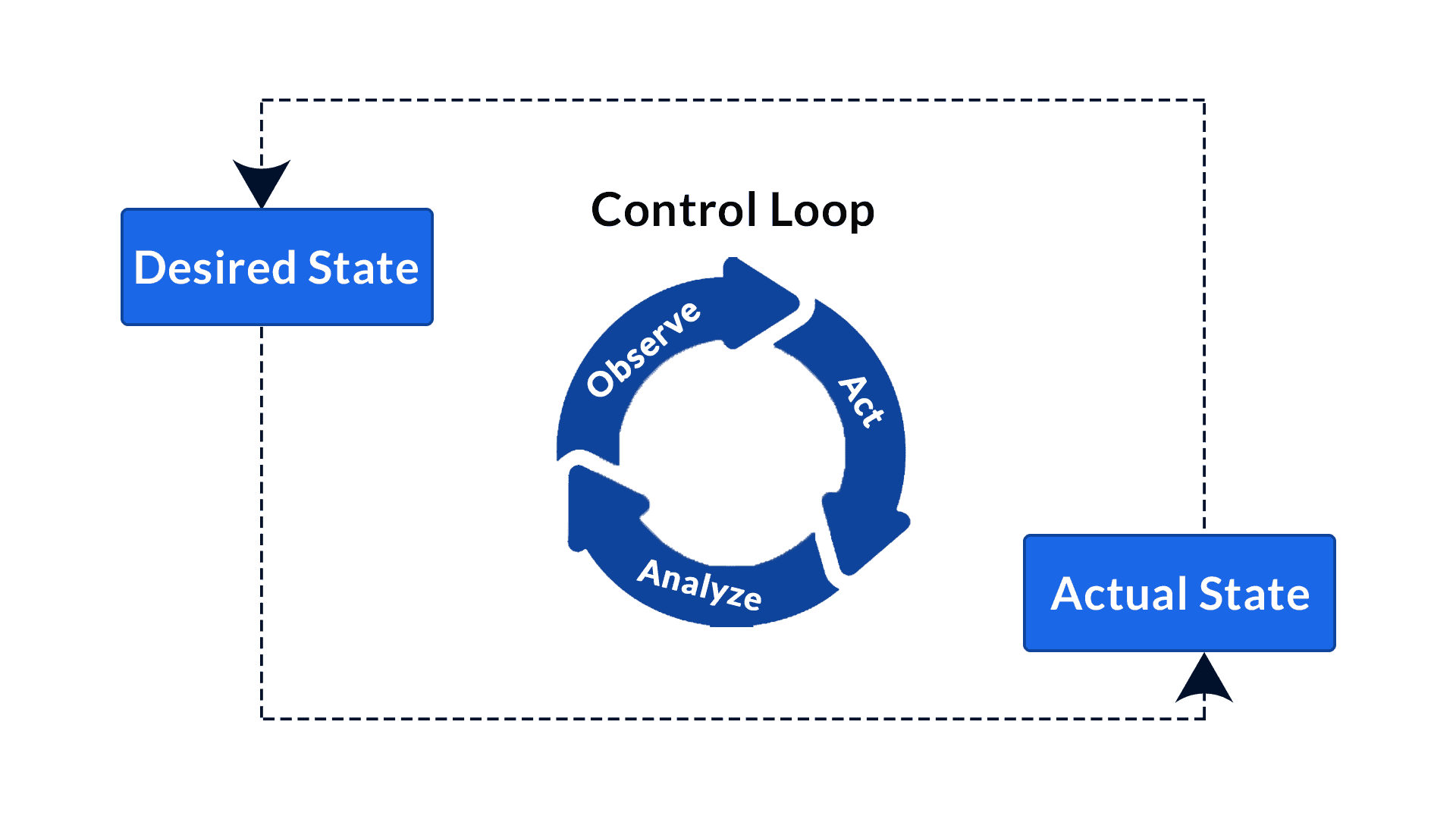
Controllers are no exception in the field of Kubernetes. Since it is all about automation, there has to be an inevitable controller listening to which the K8s runs accordingly. Hence, the controllers reduce the sysadmin toil.
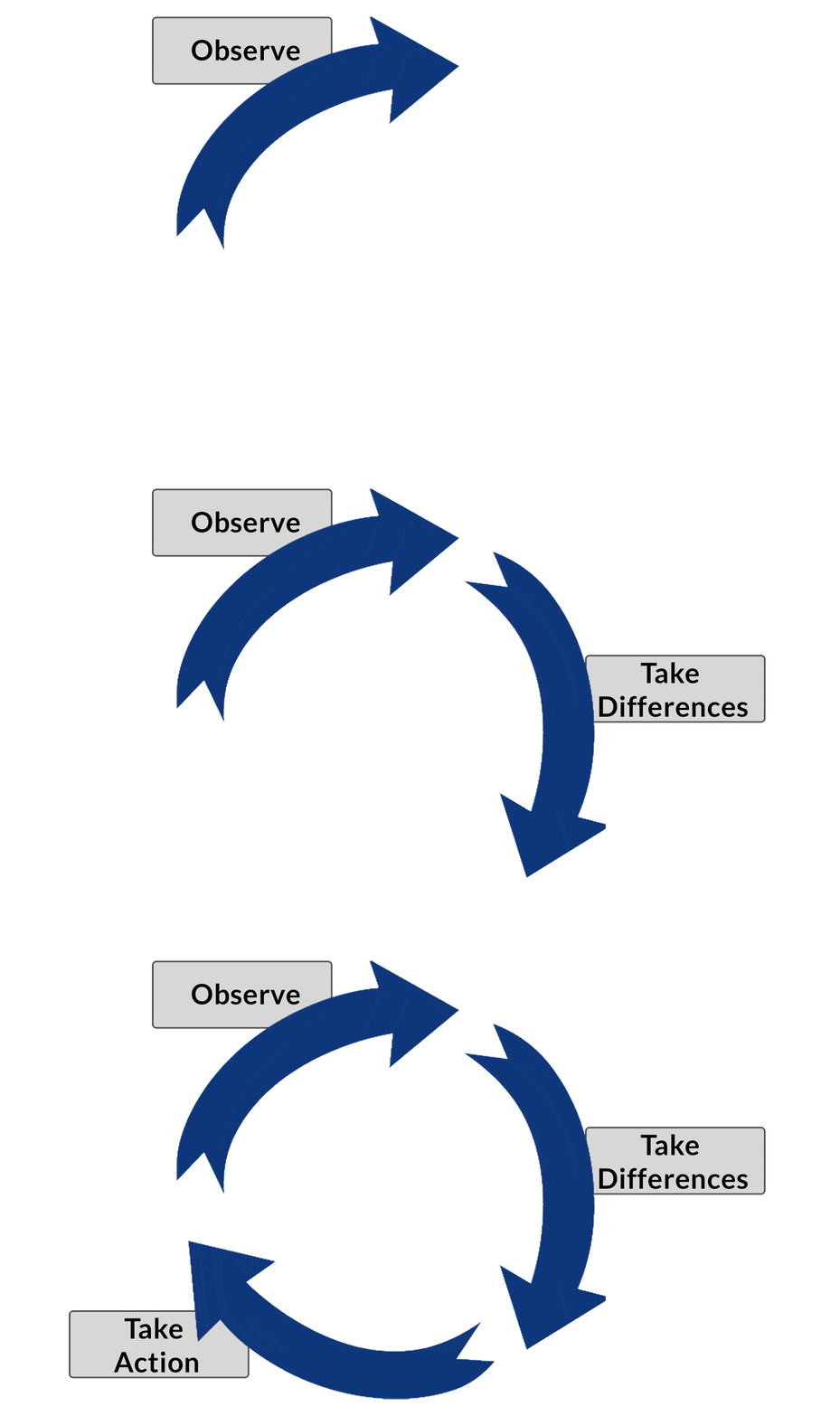
Control Loop
In short, controllers are the control loops that observe the state of a K8s cluster. As a result, make or request changes where required. Every controller strives to move the current cluster state nearer to the desired state.
Controller Pattern
Controller
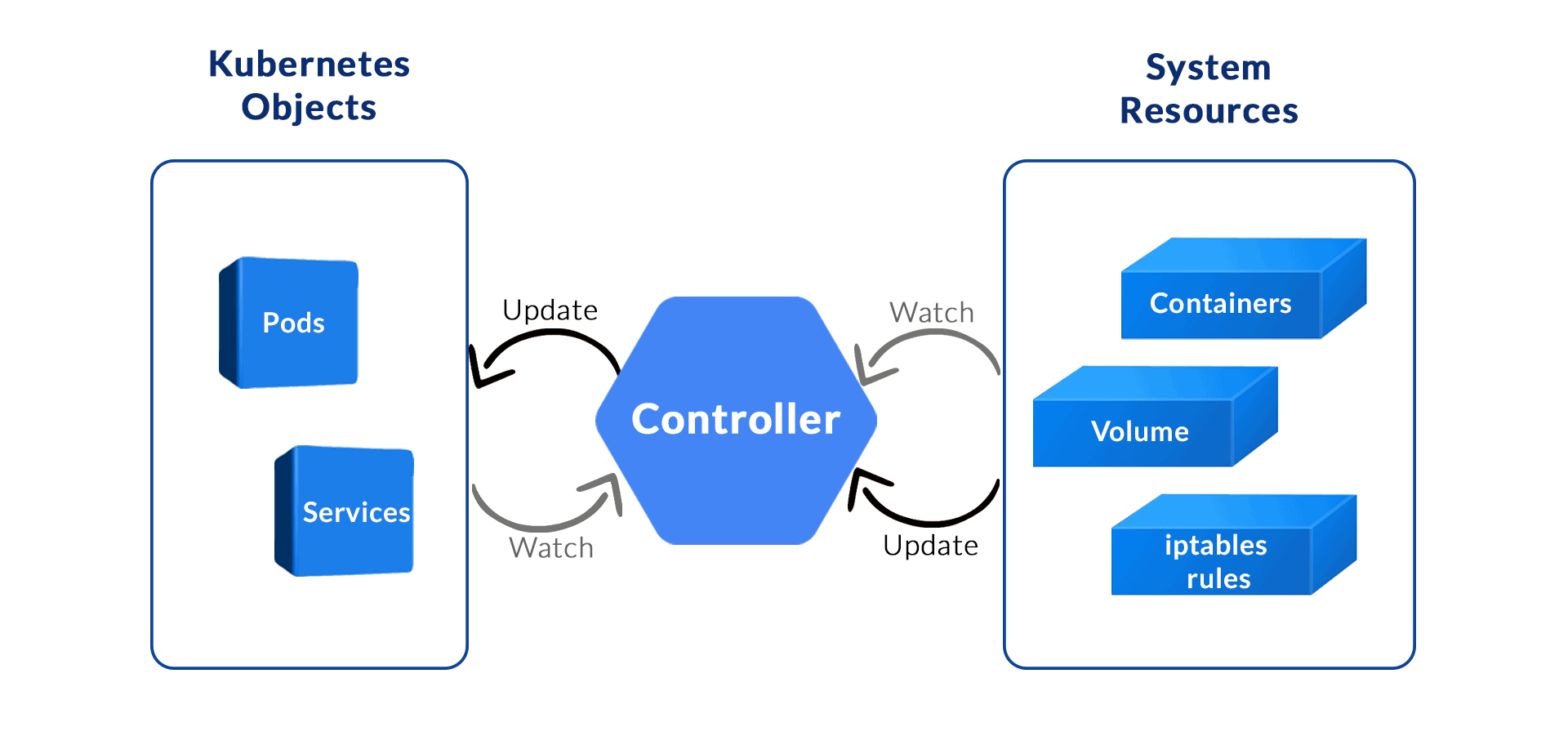
The concept of the desired state comes from tracking a Kubernetes resource type. The desired state of an object is present in the spec field. So, the controller/s responsible for bringing the cluster from the observed state to the desired state. A controller may decide to perform this action independently. But usually, the controller in K8s will communicate with the API server to take the necessary measures.
What is a Kubernetes Operator?
The best practice says that automation is not interfered with by Humans as they are prone to errors. Also, if it comes to us to fix a broken pod in a cluster, scale up and down applications, it defeats the whole point of container automation. For ‘package, it since and run it everywhere‘ to be accurate, there are many other things to address.
Kubernetes Operator
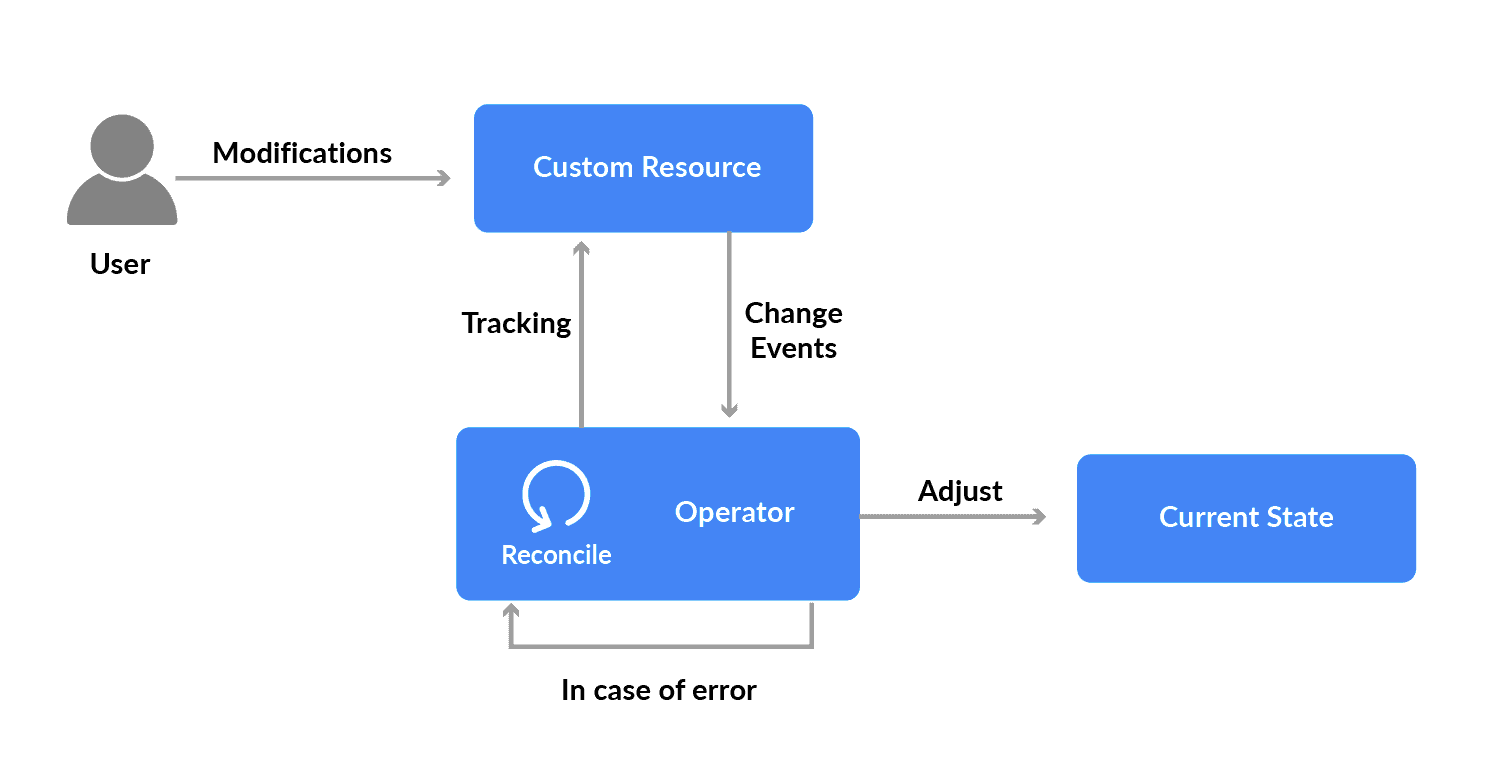
An operator in Kubernetes is an application-specific controller. Kubernetes Operators are application-specific and are software written to encapsulate all the operational considerations of an application. It extends a Kubernetes API to create, configure, and manage complicated applications in place of humans. Let us look at an example where an operator deploys a database, upgrades database versions, or performs backups. Therefore, these systems can then be tested and be relied on to react quicker than a human engineer could.
TL;DR – A Kubernetes operator is a method of packaging, deploying, and managing a K8s application. It is application-specific and extends the functionality of the Kubernetes API on behalf of a Kubernetes user.
Also Read: Our blog post on Kubernetes Prometheus. Click here
How does a Kubernetes Operator work?
The operator is nothing but software that does everything a human operator does. So all the tasks of a DevOps member/team are packed into the software. Some of the instructions of deploying an application, creating a cluster of replicas, recovery instructions, etc. It always keeps a watch and gets the application to the desired state.
 Kubernetes Operator Architecture
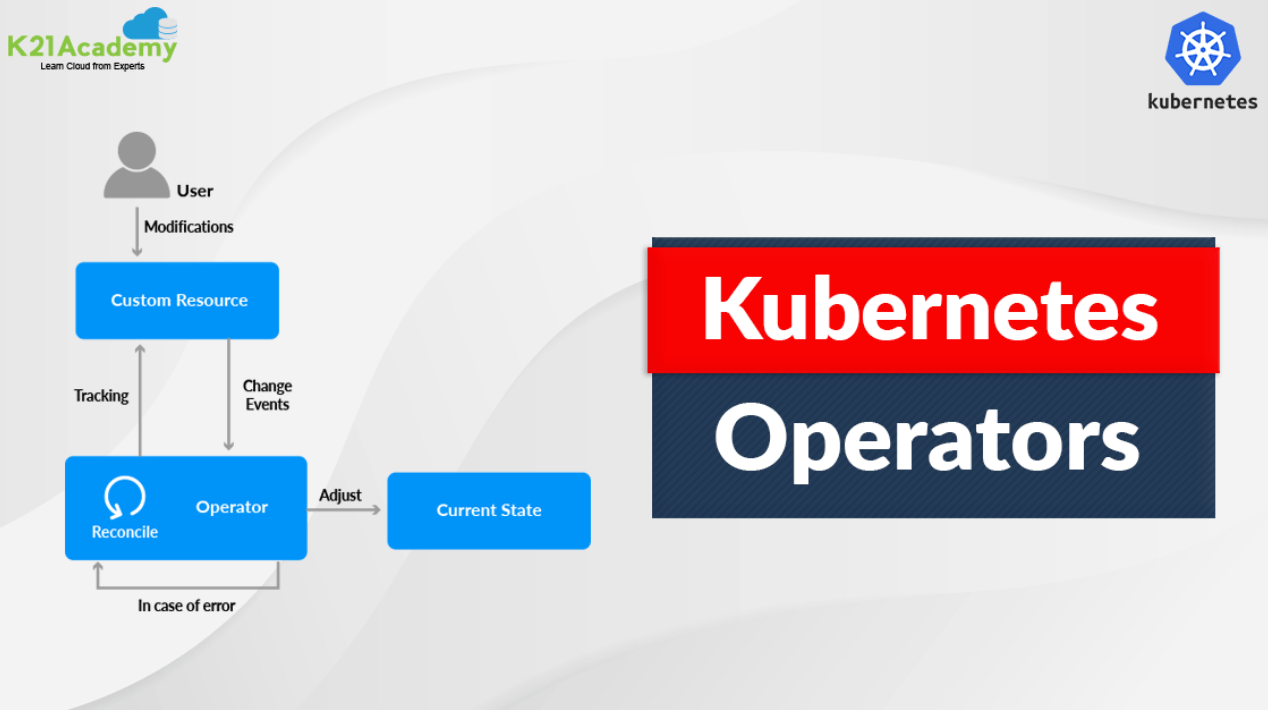
At its core, the Kubernetes operator has the exact control loop mechanism. It handles the recovering of an application or restarting an application because of the update in deployment. So, Kubernetes Operators are responsible for all the actions performed after changes in the environment.
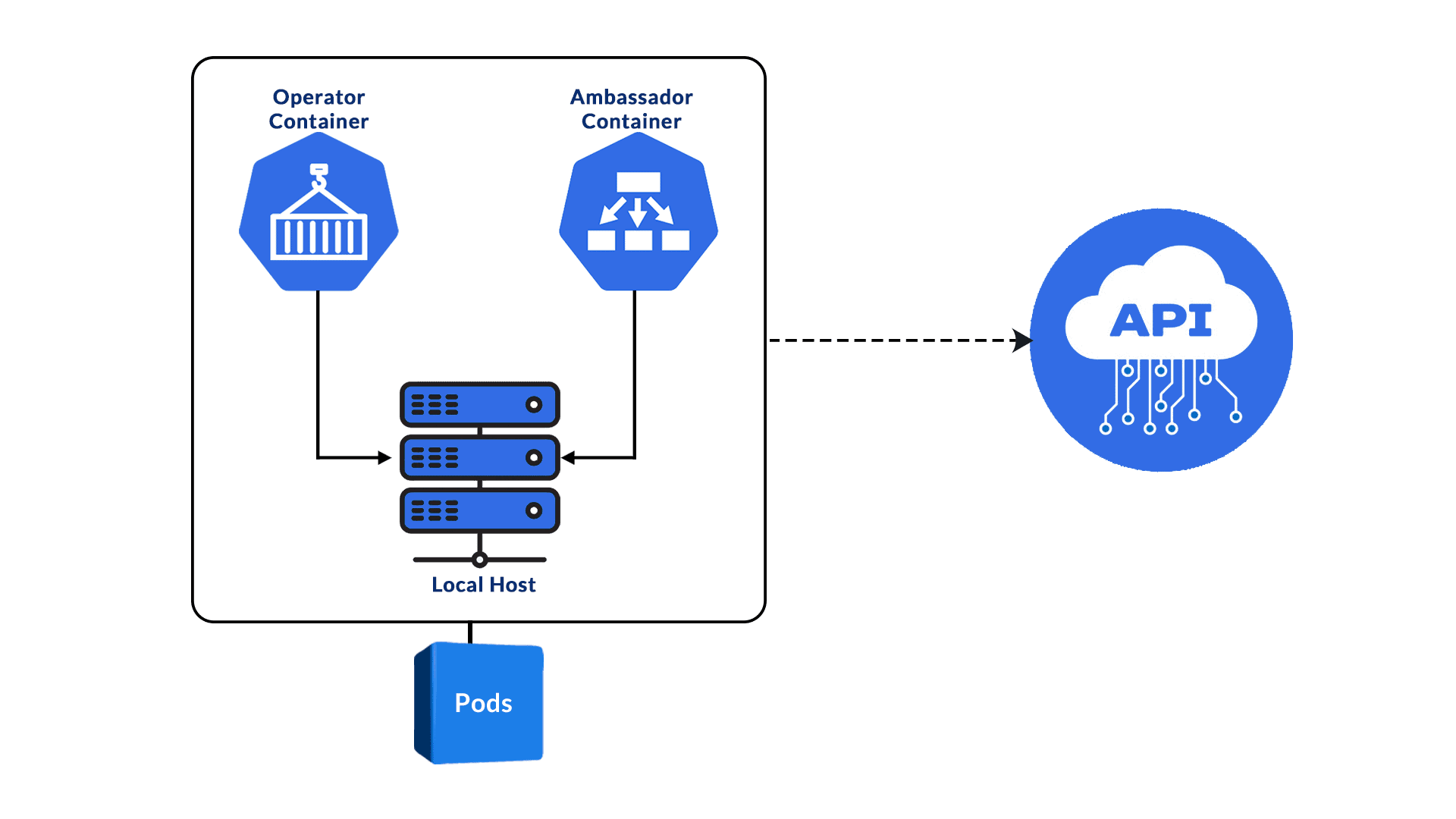
Everything in Kubernetes runs as containers; Operators are no exception. Below is an example of an Ambassador pattern multi-container and an operator. An operator consists of a code that performs the commands. It also has a Custom Resource Definition (CRD), which maps the operator code back to the kubectl command.
- The operator container contains the program that sees the API and identifies the changes.
- The Ambassador container runs kubectl proxy. It helps in connecting the operator container with the K8s API server.
Also Read: Our blog post on Kubernetes Deployment Strategy. Click here
Why use Kubernetes Operator?
Let’s look at some reasons why the Kubernetes operators are needed:
- The Operators extend Kubernetes functionality.
- Our ideas and knowledge can be defined in an operator.
- K8s Operators do this in a scalable, repeatable, standardised fashion.
- Operators improve resiliency while reducing the burden on IT teams.
- Operators prove particularly useful in multi-cloud and hybrid cloud environments.
Check Out: How to Install Kubernetes Dashboard. Click here
When to use a Kubernetes Operator?
FYI, ‘All operators are controllers, but not all controllers are operators‘. We can choose an existing Operator; on the other hand, you can write it too. But writing operator code will also constrain you from maintaining it. Also, it means that you need more developers to keep the environment robust and secure.
It would be best if you used an operator under the following conditions:
- When you need to encapsulate a stateful application business logic controlling everything with Kubernetes API.
- When you need to build a tool that watches your applications for changes and performs specific SRE/Ops tasks at required times.
Now let’s look at some real-time scenarios where we use Kubernetes Operators that will come into deployment.
Stateless Application on Kubernetes
Application Configuration
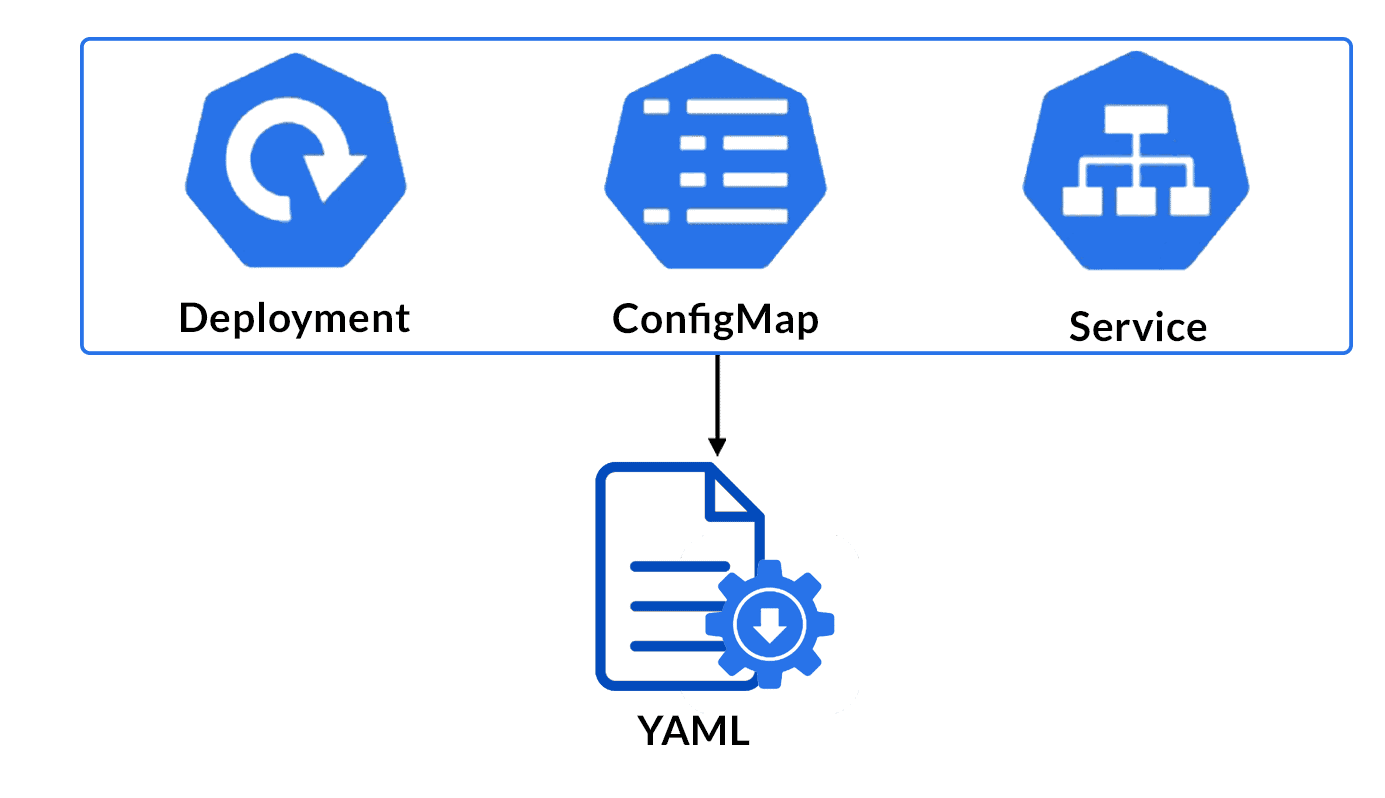
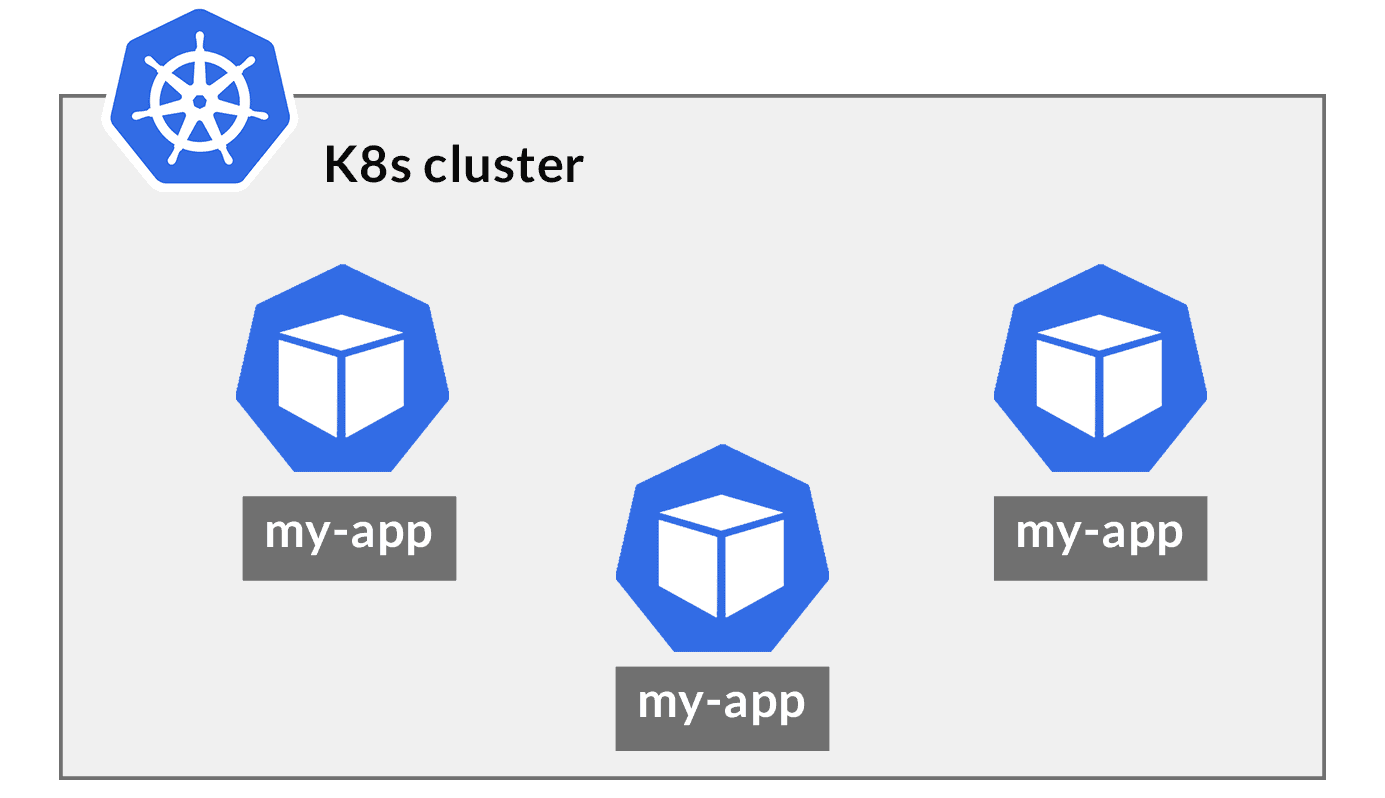
The first example use case is a web application. You write your deployment, configmap. And service files as per the requirement, and spin up the applications. You also scale the application to the preferred number. In our case, we are scaling it to 3 replicas.
Let’s say one of your application dies for various reasons. So, this is where the Kubernetes comes in and recovers it using the control loop mechanism we saw earlier. Hence a new application gets created and replaces the crashed application. If you make any changes in the deployment configuration, all replicas restart with the latest version.
Stateless K8s Application
Wait wait! Should we not take backups? Well, the answer is no, as the application is Stateless. So, here is a perfect example of Deploy once; run it many times. Hence, when you update the deployment or Scale-Up/Down the application, it works pretty much the same without any problems.
Therefore, you don’t need to sit and control the application once deployed, nor need a controller! Kubernetes handles all of these tasks because it is a part of the control loop mechanism. It observes the current state and knows the desired state by the deployment file; it updates the configuration to the desired state.
Also Read: Our blog post on Kubernetes LivenessProbe. Click here
Stateful Application without Kubernetes Operator
Now, we have a web application that requires a database of data persistence. The database applications always possess some state, and we must keep a watch throughout the lifecycle. These applications are called the Stateful applications.
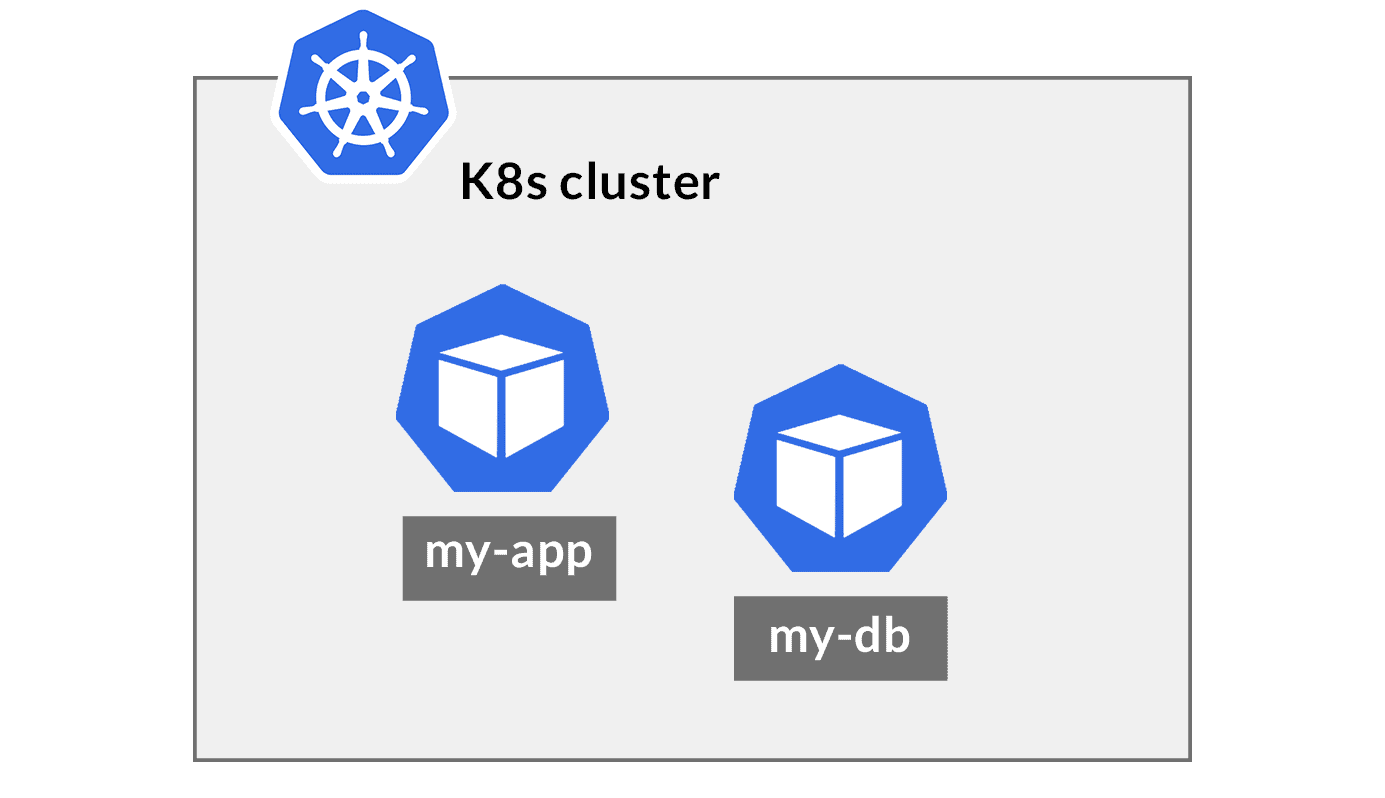
Stateful K8s Application
So, if you decide to create three replicas of a database application, their states and identities will differ. Hence, it is a challenge for Kubernetes to handle everything because all the replicas should communicate with each other and be in sync. Also, different databases have different workarounds, so we can’t have a generalised solution for this.
If it is the case that we always need manual intervention doesn’t matter if they run on K8s or traditional servers. So, we require people who “operate” these applications.
But the manual intervention of K8s voids the idea of Kubernetes! The concepts of automation, load-balancing, self-healing capabilities, etc. Don’t jump the gun so quickly; the next section is all the reason you have come here!
Also Read: Our previous blog post on Kubernetes Configmap. Click here
Stateful Application with Kubernetes Operator
So the time has finally come to see an Operator in action. We shall see how the operator enhances the same web application. Using an application-specific operator makes the job easier and effortless after deployment. We don’t need a manual intervention unless there is a significant change in the whole system. Operators are reusable and have a single automated process for all the available similar Kubernetes cluster.
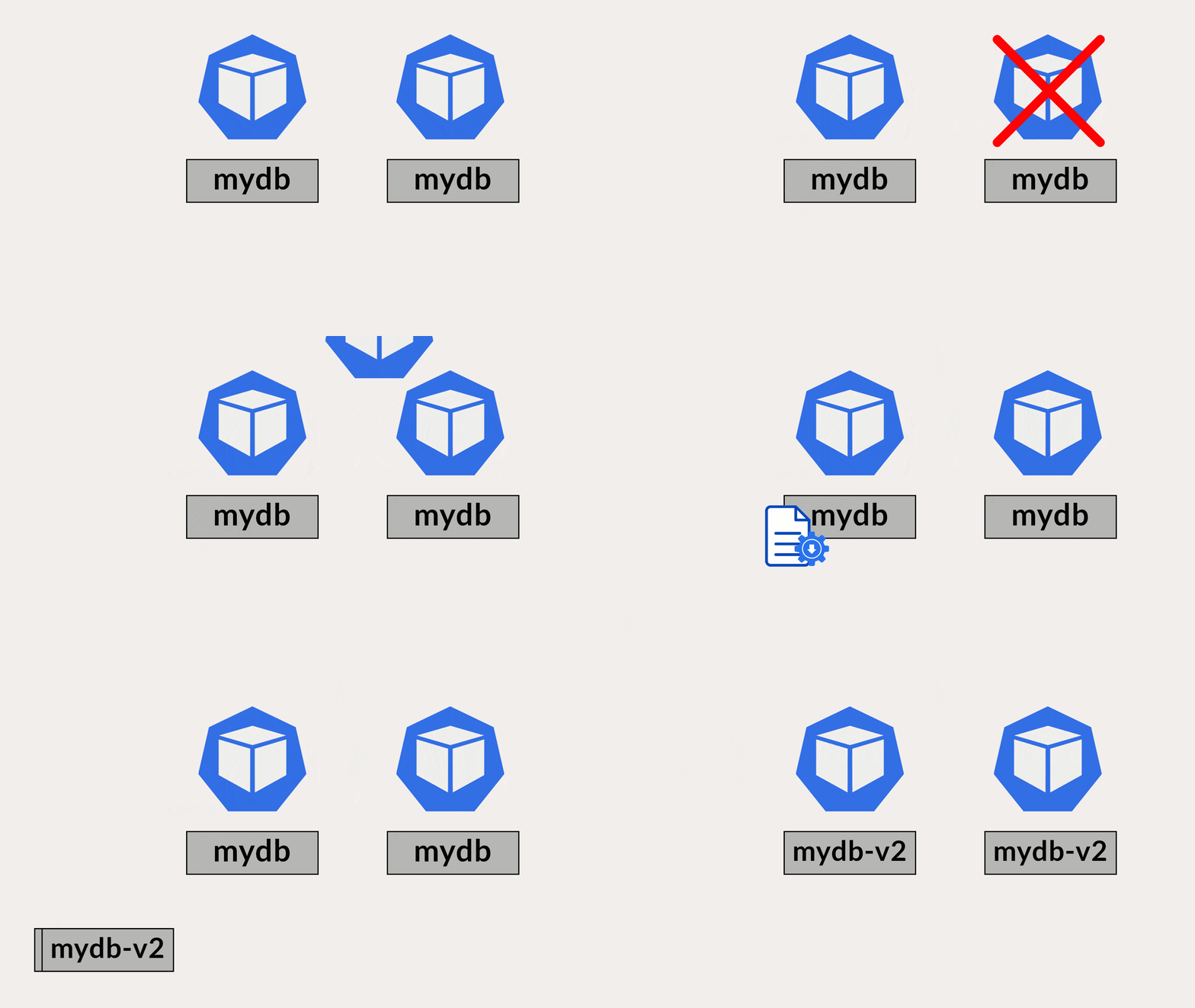
Stateful Application with Kubernetes Operator
The more challenging the application deployment gets, the harder it becomes for a human operator. Hence, a human operator vs a Kubernetes operator is a no brainer! 🤯
So if an application dies, the operator recovers it without any downtime as it always keeps a watch of the current state. Also, any change in the deployment, the Kubernetes Operator is responsible for restarting the latest versions. The tasks of scale up and scale down are more manageable too!
Benefits of Kubernetes Operators
- Simplified Application Management
- Automation and Self-Healing Capabilities
- Standardized and Reproducible Deployments
- Extensibility and Ecosystem
Best Practices for Working with Kubernetes Operators
- Test-Driven Development for Operators: Apply test-driven development principles to ensure the reliability and robustness of Operators. Write tests for different scenarios and use automated testing frameworks.
- Monitoring and Alerting for Operator Health: Implement monitoring and alerting for the health and performance of Operators to proactively detect and resolve issues.
- Versioning and Upgrades: Plan for versioning and upgrades of Operators, considering backward compatibility and ensuring a smooth transition between different versions.
- Security Considerations: Follow security best practices when developing Operators, including secure communication, least privilege access, and vulnerability management.
The Future of Kubernetes Operators
- Operator Framework Improvements and Enhancements: The Operator Framework will continue to evolve, with improvements in tooling, libraries, and APIs, making it easier to develop and manage Operators.
- Industry Adoption and Standardization: As Kubernetes Operators gain widespread adoption, we can expect more industry-specific use cases and standardization around Operator development practices.
- Operator Maturity Models: Maturity models and best practices will emerge to guide organizations in assessing and improving the maturity and reliability of their Operators.
Conclusion
Kubernetes Operators have revolutionized the management of applications in Kubernetes, bringing automation, simplification, and consistency to the management of complex workloads. By leveraging Operators, organizations can achieve faster deployments, improved scalability, and reduced operational overhead. As the Kubernetes ecosystem continues to evolve, Operators will play an increasingly crucial role in enabling developers to focus on building innovative applications without worrying about the underlying infrastructure. Embrace the power of Kubernetes Operators and unlock the full potential of your Kubernetes deployments.
Frequently Asked Questions
What is a Kubernetes Operator?
A Kubernetes Operator is a software extension that automates the management and lifecycle of applications in a Kubernetes cluster. It uses Custom Resource Definitions (CRDs) and Controllers to define and manage specific resources and their desired state.
How do Kubernetes Operators simplify application management?
Kubernetes Operators simplify application management by abstracting away the complexities of deploying and managing complex applications. They automate tasks such as scaling, upgrading, and monitoring, ensuring applications remain in the desired state with minimal manual intervention.
What are some benefits of using Kubernetes Operators?
Some benefits of using Kubernetes Operators include simplified application management, automation and self-healing capabilities, standardized and reproducible deployments, and extensibility to support various use cases and applications.
What are some common use cases for Kubernetes Operators?
Kubernetes Operators are commonly used for managing stateful applications like databases, deploying logging and monitoring solutions, streamlining CI/CD pipelines, and orchestrating machine learning workloads.
What is the Operator Hub?
The Operator Hub is a centralized repository where you can discover and share pre-built Operators for various applications and services. It helps in finding and installing Operators that suit your needs.
Related Post
- Kubernetes for Beginners
- How To Setup A Three Node Kubernetes Cluster For CKA: Step By Step
- Check out and Subscribe to our YouTube channel on “Docker & Kubernetes.”
- Certified Kubernetes Administrator (CKA) Certification Exam
- Certified Kubernetes Administrator (CKA) Certification: Step By Step Activity Guides/Hands-On Lab Exercise
Join FREE Masterclass of Kubernetes
Discover the Power of Kubernetes, Docker & DevOps – Join Our Free Masterclass. Unlock the secrets of Kubernetes, Docker, and DevOps in our exclusive, no-cost masterclass. Take the first step towards building highly sought-after skills and securing lucrative job opportunities. Click on the below image to Register Our FREE Masterclass Now!


![Microsoft Agentic AI Business Solutions Architect [AB-100] | K21 Academy](https://test.k21academy.com/wp-content/uploads/2025/11/Microsoft-Agentic-AI-Business-Solutions-Architect-AB-100-Exam-Overview1.png)