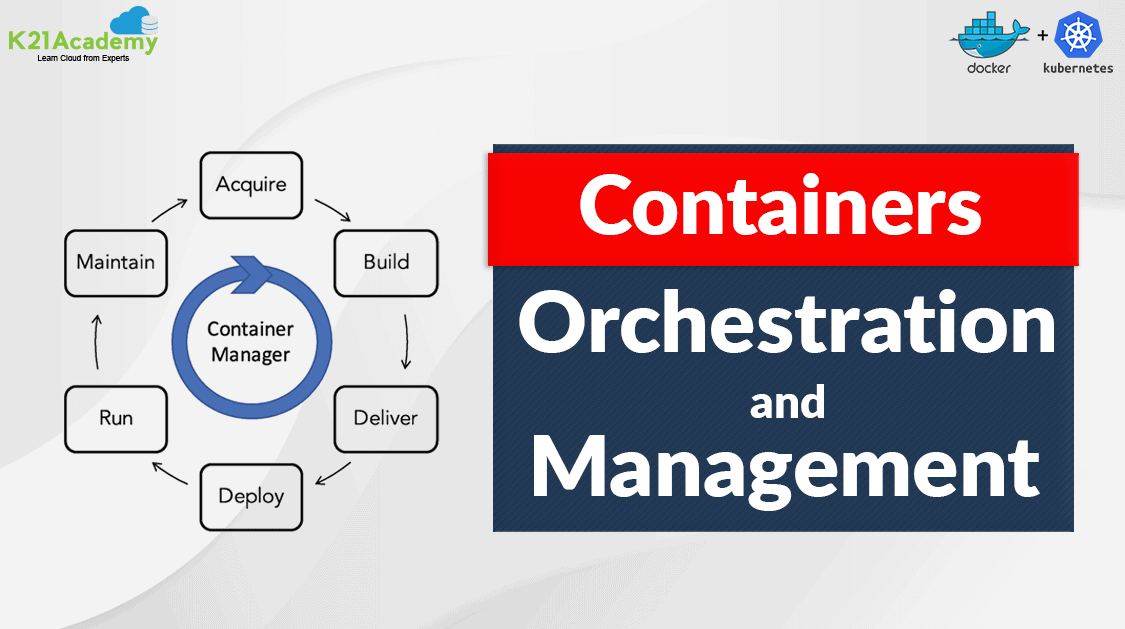



Container orchestration is essential for managing, scheduling, scaling, storage, and networking for individual containers. It can be used in any environment that utilizes containers, facilitating the deployment of the same application across different environments without the need for redesign or reconfiguration. Additionally, microservices in containers simplify the orchestration of services, including storage, security, and networking.
In this blog, we will be covering the following topics:
- What is Container Orchestration?
- How does Container Orchestration Work?
- Benefits of Container Orchestration
- Different Container Orchestration Tools
- Container Orchestration Platforms
What is Container Orchestration?
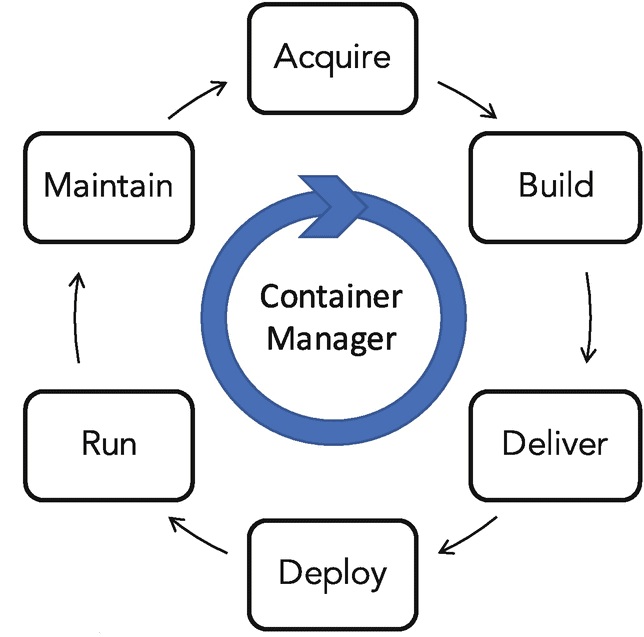
Container orchestration focuses on managing containers and their dynamic environments. It involves managing the lifecycles of containers and assists DevOps teams in integrating containers into CI/CD workflows. Software teams use container orchestration engines to control, manage, and automate tasks such as:
- Provisioning and deploying containers
- Ensuring container availability
- Scaling containers up or down to balance application load
- Moving containers between hosts if resources are low or a host fails
- Allocating resources between containers
- Load balancing and service discovery among containers
- Monitoring the health of containers and hosts
Check Out : Our kubernetes training. A Kubernetes certification enhances your resume and sets you apart from the competition. As companies increasingly rely on Kubernetes, your expertise becomes an immediate asset.
How Does Container Orchestration Work?
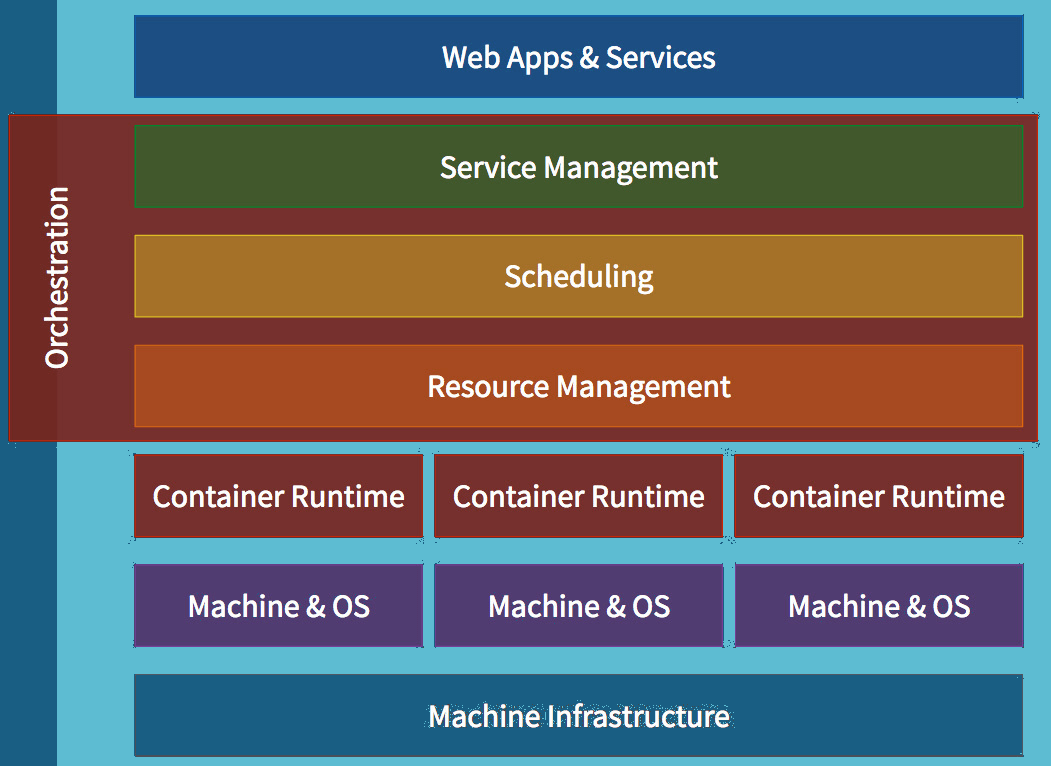
In any container orchestration tool, a configuration file (YAML or JSON) is written to describe the application’s setup, such as the location of Docker images, network configurations between containers, storage volume mounts, and log storage. These configuration files are version-controlled and used to deploy applications across various development and testing environments before moving to production clusters.
Containers are deployed onto hosts, typically in replicated groups. The orchestration tool schedules deployments, locating suitable hosts based on constraints in the configuration file, such as CPU or memory availability. Containers can also be placed according to labels, metadata, or proximity to other hosts. Once running, the orchestration tool manages the container lifecycle per the container’s definition file (e.g., Dockerfile).
Also Read: AKS Cluster – a Kubernetes cluster on Azure Kubernetes Service (AKS), one of the leading managed K8s services.
Benefits of Container Orchestration Tools
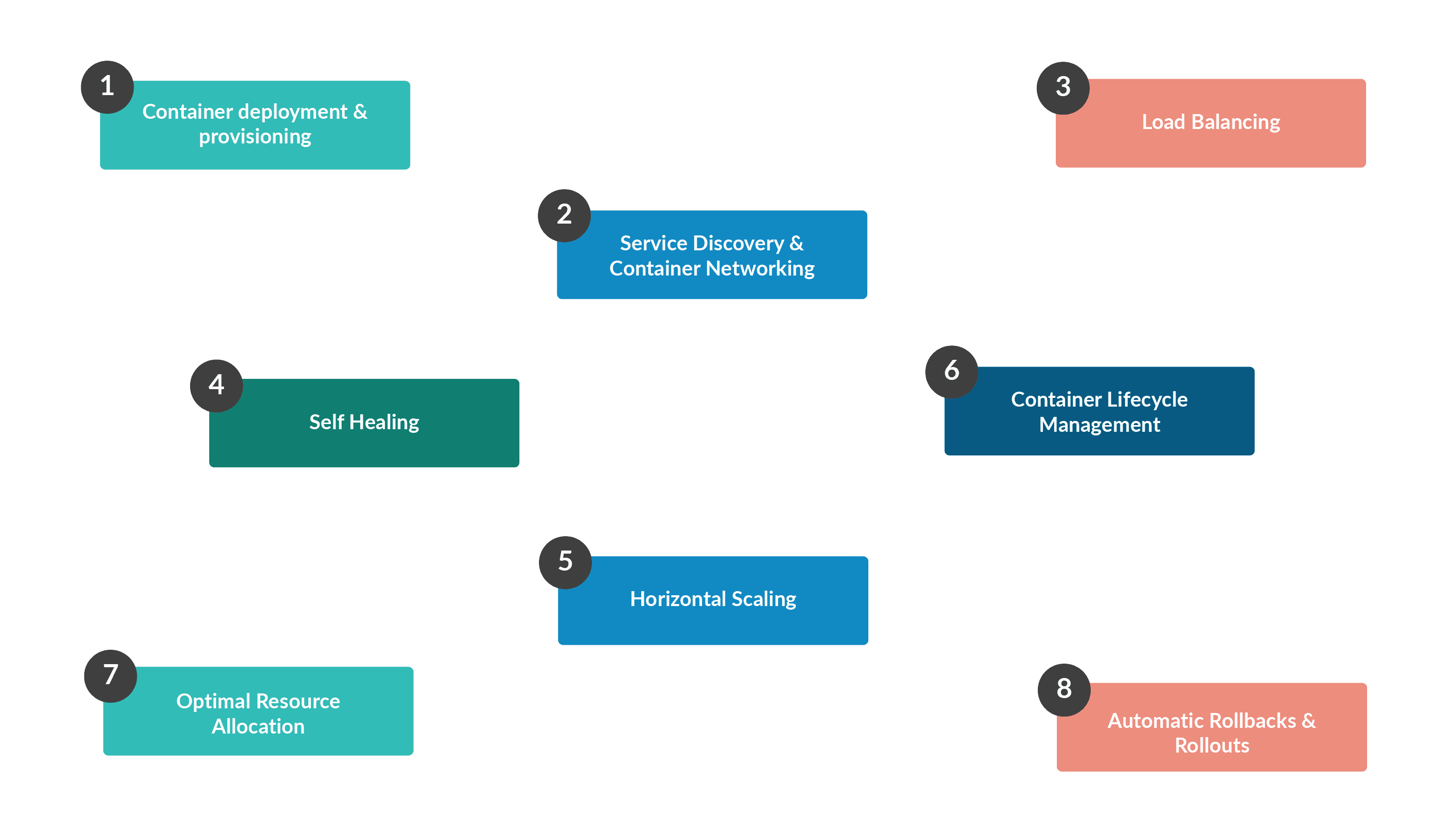
Container orchestration tools manage the entire containerization process, providing portability and reproducibility for containerized applications, allowing them to be moved and scaled across clouds and data centers as needed. The main benefits include:
- Service discovery and container networking
- Enhanced governance and security controls
- Container health monitoring
- Even load balancing across hosts
- Optimal resource allocation
- Lifecycle management of containers
 Different Container Orchestration Tools
Tools to manage, scale, and maintain containerized applications are called orchestrators. The most common examples include Kubernetes, Docker Swarm, and Apache Mesos.
Also read: Container (Docker) vs Virtual Machines (VM) to understand what is their difference.
Kubernetes
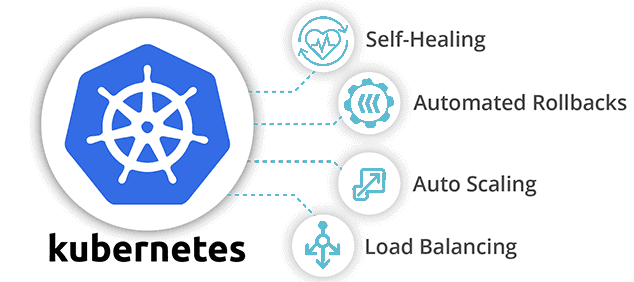
Kubernetes is an open-source container orchestration tool or orchestrators, it was developed by Google. Google donated the Kubernetes project to the newly formed Cloud Native Computing Foundation in 2015.
Kubernetes allows us to build application services that deploy multiple containers, schedule them across the cluster, scale those containers and manage the lifecycle of those Containers. It helps in making the process automated by eliminating many of the manual processes involved in deploying and scaling containerized applications. Kubernetes gives the platform to manage the clusters easily and efficiently.
Kubernetes has become an ideal platform for hosting cloud-native apps that require rapid scaling and deployment. Kubernetes also provides portability and load balancer services by enabling them to move applications across different platforms without redesigning them.
If you want to know about the Architecture of Kubernetes, check out our blog on Kubernetes Architecture.
Docker Swarm
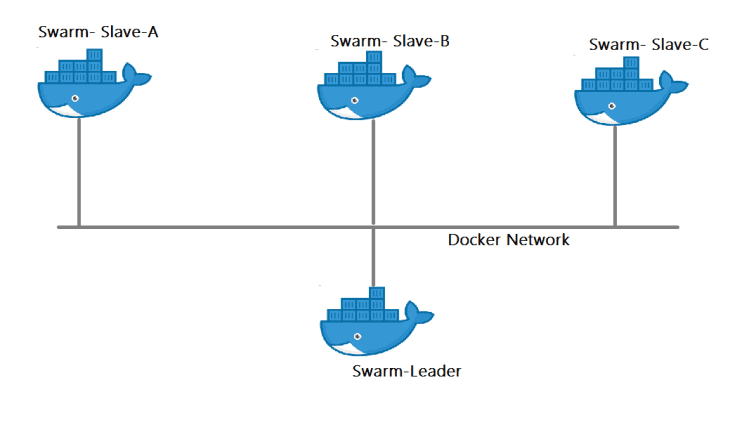
Docker swarm is also a container orchestration tool, meaning that it allows the user to manage multiple containers deployed across multiple host machines.
Docker Swarm main benefits include that it offers a high level of availability for applications. Like Kubernetes, Docker Swarm also has several worker nodes and manager node which handles the worker nodes’ resources and ensures that the cluster operates efficiently.
Even though we have Kubernetes as the container orchestration, the company still offers Docker Swarm. It is the fully integrated container orchestration tool but it is slightly less extensible and complex than Kubernetes. Docker Swarm is useful or a good choice for Docker enthusiasts who wants an easier and faster path to container deployments. In fact, Docker bundles both Swarm and Kubernetes in its enterprise edition in hopes of making them complementary tools.
Check out: Azure Databricks is an easy, fast, and collaborative Apache spark-based analytics platform.
Apache Mesos
Apache Mesos is slightly older than Kubernetes. It is an open-source software project originally developed at the University of California at Berkeley, but now widely adopted in organizations like Twitter, Uber, and Paypal. Mesos’ lightweight interface lets it scale easily up to 10,000 nodes (or more) and allows frameworks that run on top of it to evolve independently. Its APIs support popular languages like Java, C++, and Python, and it also supports out-of-the-box high availability. Unlike Swarm or Kubernetes, however, Mesos only provides management of the cluster, so a number of frameworks have been built on top of Mesos, including Marathon, a “production-grade” container orchestration platform.
Read this blog to know about what is Kubernetes Pod which is an important component of Kubernetes.
Container orchestration platforms
With the enormous growth of container usage, container orchestration solutions are greatly increasing in popularity. Containers can be supported in practically any type of environment, ranging from on-premise servers to the cloud. Talking about the cloud, the most common examples are Azure Kubernetes Service (AKS), Amazon Elastic Kubernetes Services (EKS) and Google Cloud Kubernetes Engine (GKE).
Azure Kubernetes Service (AKS)
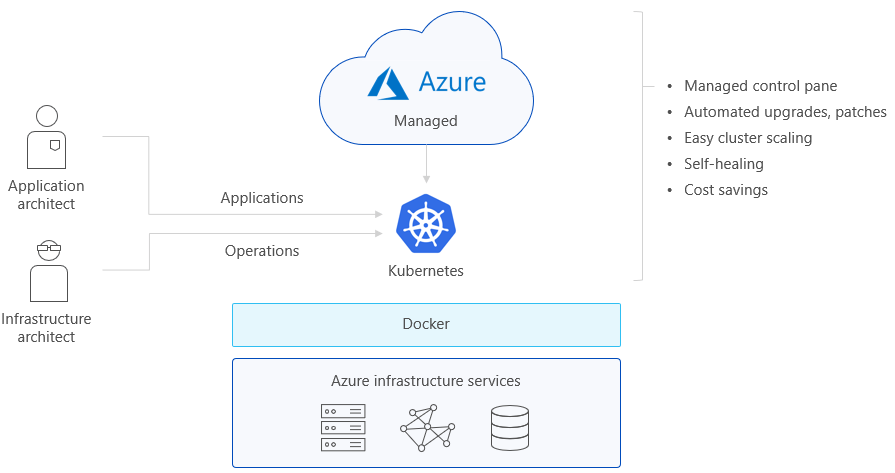
A Fully Managed Kubernetes Cluster
Azure Kubernetes Service (AKS) is a managed Kubernetes service. AKS manages the master node and the users have to manage the Worker nodes. Users can use AKS to deploy, scale, and manage Docker containers and container-based applications across a cluster of container hosts. As a managed Kubernetes service AKS is free – you only pay for the worker nodes within your clusters, not for the masters. You can create an AKS cluster in the Azure portal, with the Azure CLI, or template-driven deployment options such as Resource Manager templates and Terraform.
Know more about Azure Kubernetes Service in detail.
Oracle Kubernetes Engine (OKE)
Oracle Cloud Infrastructure Container Engine is a container orchestration platforms. It is a fully managed, scalable, and highly available service that we can use to deploy our containerized applications to the cloud. Container Engine for Kubernetes uses Kubernetes – the open-source system for automating deployment, scaling, and management of containerized applications across clusters of hosts.
Know more about Oracle Kubernetes Engine (OKE).
Amazon Elastic Kubernetes Service (Amazon EKS)
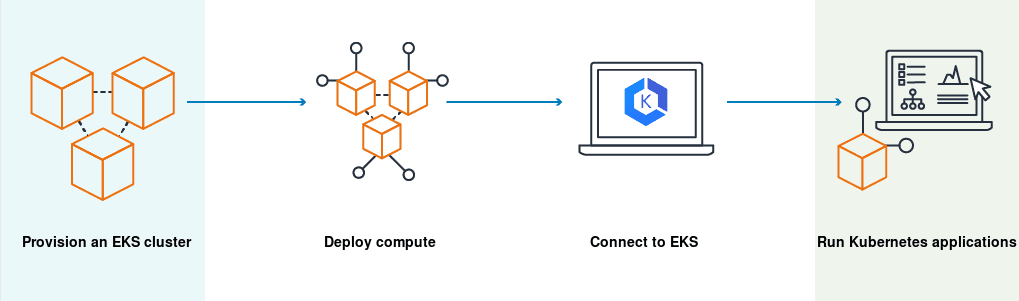
Amazon EKS offers Kubernetes as a service that makes it easy to run Kubernetes on AWS. By using Amazon EKS, users don’t have to maintain a Kubernetes control plan on their own. It helps in automating the deployment, scaling, and maintaining the containerized application. EKS works with almost all of the operating systems. And through EKS, organizations can even run Kubernetes without installing in their local system and can operate a Kubernetes control plane or worker nodes easily and effectively. We can also say that EKS is a managed containers-as-a-service (CaaS) which drastically simplifies Kubernetes deployment on AWS.
Know more about Amazon Kubernetes Service in detail.
Google Cloud Kubernetes Engine
The Google Kubernetes Engine (GKE) is also a container orchestration platform provided by Google. The Google Kubernetes Engine (GKE) is a fully managed Kubernetes service for deploying, managing and scaling containerized applications on Google Cloud. The GKE environment consists of multiple machines (specifically, Compute Engine instances) grouped together to form a cluster.
Check out different ways to set up and run Kubernetes.
Frequently Asked Questions
What is container orchestration?
Container orchestration refers to the automated process of deploying, scaling, and managing containerized applications. It ensures that containers are running as expected and manages tasks such as scheduling containers across a cluster of machines.
Why is container orchestration important?
Container orchestration simplifies the management of complex, multi-container applications by handling load balancing, service discovery, scaling, and failure recovery. This automation is essential for maintaining a reliable and scalable application infrastructure.
What are some popular container orchestration tools?
Popular container orchestration tools include Kubernetes, which is an open-source platform for automating container deployment, scaling, and operations. Docker Swarm is Docker’s native clustering and orchestration tool. Apache Mesos is a distributed systems kernel that can manage containers using Marathon or other schedulers. Amazon ECS (Elastic Container Service) and Amazon EKS (Elastic Kubernetes Service) are managed services provided by AWS.
How does Kubernetes differ from Docker Swarm?
Kubernetes and Docker Swarm differ in complexity and feature set. Kubernetes is known for its robust feature set and is widely used in production environments, offering advanced scheduling, scaling, and self-healing capabilities. Docker Swarm, on the other hand, is simpler to set up and manage, making it more suitable for smaller deployments and users already familiar with Docker.
What is the role of a container registry in container management?
A container registry serves as a repository for storing and managing container images. It allows users to store, version, and retrieve container images. Examples include Docker Hub, Google Container Registry (GCR), and Amazon Elastic Container Registry (ECR).
Related Post/References
- Docker vs Virtual Machine | Physical vs Virtual Servers
- Docker Architecture | Docker Engine Components | Container Lifecycle
- Docker Images: A Complete Guide for Beginners
- Kubernetes vs Docker – Understand the Difference
- Certified Kubernetes Administrator (CKA) Certification Exam: Everything You Must Know
- Certified Kubernetes Administrator (CKA) Certification: Hands-On Lab Exercise
- View the Official Documentation of Kubernetes, Docker Swarm, Apache Mesos.
Join FREE Masterclass on Kubernetes
Discover the power of Kubernetes, Docker, and DevOps – join our free masterclass. Unlock the secrets of Kubernetes, Docker, and DevOps in our exclusive, no-cost masterclass. Take the first step towards building highly sought-after skills and securing lucrative job opportunities. Click on the image below to register for our FREE masterclass now!


![Microsoft Agentic AI Business Solutions Architect [AB-100] | K21 Academy](https://test.k21academy.com/wp-content/uploads/2025/11/Microsoft-Agentic-AI-Business-Solutions-Architect-AB-100-Exam-Overview1.png)