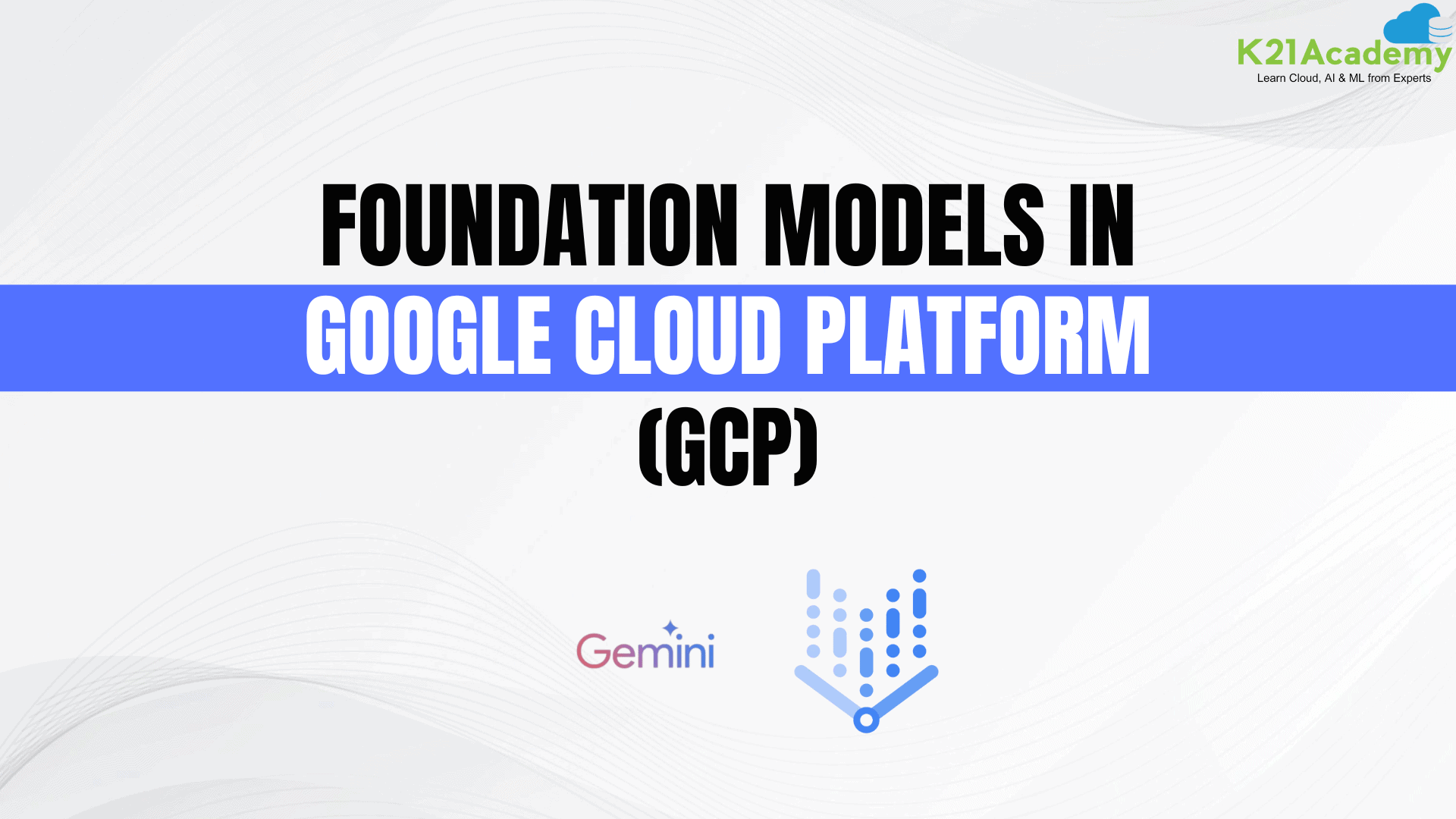




In recent years, artificial intelligence (AI) has advanced significantly, with foundation models playing a pivotal role. These models, characterized by their ability to handle vast datasets and perform a wide range of tasks, are revolutionizing AI development. Google Cloud, through its Vertex AI platform, offers a comprehensive suite of foundation models that developers and businesses can leverage to build powerful AI-driven applications.
In this blog we will discuss about:
- What Are Foundation Models?
- Types of Foundation Models on Google Cloud
- Key Foundation Models on Google Cloud
- Features of Foundation Models on Vertex AI
- Benefits of Using Foundation Models on Google Cloud
- Real-World Use Cases
- Getting Started with Foundation Models on Google Cloud
- Conclusion
- FAQs
What Are Foundation Models?
Foundation models are large-scale machine learning models that have been pre-trained on massive datasets. These models can be fine-tuned for specific tasks, such as natural language processing (NLP), image generation, and code completion. What makes them unique is their versatility and scalability across multiple domains.
On Google Cloud, these models are accessible through Vertex AI’s Model Garden. This environment allows users to discover, deploy, and customize foundation models, reducing the time and effort required to create AI solutions.
Types of Foundation Models on Google Cloud
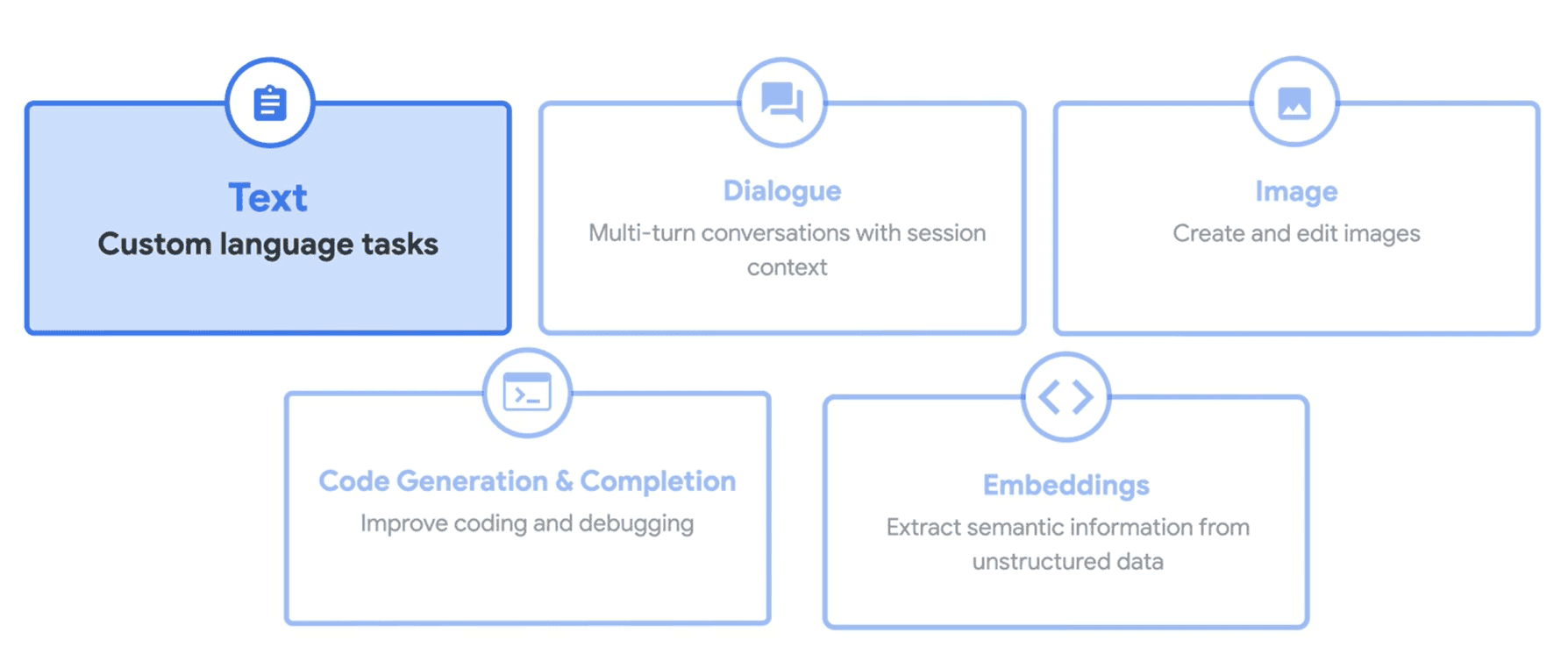
- Text Models: These are pre-trained models that can generate human-like text, perform translations, and assist in content creation. Google’s PaLM model is an example of a powerful text-based foundation model available in Vertex AI.
- Image Models: These models are used for tasks like image classification, object detection, and image generation. For instance, Google’s Imagen model can generate images from text prompts, opening new possibilities for creative and design-related applications.
- Code Models: These models assist in code generation, completion, and debugging, making software development more efficient. Google Cloud offers models that streamline coding tasks and improve developer productivity.
- Multimodal Models: Google’s Gemini models are an example of multimodal models that can understand and generate responses across text, images, video, and audio inputs. This enables more interactive and integrated AI applications across diverse mediums.
Key Foundation Models on Google Cloud
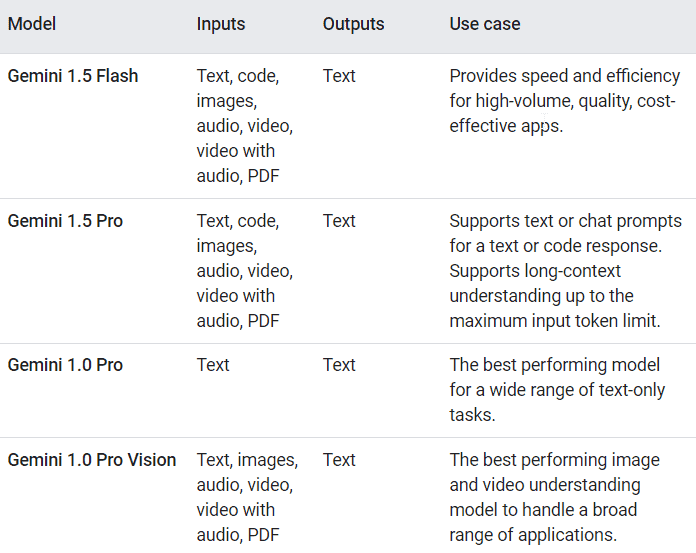
1. Gemini Models:
- Gemini 1.5 Flash: Multimodal model supporting text, code, images, and more, delivering speed and cost-efficiency for large-scale applications.
- Gemini 1.5 Pro: Ideal for long-context tasks in text and code with enhanced understanding across 102 languages.
- Gemini 1.0 Pro: Best for high-performance text tasks.
- Gemini 1.0 Pro Vision: Excels in image and video understanding for various applications.
2. Imagen Models:
Imagen models generate images based on text inputs. For example, you can type “a cat playing a piano,” and the model will create an image of that scene. It can also edit images, like removing or adding objects. It supports tasks like outpainting (expanding images beyond their original borders) and is useful for creative tasks such as product design or marketing visuals.
3. Codey Models:
These models help developers by completing or generating code. For example, when you’re writing a program, Codey can suggest the next line of code or help debug and optimize it. This speeds up software development and ensures fewer errors.
4. MedLM Models:
MedLM models are designed specifically for the medical field. They help with tasks like answering medical questions or summarizing long healthcare documents. This is particularly useful for doctors or healthcare professionals who need to process large amounts of medical information quickly. Plus, they follow strict privacy standards like HIPAA (a healthcare data privacy law in the U.S.).
Model Garden on Google Cloud:
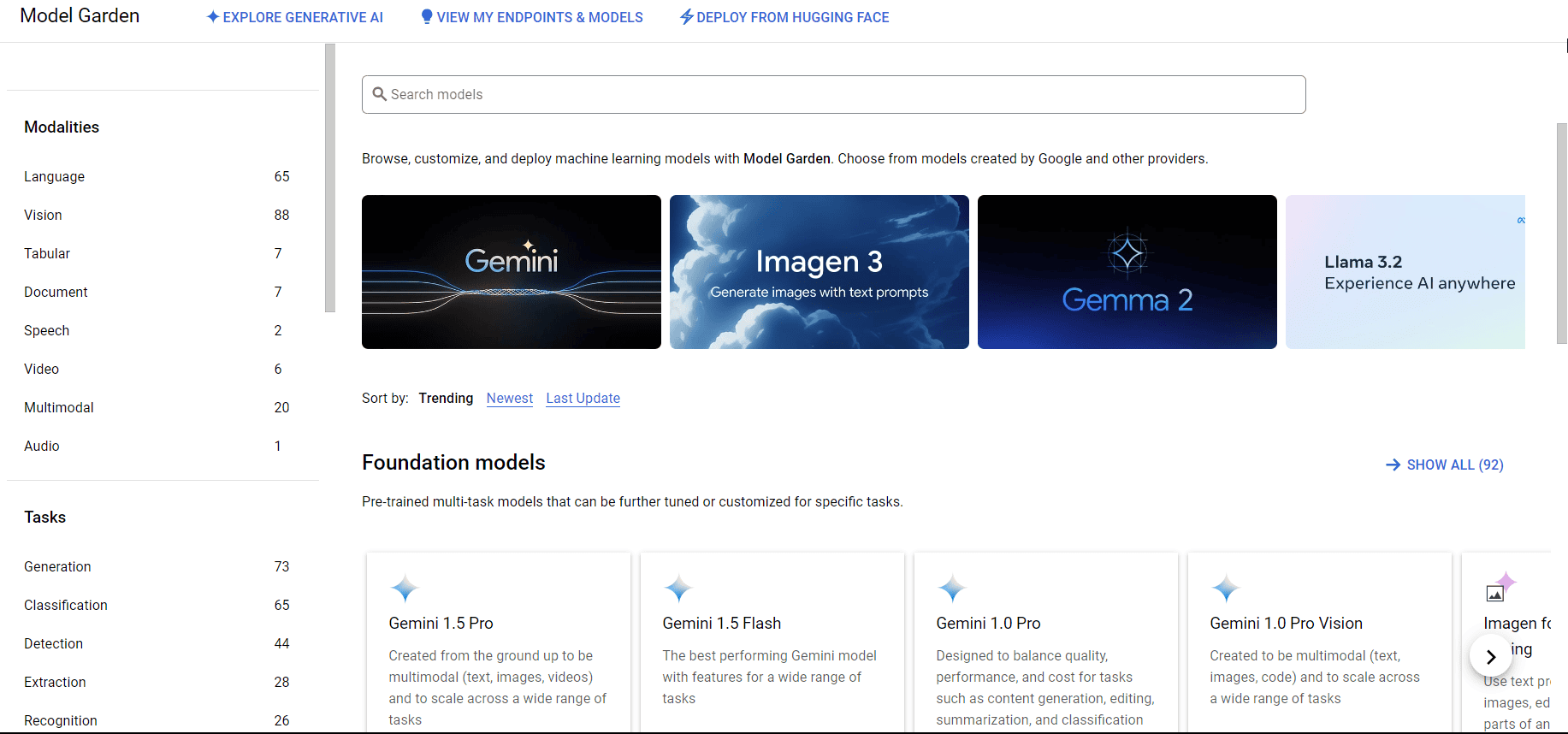
The Model Garden on Google Cloud is like an AI app store. It provides pre-built models that you can use in your applications without building them from scratch. Whether you’re working on text, images, code, or medical data, you can find models that suit your needs. You can also fine-tune and customize these models for your specific use case, saving time and resources while improving efficiency.
Features of Foundation Models on Vertex AI
1. Model Garden:
Vertex AI’s Model Garden acts as a centralized hub for discovering various foundation models, both from Google and third-party providers. Users can test these models in a sandbox environment, customize them for specific use cases, and deploy them seamlessly in their applications.
2. Customization:
While foundation models are pre-trained on generic datasets, they can be fine-tuned using your own data. Vertex AI makes it easy to perform this customization through APIs or the Vertex AI Studio, offering tailored solutions for business needs.
3. Scalability and Performance:
Google Cloud ensures that these models are optimized for performance, offering scalable solutions that can handle enterprise-level workloads. This allows businesses to integrate AI without worrying about infrastructure limitations.
Benefits of Using Foundation Models on Google Cloud
- Speed to Market: By utilizing pre-built models, businesses can reduce the time required to develop AI solutions, allowing for faster innovation and deployment.
- Cost-Effective: Foundation models can significantly reduce the cost of building AI applications, as much of the foundational work has already been done by Google. Fine-tuning these models requires less data and computational power compared to building models from scratch.
- Enterprise-Grade Security: Google Cloud provides enterprise-grade security for its AI services, ensuring that data privacy and compliance requirements are met.
- Seamless Integration: Foundation models on Google Cloud are easily integrated into existing workflows and applications, thanks to managed APIs and endpoints.
Real-World Use Cases
- Content Creation: Businesses can use text models like PaLM to generate blog posts, product descriptions, or marketing copy.
- Customer Support: With natural language models, companies can create intelligent chatbots that understand customer queries and provide accurate responses.
- Creative Design: Imagen can be used to generate marketing visuals, product designs, or other creative assets from text prompts.
- Software Development: Code generation models assist developers in writing, completing, and debugging code, improving overall development cycles.
Getting Started with Foundation Models on Google Cloud
To start using foundation models, users can explore the Model Garden within the Vertex AI platform. Google provides comprehensive documentation, tutorials, and SDKs that make it easy to integrate these models into applications. Whether you’re building a conversational AI application, generating images, or creating content, Google Cloud’s foundation models provide the tools and flexibility needed to achieve your goals.
Conclusion
Google Cloud’s Vertex AI platform is at the forefront of AI innovation, offering a range of foundation models that cater to various industries and use cases. These models help businesses accelerate AI adoption, reduce costs, and improve the accuracy and performance of their applications. With the ability to fine-tune and deploy models at scale, Google Cloud is empowering developers and enterprises to unlock the full potential of AI.
FAQs
What are foundation models?
Foundation models are large pre-trained AI models that can handle tasks like text generation, image creation, and code completion. They are trained on massive datasets and can be fine-tuned for specific business applications.
How do I use foundation models on Google Cloud?
You can access these models through Vertex AI’s Model Garden. This platform allows you to test, deploy, and customize models without starting from scratch.
What are Gemini models used for?
Gemini models are multimodal, meaning they work with multiple data types (like text, images, and audio). They are useful for creating chatbots, automating content creation, and processing multimedia data efficiently.
What are Codey models, and how can they help developers?
Codey models specialize in helping developers write code more efficiently. They can suggest code completions, debug, and generate entire code blocks, reducing development time.
Related References
- Join Our Generative AI Whatsapp Community
- Google Cloud Professional Machine Learning Engineer Certification: Everything You Need to Know
- Google AI/ML: Step-by-Step Activity Guide (Hands-on Lab) & Project Work for getting a higher paying Job & Certifications
- Simplifying Machine Learning with Google Cloud Vertex AI: Key Tools & Real-World Applications
- Introduction to AI/ML Services in Google Cloud Platform (GCP)
- Introduction to Generative AI and Its Mechanisms
- Mastering Generative Adversarial Networks (GANs)
- Generative AI (GenAI) vs Traditional AI vs Machine Learning (ML) vs Deep Learning (DL)
Next Task For You
Don’t miss our Exclusive Free Training on Mastering Google AI/ML and Generative AI. Gain expertise in advanced AI and Machine Learning technologies using Google’s powerful tools. Join a thriving community of learners and take the next step in advancing your career. Click the image below to reserve your spot!


![Microsoft Agentic AI Business Solutions Architect [AB-100] | K21 Academy](https://test.k21academy.com/wp-content/uploads/2025/11/Microsoft-Agentic-AI-Business-Solutions-Architect-AB-100-Exam-Overview1.png)