



Becoming a DevOps Engineer, the first thing that comes to mind is what my roles will be, and what will be my responsibilities after completing the DevOps certification.
In this blog, we are going to cover who a DevOps Engineer is and what are a DevOps Engineer Roles and Responsibilities.
If you want to know more about DevOps certification please go through our previous blog on [DOFD] DevOps Foundation Certification Exam and everything you need to know about it.
Who Is A DevOps Engineer?
DevOps Engineers are highly scoped across the industry. DevOps Engineers are IT professionals who collaborate with software developers, system operators, and other IT staff members to manage code releases.
They cross and merge the barriers that exist between software development, testing, and operations teams.
Skills of a DevOps Professional are:
- Business knowledge: DevOps Engineers should have business knowledge as he/she is going to address the gap between business, development, testing, and operations teams.
- Technical knowledge: Profound knowledge of various scripting languages and the latest technologies available in the market.
- Soft skills: DevOps engineers should be an effective communicator as they will have to communicate and collaborate with multiple teams.
- Self-management skills: A DevOps Engineer should be able to control stress, self-motivation, and manage time.
DevOps Engineer Roles And Responsibilities
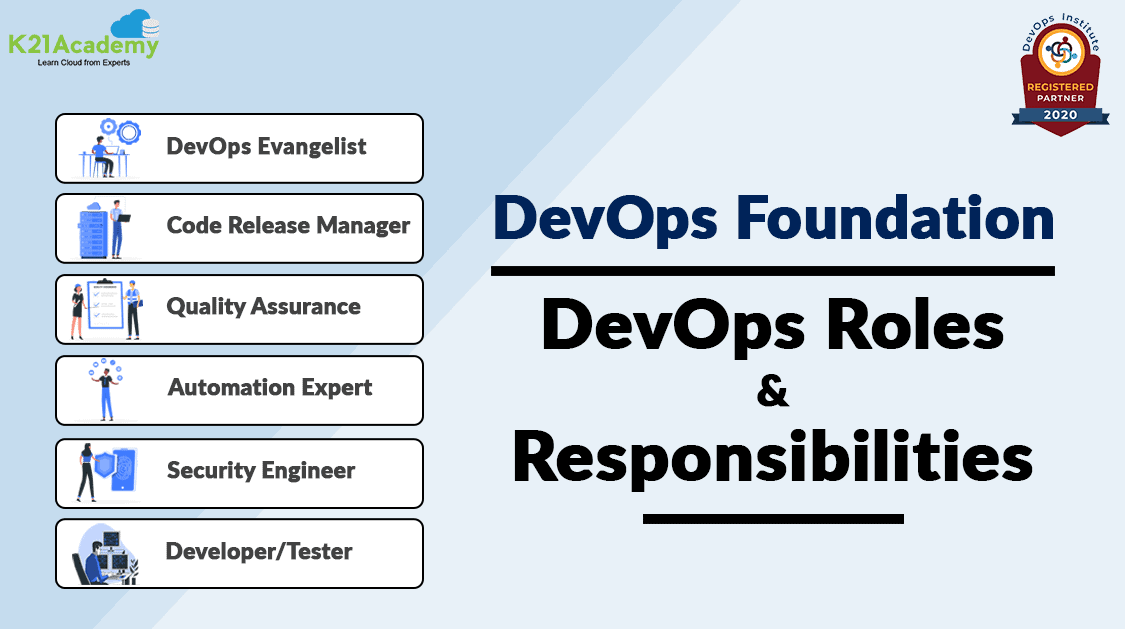
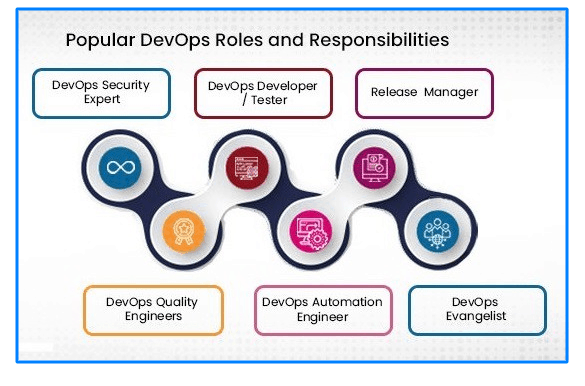 In a successful DevOps industry, the following are the roles available in the market along with their responsibilities:
- DevOps Evangelist or leader: A leader or person responsible for implementing DevOps. This is the key role in DevOps.
- Software Engineers, Developers, and Testers: The one who develops the code and test it. The traditional coders and programmers fall under this role.
- Build and Release Engineer: The one releasing new features & ensuring post-release product stability, i.e. integrating the new/ updated features while maintaining the existing framework.
- Automation or Continuous Delivery Architect: The one responsible for achieving automation & orchestration of various automation tools.
- Security Engineer: The one always monitoring the product’s security & health
- Quality Assurance(QA)/Experience assurance(XA): The one who ensures the quality of the product conforms to its requirements.
- DevOps Operations Engineer: The one responsible for maintaining the environment and systems engineering.
- IT Support: The one who monitors and maintains the company computer systems, installs and configures hardware and software, and solves technical problems.
- Agile Service Manager: The one responsible for the application and integration of agile thinking into IT service management.
- Agile Process Owner: The one accountable for the performance of a process and for ensuring that the process delivers value to its stakeholders.
These are the roles that you can apply for once you complete DevOps certification.
Skills Required for a DevOps Engineer
Technical Skills
-
Proficiency in Programming and Scripting Languages (Uses Python, Ruby, Bash, and Go for automation and tool development): DevOps engineers need to be able to write scripts to automate tasks and develop tools to streamline workflows. Common languages used include Python, Ruby, Bash, and Go.
-
Understanding of Various Tools and Technologies (Knowledge of Docker, Kubernetes, Jenkins, Ansible, and cloud platforms): A strong understanding of DevOps tools and technologies is essential. This includes containerization tools like Docker and Kubernetes, CI/CD tools like Jenkins, configuration management tools like Ansible, and cloud platforms like AWS, Azure, and GCP.
Soft Skills
-
Communication Skills (Communicates technical information effectively across teams): DevOps engineers need to be able to communicate complex technical information clearly and concisely to both technical and non-technical audiences.
-
Problem-Solving Abilities (Troubleshoots and resolves issues to maintain software stability): DevOps engineers need to be able to troubleshoot problems quickly and efficiently to keep applications running smoothly.
-
Teamwork and Collaboration (Collaborates effectively with diverse teams for project success): DevOps engineers work as part of a cross-functional team, so collaboration skills are essential. They need to be able to work effectively with developers, operations staff, security professionals, and other stakeholders.
DevOps Tools and Technologies
Popular CI/CD Tools
- Jenkins, Travis CI, CircleCI: These tools automate the build, test, and deployment process, enabling continuous integration and continuous delivery (CI/CD).
Configuration Management Tools
- Ansible, Puppet, Chef: These tools automate the configuration management of servers and infrastructure, ensuring consistency and reducing errors.
Containerization and Orchestration Tools
- Docker, Kubernetes: These tools enable containerization, which packages applications with their dependencies into standardized units for easy deployment and scaling. Kubernetes helps manage containerized applications at scale.
Monitoring and Logging Tools
- Prometheus, Grafana, ELK Stack: These tools provide monitoring and logging capabilities to track application and infrastructure performance and identify potential issues.
The DevOps Lifecycle
The DevOps lifecycle is a continuous process that involves several stages:
-
Planning and Coding: This stage involves defining requirements, designing features, and developing code.
-
Building and Testing: The code is built and tested to ensure it meets quality standards and functions as expected.
-
Release and Deployment: The code is deployed to production environments using automated processes.
-
Operate and Monitor: Applications are monitored for performance and stability, and issues are addressed promptly.
Challenges Faced by DevOps Engineers
Common obstacles in implementing DevOps practices include:
-
Resistance to change: Individuals or teams may be resistant to changing their workflows or adopting new tools.
-
Collaboration issues: Effective collaboration between development, operations, and other teams is crucial for successful DevOps implementation.
-
Complex process automation: Automating complex processes can be challenging and requires careful planning and execution.
Solutions and Best Practices to Overcome Challenges
-
Promote collaboration: Foster a culture of collaboration and openness to new ideas.
-
Provide training: Provide training on DevOps principles, tools, and best practices.
-
Use automation tools effectively: Identify areas where automation can add value and implement tools strategically.
The Future of DevOps
Trends and predictions for the future of DevOps include:
-
AI integration: Artificial intelligence (AI) will be used to automate tasks, predict potential issues, and improve decision-making.
-
Automation advancements: DevOps automation will become more sophisticated, enabling even greater efficiency and agility.
-
DevSecOps adoption trends: DevSecOps, which integrates security into the DevOps lifecycle, will become increasingly important.
The Evolving Role of DevOps Engineers
The role of DevOps engineers is evolving to focus on:
-
Security: DevOps engineers will play a more prominent role in securing applications and infrastructure.
-
Automation: They will continue to automate tasks to improve efficiency and reliability.
-
Cross-functional team collaboration: Collaboration with developers, operations, security, and other teams will be even more critical.
Case Studies of Successful DevOps Implementations
Examples of companies that have successfully implemented DevOps practices:
-
Example 1: Company A reduces deployment time by 50% with DevOps practices. By adopting DevOps principles and tools, Company A was able to significantly reduce the time it takes to deploy new features and updates.
-
Example 2: Company B improves collaboration and release efficiency with CI/CD automation. Company B implemented a CI/CD pipeline that automated the build, test, and deployment process. This led to improved collaboration between development and operations teams and increased release efficiency.
Getting Started as a DevOps Engineer
Educational Background and Certifications
- Consider a background in IT, computer science, or a related field.
- Certifications like the AWS Certified DevOps Engineer Professional validate your skills and knowledge to potential employers.
Building a Portfolio
- Showcase your skills through personal projects or contributions to open-source software.
- Highlight your experience in automation, infrastructure management, and successful DevOps implementations.
DevOps Engineer Career Path
Entry-Level Positions
- Junior DevOps Engineer: Gain foundational knowledge and experience in core DevOps practices.
- DevOps Support Engineer: Provide technical support for DevOps tools and processes.
Mid-Level Roles
- DevOps Engineer: Take on more responsibility for automating workflows, managing infrastructure, and collaborating with teams.
- Site Reliability Engineer (SRE): Focus on ensuring the reliability and scalability of applications and infrastructure.
Senior Positions and Beyond
- Senior DevOps Engineer: Lead DevOps initiatives, mentor junior engineers, and design and implement complex solutions.
- DevOps Architect: Design and architect DevOps tools, processes, and infrastructure for scalability and efficiency.
Salary Expectations for DevOps Engineers
Factors Affecting Salary
- Experience: Salary increases with experience and expertise.
- Location: Cost of living can impact salary ranges.
- Organization size: Larger companies may offer higher salaries.
Average Salary Ranges
- Expect a range of $90,000 to $140,000 annually, depending on experience and responsibilities.
Conclusion
In conclusion, DevOps is a transformative approach that has reshaped how organizations develop and deploy software. The role of a DevOps engineer is crucial in maintaining a balance between development and operations, contributing to faster, more reliable software releases. As technology advances, the importance of DevOps in the IT landscape will only grow.
FAQs
What is the role of automation in DevOps?
Automation in DevOps streamlines repetitive tasks, enhancing efficiency and reducing errors, ultimately accelerating development cycles.
How do DevOps engineers collaborate with different teams?
DevOps engineers foster collaboration by facilitating open communication between development, operations, and other cross-functional teams.
Can you provide examples of popular DevOps tools?
Popular DevOps tools include Jenkins, Docker, Ansible, and Kubernetes, each serving specific functions in the DevOps pipeline.
What challenges do DevOps engineers commonly face?
DevOps engineers often face challenges in balancing speed and quality and overcoming resistance to organizational change.
How can one pursue a career in DevOps?
Pursuing a DevOps career involves acquiring a mix of technical and soft skills, staying updated with industry trends, and gaining hands-on experience with relevant tools and technologies.
Related/References
- What Is DevOps | DevOps Principles | Advantages Of DevOps | Why DevOps?
- Agile Methodology and DevOps | DevOps and Agile Relationship
- [DOFD] DevOps Foundation Certification Exam: Everything You Need To Know
- [AZ-400] Roles and Responsibilities As An Azure DevOps Engineer
- [AZ-400] Microsoft Azure DevOps Certification Exam: Everything You Need To Know
- Certified Kubernetes Administrator (CKA) Certification Exam: Everything You Must Know
Next Task For You
Begin your journey towards becoming a DevOps Expert and earn a lot more by landing a high-paying job.
Join FREE CLASS to learn more about the DevOps Roles and Responsibilities, Job opportunities related to DevOps in the market, and what to study Including Hands-On labs and projects you must perform to get your Dream job.
Click on the below image to Register for Our FREE Class on Mastering DevOps on Cloud: How to Build In-Demand Skills and Land High-Paying Jobs


![Microsoft Agentic AI Business Solutions Architect [AB-100] | K21 Academy](https://test.k21academy.com/wp-content/uploads/2025/11/Microsoft-Agentic-AI-Business-Solutions-Architect-AB-100-Exam-Overview1.png)