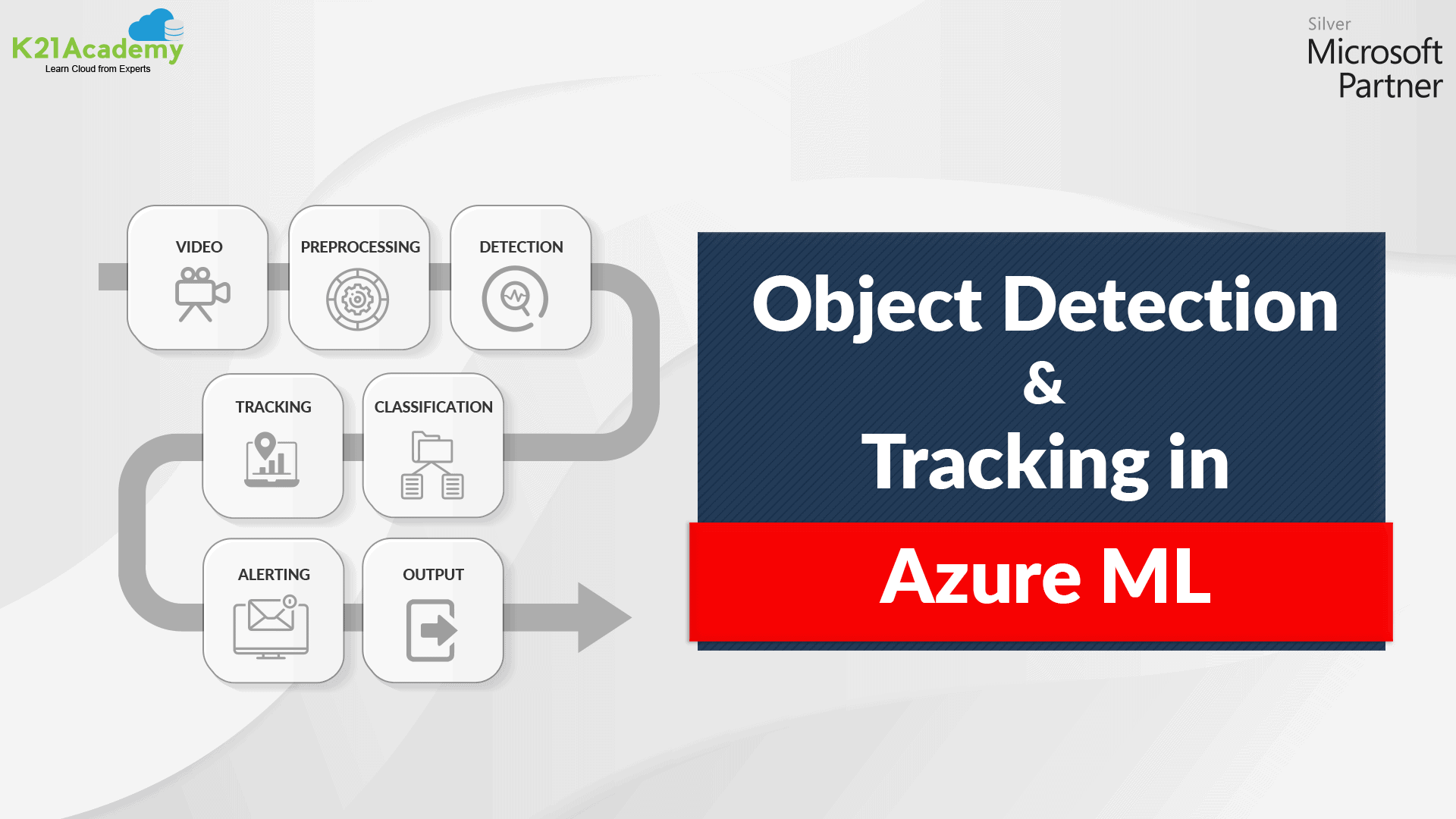





Machine learning is a subset of artificial intelligence where statistical methods are used to help a computer improve at a task with training and experience. Object Detection and Tracking in Machine Learning are widely used in Computer Vision. We can also deploy this Technology on the cloud with the help of various cloud vendors like Microsoft Azure. This topic is covered in [AI-900] Microsoft Certified Azure AI Fundamentals Course.
In this post, we will cover
- Overview of Object Detection and Tracking
- Object Detection on Azure
- Algorithms
- Real-Life Applications
Overview Of Object Detection And Tracking
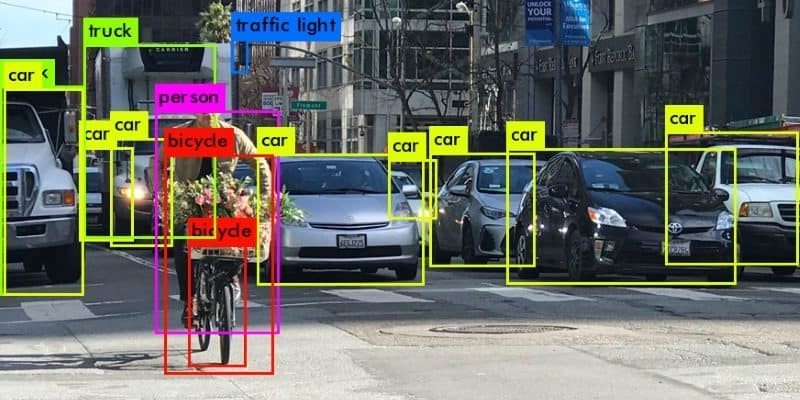
Object Detection and Tracking in Machine Learning are among the widely used technologies in various fields of IT industries. Object identification is a type of AI-based PC vision in which a model is prepared to perceive singular kinds of items in a picture and to distinguish their area in the picture. An item can be a face, a human, a line of individuals, as well as a product on an assembly line.
Also Read: Our Previous Blog on AutoML ( Automated Machine Learning )
Object Detection:
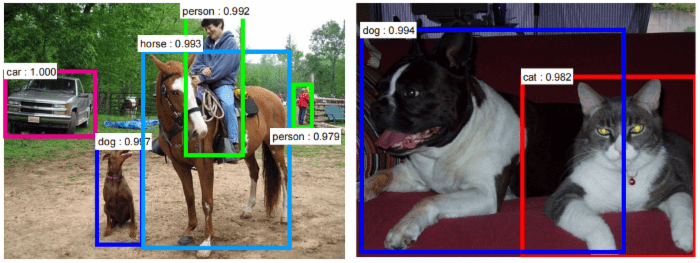
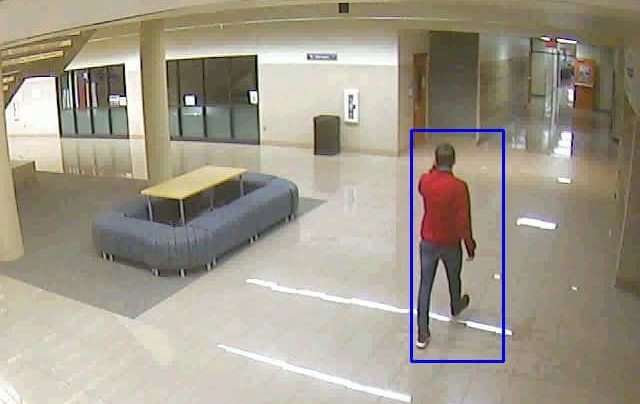
Object detection is a technology related to computer vision and image processing that deals with detecting and locating objects of a certain class (such as humans, buildings, or cars) in digital images and videos.
Check Out: Our Previous Blog On Azure Cognitive Services.
How does machine learning-based object detection work?
Machine learning-based object detection involves identifying and classifying objects within an image or video. It combines computer vision techniques with machine learning models like Convolutional Neural Networks (CNNs) to detect objects. These models use feature extraction to identify patterns such as edges, textures, or colors. Algorithms like YOLO (You Only Look Once) and Faster R-CNN are commonly used to achieve high accuracy in real-time detection. The process involves training on labeled datasets, enabling models to recognize objects and their locations within diverse scenarios.
What are the types of object detection methods?
Object detection methods can be categorized into two main types: two-stage detectors and single-stage detectors. Two-stage detectors, like R-CNN and Faster R-CNN, first generate region proposals and then classify them, offering high accuracy but slower performance. Single-stage detectors, such as YOLO (You Only Look Once) and SSD (Single Shot Detector), perform detection and classification in one step, making them faster but slightly less accurate. These methods are widely used in applications like surveillance, autonomous vehicles, and medical imaging.
Object Tracking:
Object tracking is a field that can help track moving objects when they move across several video frames with the help of machine learning. In Machine-learning accuracy and analysis power of object detection vastly improved. Objects can be people, but may also be animals, vehicles, or other objects of interest such as the ball in a game of soccer.
Also read: Azure Core Identity Services – Azure AD & MFA
What is the difference between object detection and object tracking?
Object detection identifies and localizes objects in a single frame or image, providing their class and bounding box. In contrast, object tracking follows detected objects across multiple frames in a video to maintain their identity and trajectory. Detection is typically the initial step, while tracking focuses on persistence and movement analysis. Together, they enable applications like surveillance, autonomous driving, and motion analysis, where understanding both “what” and “where” an object is over time is crucial for effective real-time decision-making and analytics.
What is Optical Flow, and how is it used in object detection and tracking?
Optical Flow is a computer vision technique used to estimate the motion of objects between consecutive frames in a video. It calculates pixel-level changes, enabling the detection and tracking of moving objects. By analyzing motion patterns, Optical Flow assists in applications like object segmentation, activity recognition, and real-time tracking in surveillance, robotics, and autonomous vehicles. It enhances the accuracy of tracking systems by providing continuous motion estimation, even in complex scenarios with varying object speeds and directions.
What is occlusion in object detection and tracking, and how can it be addressed?
Occlusion in object detection and tracking occurs when objects are partially or fully hidden by other objects, leading to inaccuracies in detection or tracking. It can be addressed by using advanced models like YOLO or DeepSort, which leverage contextual information to identify occluded objects. Techniques such as multi-camera setups, temporal tracking across frames, and incorporating 3D modeling help improve performance under occlusion. Additionally, using robust feature extraction and re-identification algorithms can ensure accurate tracking even when objects reappear after being occluded.
What challenges and difficulties are associated with object detection and tracking?
Object detection and tracking face challenges such as handling occlusions when objects are partially hidden, dealing with varying object sizes, shapes, and orientations, and maintaining accuracy in low-light or cluttered environments. Real-time processing demands high computational power, while tracking objects across frames requires robust algorithms to manage motion blur and rapid object movements. Additionally, scaling models to handle diverse datasets and ensuring reliability across multiple applications further complicates implementation. These challenges necessitate advanced techniques like deep learning and optimization for efficient and accurate object detection and tracking.
Object Detection And Tracking using Deep Learning
Object detection and tracking using deep learning involves identifying objects in images or videos and continuously tracking their movement across frames. Techniques like YOLO (You Only Look Once) and DeepSort leverage convolutional neural networks (CNNs) and deep learning models to achieve real-time detection and accurate tracking. These methods are widely used in applications like autonomous driving, surveillance, and augmented reality. By combining object recognition and trajectory analysis, deep learning provides a robust solution for handling complex, dynamic environments with high precision and speed.
Object Detection On Azure
The Custom Vision cognitive service in Azure is used to create object detection models on the Azure cloud. This meets the needs of many computer vision scenarios and doesn’t require expertise in deep learning and a lot of training images.
We can use the following types of resources to create an Object detection model
- Custom Vision: A dedicated resource for the custom vision service, which can be either a Training or a Prediction resource.
- Cognitive Services: A general cognitive services resource that includes Custom Vision along with many other cognitive services. We can use this type of resource for Training, Prediction, or both.
Also Check: the features of Azure Machine Learning Studio
Creating an Object Detection model using Custom Vision consists of three main tasks.
1) Upload & Tag Images: First, we need to upload some images and tag them with the labels (like a car, bus, human) which we use as training data for model creation
2) Training Model: Train the object detection model with this image data so that the model will learn the pattern in the images to make further inferences.
Note: The efficiency & accuracy of the model created is directly proportional to the training of the model.
3) Publish the Model: Use the trained model on some test data (images) and check the accuracy of the model created.
Check out: Overview of Azure Machine Learning Service
What is YOLO, and how does it contribute to object detection and tracking?
YOLO (You Only Look Once) is a real-time object detection model that processes an image in a single pass through a neural network. It divides the image into a grid, predicting bounding boxes and class probabilities simultaneously. YOLO’s speed and accuracy make it ideal for applications like surveillance, autonomous vehicles, and robotics. Its ability to detect and track multiple objects in real time while maintaining high performance revolutionized object detection, offering a balance between computational efficiency and precision.
Object Detection Azure Custom Vision
Azure Custom Vision simplifies object detection by enabling users to train custom AI models to identify objects in images. It supports tasks like locating multiple objects, detecting specific items, and labeling them with precision. With an intuitive interface, you can upload labeled images, train the model, and deploy it as an API for integration into applications. Azure Custom Vision is ideal for use cases like inventory management, quality control, and surveillance, providing businesses with a flexible, efficient, and scalable solution for image-based object detection.
Algorithms
There are some useful Algorithms like HOG, SORT, GOTURN, and MDNet for Object detection and tracking in machine learning, Nowhere is a HOG algorithm described.
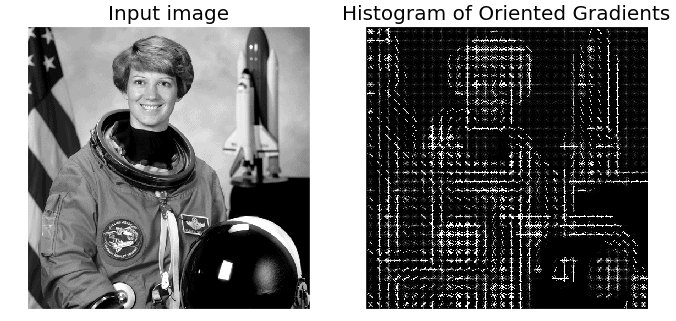
Histogram of oriented gradients (HOG): HOG is a feature descriptor. A feature descriptor is a representation of an image or parts of an image known as patches that extract useful information for the model to interpret, such as information like human or textual data, and ignores the background. The HOG descriptor technique counts occurrences of gradient orientation in localized portions of an image-detection window or region of interest.
Read more: MLOps is based on DevOps principles and practices that increase the efficiency of workflows and improve the quality and consistency of machine learning solutions.
How does DeepSort work for object detection and tracking?
DeepSort is an advanced object tracking algorithm that builds on the Simple Online and Realtime Tracking (SORT) method. It integrates deep learning-based appearance feature extraction to improve object re-identification across frames. By combining motion and appearance cues, DeepSort assigns unique IDs to detected objects, ensuring robust tracking even during occlusion or rapid movement. It uses Kalman filters for motion prediction and the Hungarian algorithm for optimal assignment of detected objects to existing tracks. This makes DeepSort highly effective for applications requiring precise object detection and long-term tracking.
What are the core components of an object detection and tracking tech stack?
An object detection and tracking tech stack includes core components such as a pre-trained model (e.g., YOLO, Faster R-CNN), a robust deep learning framework (e.g., TensorFlow or PyTorch), and a dataset for training or fine-tuning. Additional components include a video processing library (e.g., OpenCV) for frame handling, object tracking algorithms like DeepSORT for motion tracking, and hardware accelerators (e.g., GPUs or TPUs) for real-time performance. Visualization tools and APIs for deployment also enhance the usability and scalability of the solution.
How does deep learning improve object detection accuracy?
Deep learning enhances object detection accuracy by leveraging advanced architectures like Convolutional Neural Networks (CNNs) and transformers. These models extract rich, hierarchical features from images, enabling precise localization and classification of objects. Techniques like multi-scale feature learning, anchor boxes, and region proposals further improve detection of objects of varying sizes and orientations. Advanced models such as YOLO (You Only Look Once) and Faster R-CNN achieve real-time, high-accuracy results by optimizing both speed and precision. Continuous advancements in deep learning make object detection more robust and reliable for diverse applications.
Real-Life Application
- People Counting: Object detection can be utilized for People counting. It is utilized for group measurements during festivals or in the Mall as well.
- Automated CCTV surveillance: Using this technology CCTV cameras can be upgraded and it can automatically detect objects and send useful information to the admin.
- Self-Driving Cars: Using Object Detection Technology, No need to drive a car it can be run automatically.
- Face detection and Face recognition: Is widely used in security and on various social media platforms (like face unlock systems, Facebook)
- Identity verification through IRIS code: Iris recognition is one of the most accurate identity verification systems which uses an Object Detection & Tracking algorithm.
- Ball tracking in Sports: Record the video frame according to the movement of the ball automatically
Also, Read Our Blog Post On DP 100 Exam.
Related/References:
- Join Our Generative AI Whatsapp Community
- Azure AI/ML Certifications: Everything You Need to Know
- Azure GenAI/ML : Step-by-Step Activity Guide (Hands-on Lab) & Project Work
- [DP-100] Microsoft Certified Azure Data Scientist Associate: Everything You Must Know
- [AI-900] Microsoft Certified Azure AI Fundamentals Course: Everything You Must Know
- Microsoft Certified Azure Data Scientist Associate | DP 100 | Step By Step Activity Guides (Hands-On Labs)
- Certified Kubernetes Administrator (CKA) Certification Exam: Everything You Must Know
- For Exam DP-100: Designing and Implementing a Data Science Solution on Azure
- [DP-100] Designing and Implementing a Data Science Solution on Azure
- Microsoft Azure Data Scientist DP-100 FAQ
- Overview of Hyperparameter Tuning In Azure
Next Task: Enhance Your Azure AI/ML Skills


![Microsoft Agentic AI Business Solutions Architect [AB-100] | K21 Academy](https://test.k21academy.com/wp-content/uploads/2025/11/Microsoft-Agentic-AI-Business-Solutions-Architect-AB-100-Exam-Overview1.png)