


Amazon Web Services created the fully managed GraphQL API layer known as AWS AppSync. By handling request parsing and resolution, connecting to other AWS services like AWS Lambda, NoSQL and SQL data stores, and HTTP APIs, and gathering backend data for the API, AppSync makes it easier for developers to create GraphQL APIs.
In this blog, we are going to take a look at the followings:
- Introduction to AWS AppSync
- System Overview and Architecture
- How does it Work?
- Developer tool & Libraies
- Security in AWS AppSync
- Data protection in AWS AppSync
- Feature of AWS AppSync
- Use Case
- Pricing
- Frequently Asked Questions
Introduction to AWS AppSync
With a single network request, you can access data from one or more sources or microservices. By publishing data from any event source to subscribed clients via serverless WebSockets, you can create engaging real-time experiences.
Offline data synchronization, versioning, and conflict resolution allow you to interact with and update data even when you’re not connected to the internet. It Pays only for API requests and real-time messages delivered to connected clients.

System Overview and Architecture
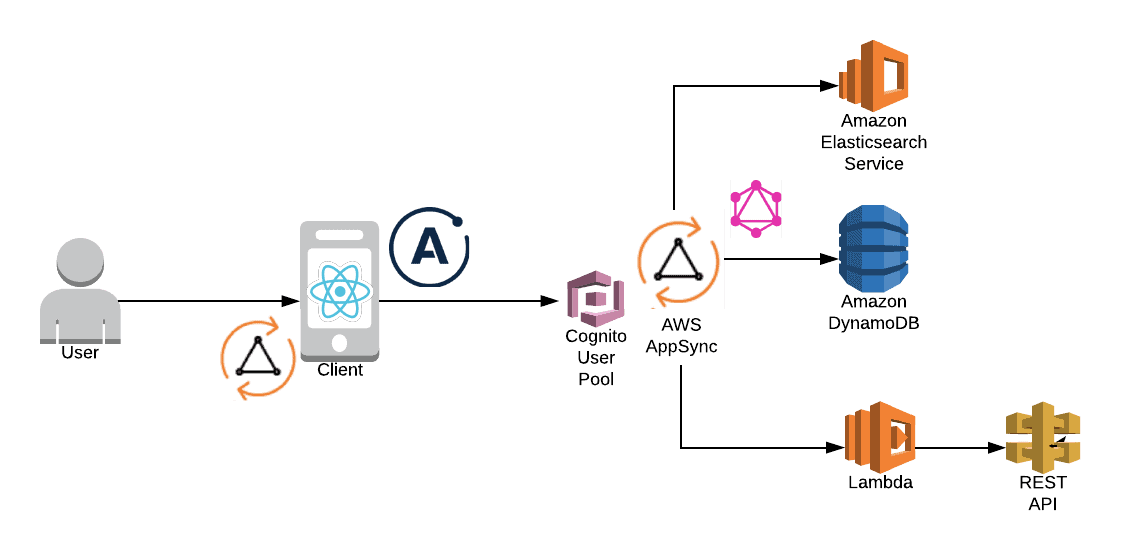
AWS AppSync gives developers access to their data through a managed GraphQL service. GraphQL has many advantages over traditional gateways, promotes declarative coding, and integrates seamlessly with modern tools and frameworks such as React, React Native, iOS, and Android. It lets you use subscriptions to implement live application updates, push notifications, and other features.
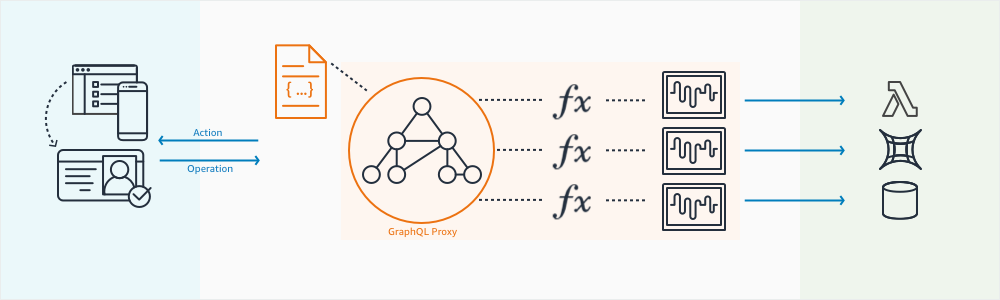
AWS AppSync automatically establishes and maintains a secure WebSocket connection when clients invoke the GraphQL subscription operations. Applications can then distribute data in real-time to subscribers from a data source, while It manages the application’s connection and scaling requirements.
How does it work?
Your applications may access only the data they need with the help of AWS AppSync. Make a flexible API that enables you to safely access, modify, and assemble data from various sources. Pay only for real-time messages sent to connected clients and API requests.
Users can securely query, change, or publish data using a single endpoint with the help of serverless GraphQL and Pub/Sub APIs developed by AWS AppSync.
- GraphQL APIs
AWS AppSync-built GraphQL APIs enable frontend developers to query multiple databases, microservices, and APIs from a single GraphQL endpoint.

- Pub/Sub APIs
AWS AppSync Pub/Sub APIs enable frontend developers to publish real-time data updates to subscribed API clients via serverless WebSocket connections.

Developer tools & libraries
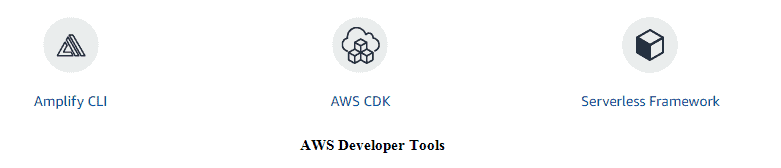
Choose from a number of AWS, open source, and third-party frameworks to help you develop and deploy AWS AppSync applications. These well-known frameworks/Developer tools are available in a variety of languages.
- Amplify CLI: The GraphQL Transform is a simple abstraction that allows you to quickly create backends for your AWS web and mobile applications. The GraphQL Transform uses the GraphQL Schema Definition Language (SDL) to define your application’s data model. AWS CloudFormation templates that implement your data model are created from your SDL definition using the library, which also handles translating it into these templates.
- AWS CDK: The AWS CDK enables you to create dependable, scalable, and cost-effective cloud applications with the expressive power of a programming language. This method has numerous advantages.
- Serverless framework: The Serverless Framework deploys your code to a cloud provider such as Amazon Web Services, Microsoft Azure, Google Cloud Platform, Apache OpenWhisk, Cloudflare Workers, or a Kubernetes-based solution such as Kubeless. For detailed Serverless Framework CLI user guides and references, select your provider.
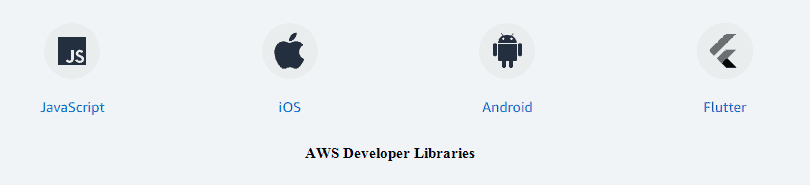
 Connect your Web, iOS, Android, React Native, and Flutter applications to AWS AppSync GraphQL APIs using adaptable libraries.
- JavaScript
- iOS
- Android
- Flutter
Security in AWS AppSync
AWS prioritizes cloud security above all else. As an AWS customer, you have access to data centers and network architectures designed to meet the needs of the most security-conscious organizations.
AWS and you are both responsible for security. This is defined by the shared responsibility model as cloud security and cloud security:
- Security of the cloud – AWS is in charge of safeguarding the infrastructure that runs AWS services in the Cloud. AWS also provides services that are safe to use. Third-party auditors test and verify the effectiveness of our security on a regular basis as part of the AWS Compliance Programs. To learn more about the compliance programs that apply to AWS AppSync, visit AWS Services in Scope by Compliance Program.
- Security in the cloud- The AWS service you use determines your responsibility for cloud security. Other factors to consider include the sensitivity of your data, the needs of your company, and any applicable laws and regulations.
Data protection in AWS AppSync
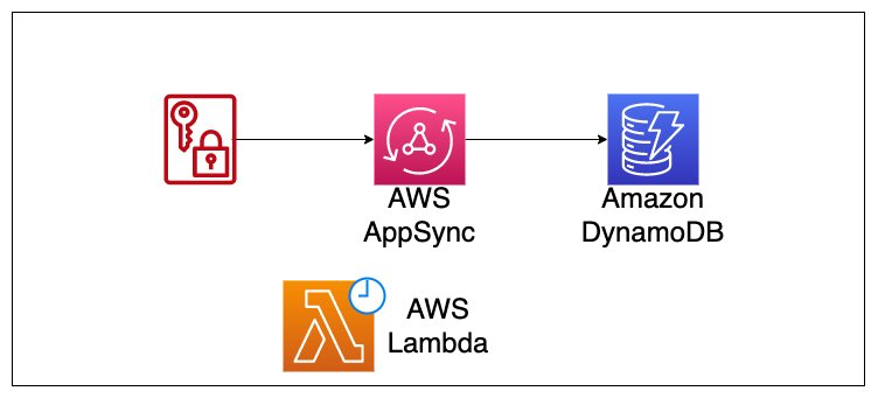
Data protection in AWS AppSync is governed by the AWS shared responsibility model. AWS is in charge of safeguarding the global infrastructure that underpins the AWS Cloud. You are responsible for keeping control of your content hosted on this infrastructure.
- With each account, use multi-factor authentication (MFA).
- To communicate with AWS resources, use SSL/TLS. TLS 1.2 or later is recommended.
- Configure AWS CloudTrail to log API and user activity.
- Use all of the default security settings for AWS services in conjunction with AWS encryption solutions.
- It uses advanced managed security services, such as Amazon Macie, to help discover and secure personal data stored in Amazon S3.
- It uses a FIPS endpoint if you need FIPS 140-2 validated cryptographic modules when accessing AWS via a command line interface or an API.
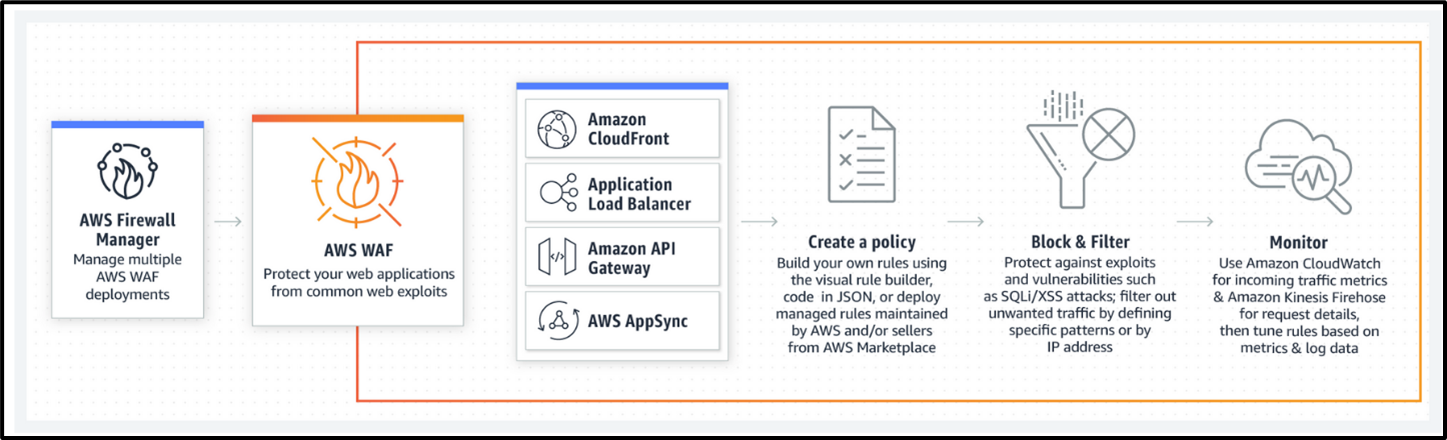
Note: AWS strongly advises against entering confidential or sensitive information, such as email addresses, into tags or free-form fields like the Name field. This includes using the console, API, AWS CLI, or AWS SDKs to interact with AppSync or other AWS services. If you provide a URL to an external server, it is strongly advised against including credentials in the URL to validate your request to that server.
AWS AppSync Features
It includes a number of features that make developing GraphQL easier:
- Powerful GraphQL schema editing via the AWS AppSync console, including DynamoDB-automated GraphQL schema generation
- JavaScript and TypeScript are supported for writing business logic that connects to your data sources.
- Data caching that is effective
- Integration with Amazon Cognito user pools for per-field fine-grained access control.
Use cases
- Retrieve or modify data from multiple data sources: With a single network call, you can interact with multiple data sources (SQL, NoSQL, search data, REST endpoints, and microservices).
- In case of client disruption, synchronize data: Using AWS AppSync and AWS Amplify DataStore, you can automatically sync data between mobile and web applications and the cloud.
- Create real-time collaboration and chat applications: Send data from the backend to and between connected clients, and create conversational mobile or web apps.
- IoT data management: Use device data sent to AWS IoT services to create real-time dashboards in a mobile or web application.
Pricing
You only pay for what you use with AWS AppSync, with no minimum fees or required service usage. You are charged separately for query and data modification operations, as well as real-time data updates. Because you only pay for the AWS AppSync features you use, you get transparency and a low price regardless of your workload type.
- Query and Data Modification Operations: Query Operations allow your app to retrieve and cache data locally. Your app can use Data Modification Operations to create, update, and delete data.
$4.00 per million Query and Data Modification Operations* - Real-time Updates: AWS AppSync allows your app to receive real-time updates to the data that you want to keep up to date. To receive Real-time Updates, your app must remain connected to the AWS AppSync service.
$2.00 per million Real-time Updates**
For every million minutes of connection to the AWS AppSync service, $0.08 is charged. - Free Tier: After signing up for an AWS account, the Free Tier provides the following monthly usage levels for free for 12 months.
250,000 queries or data modifications
250,000 updates in real-time
600,000 minutes of connection
Above all those limits are charged at the published rates. The AWS AppSync Free Tier automatically expires after 12 months.
Frequently Asked Questions
Is AppSync creating a database for me?
Customers can develop GraphQL schemas manually or through the console, and AWS AppSync will automatically create the necessary indexes and tables in Amazon DynamoDB. It will also link the data sources to GraphQL resolvers, freeing you to concentrate just on the application code and data structures.
Is AppSync used with existing AWS resources?
Yes. You can leverage pre-existing domains, tables, and functions from Amazon DynamoDB, AWS Lambda, and Amazon OpenSearch Service with AWS AppSync using a GraphQL schema. You can construct data sources with AWS AppSync by using pre-existing AWS resources and setting up the interfaces with Mapping Templates.
What type of data sources can be used with AppSync?
With Amazon DynamoDB, AWS Lambda, and Amazon OpenSearch Service with a GraphQL schema and tables, functions, and domains from those services, you can use AWS AppSync with either new or current AWS resources. Any data sources and services with an HTTP API are also accessible. You can customize how your JavaScript resolvers interact with each other using AWS AppSync.
What is AWS Amplify in AppSync?
To build, incorporate, and administer the AWS cloud services for your app, use the AWS Amplify CLI. Thanks to Amazon API Gateway, a fully managed service, it is simple for developers to establish, publish, maintain, monitor, and protect REST APIs at any scale
Is AppSync an API gateway?
A serverless GraphQL service is AppSync. Simply said, it's a GraphQL-based API gateway you can use and pay for as needed. By providing a user-friendly query language on top of HTTP, GraphQL reduces network latency by enabling the retrieval of numerous diverse resources in a single request
Related Links/References
- AWS Free Tier Account Details
- AWS Certified Solutions Architect Associate SAA-C03 Exam details
- AWS Outposts: Overview, Working, Features & Use Cases
- AWS Virtual Private Network (AWS VPN): Everything You need to Know
- Amazon Forecast: Overview, Workflow, Benefits & Use Cases
Next Task For You
Begin your journey towards an AWS Cloud by joining our FREE Informative Class on Amazon Cloud Free Class by clicking on the below image.


![Microsoft Agentic AI Business Solutions Architect [AB-100] | K21 Academy](https://test.k21academy.com/wp-content/uploads/2025/11/Microsoft-Agentic-AI-Business-Solutions-Architect-AB-100-Exam-Overview1.png)