

Do you like working with technology and thinking critically?
If so, a career as an AWS Solutions Architect could be a great fit for you. AWS Solutions Architects develop, implement, and maintain scalable and reliable systems leveraging AWS infrastructure. As the dominant cloud computing platform, AWS experts are in high demand.
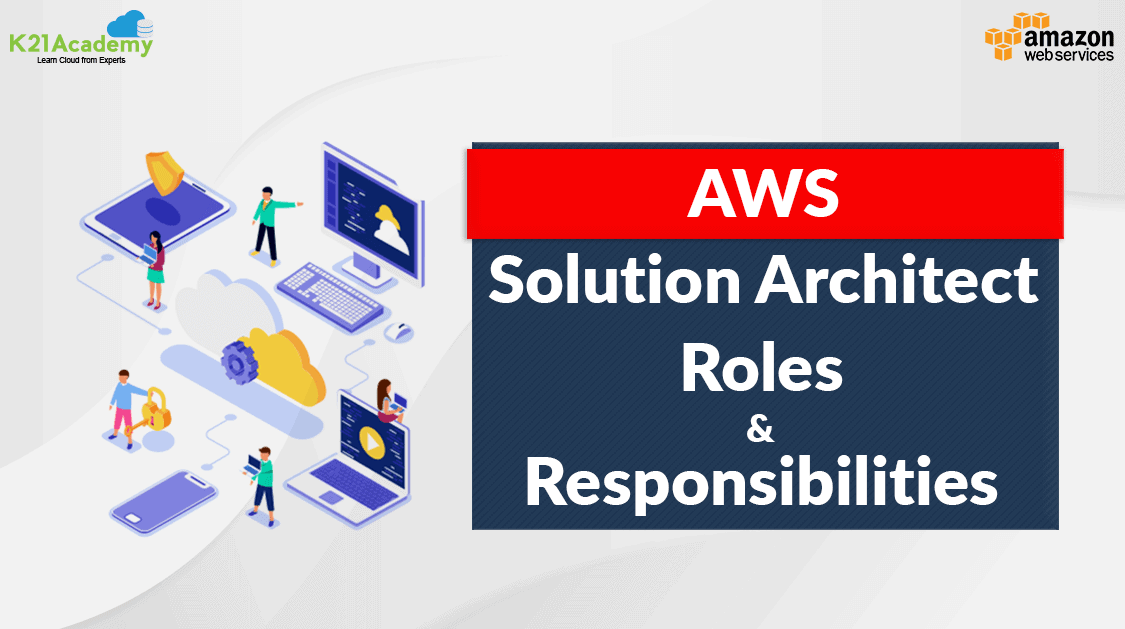
In this blog, we are going to cover, who is a Solutions Architect, and what are its Roles and Responsibilities.
If you want to know more about Solutions Architect certification, you can go through our previous blog on AWS Certified Solutions Architect Associate SAA-C03
- Who is an AWS Solutions Architect?
- What Is AWS Solution Architect Certification?
- Why Is AWS Certification Beneficial?
- What does a Solutions Architect do?
- Skills Required for a Solutions Architect
- Roles and Responsibilities
Who is an AWS Solutions Architect?
Solution Architects are the ones that are responsible for managing an organization’s cloud computing architecture. They have in-depth knowledge of the architectural principles and services used to develop a technical cloud strategy, review workload architectures, assist with cloud migration efforts, and guide how to address high-risk issues.
Working as an AWS Solutions Architect means that you can come up with advanced cloud-based solutions and migrate the existing ones to the cloud. So what are the various tasks carried out by them?
Learn with us: Join our AWS Solution Architect Training and understand AWS basics in an easy way.
What Is AWS Solution Architect Certification?
AWS Certified Solutions Architect – Associate exam certification is intended for individuals who perform a solutions architect role and have one or more years of hands-on experience designing available, cost-efficient, fault-tolerant, and scalable distributed systems on AWS.

This exam is designed to test a candidate’s ability to effectively demonstrate knowledge on:
- How to architect, and deploy secure and robust applications on AWS technologies.
- Define a solution using architectural design principles based on customer requirements.
- Provide implementation guidance based on best practices to an organization throughout the lifecycle of a project.
Why Is AWS Certification Beneficial?
There are some great advantages related to getting AWS certification. If you are considering getting certified, you should know some of the major benefits.
- High demand for AWS experts: Amazon is on top of things of a serious share of the market when it involves cloud computing. Their biggest competitor is Microsoft, yet they need a 3 times higher market share. Not only that, AWS has immense yearly growth, which is an indication that it will continue to dominate the cloud computing market in the future as well.
- The likeliness of upper pay: Undergoing training for AWS certification can help increase the income of average professionals by 25.9%
- Demonstration of commitment: It takes a considerable amount of time, effort as well as commitment for receiving AWS certification. Such commitment to the professional is usually impressive, particularly to the employers. If you are looking for a job or want some change in your career, certifications provide you with a competitive edge over others. It is a well-known fact that employers usually favor candidates who have industry certifications.
- Relatively easier to earn: Regardless of what certification you want, getting certified always takes a lot of hard work. However, AWS certifications aren’t quite as time-consuming and difficult as other similar certifications. You might have tons happening immediately, but it’s definitely worth forming some compromise for AWS certifications.
Check out AWS Elastic Beanstalk, an easy-to-use AWS service for deploying and scaling web applications and services.
What does a Solutions Architect do?
Solution Architects are liable for building and integrating computer systems and knowledge for meeting specific needs. This involves the integration of hardware and software for meeting the customer-defined purpose. Examination of current systems and architecture is additionally one of their responsibilities. They work with technical and business staff for recommending solutions for simpler systems.
- They focus on technology implementation to seek out a simple solution for tough business problems.
- They check on the technology platform, programming language, and operating system that can be used for the creation of a business solution.
- They decide on the design and feel of the software and the way can different modules interact together.
- They decide on system maintenance and future scaling as required.
- They determine the associated risks with software products, frameworks, or third-party platforms.
- They understand the company’s business goals and develop cloud-based solutions for achieving those goals.
- Keeping up to date on cloud computing best practices and improving their company’s or organization’s cloud infrastructure.
Read this blog where we have discussed the 5 Pillars of AWS Well-Architected Framework and their design principles.
Skills Required for a Solutions Architect

Skills of a Solution Architect include:
- Flexibility and eagerness to learn – The Solution Architect must be able to work with different scenarios. They must learn the unique requirements for the project as the projects or the customers will not be the same so they must be continuously learning and willing to experiment.
- Time management – Time management is a strong skill that Cloud professionals must possess. There are many tasks for which they need to plan their day like discussing problems, designing architecture frameworks, working on migrations, etc. So they must prioritize their tasks and complete them on time.
- Decisiveness – The Solutions Architect should have the ability to provide a clear perspective and proper guidance for the cloud problems their clients are facing. They must also reassure that the cloud solutions they’ve recommended are secure, cost-efficient, and resilient.
- Problem-Solving – The client specifications can change during development. So the Solution Architect needs to use their problem-solving skills for the updated specifications and come up with a clear solution for the clients.
- Analytical Assessment – They need to examine the current system of the client involving extreme analysis for the overall scope and the requirements of the project.
- Communication skills – Solution architects must be able to encourage and lead development teams because they are primarily accountable for them throughout the project’s development lifecycle.
- Leading the team – Knowing that the role requires communication with clients, external vendors, and team members, excellent verbal and written communication skills are also necessary.
Read more about AWS Storage and its Overview, Types & Benefits.
Roles and Responsibilities
The major roles and responsibilities of a Solutions Architect are:
- Conducting architectural analysis, and style of enterprise-wide systems.
- Ensuring the delivery of strong system solutions by the appliance architecture team to the architect business
- Developing, enhancing, and maintaining established processes and procedures of service design to assuring appropriate and robust service design
- Work with the enterprise architect to creating sure the architecture and strategic blueprints complied with
- Forming a part of a high-performance solution architecture team that supports the developmental effort of a business-oriented project
- Planning, designing, and executing complex company-level solution configuration
- Preparation and presentation of a test plan, lab reports, technical presentations, and analyst briefings for covering different solution areas
- Collaborating with the IT development team for ensuring suitable translation of architectural solutions into robust and effective implementation.
- Identifying the customer requirements, analyzing the alternatives, and conducting product recommendations related to the platform, software, and network configurations
- Initiate contact with the client to provide a complete team effort
Check out what is AWS DevOps here.
Related/Reference
- AWS Certified Solutions Architect Associate SAA-C03
- AWS Management Console Walkthrough
- Creating AWS Elastic Compute Cloud EC2 Instance
- Overview of Amazon Web Services & Concept
- AWS Certified DevOps Engineer Professional DOP-C02
- AWS DevOps Vs. Azure DevOps
- AWS Free Tier Account Services
Next Task For You
Begin your journey towards an AWS Cloud by joining our FREE Informative Class on Amazon Cloud Free Class by clicking on the below image.


![Microsoft Agentic AI Business Solutions Architect [AB-100] | K21 Academy](https://test.k21academy.com/wp-content/uploads/2025/11/Microsoft-Agentic-AI-Business-Solutions-Architect-AB-100-Exam-Overview1.png)