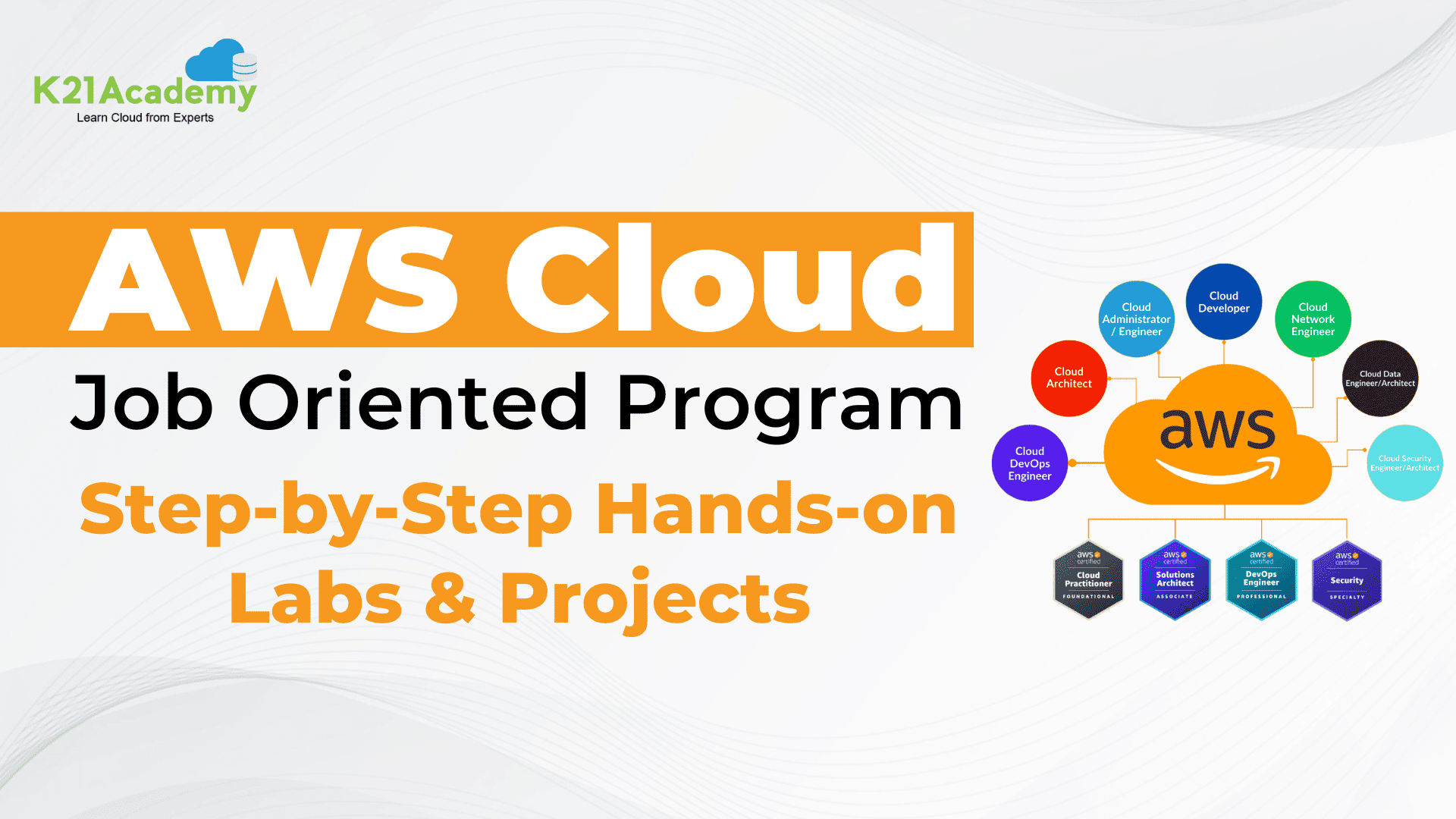


The cloud industry is leading with a variety of best cloud certifications and Amazon Web Services is one of the top cloud providers during this cloud era. AWS offers various certifications for different levels.
Now let’s understand the roles & responsibilities of AWS Certified Professionals
- AWS Solution Architect Associate is one who features a thorough knowledge of cloud architectural principles that are required for the designing and deployment of scalable, reliable, and robust business solutions on the cloud.
- The DevOps engineer is a professional with the responsibility of managing IT infrastructure according to the requirements of supported software code. The DevOps engineer is additionally liable for provisioning resources and recommends a suitable deployment model.
We have recently started our AWS Solution Architect Associate Training Program. In this training, we will be covering the following modules and activity guides for each respective courses
- For AWS Certified Solution Architect Associate, there are 11 modules & 30+ Hands-on.
- For AWS Certified DevOps Professional, there are 9 modules & 30+ Hands-on.
The following courses have 1 module in common and in this section, first, we will cover common topics covered in both certified courses, and then we will cover specific topics of each certified course.
AWS FAQs: Introduction To Cloud And AWS
This is how Module 1 looks like on the self-portal.
 So, here are some FAQs asked during the Live session from Module 1.
Cloud Services and Deployment Model

Also Read: Our blog post on AWS MFA.

Security Services

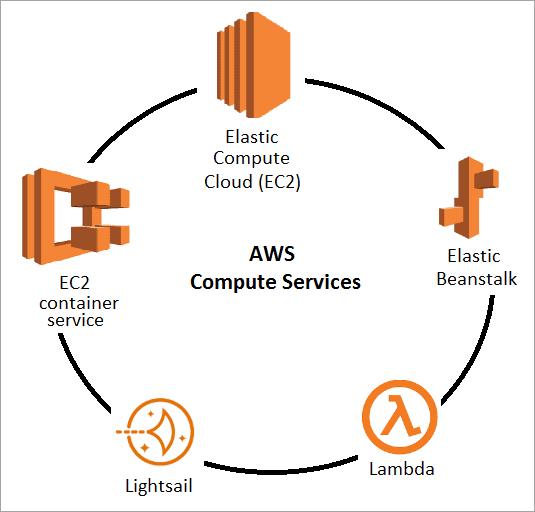
Compute Services
Storage Services
- Object Storage: Amazon S3
- Block Storage: Amazon EBS

Network Services
Database Services
AWS Database Services are Amazon’s completely controlled and scalable database solution for your applications. Amazon provides a good range of database options like Amazon RDS, Aurora, DynamoDB, ElasticCache, and Redshift.

Click here to know more about AWS Database Services.
- Amazon Aurora
- Oracle Database
- PostgreSQL
- MySQL
- MariaDB
- Microsoft SQL Server

Application Services
An application service simply refers to any software application that is deployed in a cloud environment rather than being hosted on a local server or machine. Companies that own and operate public cloud infrastructure deliver on-demand computing services to a spread of consumers across industry verticals.
Q7: How is Amazon SQS different from Amazon SNS?
A7. Amazon SNS permits applications to send time-critical messages to multiple subscribers through a “push” mechanism, eliminating the necessity to periodically check or “poll” for updates. Amazon SQS is a message queue service utilized by distributed applications to exchange messages through a polling model and may be utilized to decouple sending and receiving components.
 Q8: What are the benefits of using Amazon SNS?
A8. Benefits of Amazon SNS are:
Audit & Monitoring
Q10: What is CloudWatch vs CloudTrail?
A10. AWS CloudWatch monitors your AWS resources and applications, whereas CloudTrail monitors the activity in your AWS environment. For instance, with CloudWatch, you’ll scale your applications, whereas, with CloudTrail, you’ll see who did what to your applications, and you would possibly find issues. they’re not mutually exclusive, and you’ll set CloudTrail to send events to a CloudWatch log, as an example.
![AWS [SA | Developer | DevOps]: Day 1 Live Session Review](https://k21academy.com/wp-content/uploads/2021/05/cldtrl.jpeg)
Check here to know more about the Amazon CloudTrail vs CloudWatch.
AWS Serverless Services
CI/CD Developer Tools
The AWS Developer Tools is a set of services designed to enable developers and IT operations professionals practicing DevOps to rapidly and safely deliver software. AWS Provides the following developer tools:
- AWS Code Commit
- AWS CodeBuild
- AWS CodeDeploy
- AWS Code pipeline
- AWS Cloudformation
- AWS Cloud9
Check more about CI/CD Tools
Now, we will cover specific services under each course.
AWS Solution Architect Associate
We have the following specific modules in this:
- Module 2: Security Management AWS
- Module 3: Object Storage Options
- Module 4: Designing Computing Environment
- Module 5: LoadBalancer, Route53 & AutoScaling
- Module 6: Networking and Monitoring Services
- Module 7: Database Server and Analytics
- Module 8: Application & Messaging Services
- Module 9: Configuration Management and Automation
- Module 10: Architecting on AWS
Q11: Why should I use Amazon VPC?
A11. ![AWS [SA | Developer | DevOps]: Day 1 Live Session Review](https://k21academy.com/wp-content/uploads/2021/05/unnamed-7-1.png)
Q12. What is Amazon Route 53?
A12. Amazon Route 53 is a highly efficient and scalable cloud web service and is also used for the health checking of resources. It provides developers with an efficient and reliable way to connect users to internet applications without any delay, it still features a delay in servers or applications, but users might not remember it. It effectively connects user requests to AWS such as Amazon EC2 instances, Elastic Load Balancing, or Amazon S3 buckets.

Check here to know more about Amazon Route 53
Q13: What are AWS Lambda and its benefits?
A13.AWS Lambda is a serverless computing service that executes your code in response to events and manages the underlying compute resources for you automatically. You may use Lambda to run code for nearly any form of application or backend service – with no administration required.
Its benefits are:
- Only pay for what you use
- Trust and integrity controls
- Automatic Scaling
- Built-in fault tolerance
- Extend other AWS services with custom logic
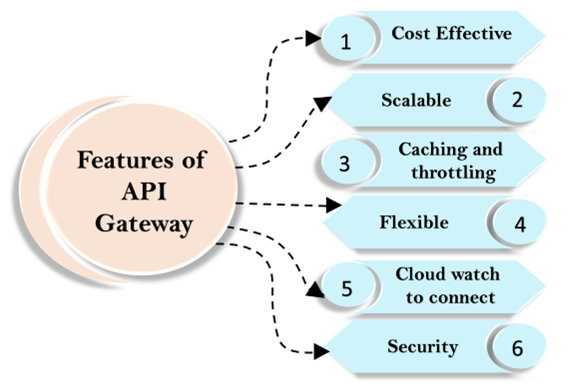
 Q14: Why use Amazon API Gateway and what are its features?
A14. Amazon API Gateway provides developers with a simple, flexible, fully managed, pay-as-you-go service that handles all aspects of creating and operating robust APIs for application back ends. With API Gateway, you’ll launch new services faster and with reduced investment so you’ll specialize in building your core business services.
Its benefits are:
AWS DevOps Professional
We have the following specific modules in this:
- Module 2: Introduction To DevOps
- Module 3: SDLC Automation
- Module 4: Configuration Management and Infrastructure as Code
- Module 5: Monitoring and Logging in AWS
- Module 6: Policy and Automation In AWS
- Module 7: Incident and Event Response
- Module 8: High Availability, Fault Tolerance, and Disaster Recovery
Q15: Give an overview of CI/CD Tools.
A15.

Continuous Integration(CI) and Continuous Deployment(CD) get rid of the traditional manual gate and implement fully automated verification of the acceptance environment to determine the scenario of whether the pipeline can continue to production or not.
Continuous Integration focuses on the software development life cycle (SDLC) of the individual developer in the code repository. This can be executed multiple times with the primary goal to enable early detection of integration bugs and errors.
Continuous Delivery focuses on automated code deployment in testing or production environment, taking the approval of updates to realize an automated software release process, and pre-emptively discovering deployment issues.
Q16: What is AWS CodeBuild?
A16. AWS CodeBuild is a fully managed continuous integration service that compiles source code, runs tests, and produces software packages that are able to deploy. With CodeBuild, you don’t need to provision, manage, and scale your own build servers. CodeBuild scales continuously and processes multiple builds concurrently, So your builds aren’t left waiting during a queue.

Create your AWS Free Tier Account
In this AWS Free Tier account, Amazon is giving no. of different services used with some of the limitations to get hands-on practice and more knowledge on AWS Cloud services as well as regular business use. The AWS Free Tier is mainly designed to give hands-on experience with AWS Cloud Services for customers free of cost for a year.
Check here to know more about How to create an AWS free account.
Quiz Time (Sample Exam Questions)
Feedback Received…
From our day 1 session, we received some good feedback from our trainees who had attended the session, so here is a sneak peek of it.

Related/References
- Overview of Amazon Web Services & Concept
- AWS Management Console Walkthrough
- How to create a free tier account in AWS
- AWS Solution Architect Questions Day 1: Introduction To Cloud & AWS
- AWS Certified Solutions Architect: Roles & Responsibilities.
- AWS Certified Solutions Architect Associate SAA-C03 Exam
- AWS Certified DevOps Engineer – Professional DOP-C02 Exam
Next Task For You
Begin your journey towards an AWS Cloud by joining our FREE Informative Class on Amazon Cloud Free Class by clicking on the below image.


![Microsoft Agentic AI Business Solutions Architect [AB-100] | K21 Academy](https://test.k21academy.com/wp-content/uploads/2025/11/Microsoft-Agentic-AI-Business-Solutions-Architect-AB-100-Exam-Overview1.png)