



As artificial intelligence (AI) continues to revolutionize industries worldwide, the conversation about *Responsible AI* has never been more important. If you’re considering a career in AI, Machine Learning, or Generative AI, understanding Responsible AI is crucial—not only for ethical considerations but also for shaping your future job prospects and certifications.
In this post, we’ll break down the what, why, and how of Responsible AI in the context of jobs and certifications, and show you how to leverage this knowledge to enhance your career in the rapidly evolving AI field.
We will cover:
- What is Responsible AI?
- Why is Responsible AI Important For Jobs?
- Principles of Responsible AI
- How to Implement Responsible AI in Your Career
- Popular Certifications for Responsible AI
- The Role of Responsible AI in Generative AI
- Top Applications of Responsible AI Across Industries
- The Future of AI Jobs with Responsible AI Expertise
- Conclusion
- FAQs
What is Responsible AI?

Responsible AI is a framework of guiding principles that ensures the ethical design, development, deployment, and use of artificial intelligence (AI) systems. It aims to build trust in AI solutions by aligning them with societal values, legal standards, and ethical principles, while mitigating potential risks and maximizing benefits for organizations and their stakeholders.
At its core, Responsible AI emphasizes transparency, accountability, and fairness. It recognizes the broader societal impact of AI systems and seeks to embed ethical considerations into AI workflows to address challenges such as bias, privacy, and explainability. This ensures that AI technologies operate in a manner that not only meets functional objectives but also aligns with human values.
Why is Responsible AI Important For Jobs?
The rapid integration of AI across industries has revolutionized processes, but it has also raised ethical challenges that cannot be ignored. Responsible AI addresses these challenges by emphasizing fairness, transparency, accountability, and the prevention of harm. As AI continues to shape the future of work, Responsible AI has become a critical area of focus for professionals seeking to stay relevant and impactful in their careers. Here’s why:
1. High Demand for Ethical AI Experts
As AI becomes increasingly integrated into daily life, businesses and governments are under pressure to ensure their AI systems are designed with fairness and transparency. This has led to a growing demand for AI professionals who are not only technically skilled but also understand the ethical implications of AI technologies. Organizations are seeking individuals who can balance innovation with responsibility.
2. Risk Mitigation
With the rapid rise of AI adoption comes the risk of unintended consequences such as biased algorithms, data privacy breaches, and social inequalities. Companies need experts who can ensure that their AI models are free from these risks, making Responsible AI a must-have skill for anyone pursuing a career in AI.
3. Compliance with Regulations
As AI regulations and guidelines continue to evolve globally, knowledge of Responsible AI practices is essential for compliance. Professionals who understand legal and ethical considerations in AI are more likely to stay ahead in a competitive job market, especially as countries introduce stricter AI governance frameworks.
Principles of Responsible AI
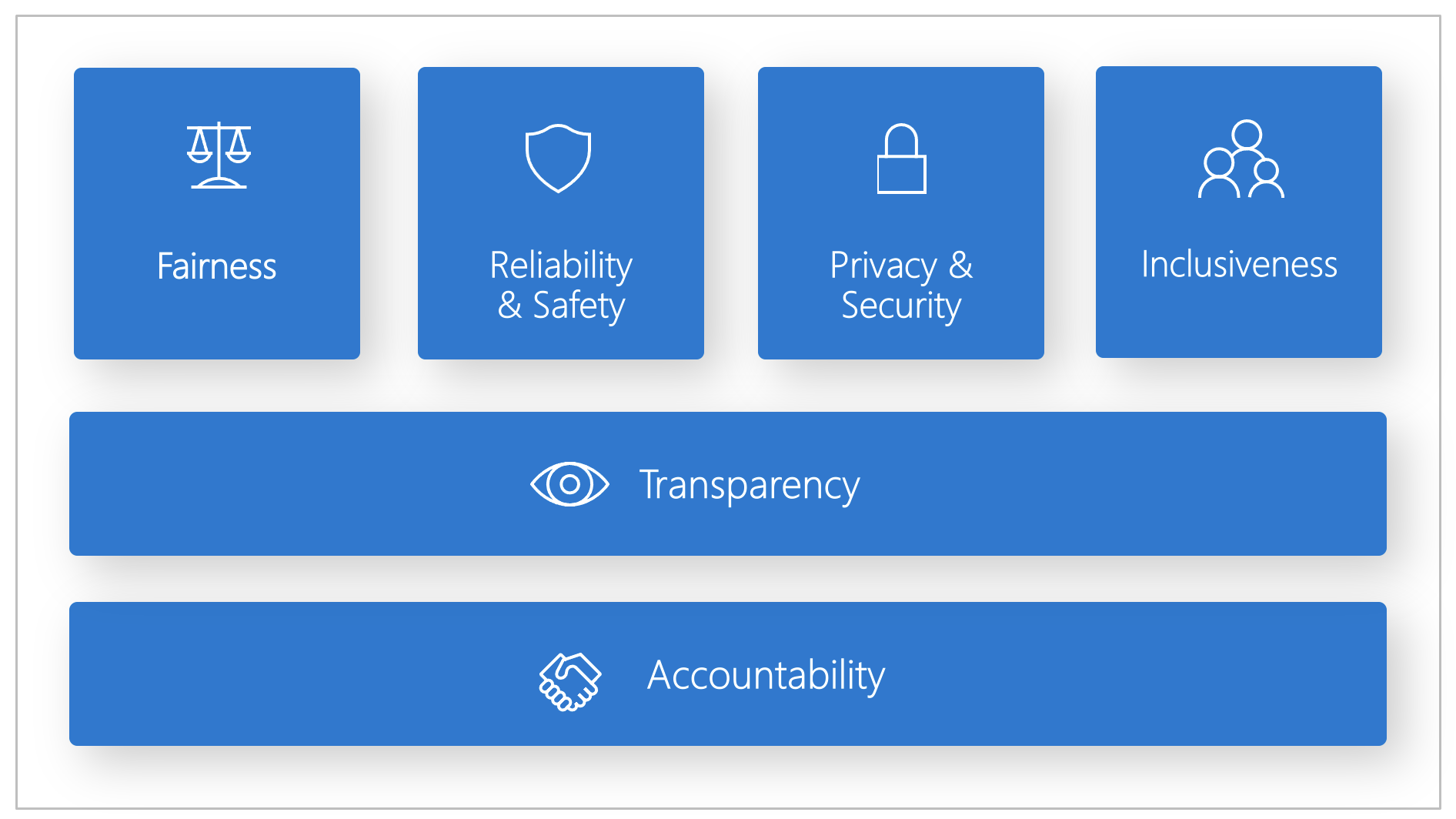
Responsible AI ensures that AI systems are designed, developed, and deployed ethically, fostering trust and fairness. These principles serve as a foundation for creating AI systems that are both effective and aligned with societal values. Below are the six core principles of Responsible AI:
Source: Microsoft
1. Fairness
AI systems must treat everyone equally and avoid biases or discrimination based on personal characteristics like race, gender, or socioeconomic status. This ensures equitable outcomes for all individuals. Bias in AI can lead to unfair decisions, such as rejecting loans or job applications for specific groups.
2. Reliability and Safety
AI systems must operate consistently and safely under a variety of conditions, ensuring they do not cause harm. Trust in AI depends on its ability to work as intended, even in unexpected scenarios.
3. Privacy and Security
Protecting user data and maintaining confidentiality is essential. AI systems must comply with data protection regulations and safeguard sensitive information from unauthorized access. Privacy breaches can damage trust and violate legal frameworks like GDPR.
4. Inclusiveness
AI systems should empower and benefit everyone by addressing potential barriers to access and engagement. Inclusiveness ensures AI is designed for diverse user groups, fostering equity and innovation. Inclusive AI ensures that no one is excluded, such as individuals with disabilities or underrepresented communities.
5. Transparency
AI systems should be clear and understandable. Users and stakeholders must know how decisions are made, particularly when these decisions significantly impact their lives. Transparency builds trust and allows users to hold AI systems accountable.
6. Accountability
Organizations and developers must take full responsibility for the outcomes of their AI systems, ensuring ethical practices throughout the AI lifecycle. Accountability ensures that issues are addressed promptly and ethically, preventing misuse.
How to Implement Responsible AI in Your Career
Incorporating Responsible AI practices into your career not only sets you apart in the competitive job market but also ensures that your work contributes positively to society. Here’s a step-by-step guide to building expertise in Responsible AI and demonstrating it effectively:
1. Get Certified in AI Ethics and Responsibility
Earning a certification in Responsible AI not only boosts your credibility but also enhances your employability. Certifications such as AWS Certified AI Practitioner , AWS Certified Machine Learning Associate, AWS Certified Machine Learning Specialty, Microsoft Azure AI Fundamentals certification , Microsoft Azure AI Engineer Associate & Google’s Machine Learning Professional, are excellent choices to demonstrate your commitment to ethical AI practices. These programs help you understand how to create transparent, fair, and unbiased AI models that comply with global standards.
2. Learn Ethical AI Practices in Machine Learning
Learning how to build machine learning models that prioritize fairness and accountability is essential. Familiarize yourself with tools like AWS SageMaker Clarify, Microsoft Fairlearn, Google AI’s Fairness Indicators, which help detect and mitigate biases in AI models. These tools are essential to building AI that serves diverse populations equitably.
3. Stay Updated on AI Regulations
As governments and organizations introduce policies for AI governance, it’s important to stay updated on AI regulations. This includes learning about GDPR (General Data Protection Regulation) for data privacy, as well as understanding frameworks like the *OECD AI Principles* and the *EU AI Act*.
4. Build a Portfolio Around Responsible AI
In today’s job market, showcasing your expertise through a strong portfolio is key. Include AI projects that emphasize fairness, transparency, and bias mitigation. Participating in open-source Responsible AI initiatives and sharing your work on platforms like GitHub can make you more attractive to potential employers.
Popular Certifications for Responsible AI
Earning certifications in Responsible AI not only enhances your credibility but also positions you as a leader in ethical AI practices. Here are some top certifications to consider:
1. AWS Certifications
- AWS Certified AI Practitioner (AIFC01): Covers foundational AI concepts, including responsible AI principles, ideal for those beginning their journey in AI.
- AWS Certified Machine Learning Associate (MLAC01): Aimed at professionals with hands-on experience in machine learning, focusing on deploying responsible AI solutions using AWS.
- AWS Certified Machine Learning Specialty (MLSC01): Advanced certification covering the entire lifecycle of machine learning solutions, with tools for bias detection, explainability, and compliance within AWS.
2. Microsoft Certifications
- Microsoft Certified Azure AI Fundamentals (AI-900): Learn the basics of AI, including responsible AI principles, privacy, and security within Azure.
- Microsoft Certified Azure AI Engineer Associate (AI-102): Focuses on designing and implementing AI solutions in Azure, with a strong emphasis on ethical considerations.
3. Google Cloud Certifications
- Google’s Machine Learning Professional Certification: Comprehensive training for machine learning professionals, emphasizing ethical AI and responsible practices.
4. International Association of Privacy Professionals (IAPP) Certifications
- Certified Ethical AI Practitioner (CEAI) : The Certified Ethical AI Practitioner (CEAI) certification is a globally recognized credential that focuses on equipping professionals with the knowledge and skills to implement ethical AI practices. This certification is ideal for individuals aiming to ensure fairness, transparency, privacy, and accountability in AI systems.
The Role of Responsible AI in Generative AI
Generative AI, including tools like large language models and image-generation systems, has revolutionized industries by enabling innovative solutions. However, the rapid adoption of generative AI also amplifies risks such as misinformation, copyright infringement, and ethical misuse.
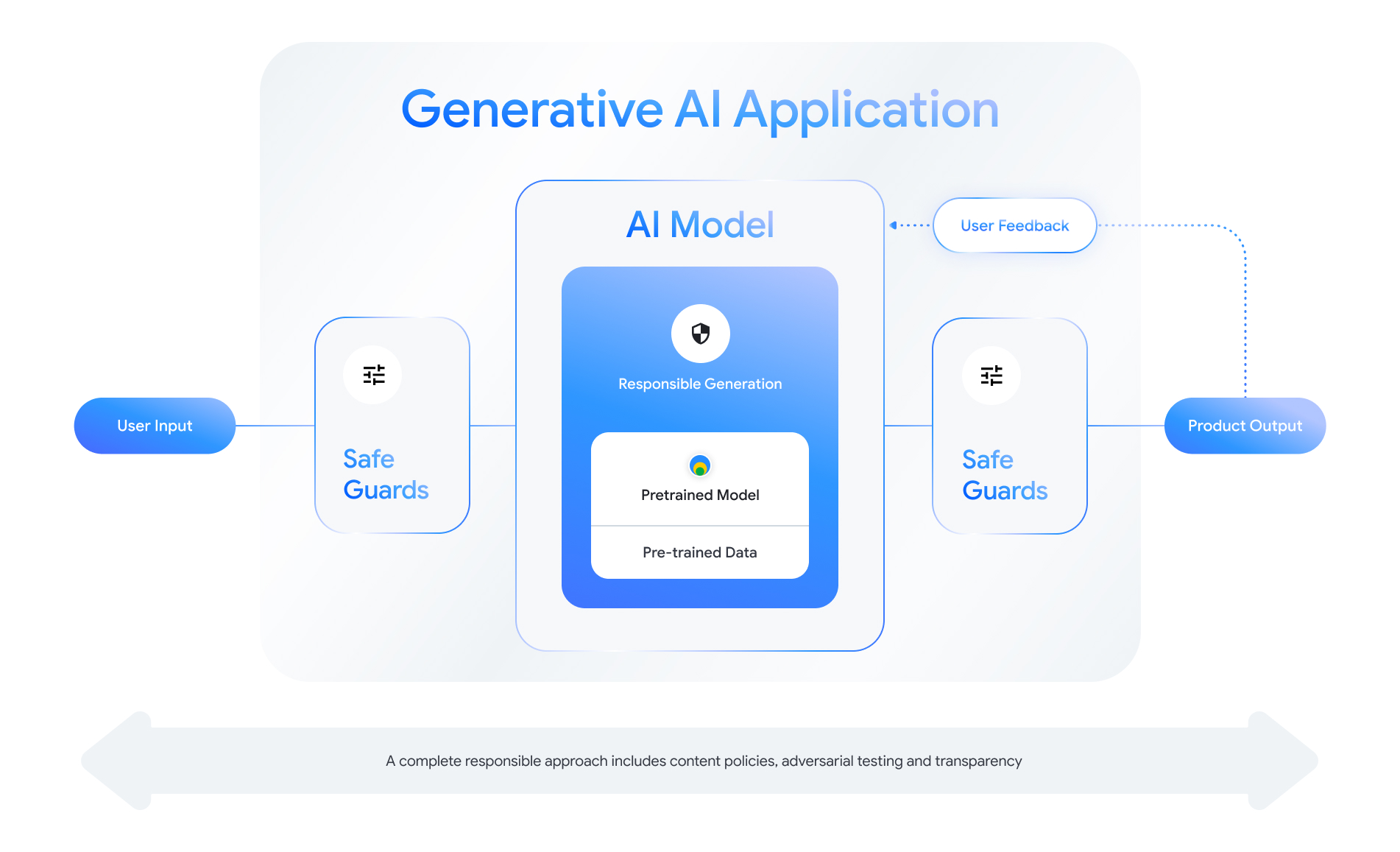
Source: GCP
Responsible AI principles help organizations navigate these challenges by:
- Encouraging ethical use of generative AI tools.
- Promoting accountability for generated content.
- Mitigating risks like hallucinations or the spread of false information.
Top Applications of Responsible AI Across Industries
Responsible AI is transforming industries by enhancing efficiency, improving outcomes, and ensuring ethical practices. Here’s how Responsible AI is applied across key sectors:
1. Responsible AI in Healthcare for Disease Diagnosis
Responsible AI, like IBM Watson Health, is revolutionizing disease diagnosis by analyzing vast amounts of medical data. It enables early detection of illnesses while respecting patient privacy, ultimately improving health outcomes.
2. Enhancing Patient Care with AI
AI personalizes treatment plans, monitors vital signs, and notifies healthcare providers of irregularities. By optimizing processes, AI could save the U.S. healthcare system an estimated $150 billion annually by 2026.
3. Responsible AI in Finance for Fraud Detection
In the financial sector, Responsible AI plays a pivotal role in fraud detection. It identifies suspicious transaction patterns, flags fraudulent activities, and ensures ethical data use to protect both institutions and customers.
4. Risk Management and Compliance
According to Deloitte, AI is transforming risk management by analyzing large datasets, predicting risks, and mitigating them effectively. This innovation can significantly reduce compliance costs for financial institutions.
5. Responsible AI in Education for Personalized Learning Systems
AI-driven personalized learning systems analyze student performance to tailor lessons for individual needs. These systems prioritize privacy and transparency to enhance the learning experience responsibly.
6. AI for Administrative Efficiency in Education
AI streamlines administrative tasks in educational institutions, such as attendance tracking and resource management. This allows educators to focus more on teaching while maintaining ethical operations.
7. Responsible AI in Call Centers for Improving Customer Experience
Responsible AI enhances customer interactions in call centers by offering intelligent and personalized support. Platforms like Convin provide transparent and fair AI-powered solutions to improve service quality.
8. AI for Agent Performance Monitoring in Call Centers
AI revolutionizes performance monitoring by identifying improvement areas and providing personalized coaching. It ensures fair and transparent processes while respecting agents’ privacy and rights.
9. Responsible AI in Retail for Inventory Management
Responsible AI optimizes retail inventory by predicting demand, analyzing sales trends, and reducing waste. This ensures efficient inventory management and enhances customer satisfaction.
10. Enhancing Customer Experiences with AI in Retail
AI-powered recommendation systems personalize shopping experiences by analyzing customer behavior and preferences. These systems adhere to Responsible AI guidelines to maintain transparency and protect customer privacy.
The Future of AI Jobs with Responsible AI Expertise
The future of AI jobs is intertwined with Responsible AI. As AI technologies evolve, organizations will increasingly rely on experts who can ensure their AI solutions are ethically aligned. AI professionals with expertise in responsible AI will have a competitive edge in fields like data science, AI development, policy making, and regulatory compliance.
Moreover, ethical AI will be at the forefront of industries like healthcare, finance, and autonomous vehicles, where the consequences of AI decisions can be life-altering. This makes Responsible AI not just a skill but a necessity for long-term career success.
Conclusion
As AI continues to evolve, the need for Responsible AI becomes increasingly critical. Organizations must prioritize ethical considerations in their AI strategies to ensure these systems serve humanity positively. By embracing principles of transparency, fairness, and accountability, we can build a future where AI empowers individuals and fosters societal growth.
By implementing Responsible AI practices, we not only mitigate risks but also pave the way for more trust and innovation in AI technologies.
FAQs
What is a responsible AI example?
A responsible AI example is using AI for disease diagnosis in healthcare, ensuring accurate, unbiased, and transparent decision-making processes while protecting patient privacy.
What is an example of AI in real life?
AI powers personalized learning systems, such as those on Khan Academy, which adapt educational content to meet the unique needs of each student.
How can AI be used responsibly?
AI can be used responsibly by following ethical guidelines, such as ensuring transparency in decision-making, fairness in outcomes, accountability for AI actions, and protecting user privacy during development and deployment.
Why is Responsible AI important?
Responsible AI ensures that AI systems are ethical, transparent, and fair, preventing biases, protecting privacy, and fostering trust among users and stakeholders.
How does Responsible AI address bias?
Responsible AI mitigates bias by using diverse and representative datasets, monitoring outcomes for fairness, and incorporating techniques like re-sampling or re-weighting to reduce disparities.
What industries benefit from Responsible AI?
Industries like healthcare, finance, education, retail, and customer service benefit from Responsible AI by improving efficiency, reducing risks, and enhancing user experiences.
Related References
- Join Our Generative AI Whatsapp Community
- Introduction to Generative AI and Its Mechanisms
- Mastering Generative Adversarial Networks (GANs)
- Generative AI (GenAI) vs Traditional AI vs Machine Learning (ML) vs Deep Learning (DL)
- AWS Certification Path: Learn AWS Certification Hierarchy 2024
- AWS Certifications
- AWS Certified Machine Learning – Specialty: All You Need to Know About
- AWS Management Console Walkthrough
- Overview of Amazon Web Services & Concepts
- AWS Certified Solutions Architect Associate SAA-CO3
Join FREE Masterclass
Don’t miss our EXCLUSIVE Free Training on Generative AI, ML on AWS Cloud! This session is perfect for those pursuing the AWS Certified AI Practitioner certification. Explore AI, ML, DL, & Generative AI in this interactive session.
Click the image below to secure your spot!


![Microsoft Agentic AI Business Solutions Architect [AB-100] | K21 Academy](https://test.k21academy.com/wp-content/uploads/2025/11/Microsoft-Agentic-AI-Business-Solutions-Architect-AB-100-Exam-Overview1.png)