




Python is one of the most popular and beginner-friendly programming languages today. Whether you’re new to coding or aiming to enter exciting fields like AI, machine learning, or web development, Python’s simplicity and versatility make it an ideal choice.
This blog will introduce you to Python’s history, key features, common uses, and the career opportunities it can open up. Get ready to start your journey with a language that powers some of the world’s most innovative technologies.
In this Blog We are going to Cover :
Python Overview
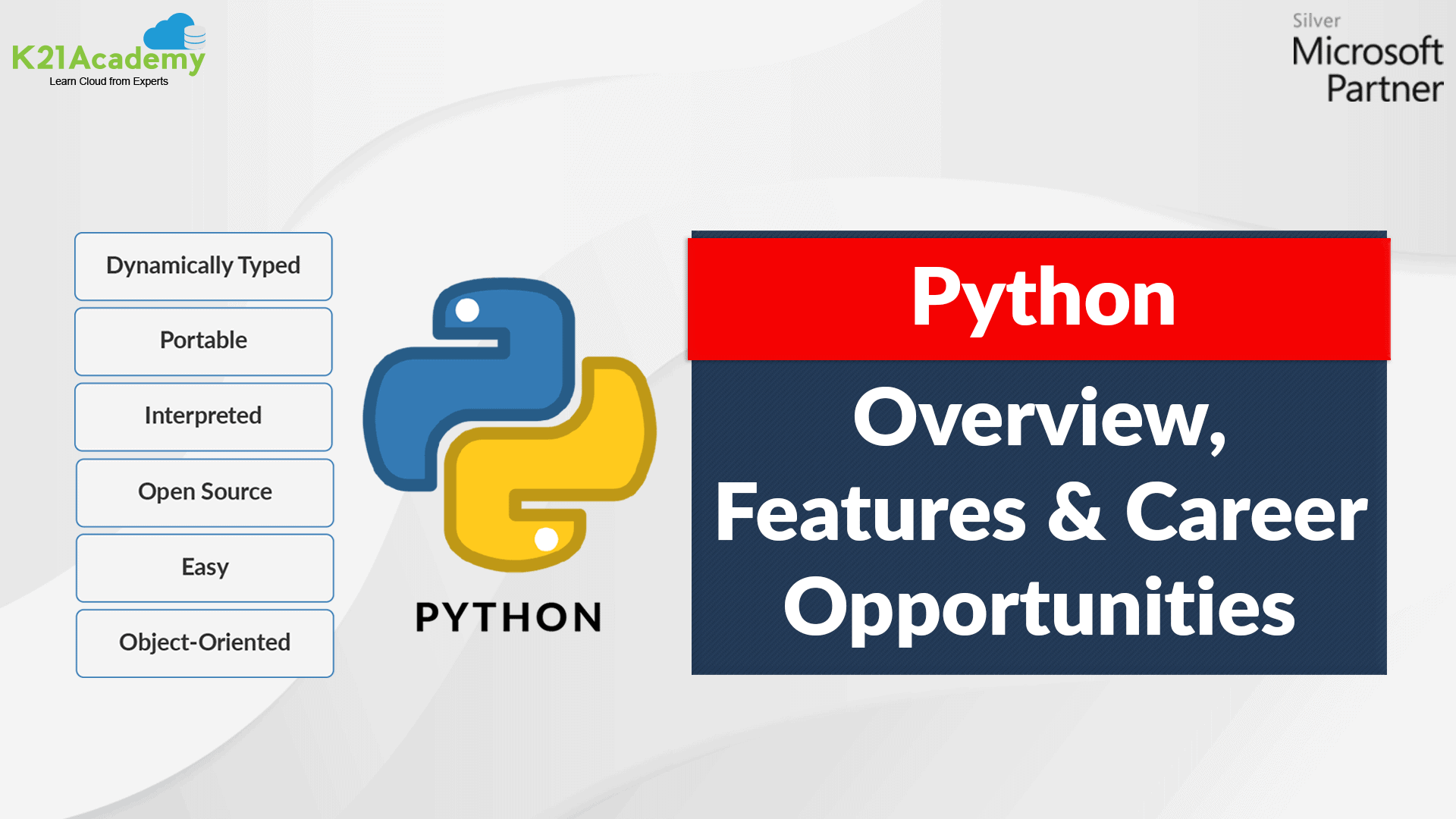
Python is a popular programming language known for its simplicity and versatility. Whether you’re a beginner or an experienced coder, Python is easy to learn and use. It allows you to write clear and readable code, which makes it a great choice for beginners. But don’t let its simplicity fool you—Python is also powerful and can be used for complex projects.
Here’s a basic breakdown of what Python is:
-
Interpreted Language: Python doesn’t need to be compiled. This means you can write your code and run it right away, which is perfect for quickly testing and debugging your ideas.
-
High-Level Language: Python handles most of the technical details (like memory management), so you can focus more on solving problems instead of worrying about how things work under the hood.
-
Object-Oriented: Python allows you to organize your code using “objects,” which makes it easier to manage large projects and reuse code.
-
Cross-Platform: Python works on many different types of systems, including Windows, macOS, and Linux, so you can write code that will run anywhere.
-
Rich Ecosystem: Python has a large collection of libraries (pre-written code) that you can use to do things like analyze data, build websites, or even create games. These libraries save you time by doing the hard work for you.
Because of all these features, Python is used for many things like web development, data science, artificial intelligence, automation, and more. It’s one of the most in-demand languages in the tech industry today, making it a great skill to learn.
History Of Python
Python was created by Guido van Rossum in the late 1980s at the National Research Institute for Mathematics and Computer Science in the Netherlands. His goal was to make a programming language that was easy to read and use, but also powerful enough for serious projects.
Python is inspired by other programming languages like ABC, C, C++, and Modula-3. The first version, Python 0.9.0, was released in 1991, and it already had many features that we still use today.
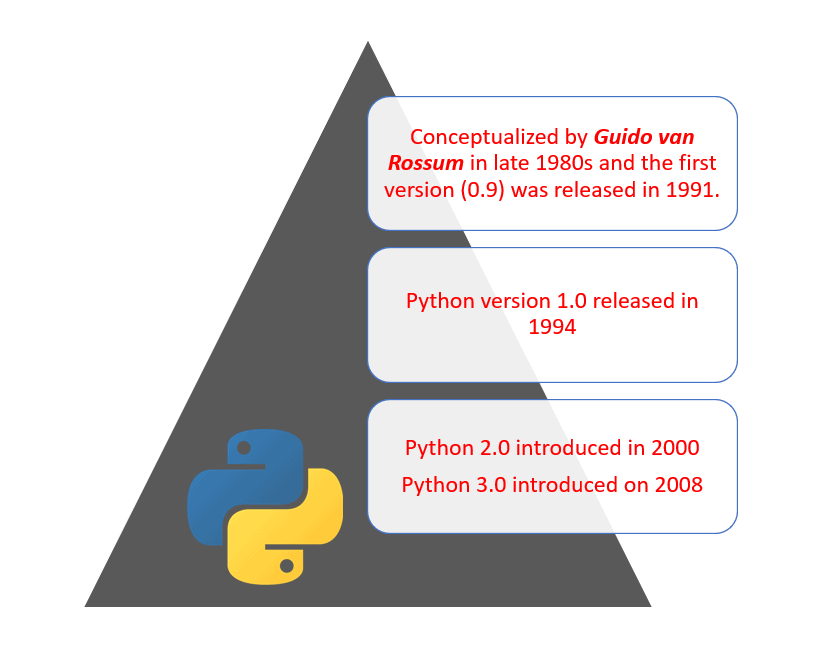
Python has grown a lot over the years, and now it’s developed by a core team of programmers, with input from the global community. Guido van Rossum played a big role in guiding Python’s development until he stepped down in 2018, but he’s still considered an important figure in Python’s history.
Python 2 vs. Python 3
When Python 3 was released in 2008, it introduced major improvements. However, Python 3 is not compatible with Python 2. This means that code written in Python 2 won’t always work in Python 3.
Why isn’t Python 3 backward compatible with Python 2?
Python 3 introduced changes like:
-
Better string handling: Python 3 uses Unicode by default, making it easier to work with text in multiple languages.
-
New division behavior: In Python 3, dividing two numbers gives a decimal result, even if both numbers are integers.
-
Syntax updates: Things like the
printfunction changed to be more consistent and clear in Python 3.
What’s different between Python 2 and Python 3?
-
Python 3 is better for working with different languages (thanks to better Unicode support).
-
The division now always returns a float.
-
Python 3 has updated libraries and is more efficient.
Why Use Python 3?
Since Python 2 reached its end of life in 2020, it’s best to focus on learning Python 3 for all new projects. Python 3 is more modern, efficient, and widely used today.
Features of Python
Python is one of my favorite languages to work with because of its simplicity, powerful libraries, and easy-to-read code. Whether you’re an experienced programmer or just starting, Python is a great language to dive into.
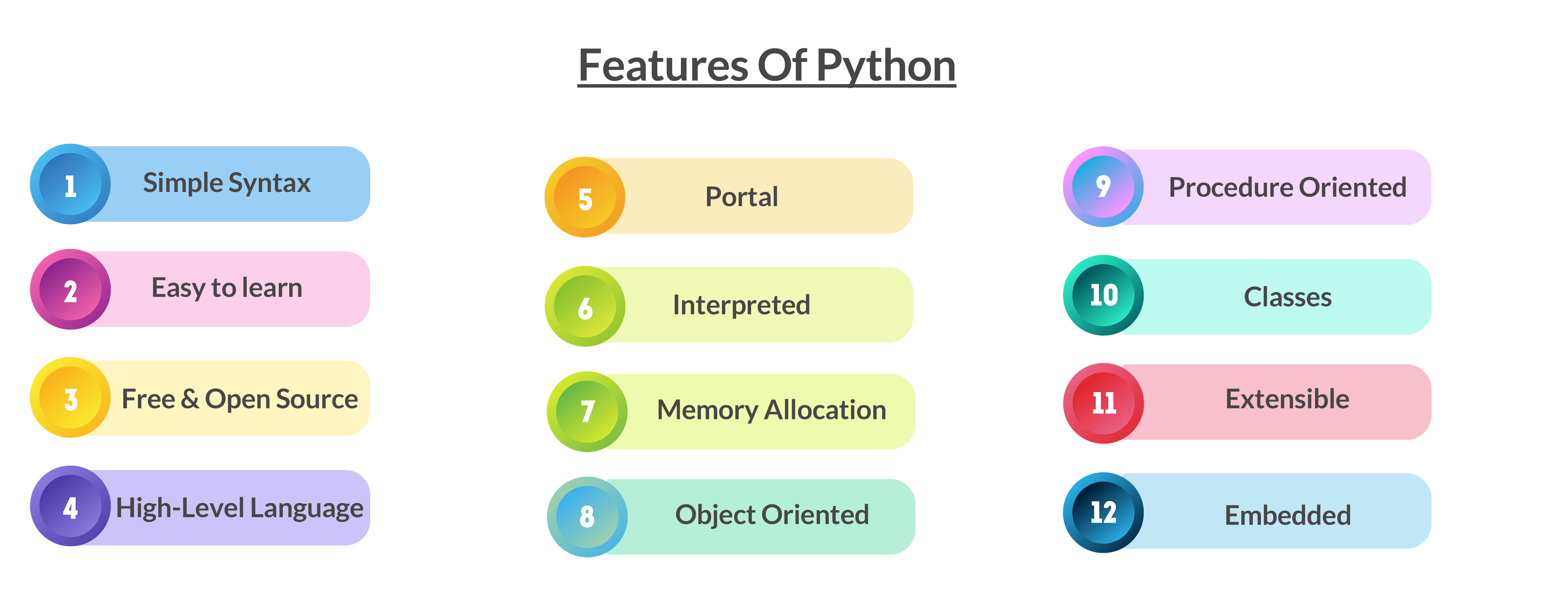
Here are some key features that make Python stand out:
1. Easy to Code
Python is known for being beginner-friendly. The syntax is simple, clean, and closely resembles English, making it one of the easiest languages to learn compared to others like Java, C++, or C#. Whether you’re an experienced coder or a newbie, Python allows you to focus on solving problems rather than getting caught up in complex syntax.
2. Open Source and Free
Python is open-source, meaning that anyone can use, modify, and contribute to its development. It’s also free to download and use on any platform (Windows, macOS, or Linux). Thanks to its huge community of developers, Python is constantly improving and evolving. If you ever need help or want to learn more, there’s an active online forum with thousands of people discussing and working on Python every day.
3. Support for GUI (Graphical User Interface)
Python allows you to create interactive and visually appealing applications using GUI libraries. Whether you want to build a desktop app or a visually rich program, Python makes it easy. Some popular GUI libraries include PyQt5, Tkinter, and Kivy, with PyQt5 being widely used for creating graphical applications in Python.
4. Object-Oriented
Python follows the object-oriented programming (OOP) paradigm, which helps in organizing and structuring your code efficiently. This means Python allows you to work with classes and objects, making it easier to manage large projects and promote code reusability. It helps in breaking down complex problems into simpler, modular components.
5. High-Level Language
As a high-level language, Python abstracts much of the complexity associated with programming. You don’t need to worry about memory management or low-level details (such as system architecture). This allows you to focus on writing the logic and functionality of your programs instead of managing hardware or memory directly.
6. Interpreted Language
Python is an interpreted language, meaning the Python interpreter reads and runs the code line-by-line rather than compiling it all at once. This makes it easier to debug and fix errors quickly. You don’t need to worry about a lengthy compilation process, and your code runs as soon as it’s written. Plus, Python automatically converts your code into intermediate byte code for more efficient execution.
7. Highly Portable
Python is highly portable, which means that code written on one platform (like Windows) will generally work on other platforms (like Mac or Linux) without modification. This makes Python an excellent choice for developers who want to ensure their programs are cross-platform and easily transferable between different operating systems.
8. Support for Other Languages
Python can seamlessly interact with other languages like C, C++, and Java, thanks to its ability to interface with other programming languages. It allows you to integrate Python with lower-level code or optimize performance-heavy parts of your application by writing them in languages like C.
9. Overcoming Limitations
While Python is a powerful language, it may face performance bottlenecks, especially in computationally intensive tasks. Fortunately, there are ways to overcome these limitations:
-
Libraries like Cython or NumPy can be used to optimize Python code for faster performance, especially for mathematical and scientific computing.
-
Multi-threading or integration with C/C++ can be used for improving efficiency and handling more demanding applications.
Python’s versatility, combined with these optimizations, allows it to perform well in a variety of tasks, from web development to machine learning.
Why Python?
If you’re still wondering why Python is so popular, here are some key reasons that make it a top choice for both beginners and experienced developers:
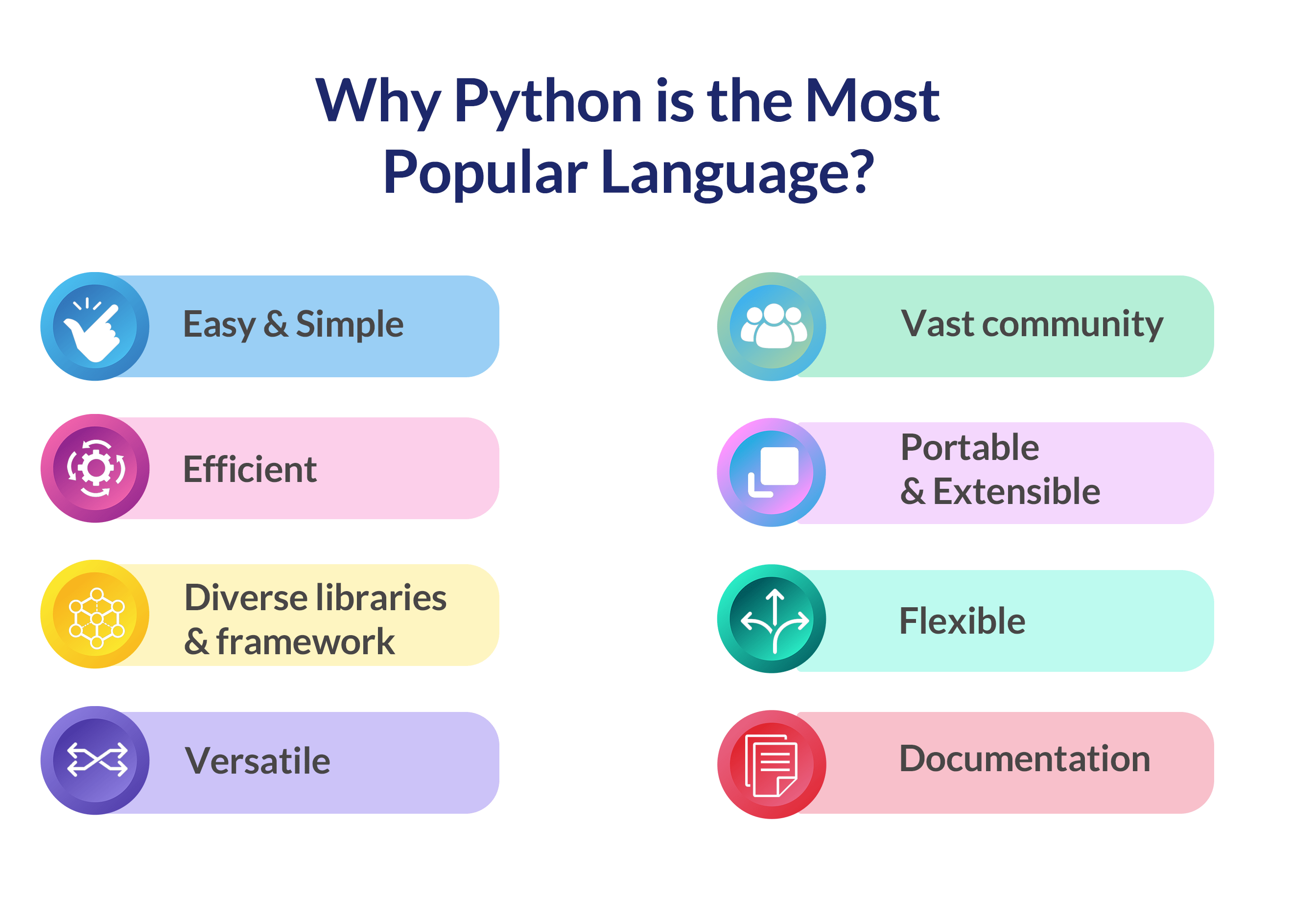
1. Cross-Platform Compatibility
Python works on multiple platforms such as Windows, macOS, Linux, and even on Raspberry Pi. This means that the same Python code can run on any of these systems without needing any changes, making it highly portable.
2. Simple, Readable Syntax
Python’s syntax is clean and easy to read, closely resembling plain English. This makes Python beginner-friendly and allows developers to write code that’s easy to understand and maintain. The readability of Python reduces the learning curve, especially for those new to programming.
3. Fewer Lines of Code
Python allows you to write programs with fewer lines of code compared to other languages like Java or C++. This is because Python has built-in functions and powerful libraries that do a lot of the heavy lifting for you, helping you achieve more with less effort.
4. Quick Prototyping and Execution
Python is an interpreted language, which means you can run your code immediately without needing to compile it first. This makes Python great for quick prototyping and testing ideas. You can write your code and see the results right away, which speeds up the development process.
5. Supports Multiple Programming Paradigms
Python is incredibly flexible. It supports multiple programming styles, such as:
-
Procedural programming (writing code step by step).
-
Object-oriented programming (OOP) (using classes and objects).
-
Functional programming (focusing on functions and data).
This flexibility means that you can approach problems in different ways and use the programming paradigm that best fits the task at hand.
Related Readings
What Can You Do With Python?
- Web Development: Build dynamic web applications using frameworks like Django and Flask.
- Automation: Automate repetitive tasks and integrate with other software to streamline workflows.
- Database Interaction: Connect to databases, read, and modify data easily.
- Data Analysis: Handle big data and perform complex computations with libraries like Pandas and NumPy.
- Machine Learning: Build and deploy AI models using libraries like TensorFlow and Scikit-learn.
- Rapid Prototyping: Quickly develop prototypes and transition to production-ready applications.
Level Up Your Career in Python & Machine Learning– Start with K21 Academy
Kickstart your tech career with Python training from K21 Academy.
Python For Machine Learning
Python is a top choice for machine learning because of its simplicity, flexibility, and powerful ecosystem of libraries. The language’s clean syntax makes it easy for developers, even beginners, to focus on solving problems instead of dealing with complicated code.
 Python has a rich set of libraries like TensorFlow, PyTorch, Scikit-learn, and Pandas that provide pre-built tools for data manipulation, building models, and evaluating performance. This drastically reduces the time and effort required to develop machine-learning applications.
Thanks to its large and active community, Python enjoys continuous updates, robust support, and access to numerous tutorials and resources. Python also integrates well with other technologies, making it ideal for both prototyping and deploying machine learning models. Its compatibility with high-performance libraries like NumPy allows it to efficiently handle large datasets and complex computations, which makes it a favorite among data scientists and researchers.
With its versatility and ongoing development, Python remains a dominant force in the rapidly growing field of machine learning.
Related Readings:
Python Career Opportunities
Now that you have an overview of Python, its features, and what makes it unique, let’s dive into one of the most important questions: What are the job opportunities with Python?

Python is not just one of the most popular programming languages globally; it also opens up numerous career paths. The demand for Python developers is growing each year, making it a language with promising career prospects.
So, what job roles can you expect once you’ve mastered Python? Here are a few key options:
1. Python Developer
One of the most common roles for Python developers is to build websites and applications. As a Python developer, your responsibilities could include:
-
Building websites using frameworks like Django or Flask.
-
Solving problems related to data analysis and automation.
-
Writing clean, reusable, and efficient code.
-
Optimizing data algorithms for faster processing.
-
Ensuring data security and protection in applications.
2. Data Scientist
Python is widely used in the field of data science. Data scientists analyze large datasets to uncover hidden patterns and trends. They also work on machine learning models and artificial intelligence systems. If you enjoy working with data and solving complex problems, this role is ideal for you. Key skills include:
-
Data analysis with Python libraries like Pandas, NumPy, and Matplotlib.
-
Building machine learning models using frameworks like Scikit-learn and TensorFlow.
3. Data Analyst
If you’re interested in finding meaningful insights from large data sets, the role of a data analyst might be perfect for you. Data analysts use Python to:
-
Process and manipulate large datasets.
-
Generate reports and visualizations using libraries like Pandas and Matplotlib.
-
Work with tools like SciPy to perform statistical analysis.
Many companies, especially in tech and finance, need skilled data analysts who can leverage Python to transform data into valuable insights.
4. Machine Learning Engineer
A machine learning engineer focuses on designing and building algorithms that allow systems to learn from data. Python is widely used for machine learning due to its rich ecosystem of libraries and frameworks. Key responsibilities include:
-
Developing and deploying machine learning models.
-
Working with large datasets to train AI models.
-
Improving the performance of existing machine learning models.
Python’s ability to handle automation, algorithms, and data makes it an ideal language for machine learning engineers.
Other Roles
Beyond these, Python is also in demand for other positions such as:
-
Data Engineer: Specializes in building infrastructure to manage large datasets.
-
DevOps Engineer: Focuses on automating and managing the deployment pipeline.
-
Product Developer: Works on creating innovative software solutions and products.
Why Is Python So Popular in the Job Market?
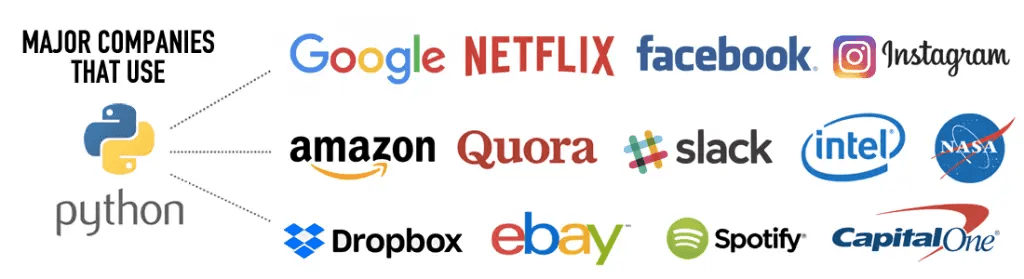
Python’s popularity in industries like tech, finance, healthcare, and research is undeniable. Major companies like Facebook, Netflix, Google, and Spotify use Python in their development and data operations. As a Python professional, you’ll have opportunities to work with some of the biggest names in the world, helping you further your career and gain experience in cutting-edge technologies.
Whether you want to work in data science, web development, or machine learning, Python provides endless opportunities to build a successful career.
Conclusion
Python is one of the most beginner-friendly programming languages, thanks to its simplicity, flexibility, and wide range of libraries. Its clean syntax and powerful features make it an ideal choice for both beginners and experienced professionals, whether you’re getting into web development, data science, or automation.
By mastering Python’s core features, beginners can easily start their coding journey and progress to more advanced projects. With its constantly growing community and vast resources, Python is not just a language—it’s a gateway to limitless opportunities in technology.
Frequently Asked Questions
What is Python used for?
Python is used in various fields like web development, data analysis, machine learning, artificial intelligence, scientific computing, automation, game development, and more.
Why is Python suitable for beginners?
Python has a simple and readable syntax that closely resembles English, making it easy for beginners to learn and write code.
What are some popular Python libraries for beginners?
Libraries like NumPy, Pandas, Matplotlib, and Flask are great starting points, depending on whether you’re interested in data analysis, visualization, or web development.
Is Python free to use?
Yes, Python is an open-source language, meaning it’s free to download, use, and distribute.
Is Python the right choice for learning programming in 2025?
Absolutely! Python continues to be one of the most popular and in-demand languages, with widespread applications across industries.
Related or References
- Join Our Community on AI & ML
- Deep Learning Vs Machine Learning
- Introduction to Artificial Neural Network in Python
- Natural Language Processing with Python
- Data Scientists vs Data Engineers vs Data Analyst
Next Task: Enhance Your Azure AI/ML Skills


![Microsoft Agentic AI Business Solutions Architect [AB-100] | K21 Academy](https://test.k21academy.com/wp-content/uploads/2025/11/Microsoft-Agentic-AI-Business-Solutions-Architect-AB-100-Exam-Overview1.png)