




Organizational success in the ever-changing digital context is directly related to their capacity to leverage data. The amount of data produced by companies across all industries has increased exponentially since the start of the digital era.
Modern approaches must be developed to handle and interpret the enormous amounts of data produced every day. As a result, there is a growing need for data management systems that are more collaborative, scalable, and flexible. This has led to the emergence of DataOps, an innovative strategy changing the data management landscape.
Topics we’ll cover:
- What is DataOps?
- The Origin of the Framework
- DataOps = DevOps + Agile?
- Differences with DevOps
- Why DataOps?
- Which Problem DataOps Can Solve
- How to start with DataOps
- Trends and Future of DataOps
- Conclusion
What is DataOps?
 DataOps, or data operations, is an automated, process-oriented methodology aimed at improving the quality and reducing the cycle time of data management in modern analytics. It emphasizes communication, collaboration, integration, automation, and measurement of cooperation between data scientists, analysts, data/ETL (extract, transform, load) engineers, IT personnel, and other stakeholders in an organization.
The primary goal of it is to provide the right data, to the right place, at the right time, thereby ensuring high-quality, reliable data output at high speed.
The Origin of the Framework
 In 2014, the phrase “DataOps” initially surfaced, coinciding with the DevOps software development technique. However, the concepts of it are not limited to DevOps. The difficulties that businesses encountered in efficiently managing and exploiting their data led to the development of data operations (Ops). The DevOps movement, which prioritizes cooperation, automation, and ongoing enhancement between development and operations teams, serves as an inspiration for it.
DataOps = DevOps +Agile?
 DataOps draws heavily from the philosophies of DevOps and Agile methodologies, integrating their core principles into the field of data management.
Like Agile, which emphasizes adaptability and swift response to changes, It also prioritizes flexibility and speed in managing and analyzing data. Similarly, the principle of fostering a collaborative environment that forms the bedrock of DevOps is also mirrored in it, promoting seamless integration and interaction among various data stakeholders.
Differences with DevOps
 Although increasing productivity through automation and teamwork is a common objective of both DevOps and DataOps, their primary areas of concentration are very different. The main focus of DevOps is on the software development lifecycle, aiming to increase the productivity, quality, and speed of both software development and operations. This on the other hand, is data-centric. With the ultimate goal of enabling quicker, more accurate data analytics,
Want to know more about DevOps: What Is DevOps | DevOps Principles | Advantages Of DevOps | Why DevOps?
Why DataOps?
It increases corporate agility and promotes more efficient decision-making, in addition to accelerating and verifying data analytics. DataOps enables real-time data streaming, which helps companies stay abreast of emerging trends and react quickly to shifts in the market. Moreover, it supports data governance and quality, guaranteeing that companies can rely on their data and meet legal requirements. Last but not least, It encourages team members to collaborate and share responsibility, resulting in more productive workflows.. Organizations can get several advantages by utilizing it, including:
 Better data quality: Throughout the whole data lifecycle, DataOps focuses on data quality control and validation to make sure the data is accurate, dependable, and suitable for its intended use.
- Faster time-to-insights: Itshortens the time and effort needed to extract insights from data by automating data pipelines, implementing self-service analytics tools, and facilitating collaboration.
- Improved scalability and agility: It encourages the use of cloud computing, containerization, and scalable infrastructure to facilitate smooth scalability as data volumes increase and quick resource provisioning.
- Enhanced cooperation and coordination: It promotes cross-functional cooperation among data scientists, business analysts, data engineers, and other interested parties, cultivating a shared accountability culture and a common aim of achieving data-driven objectives.
Which Problem DataOps Can Solve
Several enduring problems in data management can be successfully addressed by data operations.
The following succinctly describes the several typical obstacles that enterprises encounter in their data management journeys (ad which DataOps resolves):
- Data silos and teams are broken down by DataOps, which encourages cooperation and shared accountability. This allows businesses to use data comprehensively throughout the whole enterprise.
- Slow and unstable data pipelines: DataOps ensures that data pipelines are scalable, dependable, and efficient by streamlining data integration, transformation, and delivery operations.
- Ineffective data quality control: DataOps places a strong emphasis on ongoing data quality validation, monitoring, and remediation, which helps businesses proactively find and fix problems with data quality.
How to start with DataOps

Trends and Future of DataOps
 DataOps is positioned to have a significant impact on how data management is shaped as we move into the data-driven future. Businesses are starting to include It in their data strategy as more and more realize the benefits of this approach.
For example, sophisticated analytics, data integration, and quality control are just a few of the DataOps processes that may be improved and automated with the help of AI and ML. With more real-time data streaming tools and platforms becoming available, real-time data processing and analytics will play a bigger role in DataOps going forward.
Conclusion
The field of data operations dynamically addresses the challenges businesses face in managing and extracting value from their data assets. By adopting DataOps techniques and concepts, organizations can achieve better data quality, quicker time-to-insights, enhanced collaboration, and greater scalability. The future of data operations lies in its integration with AI and machine learning, its adaptation to handle big data and streaming data, the adoption of cloud-native architectures, the emergence of DataOps-as-a-Service offerings, prioritization of governance and compliance, and making DataOps more accessible throughout the entire organization. As organizations increasingly recognize the value of data-driven decision-making, DataOps will play a crucial role in helping them maximize their data resources.
In conclusion, It offers a viable solution for companies struggling to manage and derive value from their data. By leveraging modern technology, agile methods, and a collaborative culture, it can revolutionize data management and utilization, driving corporate growth and innovation in the digital era.
Related/References
- What Is DevOps | DevOps Principles | Advantages Of DevOps | Why DevOps?
- ETL Explained: Simplifying Data Transformation
- Migrate ETL (IBM DataStage) from on-prem to Cloud
- Data Warehouse vs. Data Lake vs. Lakehouse: Choosing the Right Cloud Storage
- Microsoft Azure Data on Cloud Bootcamp: Hands-On Labs & Projects for Job-Ready Skills
- Introduction to Big Data and Big Data Architectures
- Understanding Generative Adversarial Network (GAN)
Next Task For You
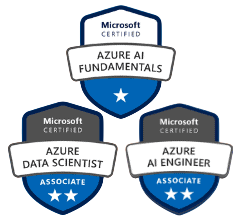
In our Azure AI/ML training and Data Science training, we cover all exam objectives, hands-on labs, and practice tests. Whether you’re aiming to become a Microsoft Certified: Azure AI Engineer, Azure AI Fundamentals, or Azure Data Scientist, join our waitlist by clicking here


![Microsoft Agentic AI Business Solutions Architect [AB-100] | K21 Academy](https://test.k21academy.com/wp-content/uploads/2025/11/Microsoft-Agentic-AI-Business-Solutions-Architect-AB-100-Exam-Overview1.png)