



“Did you know that AI-generated content is already writing news articles, creating art, and even coding software?” Generative Artificial intelligence (AI) has gone far beyond science fiction and is now a transformative force across industries.
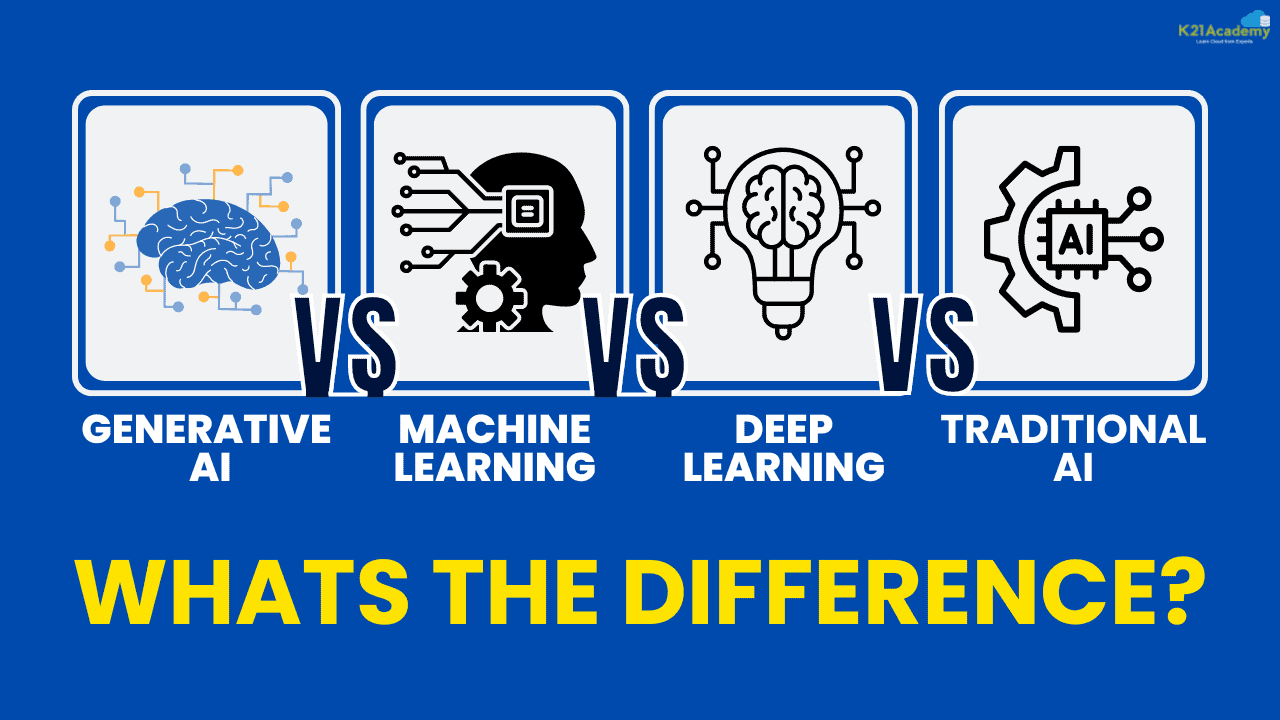
In this blog, we’ll explore Generative AI (GenAI) and how it stacks up against Traditional AI, Machine Learning (ML), and Deep Learning (DL). Discover the key differences between these technologies and how they’re reshaping the future of innovation.
Table of Contents
- Modern AI
- Generative AI vs Traditional AI
- Machine Learning (ML)
- Deep Learning
- Difference: GenAI vs Machine Learning vs Deep Learning
- Conclusion
- Frequently asked questions
What is Traditional AI?
Traditional AI refers to the early stages of artificial intelligence, which began with the idea that machines could mimic human intelligence. This era focused on rule-based systems where computers followed pre-programmed instructions to perform specific tasks, such as playing chess or solving basic problems.

Traditional AI was good at solving narrow tasks but struggled with more complex, real-world problems. It couldn’t adapt or learn on its own, which limited its use in industries that needed more flexibility.
But why has AI seen such rapid growth over the last decade? Let’s explore the rise of Modern AI and its impact.
What is Modern AI (Gen AI), and How Smart Is It?
Modern AI uses advanced methods like Machine Learning and Deep Learning to go beyond the limitations of traditional AI.
These new methods allow computers to analyze data, learn patterns, and make predictions without needing step-by-step instructions for each task. Modern AI can handle more complex problems and is now used in fields like healthcare, finance, and manufacturing.
 Traditional AI vs Generative AI
Generative AI (GenAI) is a newer form of AI that stands out from traditional AI in one big way: it creates. Instead of just analyzing existing data, Generative AI models like large language models (LLMs) can generate new content—from text to images—based on patterns they’ve learned from massive amounts of data.
For example, GenAI can write entire articles, generate images, or even assist in product design by creating prototypes. This technology is revolutionizing industries like research and development, customer service, and creative arts by allowing for more personalized and innovative solutions.
Machine Learning, Deep Learning Explained: With Top Use Cases
Machine Learning (ML)
This is a type of AI that enables computers to learn from data without being explicitly programmed. In ML, computers analyze historical data to make predictions or decisions. ML can be found in everyday applications, from recommending products to predicting equipment failures.

Top ML use cases include:
- Predictive Maintenance: Analyzing sensor data to predict when machines will need repairs, reducing downtime and maintenance costs.
- Recommendation Systems: Suggesting personalized products, movies, or music based on user preferences.
- Fraud Detection: Spotting unusual patterns in financial transactions to detect fraud.
- Yield Optimization: Helping farmers increase crop production by analyzing soil, weather, and historical data.
Machine Learning’s ability to improve processes and provide insights makes it essential in industries ranging from retail to agriculture.
Deep Learning
Deep Learning (DL) is a specialized type of machine learning inspired by the structure of the human brain. Using artificial neural networks, deep learning allows computers to analyze complex patterns in data, enabling them to excel at tasks like image recognition and natural language processing (NLP).
Although not inherently generative, deep learning is the foundation for many Generative AI models. For example, Generative Adversarial Networks (GANs), which create realistic images, are built using deep learning techniques.

Top DL use cases include:
- Image Recognition: Deep learning powers facial recognition, medical imaging, and more. In healthcare, it helps reduce diagnosis errors by 50%.
- Natural Language Processing (NLP): Technologies like transformers and recurrent neural networks (RNNs) are used for text summarization, language translation, and even chatbots.
- Autonomous Vehicles: Deep learning helps self-driving cars detect objects, plan routes, and make decisions in real-time.
- Chatbots and Customer Support: AI-powered chatbots use deep learning-based NLP to improve customer service experiences.
Differences: Generative AI vs Machine Learning vs Deep Learning
Now that we’ve explored Generative AI, Machine Learning, and Deep Learning, let’s break down the key differences:
 Conclusion
AI is a vast field, ranging from traditional rule-based systems to modern technologies like Machine Learning, Deep Learning, and Generative AI. Each has unique capabilities that are reshaping industries and opening up new opportunities for innovation.
- Traditional AI was effective for specific tasks but lacked adaptability.
- Machine Learning revolutionized AI by allowing systems to learn and improve from experience.
- Deep Learning further pushed AI’s limits, enabling breakthroughs in image and speech recognition.
- Generative AI takes AI a step further by creating new content, unlocking endless possibilities in industries like design, entertainment, and customer service.
As businesses embrace these AI technologies, they can drive innovation, efficiency, and personalized experiences that set them apart in an increasingly competitive world.
Frequently Asked Question
1.What are the main differences between traditional AI and modern AI techniques?
Traditional AI was focused on narrow, rule-based systems that performed well on specific tasks but lacked flexibility. Modern AI, including machine learning and deep learning, introduces adaptability and intelligence, allowing systems to handle more complex, real-world problems.
2.How does generative AI differ from other AI technologies like machine learning and deep learning?
Generative AI, unlike machine learning and deep learning, creates entirely new and original content using models such as large language models (LLMs). While machine learning and deep learning focus on pattern recognition and prediction, generative AI produces novel outputs from scratch.
3.How does deep learning contribute to advancements in AI?
Deep learning, inspired by the human brain, uses artificial neural networks to process complex data. It excels in areas like natural language processing, image and speech recognition, and autonomous vehicles, forming the foundation for many generative AI models.
4.What are some practical applications of machine learning in businesses?
Machine learning can be applied to various business scenarios such as predictive maintenance (reducing costs and downtime), recommendation systems (personalizing product suggestions), fraud detection (identifying fraudulent activities), and yield optimization (improving agricultural productivity).
References
- An Introduction to Reinforcement Learning
- The role of AI & ML in cloud computing
- Introduction To Data Science and Machine Learning
- Deep Learning Vs Machine Learning
- Recurrent Neural Networks (RNN) Tutorial
- Introduction to Artificial Neural Network
Next Task For You
In our AWS AI/ML training, we cover all exam objectives, hands-on labs, and practice tests. Whether you’re aiming to become a AWS Certified AI Practitioner, AWS Certified ML Engineer, & AWS Certified Machine Learning Specialty
Secure your spot by Clicking Here.


![Microsoft Agentic AI Business Solutions Architect [AB-100] | K21 Academy](https://test.k21academy.com/wp-content/uploads/2025/11/Microsoft-Agentic-AI-Business-Solutions-Architect-AB-100-Exam-Overview1.png)