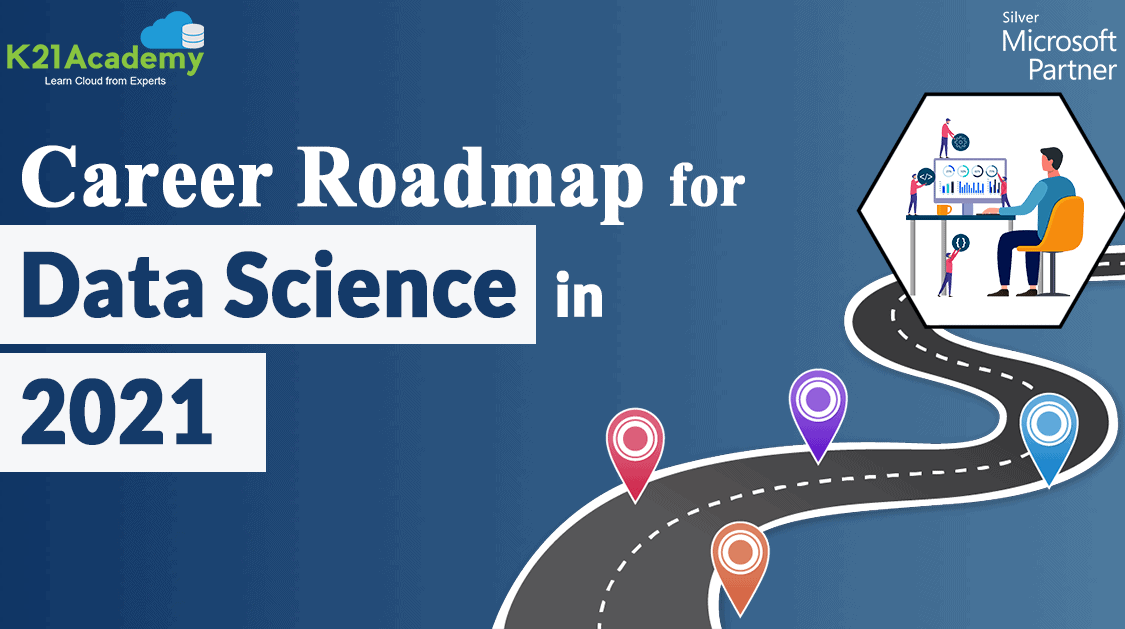




In this post, I will share with you the Data Science Career Path in 2023. Data Science continues to be one of the most trending jobs in the industry today. According to the US Bureau of Labor Statistics survey, there will be a rise of 27.9% in Data Science job opportunities by 2026. A Data Science career is always rewarding if you gain the right set of skills. Let’s get right into this blog to extend our discussion further.
We will have a discussion on the following topics:
- What is Data Science?
- What is the role of a Data Scientist?
- Where do Data Scientists work?
- Data Science Career Path
- Data Science Job Roles and Opportunities
- Frequently Asked Questions
- Conclusion
What is Data Science?
Data Science is making raw data, structured data, and unstructured data understandable and actionable to gain meaningful insights from them. Valuable insights from data are obtained with scientific methods, processes, algorithms, and systems. Those who perform these operations are highly skilled individuals and are called Data Scientists.
Technically, Data Science is a multidisciplinary tool that combines domain experience, programming skills, mathematics and statistics, and machine learning concepts to extract information from data. Machine learning algorithms are used on numbers, text, photos, video, audio, and other data to create artificial intelligence (AI) systems that can execute jobs that would normally need human intelligence.
What is the role of a Data Scientist?
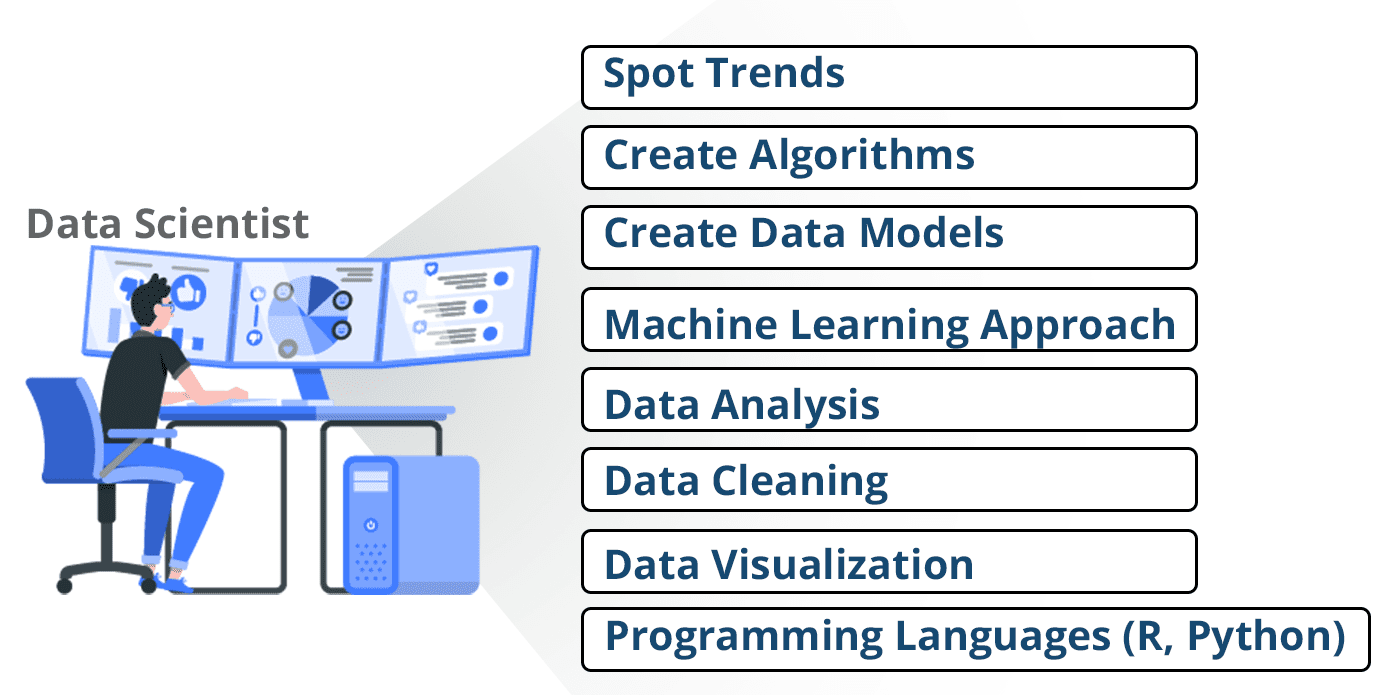
A data scientist is a data analyst with technical expertise and the capacity to tackle difficult challenges. A data scientist is a cross between a mathematician, a computer scientist, and a trend-spotter – someone who works at the intersection of technology and business. So, what’s the bottom line here? Someone who gathers, analyses, and interprets data in order to assist a company to improve its operations and gain a competitive advantage.
Let’s have a look at the summarised role of a Data Scientist:
- To unearth insights, look for patterns and trends in datasets.
- To forecast outcomes, create algorithms and data models.
- To improve the quality of data or product offers using machine learning approaches.
- Inform the latest trend, recommendations to other teams and senior employees of a company.
- In data analysis, use data tools like Python, R, SAS, or SQL.
- Keep up with the latest developments in the world of Data Science.
Check Out: Our blog post on Python Function.
Where do Data Scientists work?
There is a huge demand for Data Scientists in every other sector today. Let’s quickly go through the fields where Data Scientists actually put their skills and hours to play with Data.

Also Read: About Python IDE.
Now we will have a look at the Data Science Career Path.
In what ways are data scientists employed in the Pharmaceutical & Biotechnology industry?
Data scientists in the pharmaceutical and biotechnology industry analyze clinical trial data, model drug efficacy, predict patient outcomes, optimize manufacturing processes, and support personalized medicine. They utilize machine learning, data mining, and statistical models to accelerate research and development.
How do data scientists contribute to the Management & Consulting industry?
Data scientists in the Management & Consulting industry analyze data to uncover insights, optimize operations, and drive strategic decisions. They develop predictive models, conduct trend analysis, and help businesses improve efficiency, reduce costs, and enhance customer experience through data-driven solutions.
What opportunities are available for data scientists in the Financial Services industry?
Data scientists in financial services can explore opportunities in fraud detection, algorithmic trading, risk management, customer segmentation, credit scoring, and predictive analytics. They leverage AI/ML models to optimize operations, enhance decision-making, and drive personalized customer experiences.
How does the Information Technology industry utilize data scientists?
In the IT industry, data scientists analyze vast datasets to uncover insights, optimize processes, and drive decision-making. They develop predictive models, enhance algorithms, improve user experiences, and contribute to innovations in AI, machine learning, and automation technologies.
What are the top industries for data scientists according to Glassdoor data?
According to Glassdoor, top industries for data scientists include technology, finance, healthcare, e-commerce, and consulting. These sectors leverage data science for predictive analytics, machine learning, customer insights, and operational efficiency, driving significant demand for skilled professionals.
Data Science Career Path
Let’s see the detailed information about the Data Science Career Path. But, before starting your Data Science journey, it is essential for you to understand What Data Science actually is and will you be an excellent fit for Data Science or not?
Let’s divide Data Science Career Path into the following steps.
Step 1) Understand and analyze whether you can be a great fit for Data Science or not. Because people often follow the hurdle and their friend’s advice, and when they get into that field in actuality, they feel stuck. Neither can they perform well for the company, nor can they satisfy themselves.
Step 2) Earn at least a bachelor’s degree in Computer Science, IT, Mathematics, Business or other related fields. Make sure to polish your skills and concepts rigorously. Although many big names like Google, Apple, IBM do not require any college degree now. Instead, they hire on the basis of skills. But there are rare brands as of now, so make sure to get a bachelor’s degree in this field.
Step 3) Mathematics and Statistics
It does not matter if you are good at maths or not. You can start your Data Science journey by learning the following topics:
- Linear Algebra
- Probability
- Descriptive Statistics
- Inferential Statistics
- Structured Thinking
Step 4) Programming language is a fundamental key for Data Science. Let’s see the top trending programming languages for Data Science.
- Python: It is one of the most popular and used programming languages. Learning this language can help you build web applications, handle big data, quickly prototype, and more.

- R Language: It is another most trending programming language for Data Science. That offers a free software environment for statistical computing.

Step 5) Data Manipulation and Analysis
Data manipulation, often known as wrangling, is the process of cleaning and transforming data into a format that may be properly evaluated in subsequent phases.
Data wrangling and manipulation takes a lot of work, but it will help you make better data-driven decisions in the end. The common data manipulation and wrangling techniques used are missing value imputation, outlier treatment, correcting data types, scaling, and transformation.
Data analysis is the process in which you learn everything there is to know about the data and get a sense of how it feels. This is normally the point at which you gain a lot of knowledge about the data. For example, what are the typical weekly sales, which products are the most popular, etc.
Step 6) Data Visualization Tools
The graphical display of data using visual components such as charts, graphics, maps, infographics, and more is known as data visualization. It falls in between technical analysis and visual narrative. Data visualization is becoming a critical tool in making sense of the massive volumes of data generated every day as big data becomes more integral to the business. Using tools like ggplot, d3.js, and Tableau, a data scientist must be able to visualize data.
Step 7) Machine Learning
Machine learning is a must-have ability for any data scientist. Predictive models are created using machine learning. If you want to forecast how many clients you’ll have in the upcoming month based on the previous month’s data, for example, you’ll need to employ machine learning techniques.
Step 8) Communication Skills, Storytelling and Structured Thinking
- Communication Skills: are the crucial factor in developing a problem statement. The stakeholders inform the data scientist of their requirements at the start of the project, and the latter formulate a problem statement. Hence, only good communication skills can help you understand the problems better from the customer’s side.
- Storytelling: You must be good at storytelling. Let’s say you have created a graph that shows the cricket score and wickets. But as this is the human tendency not to pick the blocks of the charts unless you make them understand what exactly is being shown over the graph. Hence, storytelling is one of the essential skills.
- Structured Thinking: A Data Scientist always thinks constructively to find solutions to complex problems. Step by step approach using suitable methods is an essential part of being a Data Scientist. Structured thinking comes from experience. The more you are involved in the projects, the more you can learn.
- Data Science is a broad field with a never-ending journey of learning. Therefore you can keep learning as per the technological advancements to upgrade your skills and grab a good opportunity.
Check out: Deep Learning Vs Machine Learning
Data Science Job Roles and Opportunities
Here is the detailed information about Data Science Job Roles.
Data Scientist
A data scientist is the most in-demand Data Science career path among professionals. If you wish to pursue a career as a data scientist, you’ll be in charge of data gathering, analysis, and actionable insights based on enormous amounts of raw data. If you want to pursue a career in Data Science, you should be interested in the technical side of things, which requires a good background in mathematics, statistics, and programming skills.
Skillset: Statistics, mathematics, data modelling, Python or R programming, Skills in database management, business acumen, visualization/BI, and presentation
Data Analyst
A data analyst gathers data from various sources and analyses it for patterns that can be used to make decisions. They are in charge of processing and modifying massive data sets in order to meet the companies’ desired analyses. A data analyst can assist a corporation in improving the quality of its data systems by recommending various approaches and strategies.
Skillset: Data Modelling, Python or R programming, Tableau, Business acumen, Database cleaning skills, Visualization/BI, Presentation skills
Data Engineer
This is one of the other famous Data Science career paths that attract multiple professionals. A data engineer is responsible for creating and nurturing data pipelines that help make information available to data scientists. They are also responsible for building new APIs to support the increase in data complexity. They work in close contact with front-end and back-end developers, product managers, and analysts.
Skillset: Database management, data cleaning, Python or R programming, Hadoop, Business acumen, Database cleaning skills, Visualization/BI, Presentation skills
Business Intelligence Developer
They convert data into insights, which are then used to create commercial value. People with good critical thinking and problem-solving talents should pursue a career in Data Science. Data analytics, data visualization, and data modelling are all methodologies used by BI analysts. BI analysts can identify trends that can assist managers in making business decisions that will improve the company’s overall performance.
Skillset: Python or R programming, Hadoop, creating models, Notebook, Github, Data Modelling, Business acumen, Visualization/BI
Data Architect
They are the ones who provide the groundwork for all data management systems. Every company’s database must be constructed and maintained by identifying all structural and installation options. A data architect is in charge of this task. Their duty is to guarantee that their company’s data solutions are performance-driven, as well as to build analytics for a variety of platforms.
Skillset: Maths, Statistics, Data Visualization, Hadoop, Data Mining and Modeling tools, Programming languages, DBMS, Cloud Computing
Check out: Data Visualization using Plotly
What are the responsibilities and required skills for a Director in data science?
A Director in Data Science oversees strategy, team management, and project execution. Key skills include leadership, advanced analytics, machine learning, data engineering, business acumen, communication, and expertise in data-driven decision-making and AI technologies.
What does the Staff role entail in the IC Leadership Track?
In the IC Leadership Track, the Staff role focuses on high-level technical expertise, providing strategic direction in projects, mentoring peers, and driving innovation. Staff members lead complex initiatives, influence product development, and foster cross-team collaboration to ensure success.
How does the role of Senior Manager differ from that of a Manager?
A Senior Manager typically has broader responsibilities, including strategic planning, cross-departmental leadership, and higher-level decision-making. They mentor managers, oversee larger teams, and align projects with organizational goals, whereas a Manager focuses on day-to-day operations and team supervision.
What are the key responsibilities of a Manager in the data science field?
A data science manager leads teams, defines project goals, and ensures data-driven solutions align with business needs. They oversee model development, data analysis, and deployment, while mentoring team members and coordinating with stakeholders for impactful decision-making.
How does the Senior Director role expand on the responsibilities of a Director?
A Senior Director role expands on a Director’s responsibilities by overseeing larger teams, shaping strategic direction, driving organizational goals, and managing high-level relationships. Senior Directors focus on long-term growth, cross-departmental collaboration, and influencing executive decisions for business success.
What is the Management Leadership Track and what positions does it include?
The Management Leadership Track is a career path focusing on developing leadership and management skills. It includes positions such as Team Lead, Manager, Director, and VP, with responsibilities in strategy, decision-making, team building, and organizational leadership.
What is the Management Leadership Track and what positions does it include?
The Management Leadership Track is a career path focusing on developing leadership and management skills. It includes positions such as Team Lead, Manager, Director, and VP, with responsibilities in strategy, decision-making, team building, and organizational leadership.
What functions does a Group Manager perform in a data science career path?
A Group Manager in data science oversees project execution, guides a team of data scientists, ensures alignment with business goals, manages stakeholder communication, allocates resources, and fosters a culture of innovation and continuous learning within the team.
What distinguishes the Fellow position in the IC Leadership Track?
The Fellow position in the IC Leadership Track is distinguished by its focus on deep technical expertise, thought leadership, and innovation. It involves leading complex projects, mentoring peers, and driving strategic initiatives without formal managerial responsibilities.
What are the main functions of the Distinguished role in data science?
The Distinguished role in data science involves leading strategic initiatives, mentoring teams, driving innovation, and influencing data-driven decision-making across the organization. Experts in this role push boundaries in research, implementation, and scaling of advanced data solutions.
What is the IC Leadership Track, and what does it involve?
The IC (Individual Contributor) Leadership Track is designed for professionals who prefer to advance through technical expertise rather than management roles. It involves leading projects, mentoring peers, and driving innovation while maintaining hands-on involvement in technical work.
What are the key duties and skills required for a Vice President in data science?
A Vice President in Data Science leads strategy, manages teams, drives data-driven insights, and oversees analytics projects. Key skills include leadership, expertise in machine learning, data visualization, business acumen, communication, and a strong understanding of AI technologies.
How does the Associate role differ from the Analyst role in terms of experience and skills?
The Associate role typically requires foundational experience and technical skills, often focused on execution and support tasks. In contrast, an Analyst role demands deeper analytical skills, problem-solving abilities, and more strategic insight to interpret data and guide decision-making.
Why is Human Resources & Staffing a significant industry for data scientists?
Human Resources & Staffing is a significant industry for data scientists because it relies on data-driven insights to optimize recruitment, performance management, employee retention, and workforce planning. Data science helps identify patterns, predict trends, and improve decision-making in HR processes.
Frequently Asked Questions
Q1. Is Data Science still in demand in 2023?
Ans: Yes, Data Science is undoubtedly a rising career not only in 2023 but also in the future. There is a lack of skilled Data Science professionals, increasing its demand and offering a high pay scale. Hence, choosing Data Science as a career is a bonus, but you should have the proper skillset and certifications.
Q2. Is Data Science a stressful job?
Ans: Data scientists often have to plan long hours, especially when working to solve a big problem. But the field has become very competitive in recent years, and sheer competition can be stressful.
Q3. Can Data scientists become CEO?
Ans: There are no barriers for data scientists to become CEOs, but they must demonstrate their skills in every way. But they won’t have enough time to do the job of a data scientist because to be an efficient senior manager, your time and skills must be used to interact with people.
Q4 : What is the focus of the Management Track for data scientists?
Ans: The Management Track for data scientists focuses on developing leadership, communication, and strategic decision-making skills. It prepares professionals to manage teams, align data projects with business goals, and drive data-driven initiatives, balancing technical expertise with organizational vision.
Conclusion
Now we have got a clear picture of a typical Data Science Career Path. Data Science is an excellent deal for those who are looking for high paying job opportunities. This field has immense scope for growth in the upcoming years. Nowadays, companies are offering desired salary packages to individuals with suitable skill sets and certifications. But as the pay scale is high, so is the skill requirement. Make sure you practice the concepts and algorithms rigorously to grab a good opportunity.
Related References
- Visit our YouTube channel “K21Academy”
- Python for Beginners
- Data Science vs Data Analytics vs Data Engineer
- Natural Language Processing with Python
- Data Science Articles And Whitepapers
- Python for Data Science
- Introduction to Reinforcement Learning
Next Task: Enhance Your Azure AI/ML Skills


![Microsoft Agentic AI Business Solutions Architect [AB-100] | K21 Academy](https://test.k21academy.com/wp-content/uploads/2025/11/Microsoft-Agentic-AI-Business-Solutions-Architect-AB-100-Exam-Overview1.png)