

In this blog, I am going to share some quick tips, including Q/A and useful links from Day of our recently launched batch of DevOps for Beginners Training.
In this blog, I have shared some quick tips, including Q/A and valuable links.
On our Day 1 Live Session of the DevOps for Beginners Training Program, we have covered Introduction to DevOps, DevOps Principles, DevOps Culture, and Characteristics of a DevOps Culture Change.
Introduction to DevOps
To get started with the first Module of DevOps for Beginners, it is important to clarify What is DevOps and its related concepts.
We started the session with DevOps basics, like What is DevOps, Why DevOps, etc.
DevOps Principles
There are mainly three principles in DevOps, and the principles are called Three Ways. Three Ways are The First Way –Flow, The Second Way –Feedback, The Third Way –Continuous Experimentation and Learning. By understanding the Three Ways, you’ll be able to understand more about the DevOps Principles. And after learning and understanding these Principles, there is less chance of a business to fail whenever they try to implement and improvise any new DevOps tool that has come to the Market.

DevOps Culture
DevOps is not just only a tool, or it’s not just only a method to follow for Project Management. DevOps is also a culture that a business should follow to increase its productivity within the Organization. The DevOps Culture addresses the most important challenge of every organization, i.e., the gap between dev + testing and operations, by establishing more communication between these two teams.
Characteristics Of A DevOps Culture Change
Implementing a DevOps Culture is a huge challenge for any organization because it requires the Organizations to break down some old habits, bring cultural changes, change the development strategies, implement the strategies to secure the organization, and implement new tools for DevOps Automation.
These challenges can be dealt with easily by understanding the DevOps Characteristics such as Golden Circle of DevOps(Why, How, What), Shift Left Strategies, Rugged DevOps, DevSec Ops and DevChat Ops.
So, here are some of the Q&As asked during the Live session from Day1.
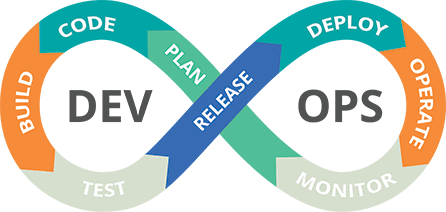
Q1. What is DevOps?
A. DevOps is the union of people, processes, and products to enable continuous delivery of value to our end users.
➝Read more about DevOps.
Q2. Is DevOps considered as a group of people or as an individual?
A. DevOps is people following process-enabled by-products to deliver value to our end users. And it also depends on how big and what the criticality of the Project is. DevOps is generally a horizontal process, i.e., a single DevOps person can be working on multiple projects.
Q3. What do the smaller inner rings in the 3rd DevOps Principle do?
A. Smaller rings imply Continuous Experimentation. It means until the business succeeds in implementing a new tool or a new way, it should do it again and again by taking different methods/steps.
➝Read more about DevOps Principle.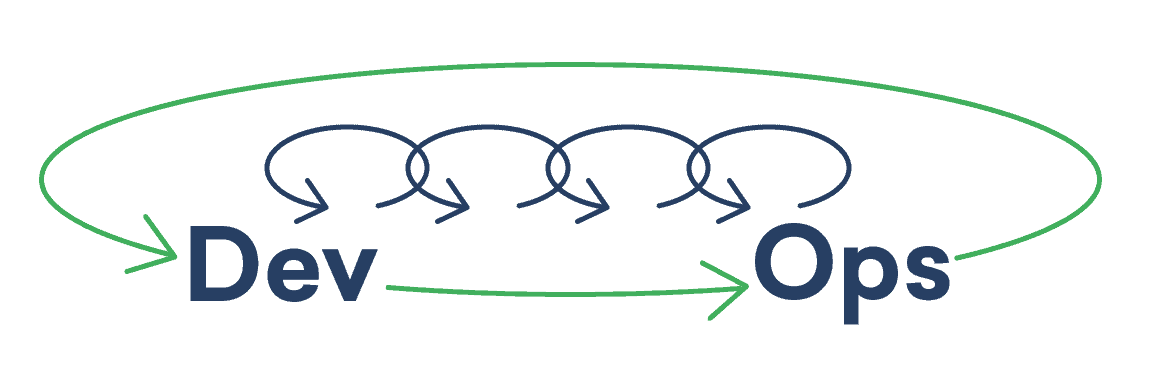
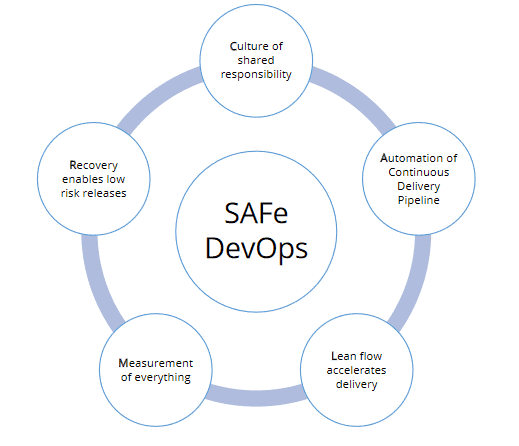
Q4. What does the R mean in the CALMR Model in the DevOps?
A. The CALMR Model R stands for Recovery, which enables low-risk releases, and it is also one of the DevOps Core Values.
Agile and Waterfall
Agile means the ability to move quickly and easily; or in a well-coordinated manner. Agile is centred around the idea of an iterative process for application development, with multiple development cycles called sprints.
Agile is a methodology that covers many frameworks, and they all incorporate the idea of iterative development and continuous feedback when creating an application.
Before Agile, Companies used to follow the traditional approach, i.e. Waterfall model for software development. To overcome the gaps introduced by the Waterfall model, companies have adapted Agile Methodology.
While DevOps addresses the communication gap between the development team and operation team, Agile addresses the communication gap between customer requirements and the development team.
Q5. Does Agile works with the waterfall model?
A. In today’s market, some companies combine both Processes, and it is called as Watergile Process. Mixing of processes can be done according to the need of the Organization.
The Waterfall Model takes more time to complete the Project. And the Agile model takes relatively less time in Project completion.
➝Read more about the Agile Methodology
Q6. Can we say that DevOps is a methodology?
A. DevOps is a methodology that combines software development (Dev) with operations (Ops). The intent is to enable communication between the teams so that they can build, test, and release software more quickly and with greater efficiency and speed.
Q7. In an organization, there are developers, operations, architect people, etc. So, in the real-time working environment or production, all these people do not communicate with each other if given an assignment or project?
A. In an agile environment, they all communicate with each other. In other environments, they don’t. For example, in a non-agile environment, DevOps will need a release note to deploy the application.
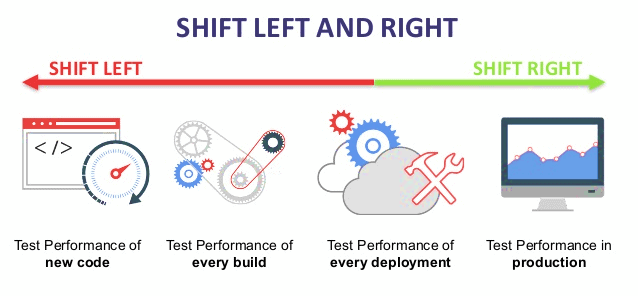
Q8. What is shift left strategies?
A. “Shifting left” is about building quality into the software development process. When you shift left, fewer things break in production because any issues are detected and resolved earlier.
Q9. Lean is an Agile Principle? How will Lean benefit DevOps?
A. Yes, Lean is an Agile Principle. Lean identifies the entire value stream for each service, product, or product family and eliminates waste for faster deliverance of your project to the Client.
Q10. So Rugged DevOps, in a nutshell, is just worrying about your code, right?
A. Rugged DevOps means securing only our code from the development phase until the production phase. The Code should be secured from the starting till the end. Rugged DevOps brings together the notions of DevOps and Security and is often used in software development for cloud environments.
Quiz Time (Sample Exam Questions)!
With our DevOps for Beginners training program, we cover 100+ sample exam questions to help you prepare for the certification.
Check out one of the questions and see if you can crack this…
Ques: Which metric BEST demonstrates DevOps business value?
A: Reduced time to deploy changes
B: Reduced cost to deploy changes
C: Increased profitability
D: Reduced deployment-related errors
Comment with your answers & we will tell you if you are correct or not!
Related/References:
- [Recap] Day 2: DevOps And Other Frameworks, Roles and Responsibility, Best Practices, Automation, Adopting DevOps [DevOps for Beginners]
- DevOps Foundation: Everything You Need to Know
- What Is DevOps | DevOps Principles | Advantages Of DevOps | Why DevOps?
- DevOps Engineer | DevOps Roles and Responsibilities
- Agile Methodology and DevOps | DevOps and Agile Relationship
- CI/CD Pipeline | Continuous Integration | Continuous Deployment
Next Task For You
Begin your journey towards becoming a DevOps Expert and earn a lot more by landing a high-paying job.
Join FREE CLASS to learn more about the DevOps Roles and Responsibilities, Job opportunities related to DevOps in the market, and what to study Including Hands-On labs and projects you must perform to get your Dream job.
Click on the below image to Register for Our FREE Class on Mastering DevOps on Cloud: How to Build In-Demand Skills and Land High-Paying Jobs


![Microsoft Agentic AI Business Solutions Architect [AB-100] | K21 Academy](https://test.k21academy.com/wp-content/uploads/2025/11/Microsoft-Agentic-AI-Business-Solutions-Architect-AB-100-Exam-Overview1.png)