




The 5 pillars of Azure Well-Architected Framework provides a set of Azure architecture best practices to help build and deliver great solutions.
In this blog, we are going to cover the Azure well-architected framework and the five pillars of the framework which are to be considered.
Overview of Azure Well-Architected Framework
Microsoft recently introduced the Microsoft Azure Well-Architected Framework, which provides customers with a set of Azure best practices to help them build and deliver well-architected solutions on top of the Azure platform.
It is a set of guiding principles to build high-quality solutions on Azure. There’s no one-size-fits-all approach to designing architecture. But there are some universal concepts that are to be applied regardless of the architecture, technology, or cloud provider.
These concepts are not all-inclusive but considering them will help in building a reliable, secure, and flexible foundation for the application.
5 Pillars Of Azure Well-Architected Framework
The 5 pillars of Azure well-architected framework are as follows:
- Cost optimization
- Operational excellence
- Performance efficiency
- Reliability
- Security
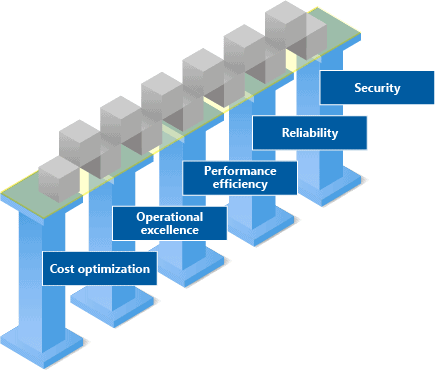
Now let’s look at the 5 pillars of Azure Well-Architected Framework in detail and understand the principles behind each of them.
1. Cost Optimization
Cost optimization refers to ensuring that the money your organization spends is being used to the maximum. Cloud services provide computing as a utility. Technologies in the cloud are provided under a service model, to be consumed on-demand. This on-demand service offering drives a fundamental change that directly affects planning, bookkeeping, and organizing.
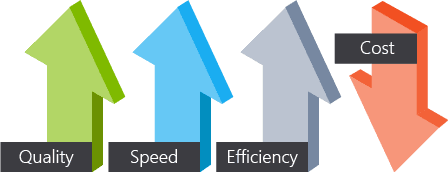
Design Principles
There are several principles which can be used for cost optimization:
Plan and Estimate Costs: For any cloud project, either development of a new application or the migration of an entire data center, it’s important to get a rough estimate of the costs which involves identifying any current resources to move or redevelop, understanding business objectives that might affect sizing, and selecting the appropriate services for the project. With these identified requirements, we can use cost estimation tools to provide a more concise estimate of the resources that would be required.
Provision with Optimization: Provisioning services that are optimized for cost from the outset can reduce your work effort in the future.
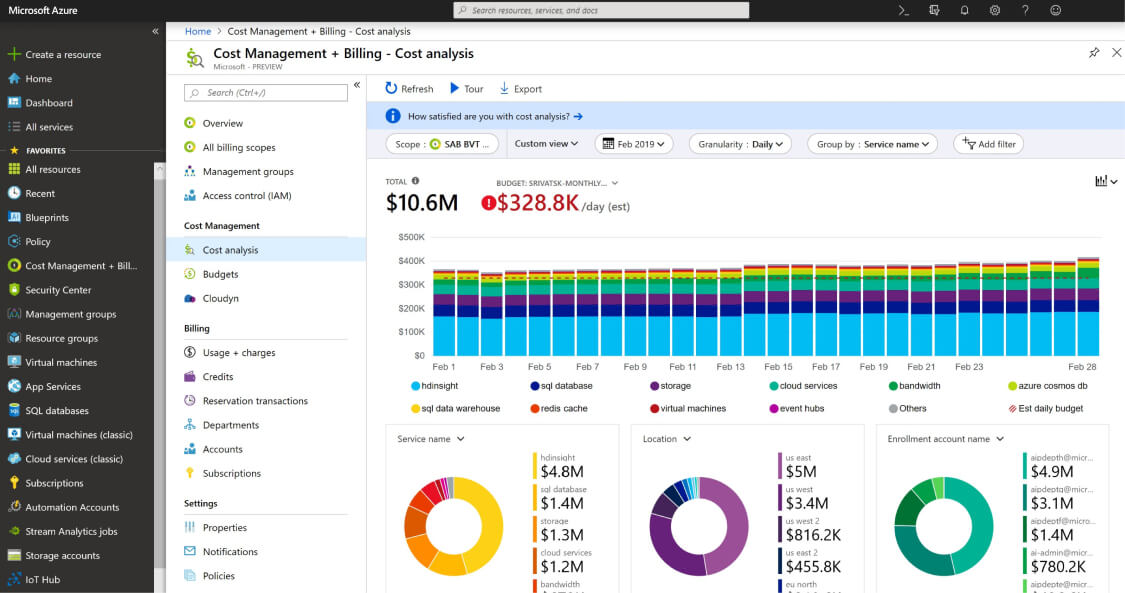
Use monitoring and analytics to gain cost insights: Conduct regular cost reviews across services to understand whether the expenditure is appropriate for the resource requirements of the workload. Adjust expenditures as necessary and also identify and track any cost anomalies that might show up on billing statements or through alerts.
Check Out: What is Delta Lake? Click here
2. Operational Excellence
Operational excellence refers to ensuring that there is full visibility into how the application is running, and ensuring the best experience for the users. It includes making the development and release practices more agile, which allows the business to quickly adjust to changes. By improving, operational capabilities, we can have faster development and release cycles, and a better experience for the users.
Design Principles
There are several principles which can be used for driving operational excellence through the architecture:
Design, build, and orchestrate with modern practices: Modern architectures should be designed with DevOps and continuous integration. Modern architecture will give you the ability to automate deployments by using infrastructure as code, automate application testing, and build new environments as needed.
Use monitoring and analytics to gain operational insights: Operationally, it’s important to have a robust monitoring strategy. This helps in identifying areas of waste, troubleshoot issues, and optimize the performance of your application. A multilayered approach is essential. Gathering data points from components at every layer will help alert you when values are outside acceptable ranges and help in tracking the spending over time.
Also Read: Our previous blog post on DP-203. Click here
3. Performance Efficiency
Performance efficiency refers to matching the resources available to an application with the demand that = is being received. It includes scaling resources, identifies and optimize potential bottlenecks, and optimizing application code for peak performance.
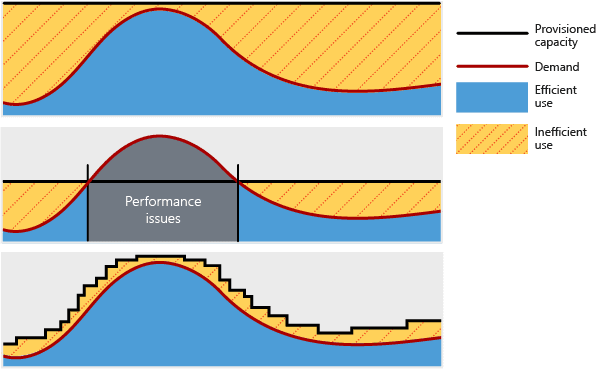
Some patterns and practices that can enhance the scalability and performance of the application are:
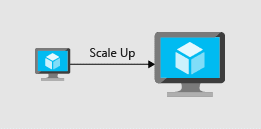
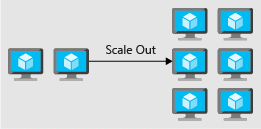
Scale Up and Scale Out: Compute resources can be scaled in two directions either scale-up or scale-out.
Scaling up refers to adding extra resources, such as CPU or memory, to a single instance which might be a virtual machine or a PaaS service.
Scaling out refers to adding more instances to a service which can be either virtual machines or PaaS services.
Optimize Network Performance
Optimize Storage Performance: In large-scale solutions, data is divided into separate partitions that can be managed and accessed separately. The partitioning strategy must be chosen carefully to maximize the benefits while minimizing the adverse effects. Partitioning helps in improving scalability, reducing contention, and optimizing performance.
Identify performance bottlenecks in your application: Distributed applications and services running in the cloud are complex pieces of software comprising of many moving parts. In the production environment, it’s necessary to track the way in which users utilize the system, trace resource utilization, and generally monitor the health and performance of systems.
4. Reliability
Designing for reliability includes maintaining uptime through small-scale incidents and temporary conditions like partial network outages, ensuring that the application can handle localized failures by integrating high availability into each component of the application, and eliminating single points of failure. It also focuses on recovery from data loss and from larger-scale disasters. It protects the business from financial losses that result from downtime and lost data. This also includes ensuring that the systems are available to the end-users and can recover from any failures.
It is the fourth pillar of the Azure well-architected framework.
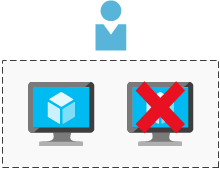
- Building a highly available architecture
- Building an architecture with failure recovery capability
Also Check: Our blog post on Azure Data Engineer. Click here
5. Security
Now that we have looked at 4 of the 5 pillars of the Azure Well-Architectecd framework, let’s look at the last and the most important one i.e., Security.
Data is the most valuable piece of an organization’s technical footprint. Security is all about protecting the data that an organization possesses, stores, and transmits. It includes authenticating and protecting the application and data from network vulnerabilities through tools like encryption.
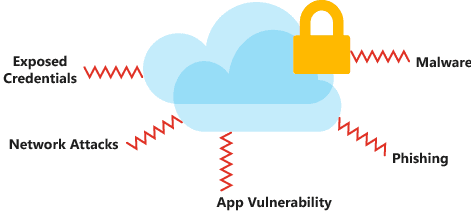
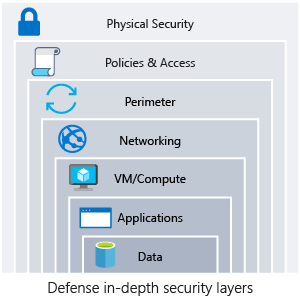
Defense in Depth: A multilayered approach in securing the environment increases the security posture. The layers include:
- Data
- Applications
- VM/compute
- Networking
- Perimeter
- Policies and access
- Physical security
Learn more: Designing An Azure Data Solution [DP-201]: Everything You Need To Know
Summary
The 5 Pillars of Azure Well-Architected Framework provides architectural best practices to execute a workload or applications without any bottlenecks and faults with efficiency.
These Five pillars of architecture have been designed by experts after gaining insight from thousands of scenarios and implementing these frameworks in your architecture will help you design stable and efficient systems.
Related/References
- Microsoft Azure Data Engineer Associate [DP-200 & DP-201]: Everything You Need To Know
- Implementing an Azure Data Solution | DP-200 | Step By Step Activity Guides [Hands-On Labs]
- Designing an Azure Data Solution | DP-201 | Step By Step Activity Guides [Hands-On Labs]
- Microsoft Azure Data Fundamentals [DP-900]: All You Need To Know
- Microsoft Azure Data Fundamentals [DP-900]: Step By Step Activity Guides (Hands-On Labs)
- Introduction to Big Data and Big Data Architectures
- Designing And Automate An Enterprise BI solution In Azure
- Azure Data Science And Data Engineering Certifications: DP-900 vs DP-100 vs DP-200/DP-201
Next Task For You
In our Azure Data Engineer training program, we will cover 28 Hands-On Labs. If you want to begin your journey towards becoming a Microsoft Certified: Azure Data Engineer Associate by checking out our FREE CLASS.


![Microsoft Agentic AI Business Solutions Architect [AB-100] | K21 Academy](https://test.k21academy.com/wp-content/uploads/2025/11/Microsoft-Agentic-AI-Business-Solutions-Architect-AB-100-Exam-Overview1.png)


