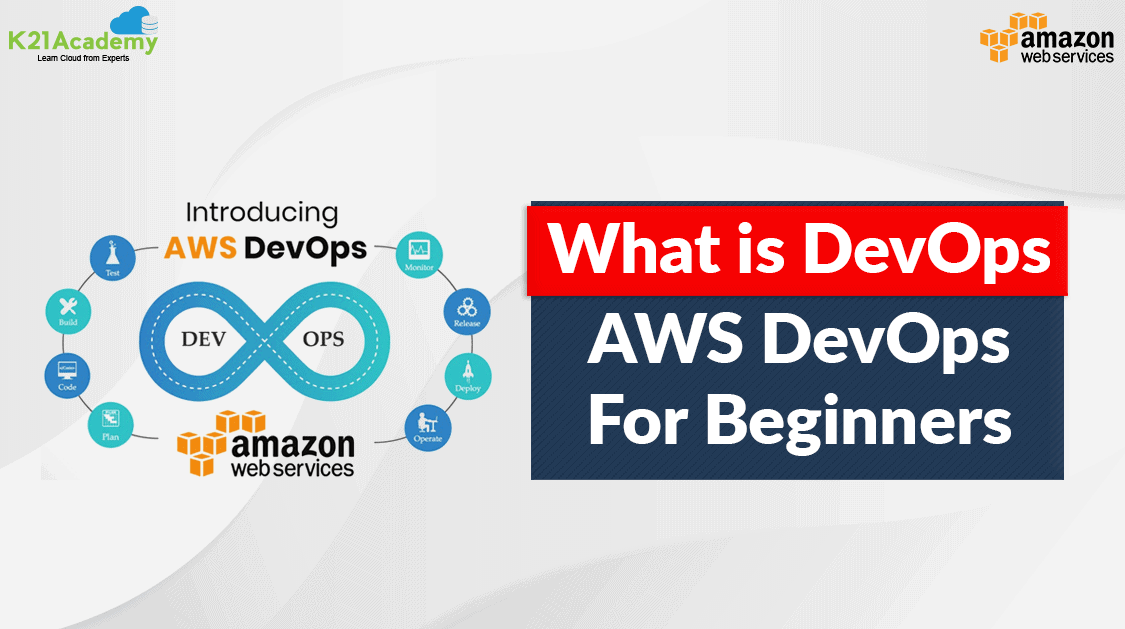


AWS provides a set of services that are designed to enable companies to build and deliver products quickly and reliably using AWS and DevOps practices. These services simplify provisioning and managing infrastructure, deploying application code, automating software release processes, and monitoring your application and infrastructure performance.
In this blog, I am going to discuss what AWS DevOps basically is and why it has gained so much popularity in the IT industry.
What is DevOps
Before getting into AWS DevOps, let’s first see what DevOps is. DevOps is a combination of Development and Operations. DevOps = Development + Operations.
What is Development
Development is a collective process of designing, programming, testing, and fixing bugs to create applications and maintain other software components. The development team is responsible for all of the work necessary to produce the working and validated assets.
What is Operations
Operations refer to a term for the processes and services managed by the IT team of an organization. These services include using resources effectively, keeping the process simple, managing the supply chain, and improving quality.
To know more about DevOps please check this blog. What is DevOps
Overview Of DevOps
DevOps is a combination of practices that streamline the automation and integration of processes between the software development and IT teams. This will help them to build, test, and release software in a faster and more reliable way.
The term was formed by combining the words “development” and “operations” and signifies a cultural shift that helps bridge the gap between the development and operation teams. The goal of DevOps is to change and improve the relationship by advocating better communication and collaboration between these two business units.
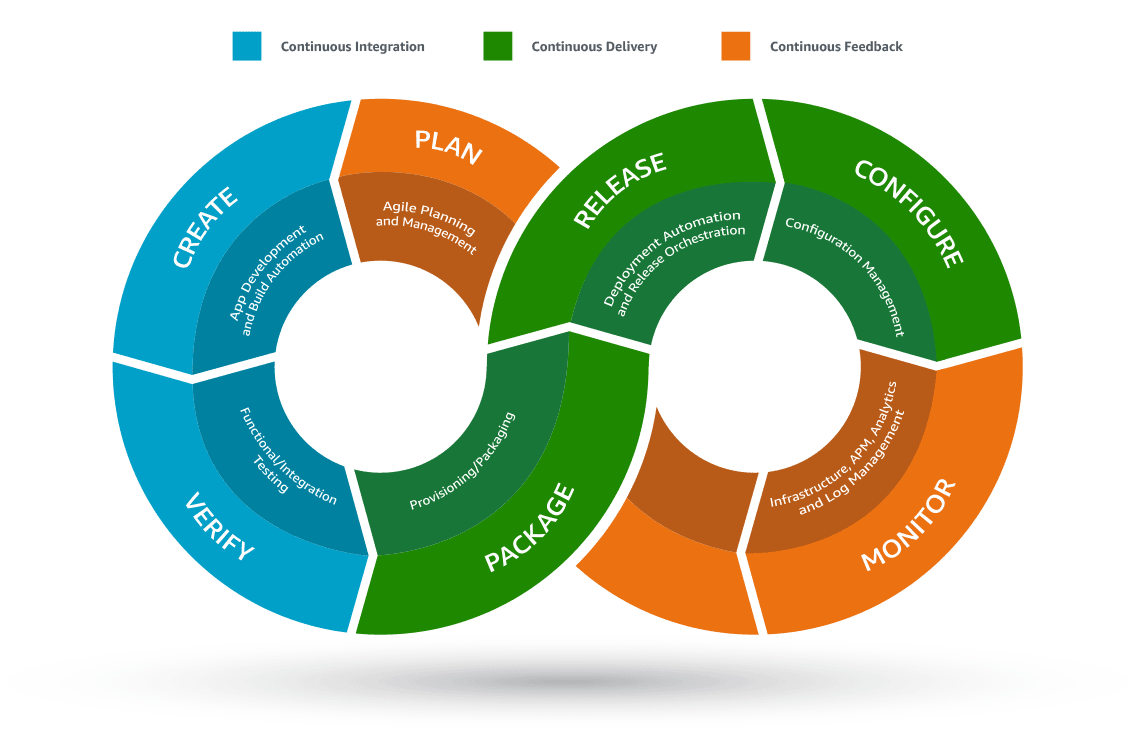
Organizations using the DevOps model are able to evolve and improve their products at a higher rate the organizations that use traditional processes. Collaboration, communication, and integration are the key elements of incorporating DevOps into any development and delivery setting. This speed enables the teams (and in turn their organizations) to better serve their customers and compete more effectively in the market.

Some benefits of DevOps are as under:
- Efficiency: Faster time to market
- Predictability: Lower failure rate of new releases
- Reproducibility: Version everything
- Maintainability: Faster time to recovery in the event of a new release crashing or otherwise disabling the current system Break down the wall between development and operations
Also read: AWS Elastic Beanstalk is an easy-to-use AWS service for deploying and scaling web applications and services.
Overview Of AWS
Amazon Web Services (AWS) is a cloud computing platform that provides on-demand services to individuals, companies, or the government on a paid subscription basis with a free tier application of 12 months. AWS offers 150 plus fully featured and managed services from different data centers globally. More than 70% of the cloud market relies on AWS. Many government and private organizations use AWS as it helps to lower costs, become more agile, and innovate faster.
Read here: A good example of how the DevOps principles are used in practice is AWS CloudFormation.
AWS & DevOps
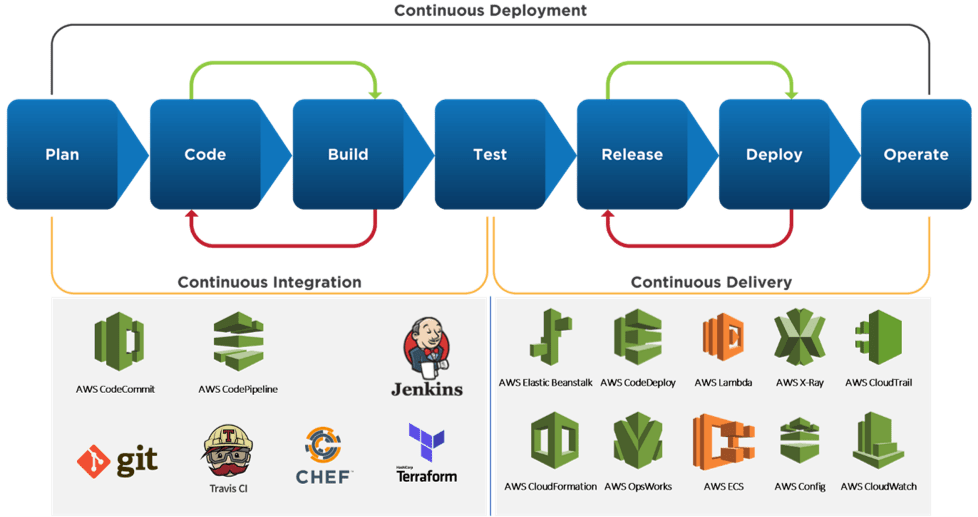
AWS is used for implementing DevOps culture using its tools and services. AWS provides many services that help you practice DevOps at your company and that are built first for use with AWS. These tools automate manual tasks, help teams manage complex environments and scale.
Why AWS for DevOps
- Get Started Fast: You are not required to download or install any software. You just need to create an AWS account and that’s it. Once you have created the account you can use each and every AWS service. These services help you take advantage of AWS resources and operating infrastructure on your own.
- Scalability: With each service, you make the most out of AWS resources too quickly by simplifying, provisioning, configuring, and scaling. You can even scale up thousands of instances using AWS services.
- Programmable: You have the option to use each service via the AWS Command Line Interface or through APIs and SDKs. You can also model and provision AWS resources and your entire AWS infrastructure using declarative AWS CloudFormation templates.
- Automation: AWS helps you use automation so you can build faster and more efficiently. Using AWS services, you can automate manual tasks or processes such as deployments, development & test workflows, container management, and configuration management.
- Secure: Use AWS Identity and Access Management (IAM) to set user permissions and policies. This gives you granular control over who can access your resources and how they access those resources.
- Pay-As-You-Go: AWS gives you the freedom to pay only for what you use. AWS pricing has no upfront fees, termination penalties, or long-term contracts. You can purchase services as you need and only for the time you require those services.
Best Practices For AWS DevOps
- Continuous Integration/Continuous Delivery. CI/CD pipelines are the backbone of DevOps culture. Continuous integration is building and regularly validating the project by continuously doing changes in the code at regular intervals of time. Continuous delivery builds off CI by automatically deploying code in the production environment.
- Infrastructure Automation. Automation, as discussed earlier, is crucial when it comes to operations as it focuses on the quality of the code and also the need to test it for any bugs.
- Infrastructure as Code. This practice focuses on managing your AWS cloud resources by writing a template file in a format that the machine understands and can be easily read by the users. The AWS CloudFormation tool is the go-to resource for AWS cloud development users.
- Monitoring and Logging. Monitoring and Logging are very beneficial as the system activities need to be monitored and recorded constantly to check that events are getting triggered properly and also to fix anything that is not running properly.
- Communication and Collaboration. Every team and department of an organization needs to remain updated with the project Logically, there should be a portal to share useful feedback that may shape the course of the project.
This is how Amazon Web Services supports DevOps to build store and deploy applications and for a good understanding of AWS DevOps, you must understand the above concepts and services.
Conclusion
DevOps is revolutionizing the way organizations build, test, and deploy software. AWS, with its powerful suite of tools, makes it easier for beginners and professionals alike to embrace DevOps practices. Now is the perfect time to start your DevOps journey with AWS.
FAQs
What is DevOps in simple terms?
DevOps is a culture and set of practices that combine development and operations to deliver software faster and more reliably.
What are the benefits of using AWS for DevOps?
AWS provides scalable, secure, and automated tools to streamline every stage of the DevOps lifecycle.
Is AWS DevOps suitable for beginners?
Yes, AWS offers user-friendly services and comprehensive guides, making it accessible for newcomers.
Which AWS services are essential for DevOps?
Key services include AWS CodePipeline, CodeBuild, CodeDeploy, and CloudFormation.
What certifications can help me learn AWS DevOps?
Consider the AWS Certified DevOps Engineer – Professional certification.
Related/References
- AWS Certified DevOps Engineer Professional DOP-C01
- Overview of Amazon Web Services & Concept
- AWS Management Console Walkthrough
- AWS CloudFormation
- AWS Elastic Beanstalk
Next Task For You
Begin your journey towards becoming an AWS Certified DevOps Engineer Professional by checking our FREE CLASS. Click on the below image to register for our FREE CLASS.


![Microsoft Agentic AI Business Solutions Architect [AB-100] | K21 Academy](https://test.k21academy.com/wp-content/uploads/2025/11/Microsoft-Agentic-AI-Business-Solutions-Architect-AB-100-Exam-Overview1.png)