


In today’s digital economy, data is the new currency, but it is still a struggle to keep pace with the changes in enterprise data and the growing business demands for information.
While businesses can agree that cloud-based technologies are key to ensuring data management, security, privacy, and process compliance across enterprises, there’s still a hot debate on how to get data processed faster- batch processing vs streaming processing.
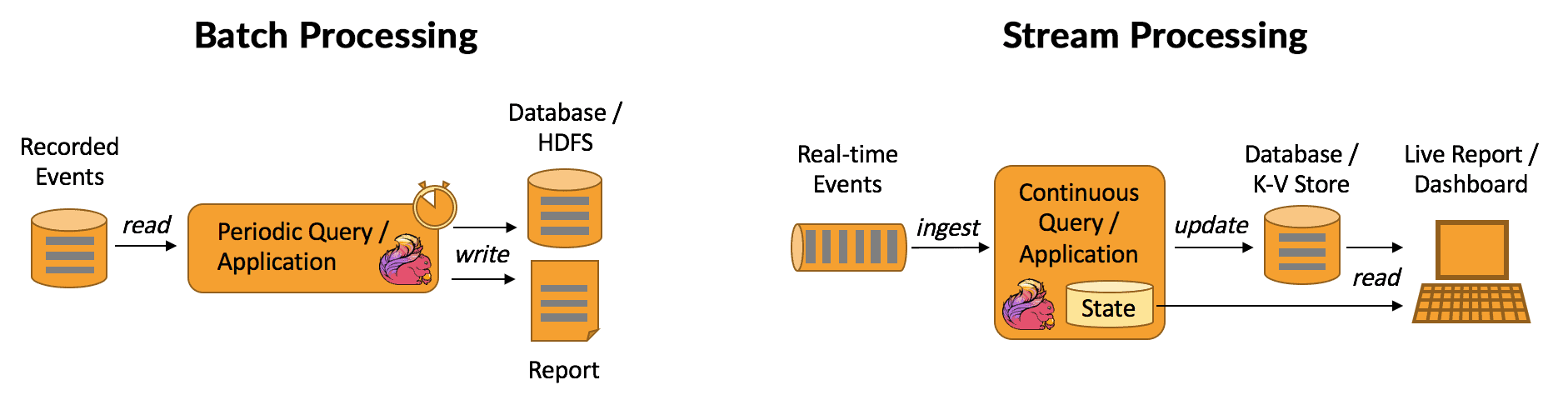
So in this blog, we will focus on batch and stream processing, what is the difference between the two, and which technique to use when.
What Is Batch Processing?
Batch processing refers to the processing of blocks of data that have already been stored over a period of time. For example, processing transactions that have been performed by a financial firm in a week. This data contains millions of records for a day that can be stored as a file or record. The particular file will undergo processing at the end of the day for various analyses that the firm requires and it will be a time taking process.
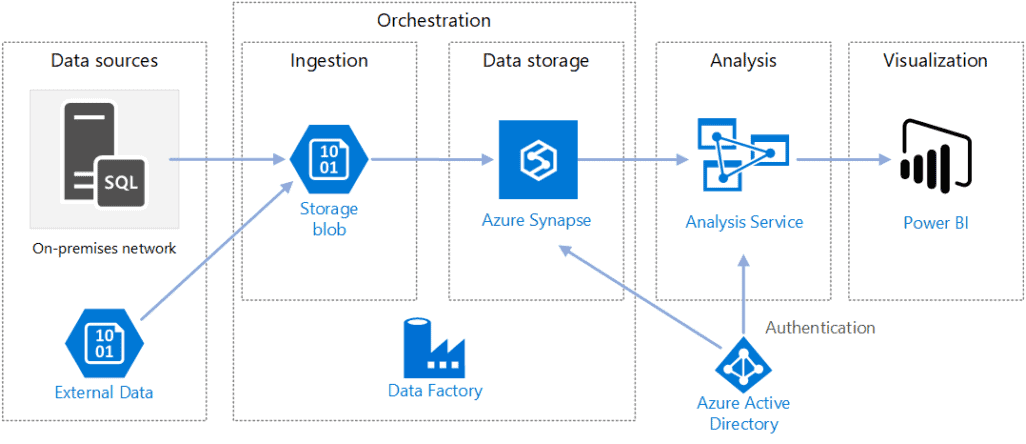
Batch Processing Architecture
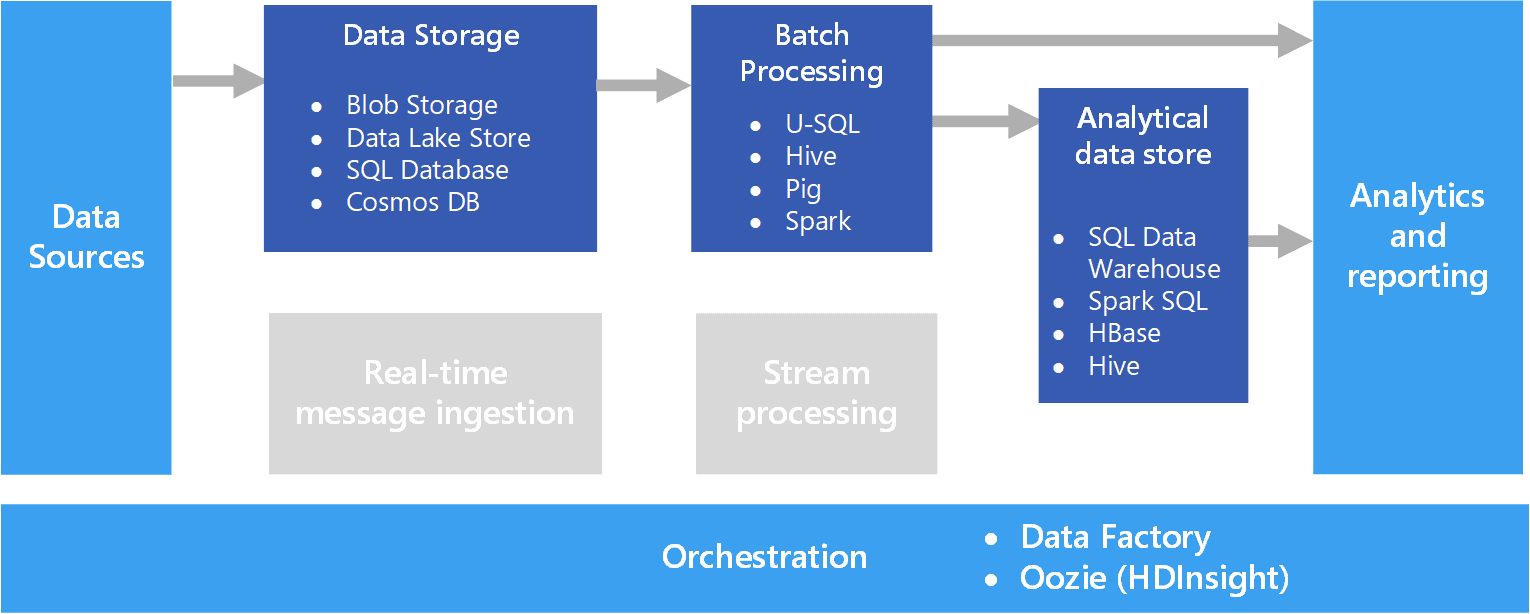
The source data is loaded into data storage, either by the source application itself or by an orchestration workflow, and then processed in-place by a parallelized job, which can also be initiated by the orchestration workflow. The processing may include multiple iterative steps before the transformed results are loaded into an analytical data store, which can be queried by analytics and reporting components.
Also check: Overview of Azure Stream Analytics
Batch processing architecture consists of the following logical components:
- Data Storage
- Batch processing
- Analytical data store
- Analysis and reporting
- Orchestration
Batch Processing Use Cases
Batch processing is used in a variety of scenarios, from simple data transformations to a more complete ETL pipeline. In the context of big data, batch processing may operate over very large data sets, where the computation takes a significant amount of time. It works well in situations where you don’t need real-time analytics results or when it is more important to process large volumes of data to get detailed insights rather than to get fast analytics results.
Read this: Article on Azure Data Lake
Technology Choices For Batch Processing:
- Azure Synapse Analytics: It is an analytics service that binds enterprise data warehousing and Big Data analytics.
- Azure Data Lake Analytics: It is an on-demand analytics job service that is used to simplify big data
- HDInsight: It is an open-source analytics service in the cloud that consists of open-source frameworks such as Hadoop, Apache Spark, Apache Kafka, and more.
- Azure Databricks: It allows us to integrate with open-source libraries and provides the latest version of Apache Spark.
- Azure Distributed Data Engineering Toolkit: It is used for provisioning on-demand Spark on Docker clusters in Azure.
Check out: Our blog on Azure Databricks for Beginners
What Is Stream Processing?
Stream processing is a big data technology that allows us to process data in real-time as they arrive and detect conditions within a small period of time from the point of receiving the data. It allows us to feed data into analytics tools as soon as they get generated and get instant analytics results.
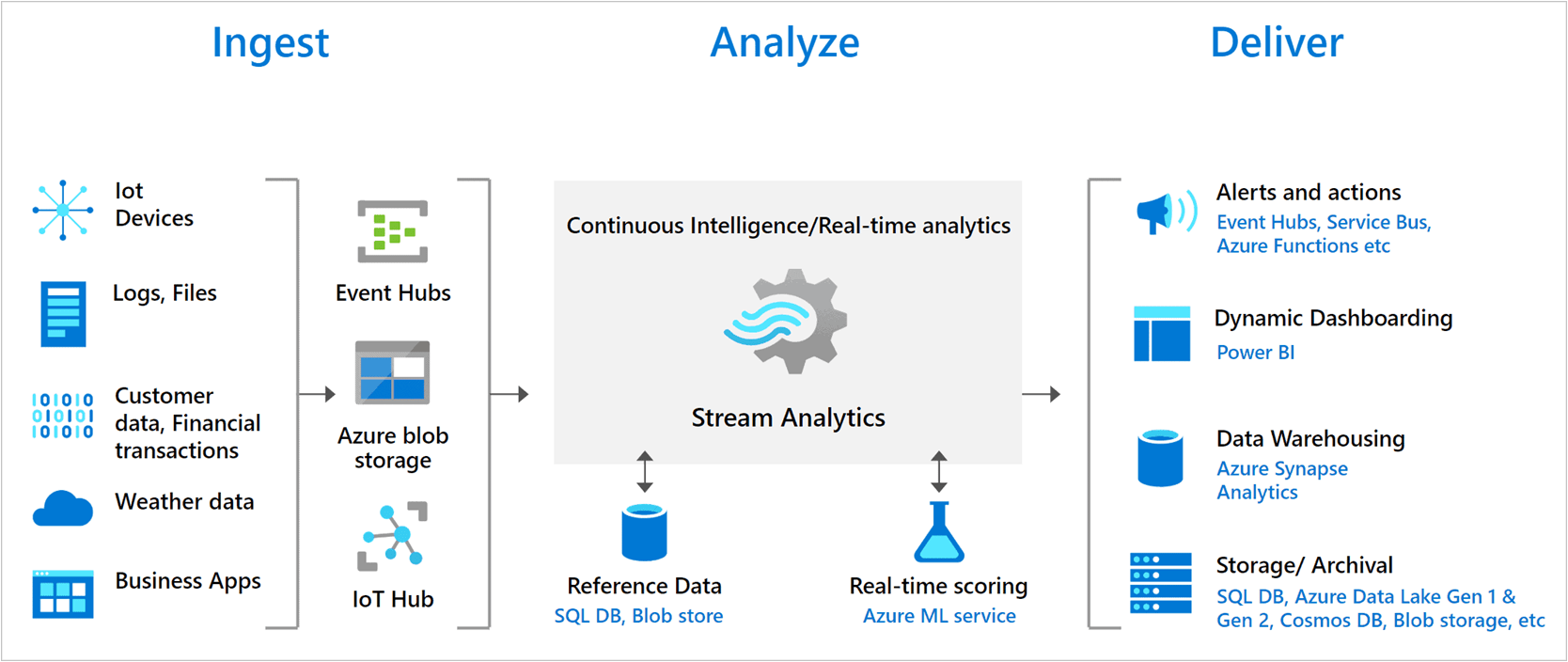
Stream Processing Use Cases
Stream processing is useful for tasks like fraud detection, social media sentiment analysis, log monitoring, analyzing customer behavior, and more.
Check Out: Our blog post on Microsoft Azure Data Engineer.
Technology Choices For Stream Processing:
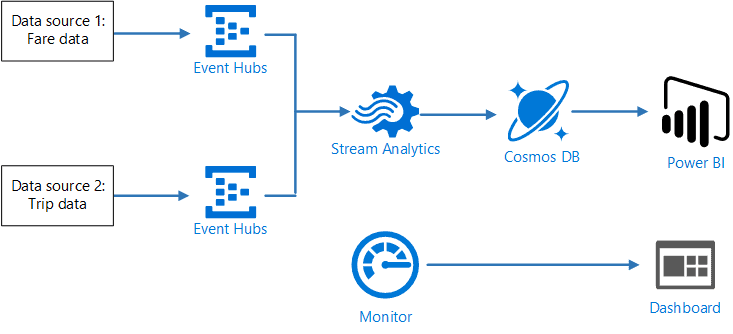
- Azure Stream Analytics: It is real-time analytics and event-processing engine designed to analyze and process high volumes of fast streaming data from multiple sources.
- HDInsight with Storm: Apache Storm is a distributed, fault-tolerant, and open-source computation system which is used to process streams of data in real-time with Apache Hadoop.
- Apache Spark in Azure Databricks
- Azure Kafka Stream APIs
- HDInsight with Spark Streaming: Apache Spark Streaming provides data stream processing on HDInsight Spark clusters.
Also Check: Our Previous Blog On Azure SQL Database
Batch Processing vs Stream Processing
Now that we have understood the two individual data stream techniques i.e., Batch processing and Stream processing, let’s look at the difference between these two.
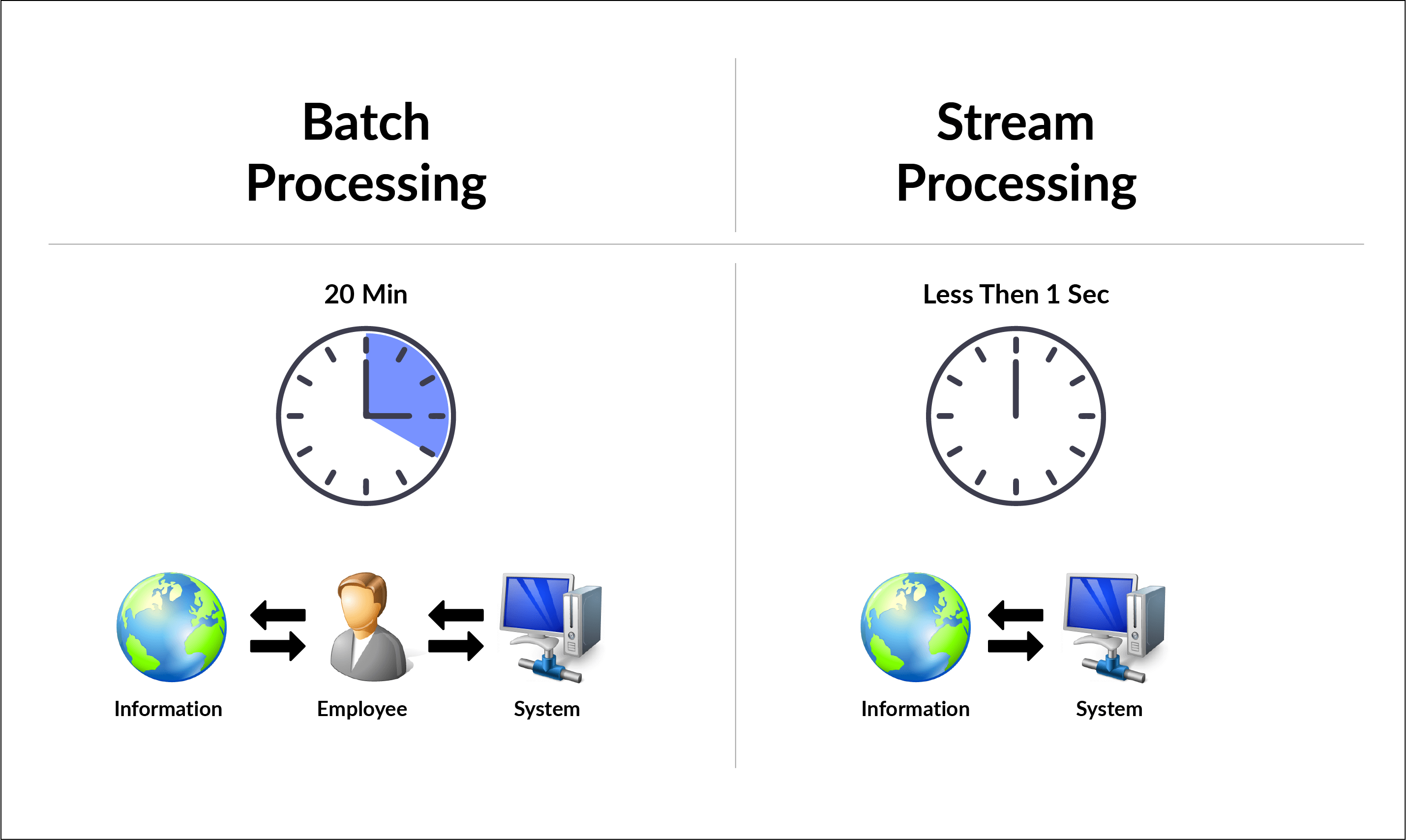
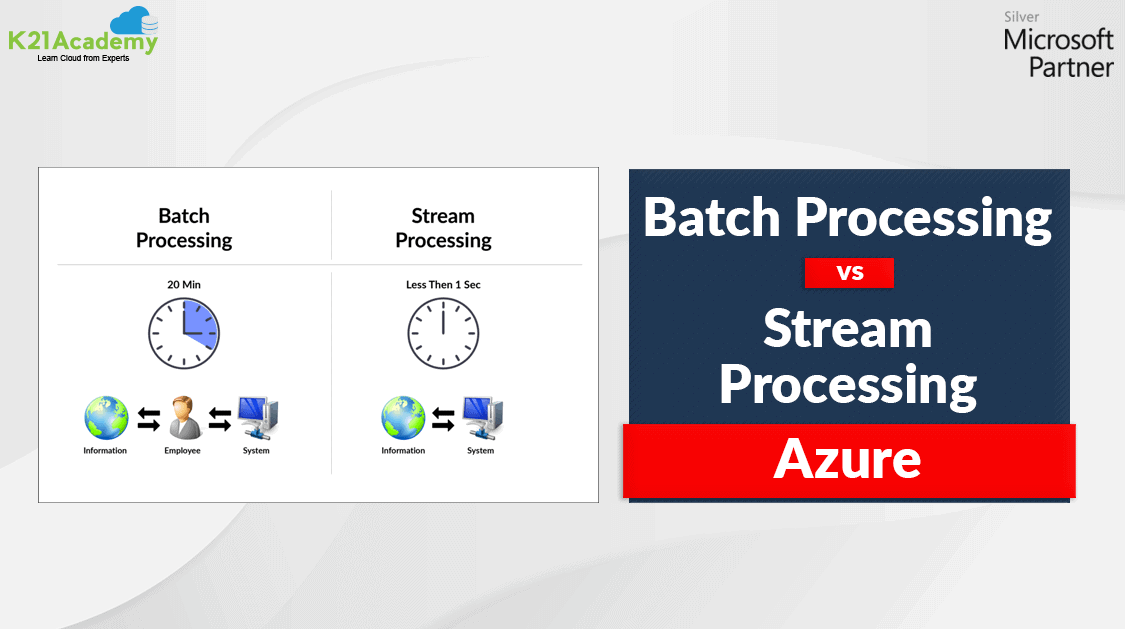
- The batch processing model requires a set of data that is collected over time while the stream processing model requires data to be fed into an analytics tool, often in micro-batches, and in real-time.
- The batch Processing model handles a large batch of data while the Stream processing model handles individual records or micro-batches of few records.
- In Batch Processing, it processes over all or most of the data but in Stream Processing, it processes over data on a rolling window or most recent record.
- From a performance point of view, the latency of the batch processing model will be in minutes to hours while the latency of the stream processing model will be in seconds or milliseconds.
- Batch processing is a lengthy process and is meant for large quantities of information that aren’t time-sensitive whereas Stream processing is fast and is meant for information that is needed immediately.
Batch Processing vs Stream Processing is one of the most discussed topics among data analysts and data engineers.
Related/References
- Microsoft Azure Data Engineer Associate [DP-200 & DP-201]: Everything You Need To Know
- Implementing an Azure Data Solution | DP-200 | Step By Step Activity Guides [Hands-On Labs]
- Designing an Azure Data Solution | DP-201 | Step By Step Activity Guides [Hands-On Labs]
- Microsoft Azure Data Fundamentals [DP-900]: All You Need To Know
- Microsoft Azure Data Fundamentals [DP-900]: Step By Step Activity Guides (Hands-On Labs)
- Azure Databricks For Beginners
- Azure Synapse Analytics (Azure SQL Data Warehouse)
Next Task For You
In our Azure Data on Cloud Job-Oriented training program, we will cover 50+ Hands-On Labs. If you want to begin your journey towards becoming a Microsoft Certified Associate and Get High-Paying Jobs check out our FREE CLASS.


![Microsoft Agentic AI Business Solutions Architect [AB-100] | K21 Academy](https://test.k21academy.com/wp-content/uploads/2025/11/Microsoft-Agentic-AI-Business-Solutions-Architect-AB-100-Exam-Overview1.png)