



Oracle Cloud Observability and Management Platform provides a comprehensive and connected solution, to manage the infrastructure, comprised of related services which include the newly announced Logging, Logging Analytics, Application Performance Monitoring, Database Management, Operations Insights, and Service Connector Hub services, as well as existing services such as Monitoring, Notifications, Events, Functions, Streaming and OS Management.
In this blog post, I am going to cover a brief overview of Oracle Cloud Observability and Management Platform and the newly announced services one-by-one:
- Logging
- Log Analytics
- Application Performance Monitoring
- Database Management
- Operations Insights
- Service Connector Hub
Oracle Cloud Observability and Management Platform
Oracle Cloud Observability and Management Platform provides a comprehensive set of management, diagnostic, and analytics services to help customers manage multi-cloud and on-premises deployments enabling monitoring and diagnostics across every tier of the software stack.
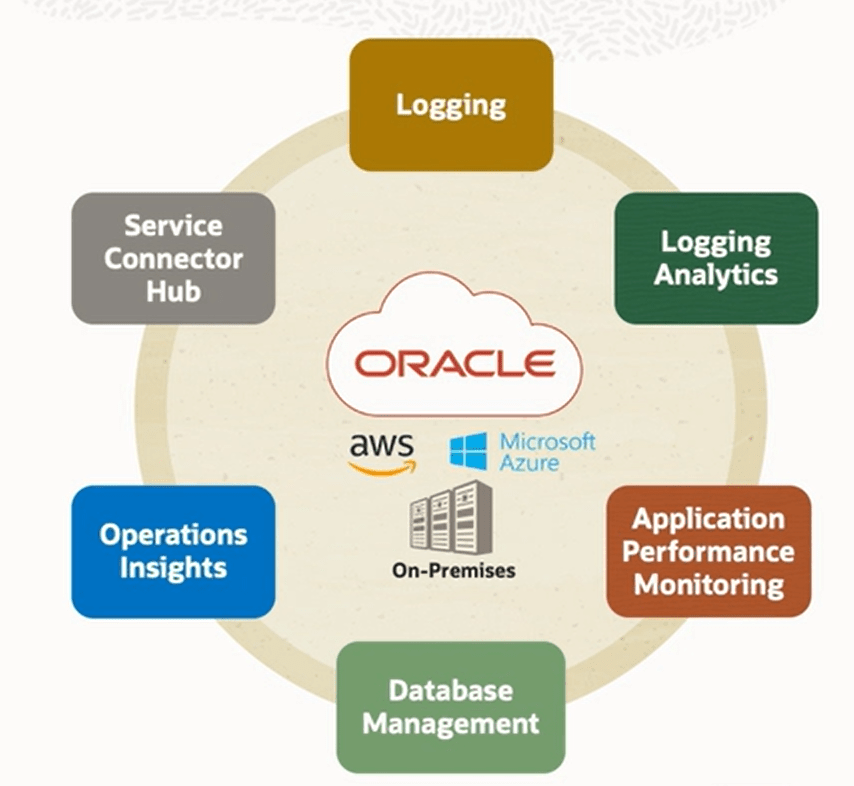
The Oracle Cloud Observability and Management Platform is a set of services that provide a unified view across the entire software stack. It enables easy and early diagnostics of cloud-native and traditional technologies deployed in the cloud or on-premises. It automatically detects any problems and enables quick resolution in near-real-time with its built-in machine learning.
Read this to get the details of what free Oracle Cloud certifications are available for FREE & how you can book them.
Logging service
Oracle Cloud Infrastructure Logging service is a highly scalable and managed centralized log management service that provides full transparency for all the logs in your tenancy. Logging provides access to logs from OCI resources and these logs include critical diagnostic information that describes how resources are performing and being accessed.
A log is a first-class OCI resource that stores and captures log events collected in a given context. For example, if you enable Flow Logs on a Virtual Cloud Network (VCN), it will have its own dedicated log. Each log has a unique OCID and all the related logs are stored in a log group.
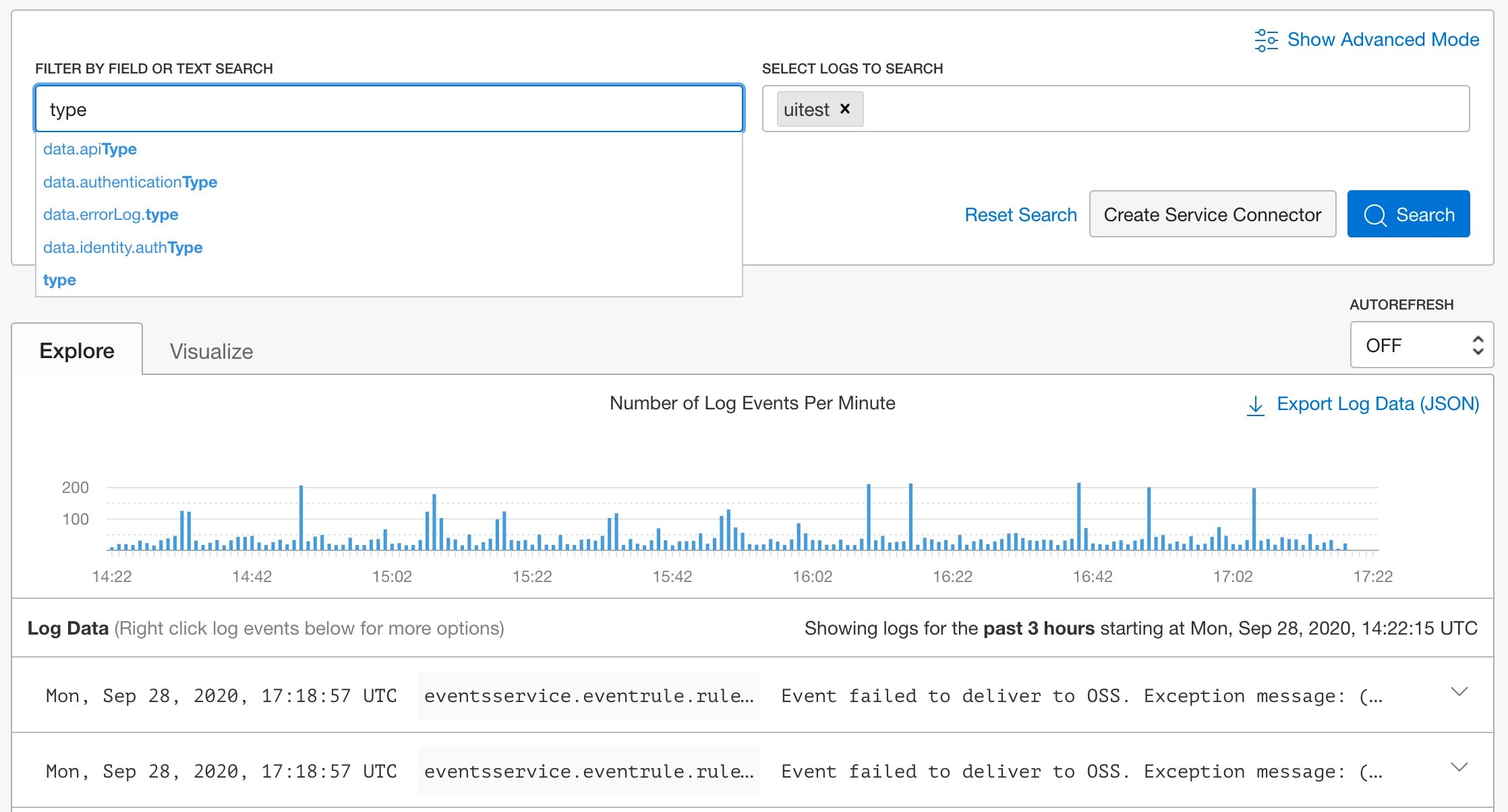
Logging Use Cases
1) Ingest flow logs from Virtual Cloud Networks (VCNs)
Logging supports the intake of logs for analysis from VCNs as well as other OCI resources, such as Functions and API Gateway.
Read our blog to know more in detail about VCN flow logs for Oracle Cloud Infrastructure
2) Ingest logs from applications and hosts
Easily deploy and manage agents across various hosts and applications directly from the cloud console. Ingest and parse the logs directly using Fluentd in the console itself.
4) Search and analyze all logs in a single view
Filter, aggregate, and visualize all logs in one view—infrastructure, application, audit, and database.
5) Integrate with the ecosystem
Push logs to third-party observability tools, such as Splunk, using Service Connector Hub.
Also Read: Our blog post on Oracle Command Line Interface. Click here
Logging Analytics
Everything generates logs, from internet-of-things (IoT) devices to software applications and containers, to database, infrastructure, and network components. The many terabytes of logs generated by these components every day contain extremely high-value data, but that data is voluminous, non-standard, and arrives at a high velocity.
Oracle Cloud Infrastructure Logging Analytics is a machine learning-based cloud service that monitors, aggregates, indexes, and analyzes all log data from on-premises and multi-cloud environments. Logging analytics makes it easy for users to quickly find the “needle in the haystack” among millions of rows of logs.
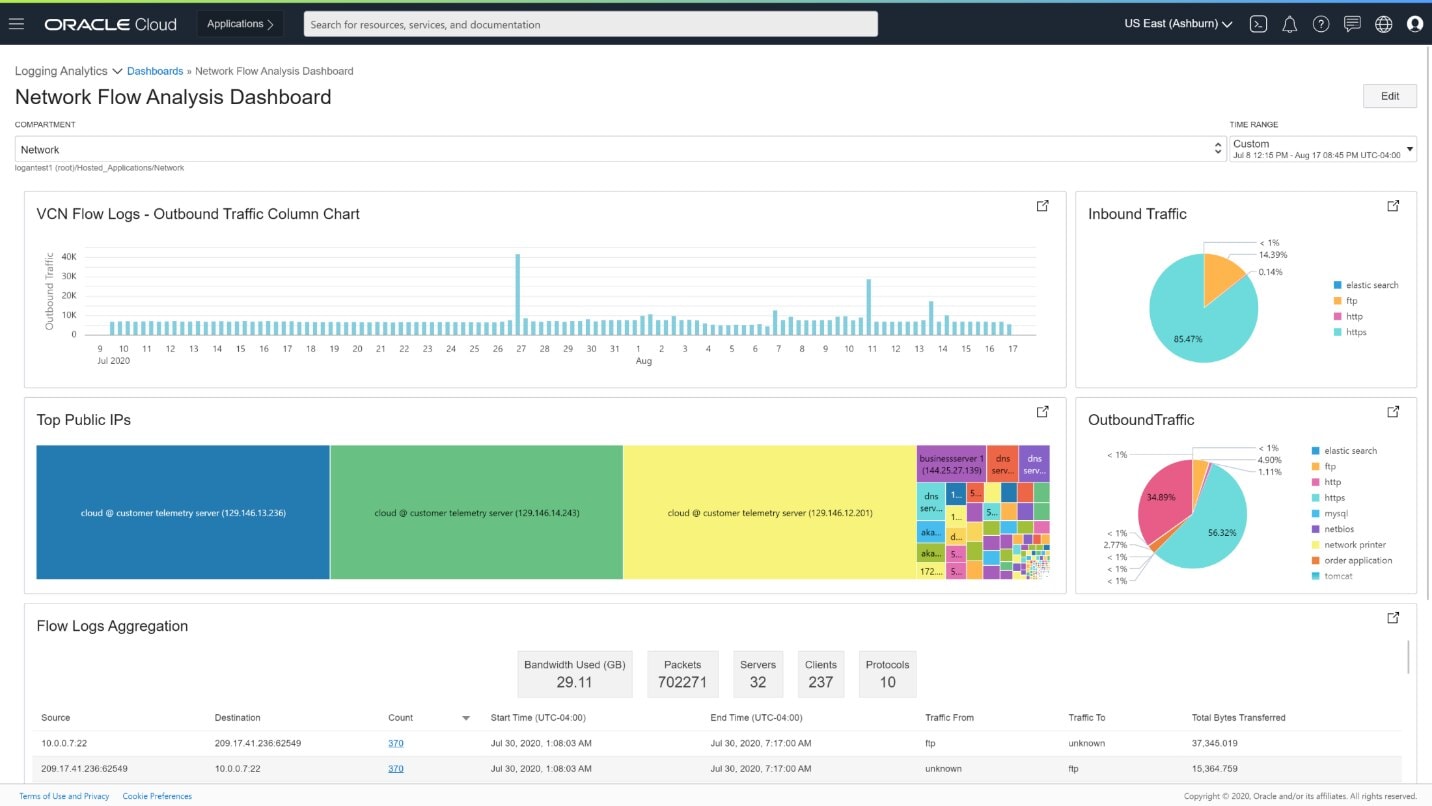
Following are the features of Logging Analytics Service:
1) Visualize and analyze log patterns
With Logging Analytics, users select the visualizations they need and analyze only log patterns for outliers instead of manually browsing through thousands of logs containing millions of log entries.
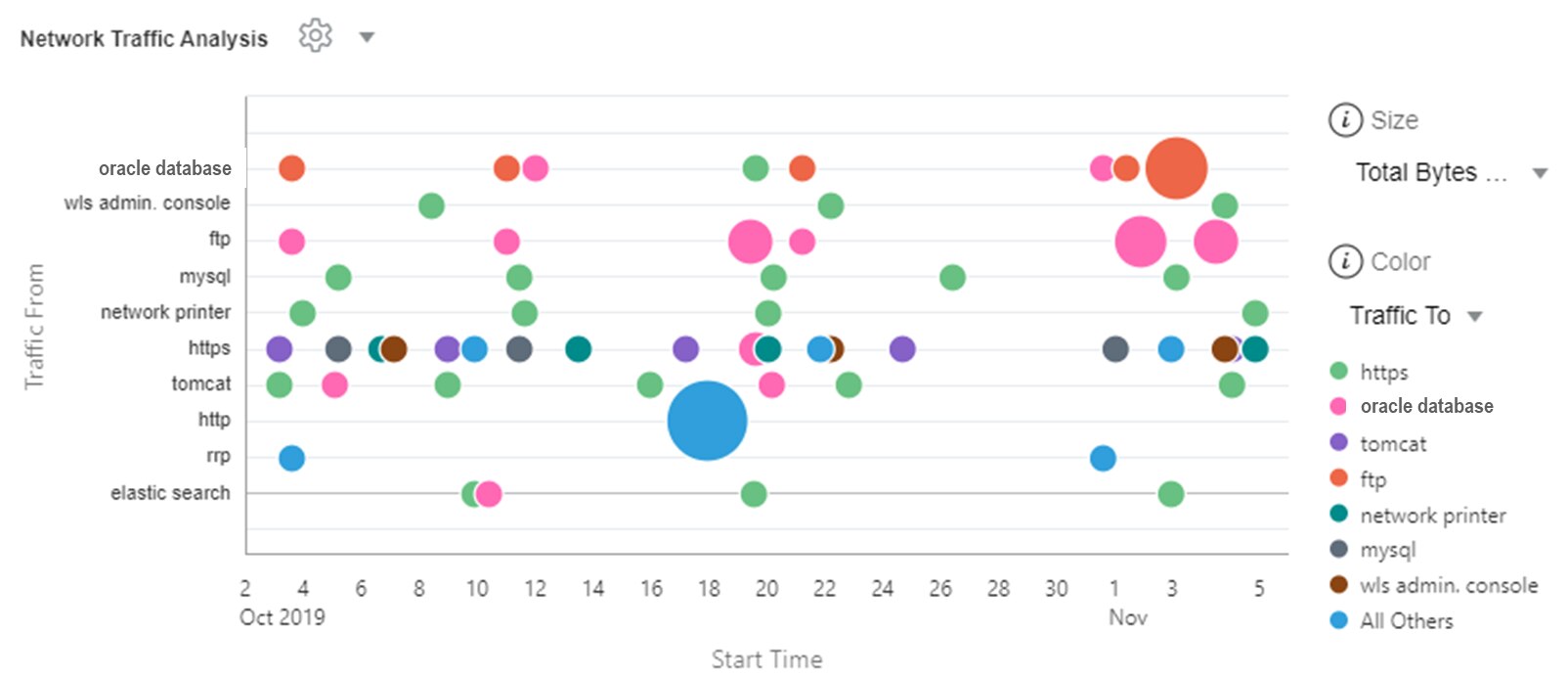
3) Long-term retention at low cost
Using Oracle Cloud Infrastructure Logging Cloud Service, logs can be retained for long periods for as little as $0,05 per Gigabyte log storage per month.
Read More: About OCI Virtual Cloud Network. Click here
Application Performance Monitoring (Limited Availability)
Oracle Application Performance Monitoring service provides DevOps professionals deep visibility into application performance from end-user experience, through application server requests, and down to application logs.
Today, applications execute across a distributed environment in a web browser, across application servers, and in databases. With Application Performance Monitoring Service, you know the
performance of your application at all levels. Although currently, it is available with Limited Availability for Oracle Cloud Infrastructure.
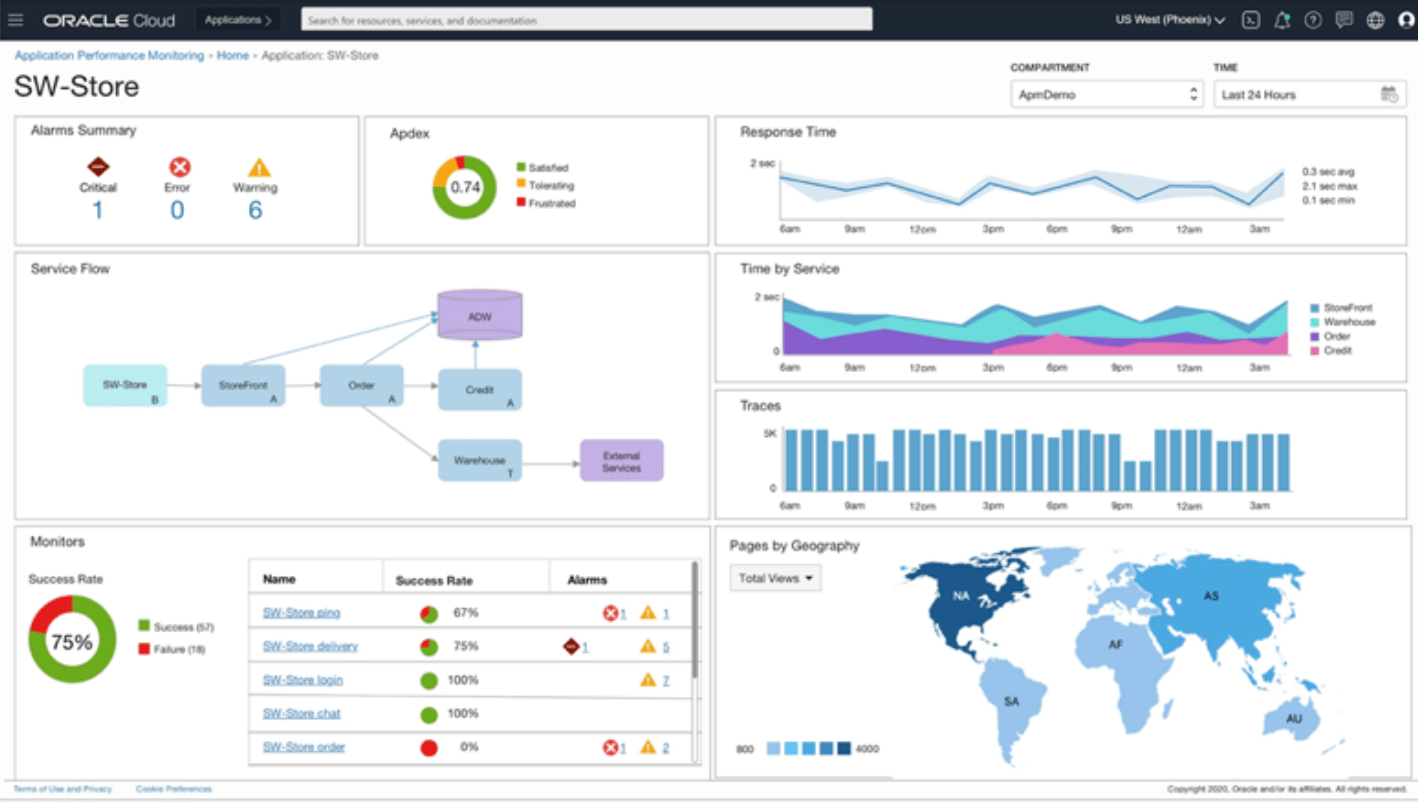
Application Performance Monitoring service provides development and operations teams with the information that they need to find and fix application issues fast so you can isolate problems before they impact your business. All your end-user and application performance information along with the associated application logs) are compiled into one data set in one place.
Also Read: Our blog post on OCI Storage Gateway. Click here
Database Management (Limited Availability)
Database Management service today is just focused on Oracle Databases and it is available with Limited Availability for Oracle Cloud Infrastructure and it supports features like:
1) Fleet Monitoring & Management
With the Database Management Cloud Console, DBAs can monitor database fleets from a unified console for on-premises and cloud databases.
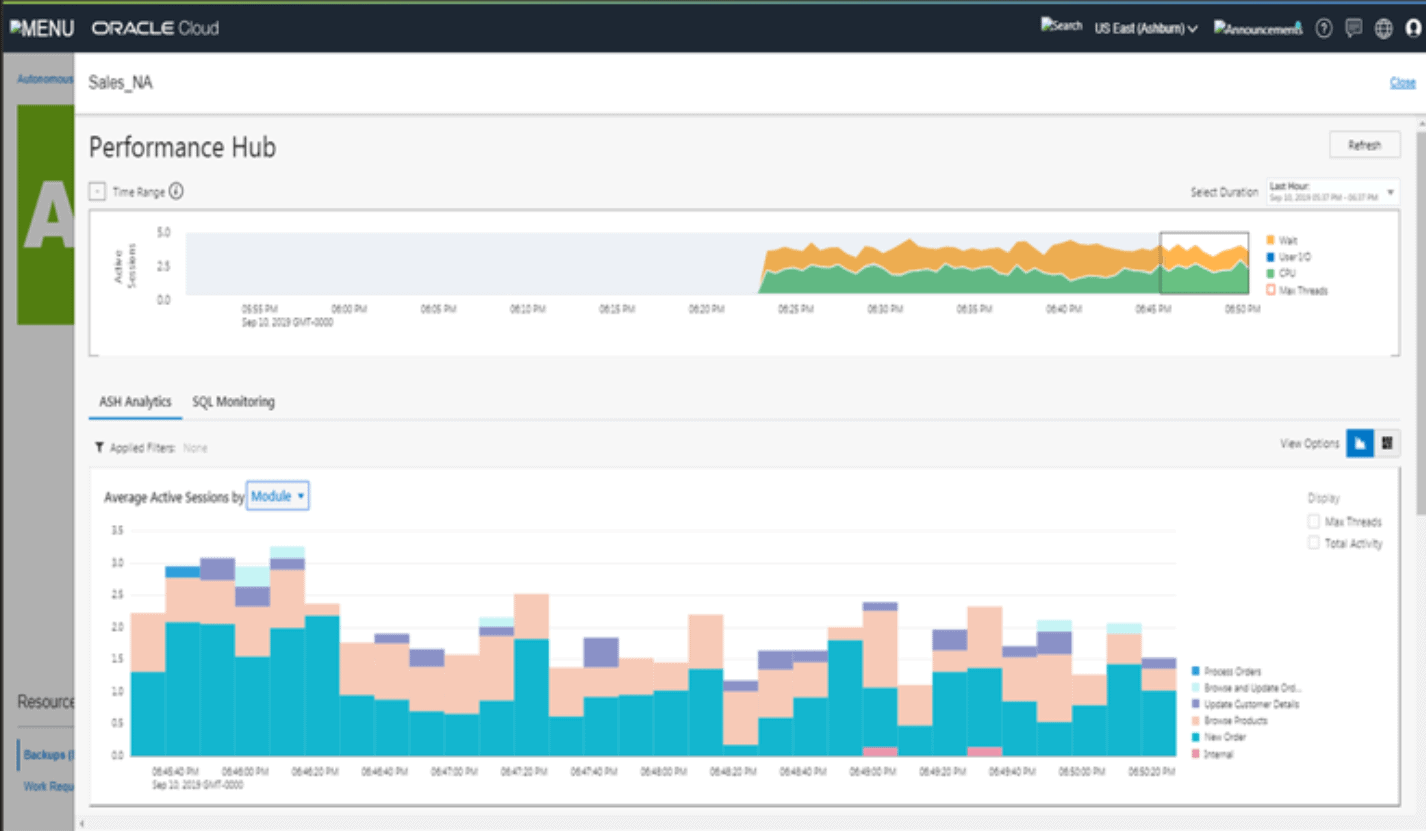
2) Performance Hub
Performance Hub automatically aggregates performance data across all database services, provides an integrated view of Oracle database activity, and enables you to optimize them.
3) Real-time SQL monitoring
Optimize SQL with Real-time SQL monitoring for advanced execution plan analysis and optimization
4) Database Administration
Also simplifies space, configuration, users, and backup management.
Check Out: Our blog post on Oracle Cloud Infrastructure Tagging. Click here
Operation Insights
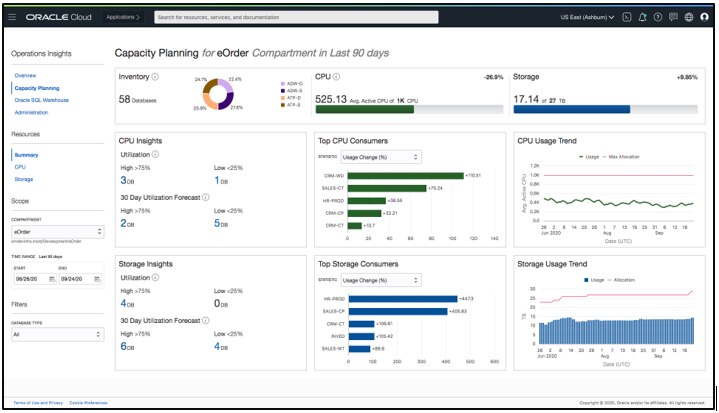
Operations Insights provides 360-degree insight into the resource utilization and capacity of Oracle Autonomous Databases. You can easily analyze CPU and storage resources, forecast capacity issues, and proactively identify SQL performance issues across a fleet of Autonomous Databases.
You can get insights on how to address seasonal demand spikes, systemic problems, and demand growth over long periods of time with Operations Insights.
Operation Insights is mainly focused on two things:
1) Capacity Planning
- Analyze and forecast database resource usage based on long-term historical data.
- Optimize the cost of operations by identifying over- and under-utilized servers
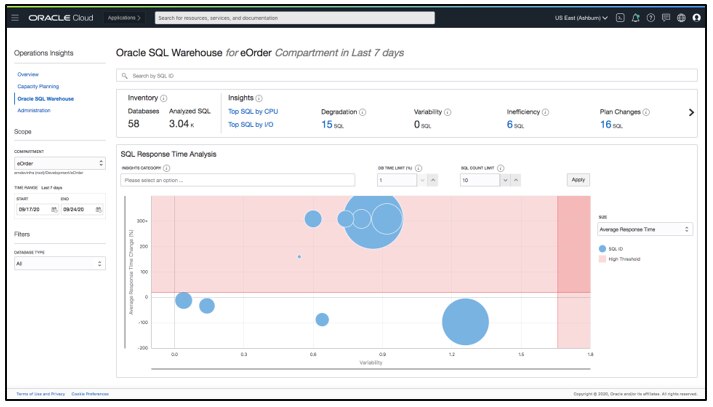
2) SQL Warehouse
- Long term SQL store for performance and trend analysis of Oracle Databases
- Proactively identify and mitigate SQL issues
- Find common patterns in SQL behaviour across databases and applications.
Service Connector Hub
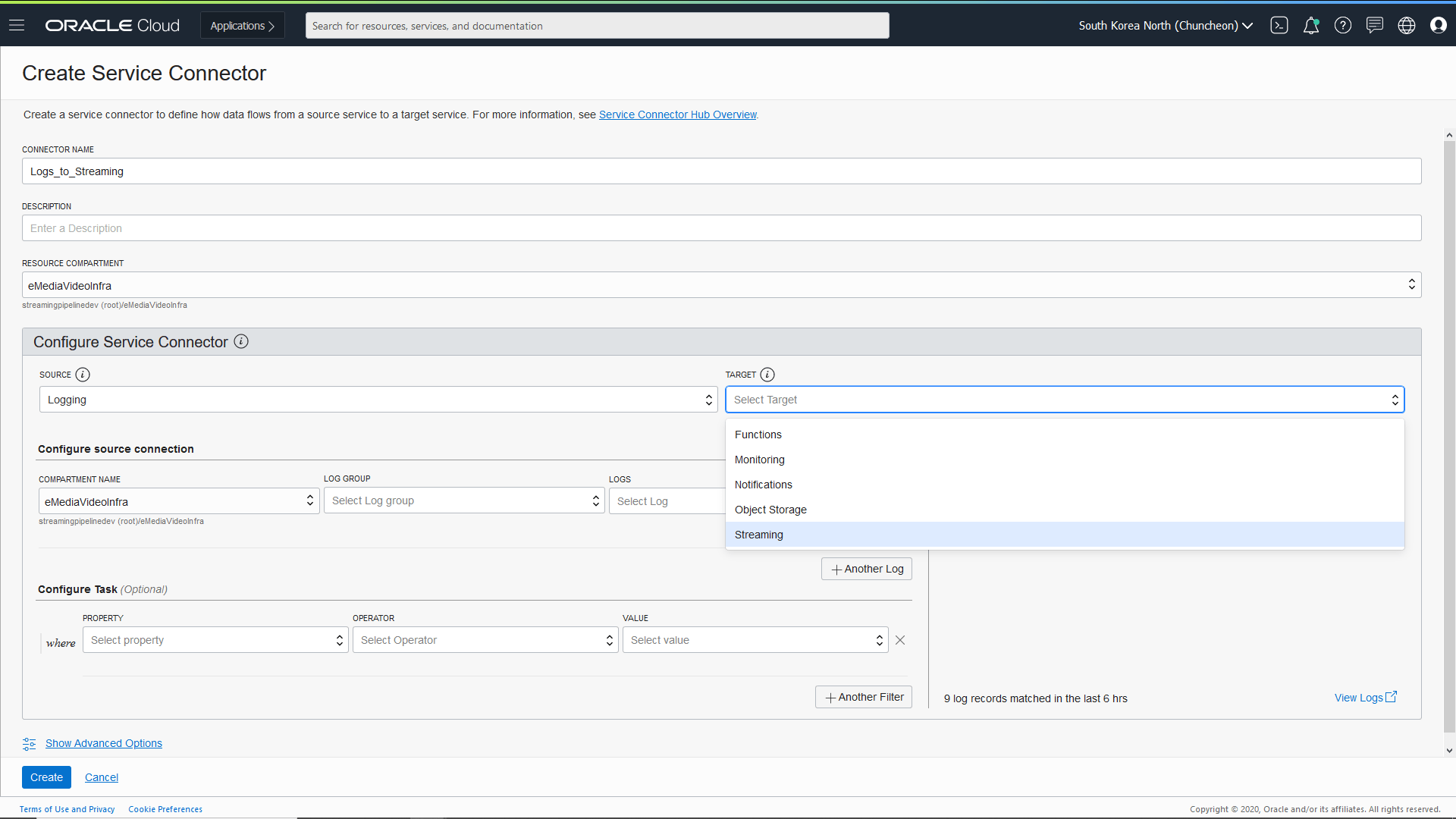
Service Connector Hub orchestrates data movement between services in Oracle Cloud Infrastructure. Service Connector Hub is a free service that moves data between your services, both within Oracle Cloud Infrastructure (OCI) and from OCI to third-party tools. It moves data, such as logs from Logging, to services such as Object Storage, Streaming, and Monitoring, for extra processing and compliance storage needs. It triggers Functions for custom data processing and sending Notifications about changes to cloud resources.
Related/References
- 1Z0-1072-20 | Oracle Cloud Infrastructure 2020 Architect Associate
- Object Storage Service in Oracle Cloud Infrastructure (OCI)
- Announcing VCN flow logs general availability for Oracle Cloud Infrastructure
- What Is Region, Availability Domain (AD), Fault Domain (FD) & Realm In Oracle Cloud Infrastructure (OCI)
- Networking In Oracle Cloud (OCI): VCN, Subnet, Gateways, Peering, Transit Routing
- Gateways In OCI: Internet Gateway, NAT Gateway, Service Gateway, Dynamic Routing Gateway
- IAM In OCI – User, Groups, Compartment, Policy, Tags, Federation & MFA
- Oracle Cloud (OCI): How To Recover SSH Keys In Compute Instance
Begin Your Cloud Journey
Begin your journey towards becoming an Oracle Cloud Expert and earn a lot more in 2024 by joining our FREE CLASS. You will also know more about the Roles and Responsibilities, Job opportunities for OCI Architects, Admins in the market, and what to study Including Hands-On labs you must perform to get the Higher Paying jobs.
Click on the below image to Register for Our FREE Class on MASTERING ORACLE CLOUD FOR DBAs, APPs DBAs, ARCHITECTS & SYS ADMINS


![Microsoft Agentic AI Business Solutions Architect [AB-100] | K21 Academy](https://test.k21academy.com/wp-content/uploads/2025/11/Microsoft-Agentic-AI-Business-Solutions-Architect-AB-100-Exam-Overview1.png)


