



In a world that’s always on the move, cloud computing powers the apps and websites we use every day. A robust cloud infrastructure is the backbone of successful digital products. Amazon Web Services (AWS) offers a Well-Architected Framework to help you create cloud applications that are stable, flexible, and secure.
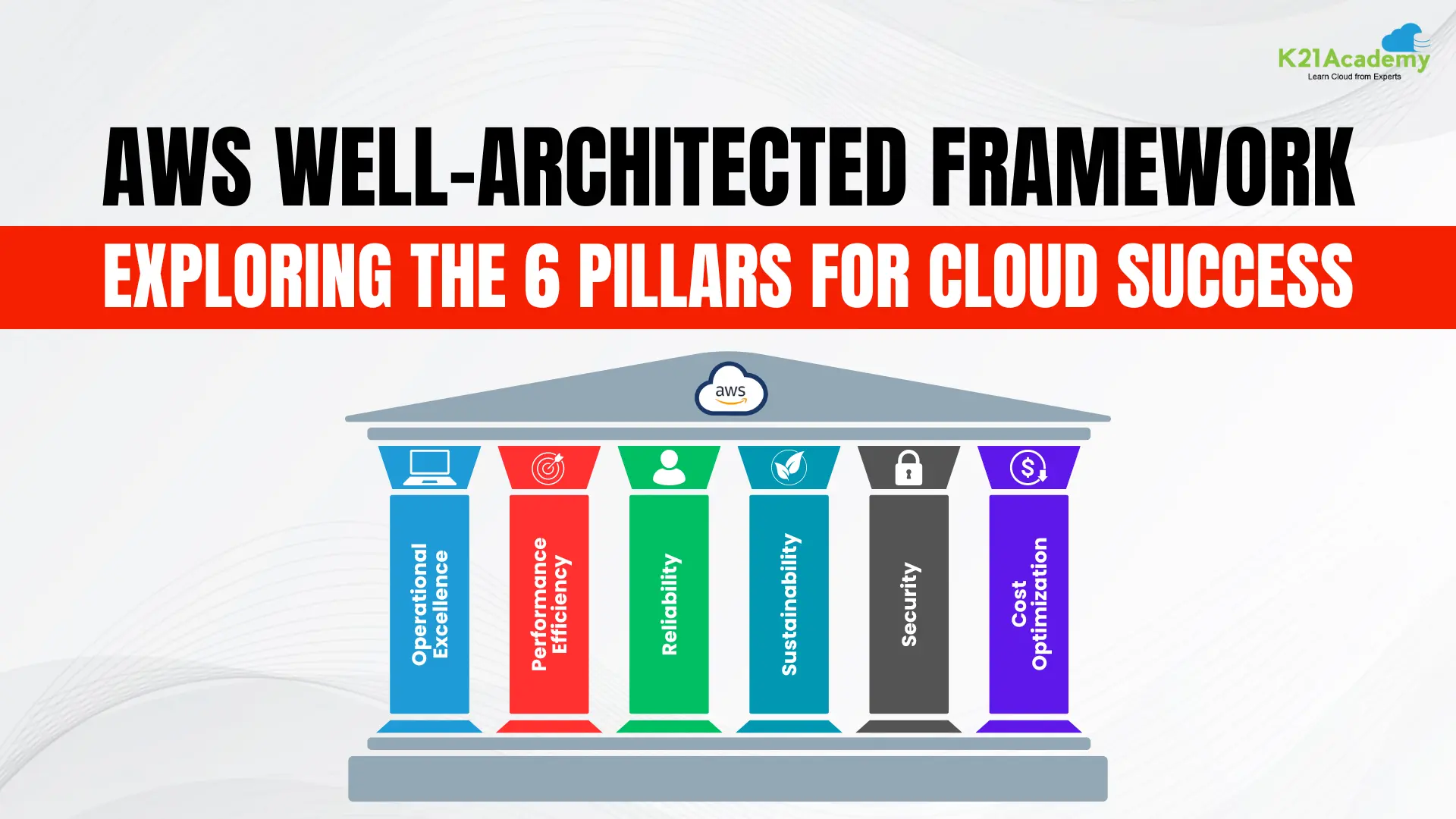
Think of the Well-Architected Framework as a guidebook for building sturdy cloud systems. It contains six key principles, or “pillars,” that focus on the critical elements of successful cloud architecture: security, operational efficiency, reliability, performance, cost management, and sustainability.
In this blog, we’ll break down each pillar and explain how they contribute to building a stronger cloud foundation. No matter your level of experience with cloud computing, you’ll gain insights and tips to create better applications on AWS. By the end, you’ll have a clear understanding of how to use this framework to build cloud systems that are reliable, cost-efficient, and can grow with your needs. Let’s get started and explore what these pillars can do for you.
- Introduction: What Are Pillars and Why Do They Matter
- Why the AWS Well-Architected Framework Is Important
- Navigating the 6 Pillars: A Comprehensive Guide to the AWS Well-Architected Framework
- Pillar 1: Security – Safeguarding Your Digital Fortress
- Pillar 2: Operational Excellence – Nurturing Efficiency and Agility
- Pillar 3: Reliability – Building for Resilience and Continuity
- Pillar 4: Performance Efficiency – Maximizing Resource Utilization
- Pillar 5: Cost Optimization – Driving Financial Prudence
- Pillar 6: Sustainability – Fostering Environmental Responsibility
- Conclusion: Embrace the Pillars for a Successful Cloud Journey
- Frequently Asked Questions
Introduction: What Are Pillars and Why Do They Matter
Pillars in architecture are what keep buildings standing strong and stable. Similarly, in cloud computing, the AWS Well-Architected Framework uses ‘pillars’ as a metaphor to describe the key ideas that support a solid and dependable cloud infrastructure. There are six of these pillars: Operational Excellence, Security, Reliability, Performance Efficiency, Cost Optimization, and Sustainability.
 Each of these pillars addresses a different part of building and maintaining cloud systems. By understanding and using these pillars, cloud architects can create systems that are not only reliable but also flexible, secure, and affordable. They serve as a guide for designing and running cloud-based applications, helping organizations build robust and efficient cloud environments that meet their needs.
Why the AWS Well-Architected Framework is Important
The AWS Well-Architected Framework isn’t just a list of things to do—it’s a complete approach to building cloud systems. It gives you advice on the best ways to design your cloud infrastructure, helping you make smart decisions. By using this framework, you can make sure your cloud setup is strong enough to handle common problems, can grow with demand, is protected from security threats, and is efficient in terms of performance and cost.
This framework also encourages a mindset of always getting better. Cloud architects regularly check their systems to find ways to improve. This proactive approach allows teams to fix problems early before they cause bigger issues, ensuring that the business keeps running smoothly and that customers stay happy.
Navigating the 6 Pillars: A Closer Look
Pillar 1: Security – Safeguarding Your Digital Fortress
In cloud architecture, security serves as the foundation. AWS prioritizes security as the initial pillar in the Well-Architected Framework, stressing a holistic approach to safeguarding data and systems from threats like unauthorized access and breaches. This entails measures such as data encryption, identity management, and threat detection.

Think of security as the lock on your front door and the alarm system in your car. It ensures that only the right people have access, and it alerts you when something seems off. By following the Security pillar, you can safeguard your cloud infrastructure from cyber threats, ensuring that your data and applications are protected.
Here are the key components of the Security pillar:
- Data Encryption: Protecting data at rest and in transit with robust encryption protocols such as AWS Key Management Service (KMS). This ensures that even if data is intercepted, it remains unreadable without the proper keys.
- Identity and Access Management (IAM): Managing who can access specific resources and what actions they can perform. AWS IAM allows for fine-grained control over user permissions, ensuring that users only have the access they need.
- Threat Detection: Using tools like AWS GuardDuty to monitor for unusual or potentially malicious activity. This proactive approach helps identify threats early and enables quick response.
- Incident Response: Establishing processes for reacting to security events. AWS provides services like AWS Systems Manager to automate responses to security incidents, reducing the impact of breaches.
Explore comprehensive insights into the Security Pillar and discover actionable tactics to strengthen your AWS framework in our extensive video guide on YouTube.
Pillar 2: Operational Excellence – Nurturing Efficiency and Agility
Operational Excellence is about running cloud infrastructure smoothly while continually seeking ways to improve. This pillar encourages a proactive approach to managing cloud operations, with a focus on automation and monitoring. The key aspects include:

- Automation of Processes: Reducing manual tasks through automation tools like AWS Lambda and AWS Step Functions. This not only increases efficiency but also reduces the risk of human error.
- Monitoring and Alerting: Using services like Amazon CloudWatch to monitor resource usage and performance. This helps identify potential issues before they become critical.
- Continuous Improvement: Regularly reviewing operations and processes to identify areas for enhancement. This can involve adopting DevOps practices, where automation and collaboration are at the forefront.
Operational Excellence is like having a well-oiled machine that works efficiently and is always ready for an upgrade. By automating tasks and monitoring everything, you can keep your cloud infrastructure running smoothly and quickly fix any issues that arise.
Our YouTube video provides a detailed examination of the Operational Excellence Pillar, featuring strategies to enhance operational procedures within your AWS setup.
Pillar 3: Reliability – Building for Resilience and Continuity
Reliability ensures that your cloud infrastructure can withstand disruptions and continue to function as expected. This pillar focuses on building fault tolerance and resilience in the architecture. Here’s what it entails:

- Redundancy and Fault Tolerance: Designing systems with backup components to avoid single points of failure. AWS services like Elastic Load Balancing and Amazon RDS (with Multi-AZ deployments) provide built-in redundancy.
- Scalability: Ensuring that the system can handle varying loads without performance degradation. AWS Auto Scaling allows you to scale resources up or down based on demand.
- Recovery Strategies: Develop disaster recovery plans to ensure quick recovery from failures. AWS Backup and Amazon S3 versioning are useful tools for data recovery.
Reliability is like having backup power and extra supplies for emergencies. If something goes wrong, your cloud infrastructure should keep working without a hitch. By building in redundancy and having a plan for recovery, you can ensure your services are always available.
Dive into our in-depth video tutorial on YouTube to understand the Reliability Pillar and learn effective methods to bolster the resilience of your AWS architecture.
Pillar 4: Performance Efficiency – Maximizing Resource Utilization
Performance Efficiency focuses on using cloud resources in the most efficient way possible. This pillar emphasizes choosing the right resources and optimizing their usage. Here’s how it’s done:

- Resource Selection: Choosing the right type of compute instances, storage, and databases for your workload. AWS offers a variety of instance types, allowing you to select the one that fits your needs.
- Performance Monitoring: Keeping track of system performance using Amazon CloudWatch and AWS X-Ray to identify bottlenecks and optimize resource utilization.
- Continuous Optimization: Regularly reviewing system performance and making adjustments to improve efficiency. AWS Trusted Advisor provides recommendations for optimization.
Performance Efficiency is like tuning an engine to get the most power while using the least amount of fuel. By selecting the right resources and monitoring performance, you can ensure your cloud infrastructure runs smoothly and efficiently without wasting resources.
Watch our detailed YouTube video to gain a thorough understanding of the Performance Efficiency Pillar and uncover techniques to optimize your AWS infrastructure’s performance.
Pillar 5: Cost Optimization – Driving Financial Prudence
Cost Optimization is about ensuring that you’re spending money wisely in the cloud. This pillar focuses on identifying and eliminating unnecessary costs while still maintaining performance and scalability. Key practices include:

- Resource Management: Identifying underutilized resources and scaling them down. AWS Trusted Advisor helps you find resources that are costing you more than they should.
- Cost Analysis: Using AWS Cost Explorer and AWS Budgets to track spending and set cost thresholds. This allows you to manage your cloud budget effectively.
- Reserved Instances and Savings Plans: Take advantage of cost-saving options like Reserved Instances or Savings Plans to reduce costs in the long run.
Cost Optimization is like managing a budget at home—you want to spend wisely without compromising quality. By monitoring your cloud spending and using cost-saving strategies, you can keep your costs in check while still delivering excellent service.
For more detailed strategies on maximizing efficiency and reducing costs, check out our blog, AWS Cost Optimization: Maximize Efficiency.
Our YouTube video provides a detailed examination of the Cost Optimization Pillar
Pillar 6: Sustainability – Fostering Environmental Responsibility
Sustainability focuses on reducing the environmental impact of cloud infrastructure. This pillar encourages energy-efficient practices and resource optimization. Key aspects include:

- Energy-Efficient Architectures: Designing cloud infrastructure that consumes less energy. This includes using efficient hardware and selecting energy-efficient geographic regions.
- Resource Optimization: Using only the resources you need and turning off unused instances to reduce energy consumption. AWS Auto Scaling helps with this by automatically scaling resources.
- Environmental Impact Reduction: Implementing practices that reduce waste and promote sustainability. AWS works towards sustainability goals, allowing you to align with a greener cloud strategy.
Sustainability is like recycling and reducing energy consumption at home. By adopting energy-efficient practices and minimizing waste, you can contribute to a healthier planet while still running a robust cloud infrastructure.
Conclusion: Embrace the Pillars for a Successful Cloud Journey
By embracing the six pillars of the AWS Well-Architected Framework, organizations can build cloud architectures that are secure, reliable, efficient, cost-effective, and environmentally sustainable. This framework serves as a valuable tool for cloud architects, guiding them toward best practices and continuous improvement. As you embark on your cloud journey, remember that these pillars are not just concepts—they are the foundation of a successful and resilient cloud infrastructure.
Remember, mastering the AWS Well-Architected Framework isn’t just about ticking boxes; it’s about embracing a mindset of continuous improvement and innovation. So, go forth and architect with confidence, knowing that you have the knowledge and tools to build a better, brighter future in the cloud.
Watch our video on AWS Certification Roadmap for Beginners
Frequently Asked Questions
Why are the 6 pillars of the AWS Well-Architected Framework essential for building a successful cloud infrastructure?
The six pillars of the AWS Well-Architected Framework—Security, Operational Excellence, Reliability, Performance Efficiency, Cost Optimization, and Sustainability—are crucial because they address all key aspects of cloud architecture. Together, they provide a comprehensive approach to building systems that are secure, reliable, scalable, cost-effective, and environmentally friendly. By focusing on these pillars, you can ensure your applications perform well, are protected from threats, and can adapt to changing business needs.
How does the AWS Well-Architected Framework help businesses achieve cost optimization without compromising performance?
The AWS Well-Architected Framework helps businesses achieve cost optimization through practices like right-sizing resources, using Reserved Instances and Savings Plans, and automating scaling to avoid over-provisioning. These strategies reduce unnecessary costs while maintaining high performance. By monitoring resource utilization and adjusting accordingly, businesses can achieve a balance between cost savings and optimal performance without compromising user experience or system reliability.
What are some common security challenges in cloud computing, and how does the AWS Well-Architected Framework address them?
Common security challenges in cloud computing include unauthorized access, data breaches, and cyber-attacks. The AWS Well-Architected Framework addresses these challenges through robust security practices like data encryption, Identity and Access Management (IAM), security monitoring with tools like AWS GuardDuty, and incident response planning. By implementing these practices, organizations can protect their data and systems, reduce risks, and ensure a secure cloud environment.
How does the AWS Well-Architected Framework promote sustainability in cloud architecture, and why is it important?
The Sustainability pillar in the AWS Well-Architected Framework promotes energy efficiency and environmental responsibility in cloud architecture. It emphasizes resource optimization, choosing energy-efficient geographic regions, and designing for energy efficiency to reduce the environmental impact of cloud operations. Sustainability is important for businesses seeking to minimize their carbon footprint and align with broader environmental goals while still benefiting from cost savings and operational efficiencies.
What is the role of operational excellence in cloud computing, and how does it impact the overall reliability of a system?
Operational Excellence in the AWS Well-Architected Framework focuses on efficient cloud operations and continuous improvement. It impacts reliability by promoting automation to reduce manual errors, monitoring to quickly detect issues, and regular process reviews to ensure the system is adaptable and resilient. By embracing operational excellence, businesses can create cloud systems that are reliable, efficient, and capable of evolving with changing requirements, thus minimizing downtime and improving user satisfaction.
Related References
- What AWS Services Should You Learn as a Data Engineer
- Overview of Amazon Web Services & Concepts
- AWS Storage: Overview, Types & Benefits
- AWS MythBusters
- AWS Well-Architected Framework Overview.
- Top 50+ AWS Cloud Interview Questions
- AWS Management Console Walkthrough
Next Task For You
Attend our FREE CLASS to explore AWS Cloud discover in-demand job opportunities, and gain insights into essential Hands-On labs and projects.
Register now for our FREE Class on Amazon Web Services: Build In-Demand Skills and Secure High-Paying Jobs by clicking the image below.


![Microsoft Agentic AI Business Solutions Architect [AB-100] | K21 Academy](https://test.k21academy.com/wp-content/uploads/2025/11/Microsoft-Agentic-AI-Business-Solutions-Architect-AB-100-Exam-Overview1.png)