

While Terraform is one of the most popular tools for “Infrastructure-as-code”, the fact is it is not the only one in the race. There are various other tools available in the market and figuring out which one to choose surely gives us a headache.
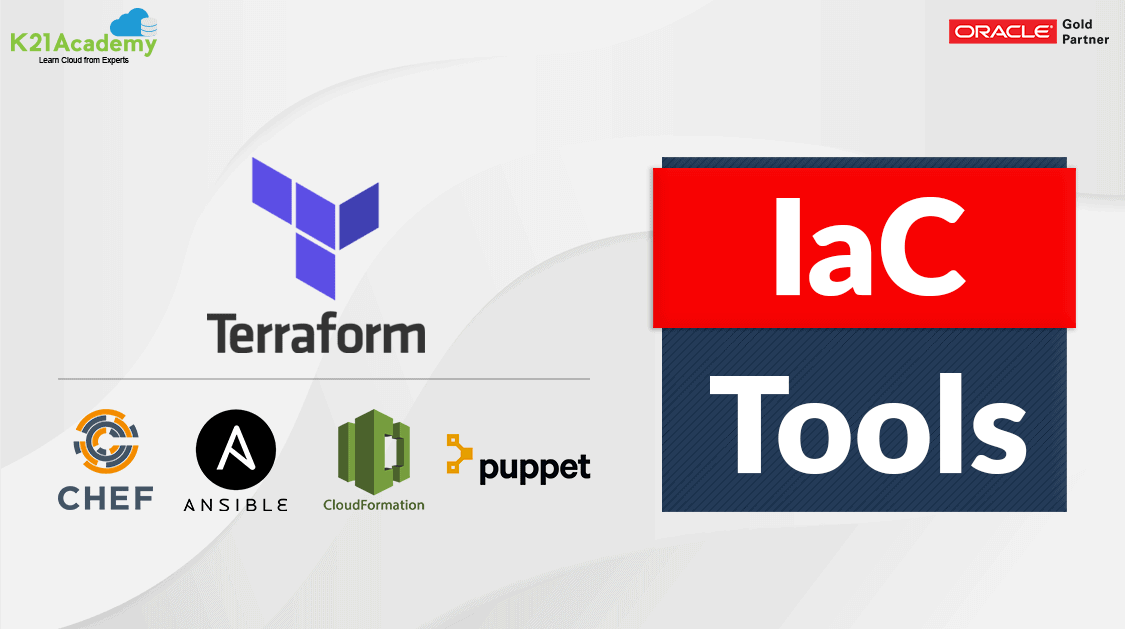
In this blog post, we have covered why you should choose Terraform over other IaC tools such as Chef, Puppet, Ansible, and CloudFormation.
Our discussion will be mostly centered around making comparisons such as Terraform vs Ansible, Terraform vs Cloudformation, Terraform vs Puppet, and so on. Let’s understand various aspects on the basis of which we can differentiate these tools and decide which one best suits your requirements.
- Configuration Management vs Provisioning
- Mutable vs Immutable Infrastructure
- Procedural vs Declarative
- Master vs Masterless
- Agent vs Agentless
- Large Community vs Small Community
Choosing the Right IaC Tool?
There are a lot of IaC (Infrastructure as Code) tools available in the market and we will be discussing a few of them in this blog post like Terraform, Chef, Puppet, Ansible, and CloudFormation and will try to resolve the dilemma of which one to pick for the automation of your cloud resources.
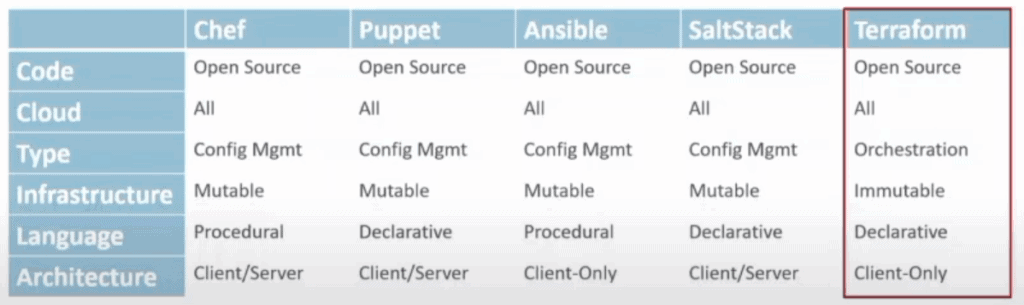
Terraform is an open-source, cloud-agnostic provisioning tool that supported immutable infrastructure, a declarative language, a masterless and agentless architecture, and had a large community and a mature codebase.
Also Check : Types of input such as Terraform variables, output variables, and how to define them in terraform configuration.
Configuration Management vs Provisioning
Chef, Puppet, and Ansible are all configuration management tools, designed to install and manage software on existing servers whereas CloudFormation and Terraform are provisioning tools designed to provision the servers themselves (and the rest of the infrastructure, like load balancers, databases, networking configuration, etc), leaving the job of configuring those servers to other tools.
That said, most of the time a good alternative is to use a configuration management and provisioning tool together. For example, using Terraform to provision your servers while running Chef to configure them.
Check out: How to Install Terraform in Linux, Mac and Windows.
Mutable vs Immutable Infrastructure
Configuration management tools such as Chef, Puppet, and Ansible typically creates a mutable infrastructure. For example, using Chef to install a new version of a software, it’ll run the software update on the existing servers and the changes will happen in-place.
While in Terraform, every “change” is the deployment of a new server. Immutable components are recreated and replaced instead of updating in-place the existing components. Here, the servers are never modified after they’re deployed.
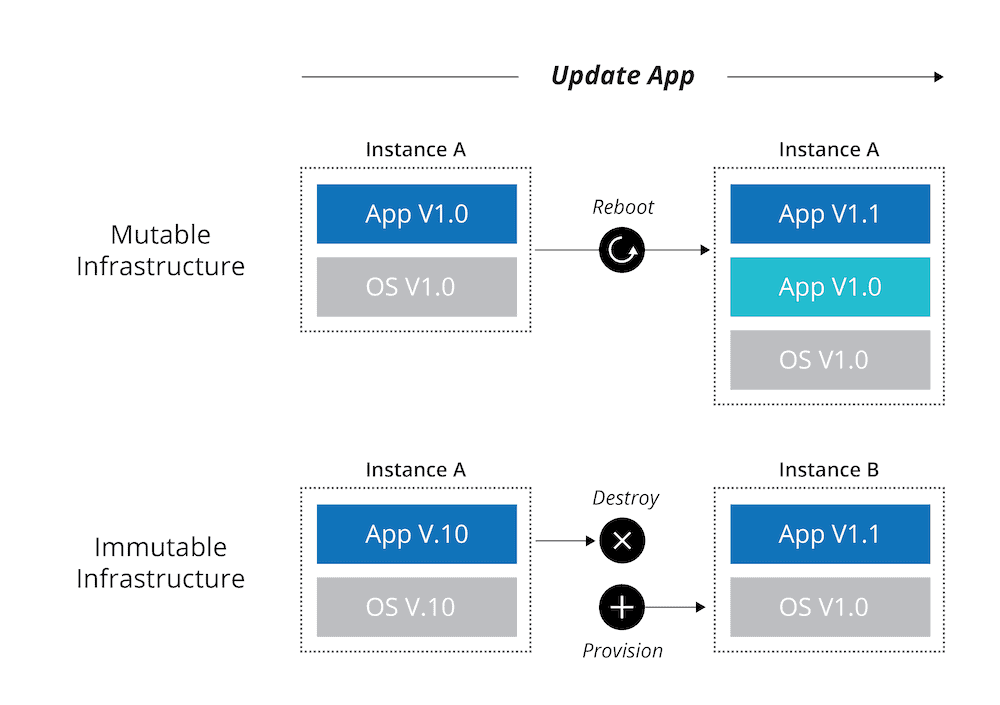
An immutable infrastructure provides more consistency and reliability in your infrastructure and a simpler, more predictable deployment process. It mitigates or entirely prevents issues that are common in mutable infrastructures such as configuration drift.
Also Read: Introduction to Terraform providers and some major terraform cloud providers such as AWS, Azure and OCI.
Procedural vs Declarative
Chef and Ansible are based on a procedural or imperative style where you write code that specifies a complete step-by-step process on how to achieve the desired end state. Terraform, CloudFormation, and Puppet all are based on a more declarative style where you only specify the desired end state, and the IaC tool itself is responsible for figuring out how to achieve that state.
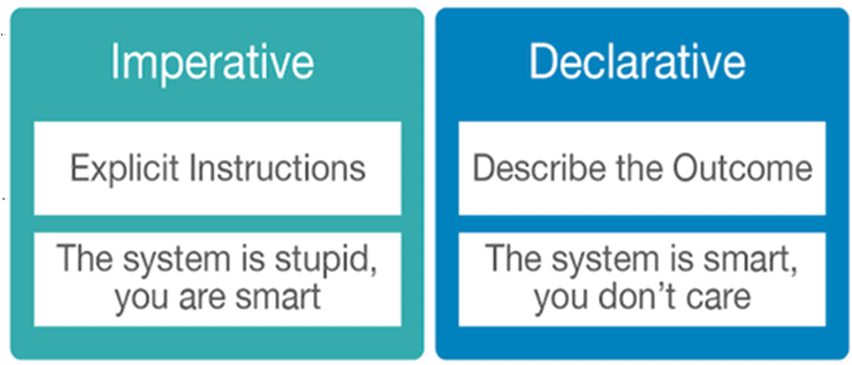
Benefits of the declarative approach of Terraform:
- Code always represents the latest state of your infrastructure
- It explains the currently deployed resources and how they’re configured
- No need to worry about history or timing.
- It is easy to create reusable code.
Also read: Step by step guide on Terraform Certification
Master vs Masterless
Chef and Puppet require a master server for storing the state of your infrastructure and distributing updates. Every time you need to install an update, a client is used to issue commands to the master server and then the master server pushes the updates out to all other servers. The master server acts as a centralized place to manage the infrastructure.
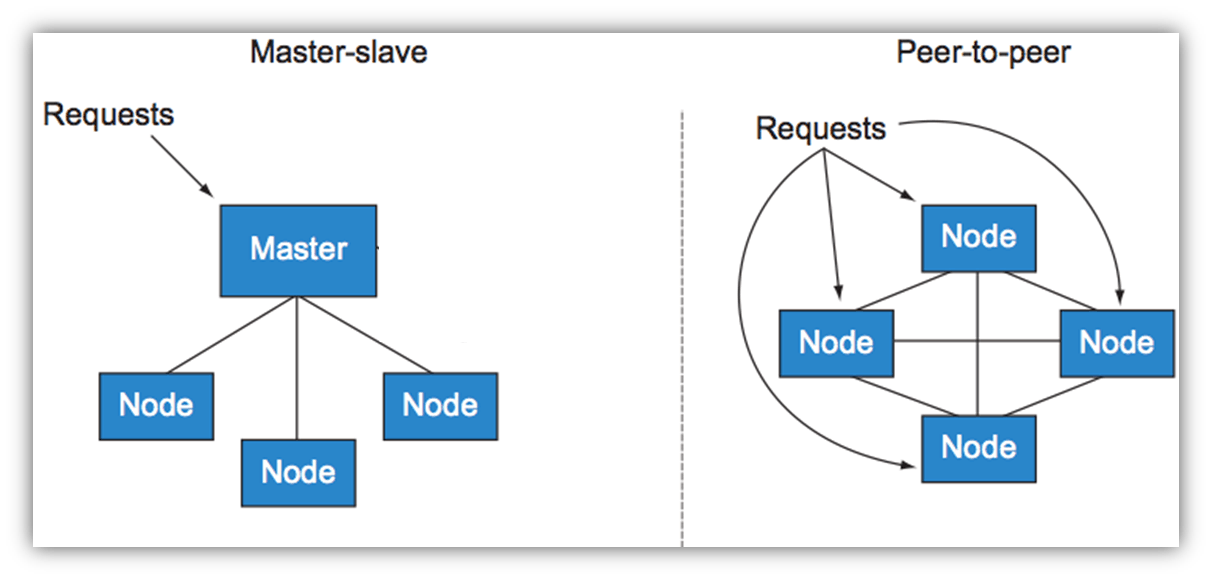
However, A master server comes with some drawbacks:
- Extra infrastructure: A master server requires to deploy an extra server or even a cluster of extra servers (for high availability and scalability).
- Maintenance: You have to maintain, upgrade, back up, monitor, and scale the master server(s).
- Security: Security is a challenge with the master server communicating to all other servers.
Ansible, CloudFormation, and Terraform are all masterless by default. Although some of them may rely on a master server, however, it’s already part of the infrastructure you’re using and not an extra piece you have to manage.
Also Check: Our blog post on Terraform Tips and Tricks
Agent vs Agentless
Chef and Puppet require you to install agent software (e.g., Chef Client, Puppet Agent) on each server you want to configure. The agent typically runs in the background on each server and is responsible for installing the latest updates.
This approach has a few drawbacks:
- Bootstrapping: How to provision and install the agent software on the server in the first place.
- Maintenance: Keep the agent software in sync with the master server and updated.
- Security: The agent has to be authenticated to the Master server leading to the increased surface area to attackers.
Ansible, CloudFormation, and Terraform do not require you to install any extra agents. As in Terraform, you just issue commands and the cloud provider’s agents execute them for you on all of your servers. With Ansible, your servers need to run the SSH Daemon, which is common to run on most servers anyway.
Check Out: Our blog post on Terraform Interview Questions.
Large Community vs Small Community
The community plays an important role while selecting a technology since the community determines how many people contribute to the project, how many plug-ins, integrations, and extensions are available, how easy it is to find help online (e.g., blog posts, questions on StackOverflow), and how easy it is to hire someone to help you (e.g., an employee, consultant, or support company).

All of the IAC tools discussed in this blog post are open source and can work with many cloud providers, except for CloudFormation, which is closed source and only works with AWS, which plays a big role in building community.
The community growth plays an important point of comparison in Terraform vs Ansible. From the recent trends, we can say that Terraform and Ansible are experiencing explosive growth. The increase in the number of contributors, stars, open-source libraries, StackOverflow posts, and jobs is through the roof. CloudFormation has also been gaining a lot of recognition on StackOverflow as well as on the job market.
Also Read Our previous blog post on Terraform Workflow.
Use Cases and Scenarios Where Terraform Shines
Terraform is ideally suited for a wide range of use cases and scenarios, including:
- DevOps automation
- Infrastructure provisioning
- Continuous integration and deployment (CI/CD)
- Container orchestration with tools like Kubernetes
Its versatility and robustness make it a preferred choice for organizations of all sizes and industries.
Common Misconceptions About Terraform
Despite its numerous benefits, Terraform is sometimes perceived as having a steep learning curve, especially for beginners. While it does require some initial investment in learning the tool’s concepts and syntax, the rewards in terms of productivity and efficiency are well worth it. Additionally, Terraform’s modular design and extensive documentation make it easier to ramp up and onboard new users over time.
Case Studies and Success Stories
Numerous organizations across various industries have successfully adopted Terraform to streamline their infrastructure management processes. Companies like HashiCorp, GitHub, and Lyft have shared their experiences and best practices, showcasing the transformative impact of Terraform on their operations.
Conclusion
All of the above-discussed tools have their benefits and limitations when designing IAC environments for automation such as Ansible is excellent at provisioning software and machines while Terraform is excellent at managing cloud resources. While the debate around Terraform vs Ansible, Chef, and other IaC tools continues, I’ll leave it to you to pick the right tool for the right job.
Terraform and other IaC tools are covered in our HashiCorp Infrastructure Automation Certification: Terraform Associate Training.
Frequently Asked Questions
Can Terraform manage resources that are not supported by other tools?
Yes, Terraform's extensive provider ecosystem allows it to manage resources that may not be directly supported by other tools like Chef, Ansible, Puppet, or CloudFormation.
Does Terraform support infrastructure automation at scale?
Yes, Terraform is designed to support infrastructure automation at scale. Its dependency graph, resource management capabilities, remote state storage, and CI/CD integration enable automation of large and complex infrastructures.
Is Terraform suitable for both small and large teams?
Yes, Terraform is suitable for teams of all sizes. Its declarative syntax, infrastructure as code approach, version-controlled configuration, and modular design facilitate collaboration, efficiency, and standardization.
Can Terraform be used for existing infrastructure or only for greenfield projects?
Terraform can be used for both existing infrastructure and greenfield projects. It can import existing resources and gradually manage them, providing a consistent approach for all infrastructure resources.
Can Terraform work with non-cloud infrastructure providers?
Yes, Terraform can manage non-cloud infrastructure providers, including on-premises infrastructure, virtual machines, containers, and more, through its provider ecosystem and extensible architecture.
Does Terraform provide rollback and recovery mechanisms?
Terraform does not have built-in rollback and recovery mechanisms. However, best practices include using version control, testing changes in isolated environments, and backing up state files to facilitate rollback and recovery if needed.
What level of community support is available for Terraform?
Terraform has a large and active community. There are official documentation, forums, tutorials, and community-maintained modules and providers, ensuring extensive support and resources for users.
Related/References
- Terraform Installation Overview
- Variables in Terraform
- Terraform Providers Overview
- HashiCorp Infrastructure Automation Certification: Terraform Associate
- 1Z0-1072-20 | Oracle Cloud Infrastructure 2020 Architect Associate
- [AZ-400] Microsoft Azure DevOps Certification Exam: Everything You Need To Know
Join FREE Class
🚀 Master Terraform & DevOps to get High-Paying Jobs! 🔥 Join our EXCLUSIVE Free class! 🚀
Get your hands dirty with lots of projects and labs based on Terraform and DevOps in our Program.Click on the below image to Register for Our FREE Class Now!


![Microsoft Agentic AI Business Solutions Architect [AB-100] | K21 Academy](https://test.k21academy.com/wp-content/uploads/2025/11/Microsoft-Agentic-AI-Business-Solutions-Architect-AB-100-Exam-Overview1.png)