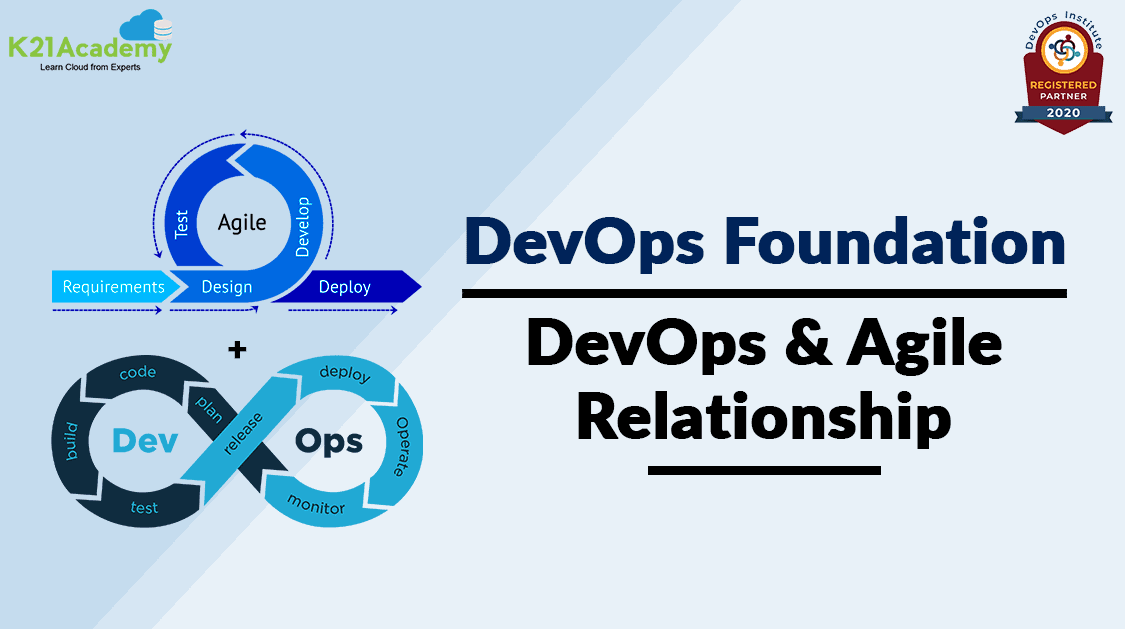




DevOps has brought a lot of changes in the IT industry. By Combining Agile in DevOps, imagine how much faster and feasible delivery DevOps will provide to a business.
In this blog, we are going to cover what is Agile, various Agile Framework, Values of Agile Manifesto, and how does Agile supports DevOps.
If you want to know more about DevOps certification please go through our previous blog on [DOFD] DevOps Foundation Certification Exam and everything you need to know about it.
Agile Methodology | Agile Frameworks
Agile means the ability to move quickly and easily; or in a well-coordinated manner.
Agile is centered around the idea of an iterative process for application development, with multiple development cycles called sprints.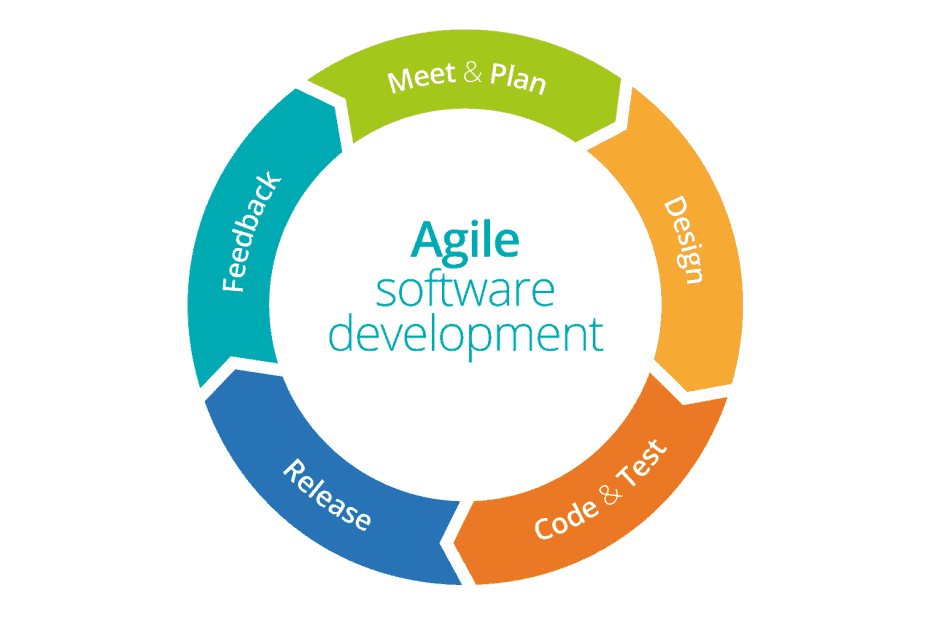
Agile is a methodology that covers many frameworks and they all incorporate the idea of iterative development and continuous feedback when creating an application.
The Agile Frameworks are:
- Scrum: It is one of the more popular and widely used Agile frameworks
- Kanban: It gives you a visualized workflow so you can break work down into small pieces.
- XP: eXtreme Programming helps you ensure the delivery of high-quality software by centering around engineering principles.
- TDD: Test-driven development is a style of programming in which three activities are tightly interwoven: coding, testing, and design.
- PDD: Process-Driven Development
- Lean: Its main focus is on eliminating all wasteful activities that do not add value to the customer.
Agile Manifesto
Agile development refers to any development process that is aligned with the concepts of the Agile Manifesto and is comprised of four values and twelve principles.
Let’s have a look at those four foundational values:
- Individuals and interactions over processes and tools
- Working software over comprehensive documentation
- Customer collaboration over contract negotiation
- Responding to change over following a plan
While there is value in the items on the right, we value the items on the left more.
Let’s understand these concepts in more detail.
Individuals and interactions over processes and tools mean people and communication is more important than processes and tools.
Working software over comprehensive documentation means your software should work before you spend long hours on documenting it. Otherwise, that documentation doesn’t serve any value.
Customer collaboration over contract negotiation means wasting time on negotiating over contracts while customer satisfaction is not given, which would be of no use.
Responding to change over following a plan means we should first try to fix a problem and then follow the process before it becomes a bigger issue.
DevOps and Agile Relationship
Before Agile, Companies used to follow the traditional approach, i.e. Waterfall model for software development. To overcome the gaps introduced by the Waterfall model, companies have adapted Agile Methodology.
While DevOps addresses the communication gap between the development team and operation team, Agile addresses the communication gap between customer requirements and the development team.
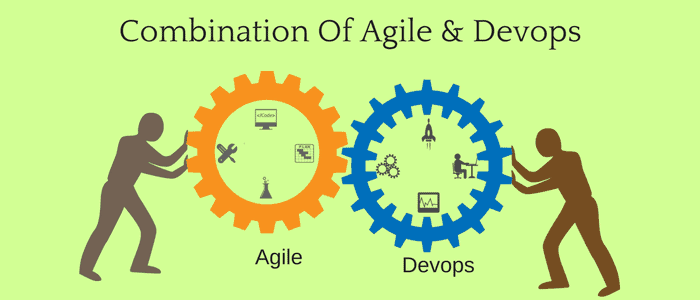
DevOps and Agile both excel at facilitating communication between software developers and IT personnel with automated deployment. However, Agile refers to the development process while DevOps is more focused on deployment.
Successful DevOps relies on the adoption and integration of multiple frameworks and methodologies and Agile is one of them.
How Agile and DevOps Complement Each Other
Agile focuses on the development phase, breaking down projects into manageable iterations, while DevOps takes over in the deployment phase, automating processes and ensuring continuous delivery. The collaboration between the two creates a continuous feedback loop, enabling rapid adjustments based on user feedback.
Agile Practices that Align with DevOps
Iterative Development and Continuous Feedback
- Agile’s iterative approach ensures continuous feedback, which is crucial for DevOps processes.
- Regular iterations allow for constant improvements and adjustments based on real-time data.
Collaboration and Communication
- Both Agile and DevOps emphasize the importance of collaboration and communication.
- Agile’s cross-functional teams and DevOps’ integration of development and operations break down silos and foster a collaborative environment.
Flexibility and Adaptability
- Agile’s focus on adaptability aligns well with DevOps’ need for flexible processes.
- The ability to respond quickly to changes is a key strength of both methodologies.
DevOps Practices that Support Agile
Continuous Integration and Continuous Delivery (CI/CD)
- CI/CD practices ensure that code changes are automatically tested and deployed.
- This supports Agile’s aim for frequent, reliable releases.
Infrastructure as Code (IaC)
- IaC allows teams to manage and provision computing resources through code.
- This promotes consistency and reduces errors, supporting Agile’s principle of technical excellence.
Automated Testing and Monitoring
- Automated testing and monitoring tools provide immediate feedback and insights.
- This helps Agile teams maintain high-quality standards and respond to issues quickly.
Case Studies: Successful Integration of Agile and DevOps
Company A: Improved Software Delivery
- Integrated Agile and DevOps, resulting in a 50% reduction in time-to-market.
- Significant improvement in software quality.
Company B: Enhanced Collaboration and Efficiency
- Adopted Agile and DevOps, enhancing collaboration between development and operations teams.
- Led to a more efficient workflow and better product outcomes.
Company C: Reduced Time to Market
- Integration of Agile and DevOps practices allowed faster delivery of new features.
- Reduced time to market by 40%.
Challenges in Integrating Agile and DevOps
Cultural Resistance
- Shifting to Agile and DevOps requires a cultural change.
- This can be met with resistance from teams used to traditional methods.
Tool Integration Issues
- Integrating tools used in Agile and DevOps can be challenging.
- Careful selection and configuration are needed to ensure compatibility.
Skill Gaps
- Both Agile and DevOps require specific skill sets.
- Gaps in these skills can hinder successful implementation.
Overcoming Challenges
Strategies for Cultural Change
- Leadership should promote a culture of collaboration, continuous learning, and openness to change.
Choosing the Right Tools
- Selecting tools that integrate well with existing systems and support both Agile and DevOps practices is crucial.
Training and Skill Development
- Investing in training and skill development ensures that teams have the necessary knowledge and abilities to implement Agile and DevOps effectively.
Future Trends in Agile and DevOps
Increased Automation
- Automation will continue to play a crucial role in both Agile and DevOps.
- More tasks will be automated to improve efficiency and accuracy.
AI and Machine Learning in DevOps
- The integration of AI and machine learning will enhance predictive capabilities and decision-making in DevOps.
- This will lead to smarter, more efficient processes.
The Evolution of DevSecOps
- Security will become increasingly integrated into DevOps practices.
- This will give rise to DevSecOps, where security is considered at every stage of the development process.
Conclusion
Agile and DevOps are powerful methodologies that, when combined, can transform software development and delivery. By understanding their relationship and leveraging their strengths, organizations can achieve greater efficiency, faster time to market, and higher-quality software. As technology continues to evolve, the integration of Agile and DevOps will remain a key factor in driving innovation and success.
FAQs
Q: Can Agile and DevOps be implemented in non-IT industries?
Yes, the principles of Agile and DevOps can be adapted and implemented in various industries beyond IT, promoting efficiency and collaboration.
Q: How do Agile and DevOps handle changing project requirements?
Agile addresses changing requirements through its iterative nature, while DevOps ensures a smooth transition from development to deployment, accommodating changes seamlessly.
Q: Are there any drawbacks to Agile and DevOps integration?
Challenges may include resistance to change and cultural barriers, but proactive strategies can overcome these drawbacks.
Q: Is it necessary for small organizations to adopt Agile and DevOps?
While the scale of implementation may vary, the principles of Agile and DevOps can benefit organizations of all sizes, fostering adaptability and efficiency.
Q: How can organizations measure the success of Agile and DevOps integration?
Success can be measured through metrics such as faster time-to-market, reduced defects, and increased collaboration between teams.
Related/References
- What Is DevOps | DevOps Principles | Advantages Of DevOps | Why DevOps?
- [DOFD] DevOps Foundation Certification Exam: Everything You Need To Know
- [AZ-400] Microsoft Azure DevOps Certification Exam: Everything You Need To Know
- Certified Kubernetes Administrator (CKA) Certification Exam: Everything You Must Know
Next Task For You
Begin your journey towards becoming a DevOps Expert and earn a lot more by landing a high-paying job.
Join FREE CLASS to learn more about the DevOps Roles and Responsibilities, Job opportunities related to DevOps in the market, and what to study Including Hands-On labs and projects you must perform to get your Dream job.
Click on the below image to Register for Our FREE Class on Mastering DevOps on Cloud: How to Build In-Demand Skills and Land High-Paying Jobs


![Microsoft Agentic AI Business Solutions Architect [AB-100] | K21 Academy](https://test.k21academy.com/wp-content/uploads/2025/11/Microsoft-Agentic-AI-Business-Solutions-Architect-AB-100-Exam-Overview1.png)