




This blog post is going to cover the correlation between DevOps and Microservices, currently the two hottest topics in the IT industry. Although they have been around for some time, their importance has increased thanks to container orchestration technologies such as Kubernetes and Openshift.
The technologies we talk about in this blog are part of DevOps. If it’s something in which you have an interest or you want to learn it then you can visit our previous blog to learn more about the [DOFD] DevOps Foundation Certification.
We will cover the following topics in this blog:
- Microservices
- Benefits of Microservices
- DevOps
- Benefits of DevOps
- How Microservices fit into DevOps
- Microservices And DevOps: Creating Change Together
- Frequently Asked Questions
Microservices Overview
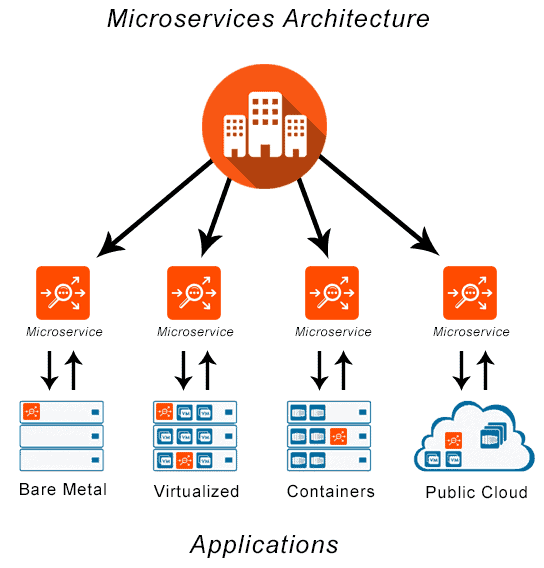
Microservices is an architectural style that structures an application as a collection of services that are:-
- Highly maintainable and testable
- Loosely coupled
- Independently deployable
- Organized around business capabilities
- Owned by a small team
The microservice architecture provides rapid, frequent, and reliable delivery of large, complex applications. It also helps an organization to evolve its technology stack.
 Benefits Of Microservices
The top 10 benefits that organizations realize from deploying microservices include:
- Localized complexity: Owners of the microservices only need to understand the complexity of their service. Other service owners only need to be aware of the capabilities a service provides, without having to worry about how it works internally. This knowledge compartmentalization and reduced complexity make it easier to create and manage large applications.
- Increased business agility: Microservices are relatively small and simple, and the failure of a microservice is isolated —not the whole application— enabling developers to experiment with new processes, algorithms, and business logic. Microservices allow you to experiment and “fail fast.”
- Increased developer productivity: New developers can be incorporated into projects faster as it’s easier to understand a small, isolated piece of functionality than an entire monolithic application.
- Simplified debugging and maintenance: Developers can be much more productive when debugging code and performing maintenance.
- Better alignment of developers with business users: Since microservice architectures revolve around business capabilities, it is easier for developers to understand the user perspective and create microservices that are better aligned with the business.
- Future-proofed applications: When innovations are incorporated and new or updated technology disrupts your software development process, microservice architectures make it easier to adapt by replacing or upgrading the services that are affected without impacting the entire application.
DevOps Overview
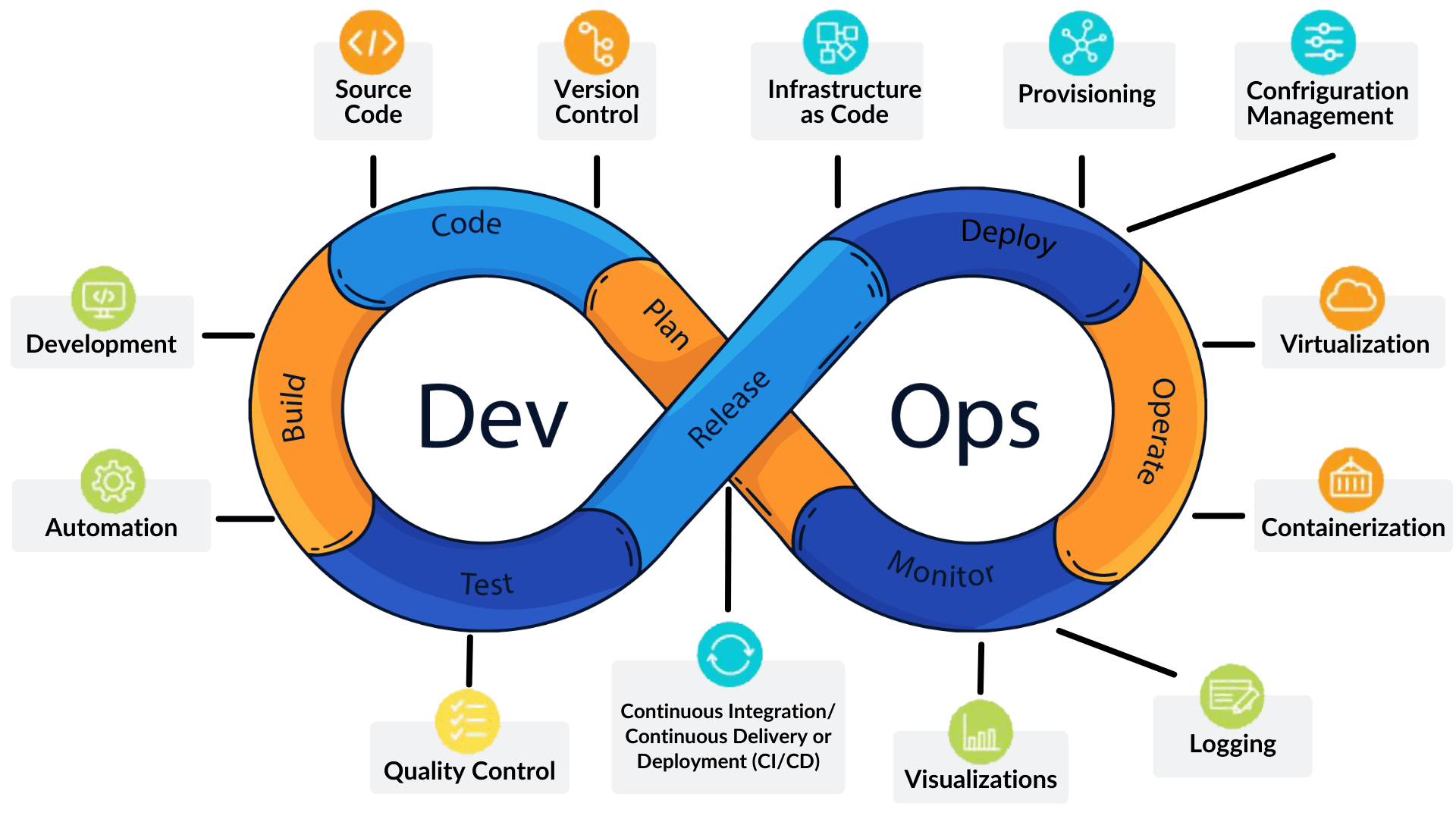
DevOps is a set of cultural philosophies, practices, and tools that improve an organization’s ability to deliver applications and services at high velocity: evolving and improving products at a faster rate than traditional software development and infrastructure management processes. This speed allows organizations to better serve their customers and compete in the market.

Development and operations teams are no longer “silos” in a DevOps model. These two teams are sometimes combined into a single team in which the engineers work across the entire application lifecycle, from development and testing to deployment and operations, and develop a diverse set of skills that are not limited to a single function.
 Benefits of DevOps
- Speed: Move quickly so you can innovate for customers faster, better adapt to changing markets, and become more efficient at driving business results.
- Rapid Delivery: Increase the frequency and pace of releases to allow you to innovate and improve your product more quickly. The faster you can release new features and fix bugs, the more quickly you can respond to your customers’ needs and gain a competitive advantage.
- Reliability: Ensure the quality of application updates and infrastructure changes so that you can deliver at a faster rate while maintaining a positive user experience.
- Scale: Scale up the operation and management of your infrastructure and development processes. Automation and consistency allow you to manage complex or changing systems more efficiently and safely.
- Improved Collaboration: Create more effective teams by following a DevOps cultural model that emphasizes values like ownership and accountability.
- Security: Move quickly while maintaining control and compliance. You can use automated compliance policies, fine-grained controls, and configuration management techniques to implement a DevOps model without sacrificing security.
How Microservices Fit Into DevOps
DevOps Practices push the idealogy of dividing large problems into smaller pieces and tackling them in order as a team. Microservices have similar ideals of utilizing small teams for the creation of functional changes one step at a time. Furthermore, they can easily scale up or down without having any impact on the resource allocations for the rest of the system.
The individual pieces created through the microservices architecture provide a plug-and-play functionality, hence creating an environment where continuous delivery pipelines can sustain a steady flow of deployments due to the reduced complexity of each deployment and lack of dependencies.
The combination of DevOps and microservices in the development, testing, and deployment of updates is the fastest method to increase the throughput of your teams and the overall quality of your services.
 Microservices And DevOps: Creating Change Together
A microservices-based architecture introduces change, a change that is often well-received by those creating modern applications. Those embracing that change are finding that productivity is increasing at an astonishing rate and solutions can be delivered much more quickly to those requesting flexible, scalable applications. For those in the field of DevOps fields, microservices bring some significant benefits, including:
- Deployability: They provide increased agility, which enables the roll-out of new versions of a service. That agility is due to shorter build, test, and deploy cycles.
- Reliability: A fault with a microservice is isolated to that microservice and its consumers.
- Availability: Releasing an update needs minimal downtime, whereas rolling out updates in the monolithic application normally needs a restart of the entire monolith.
- Scalability: Microservices can be independently scaled using pools, clusters, and grids. This characteristic makes them perfect for the elasticity of the cloud.
- Modifiability: Microservices are flexible in terms of new frameworks, libraries, data sources, and other resources. As loosely coupled, modular components, microservices are easier to work with and provide support for dynamic discovery and binding via a registry.
- Management: Microservices leverage the agile methodology, where the development of the application is divided across teams that are smaller and independent.
Conclusion
In conclusion, the dynamic collaboration between DevOps and Microservices is reshaping the landscape of software development. The symbiotic relationship between these two concepts accelerates innovation, improves efficiency, and empowers organizations to navigate the complexities of modern business.
Frequently Asked Questions
How do DevOps and Microservices improve development speed?
The collaboration streamlines processes, allowing for faster deployment and continuous integration.
What challenges do organizations commonly face in adopting DevOps and Microservices?
Common challenges include cultural resistance, technical complexities, and the need for a mindset shift.
Are there any security risks associated with Microservices architecture?
While Microservices offer benefits, they require careful consideration of security measures to mitigate potential risks.
What role does automation play in the success of DevOps and Microservices?
Automation is integral, reducing manual efforts and ensuring consistency in development, testing, and deployment.
How can organizations measure the success of their DevOps and Microservices initiatives?
Key performance indicators such as deployment frequency, lead time, and mean time to recovery provide measurable insights.
Related/References
- [DOFD] DevOps Foundation Certification Exam: Everything You Need To Know
- Top DevOps Interview Questions and Answers for 2023
- Check out the official DevOps Institute page for [DOFD] DevOps Foundation here.
- DevOps Foundation Sample Exam Questions
- What Is DevOps | DevOps Principles | Advantages Of DevOps | Why DevOps?
- DevOps Engineer | DevOps Roles and Responsibilities
- DevOps For Beginners: Step-by-Step Activity Guide (Hands-on Lab)
Next Task For You
Begin your journey towards becoming a DevOps Expert and earn a lot more by landing a high-paying job.
Join FREE CLASS to learn more about the DevOps Roles and Responsibilities, Job opportunities related to DevOps in the market, and what to study Including Hands-On labs and projects you must perform to get your Dream job.
Click on the below image to Register for Our FREE Class on Mastering DevOps on Cloud: How to Build In-Demand Skills and Land High-Paying Jobs


![Microsoft Agentic AI Business Solutions Architect [AB-100] | K21 Academy](https://test.k21academy.com/wp-content/uploads/2025/11/Microsoft-Agentic-AI-Business-Solutions-Architect-AB-100-Exam-Overview1.png)