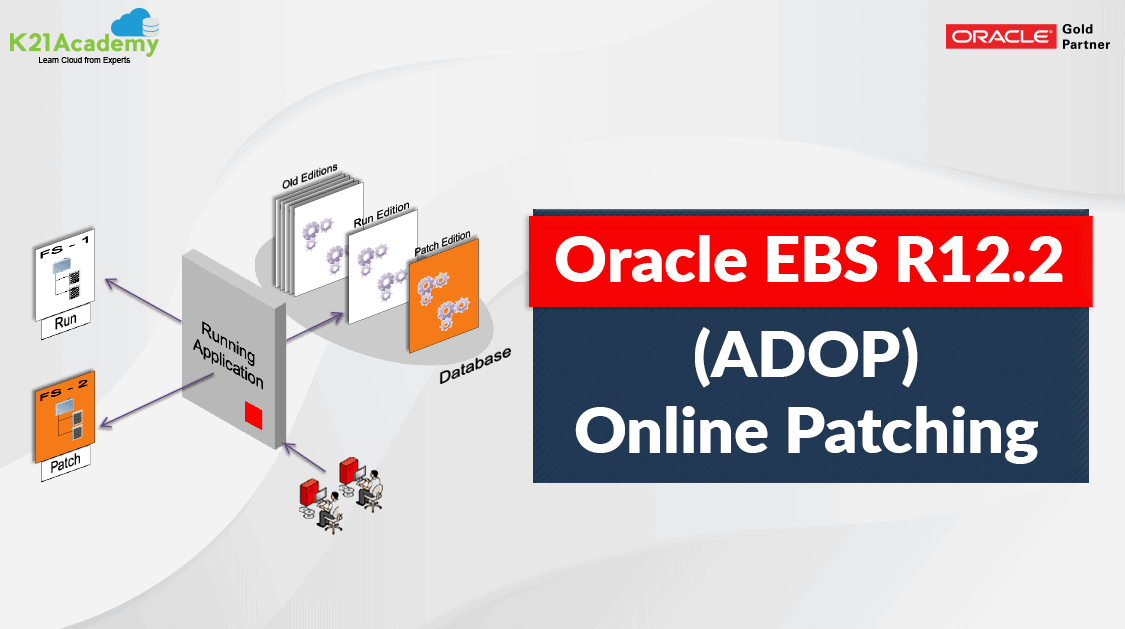


This post covers Online Patching (ADOP) in Oracle E-Business Suite (Apps) R12.2 for Apps DBAs and also part of one of the Lessons from Module Patching from our Oracle Apps DBA (R12.2) Training.
If you have not yet gone through previous training videos then I suggest you look at
- Architecture in Oracle E-Business Suite R12.2 for Apps DBAs here (One of the FREE lessons from 7 Lessons Architecture Module I of Oracle Apps DBA Training )
- Installation of Oracle Apps DBA R12.2 for Apps DBAs here (One of the FREE lessons from 6 Lessons Installation Module II of Oracle Apps DBA Training)
Note: Video starts with topics covered in Patching module so far, How to Find Patches for Oracle EBS, and then most interesting bit i.e. Patching Cycle in ADOP
ADOP Overview
ADOP stands for Application DBA Online Patching, introduced in EBS R12.2 to patching Oracle Applications while the system is available for users during Patching.
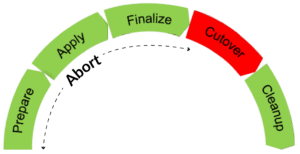
In an Online Patching, there are five phases PREPARE -> APPLY -> FINALIZE -> CUTOVER -> CLEANUP
- prepare: Run and Patch file systems are needed to be synchronized.
- apply: All the patches must be applied in this phase. Applied patches need to be copied in fs_ne (non-editioned filesystems)
- finalize: Getting ready for the cutover phase.
- cutover: The filesystems interchange occurs. i.e., the Patch file system becomes the Run file system and vice versa.
- cleanup: All the obsolete objects gets compiled and cleanup old edition & objects.
Check Out : Our Previous Blog On Oracle Apps DBA ( R12.2 ) Training.
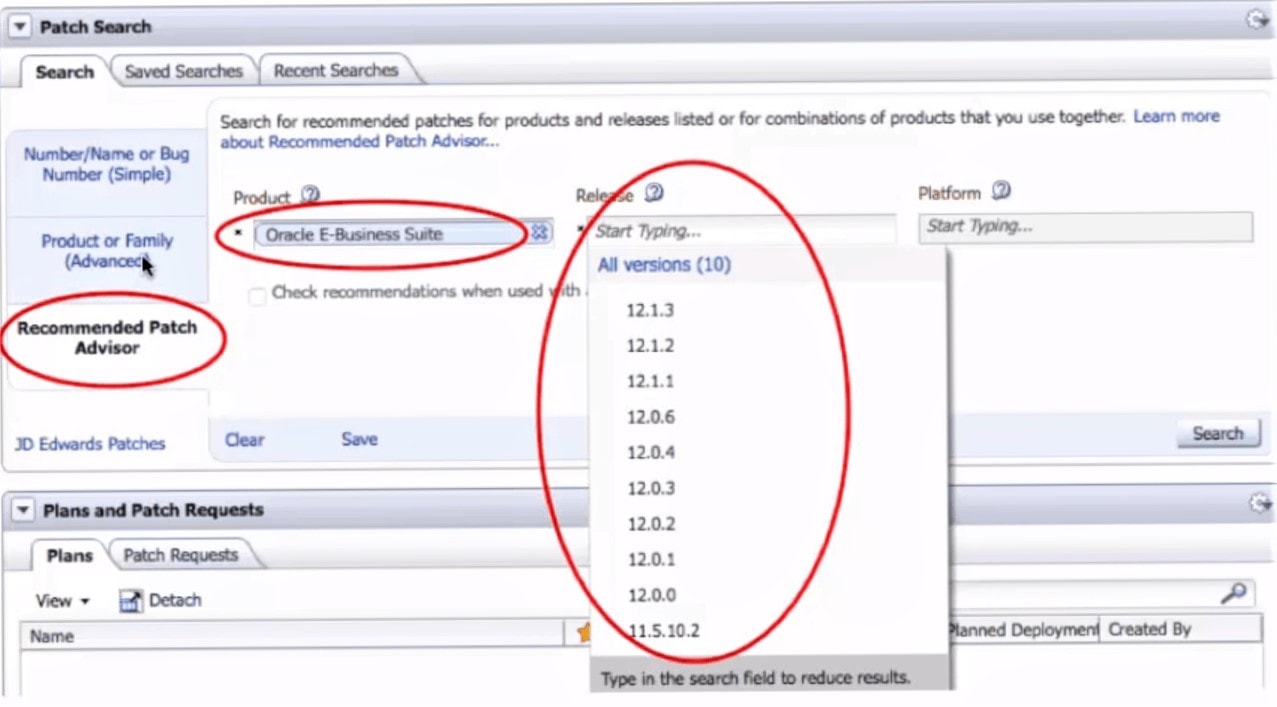
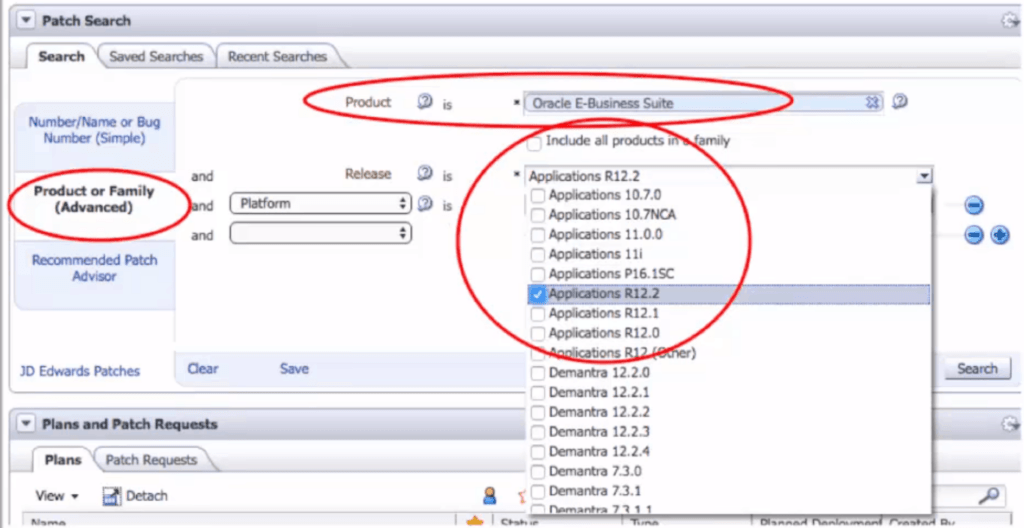
Find Patches for EBS
To find the patches for EBS, we can follow the below steps.
- Login to My Oracle Support
- Click on Patches & Updates tab
- Go to Patch Search
- Click on Recommended Patch Advisor
- Type your product for which you need a recommendation (Oracle E-Business Suite)
- Select Version
- Click Search
Also Read: Our previous blog post on Oracle 19c. Click here
FAQs
2) How do you run an empty Adop cycle?
3) What is Adop Oracle Apps?
4) What is Adop phase Fs_clone?
Related/Further Readings
- Recommended Browsers for Oracle E-Business Suite Release 12 [Doc ID 389422.1]
- Oracle E-Business Suite Release 12.2 Information Center (Doc ID 1581299.1)
- Oracle E-Business Suite Release 12.2.9 Readme (Doc ID 2495027.1)
- Oracle E-Business Suite 12.2.9 Now Available
- [Troubleshooting] Forms Issue: FRM-92050 failed to connect to server:forms/servlet
- Oracle E-Business Suite (EBS) 12.2.9 Now Available & Its Upgrade Steps
- Oracle AppsDBA (R12.2) Training: Step by Step Activity Guides/Hands-On Lab Exercise
- Oracle AppsDBA (R12.2): Install | Patch | Clone | Maintain
Next Task For You
We cover Oracle E-Business R12.2 Architecture & concepts in our Oracle Apps DBA For Beginners Training along with the Installation, Patching, Cloning, and Troubleshooting and also, Database upgrade to 19c and much more including the hands-on labs you must perform to upgrade your skills and get a good job with a high package.
Begin your journey towards becoming an Apps DBA by joining our FREE Masterclass on How To Learn Oracle Apps DBA (R12) & It’s New Features.


![Microsoft Agentic AI Business Solutions Architect [AB-100] | K21 Academy](https://test.k21academy.com/wp-content/uploads/2025/11/Microsoft-Agentic-AI-Business-Solutions-Architect-AB-100-Exam-Overview1.png)