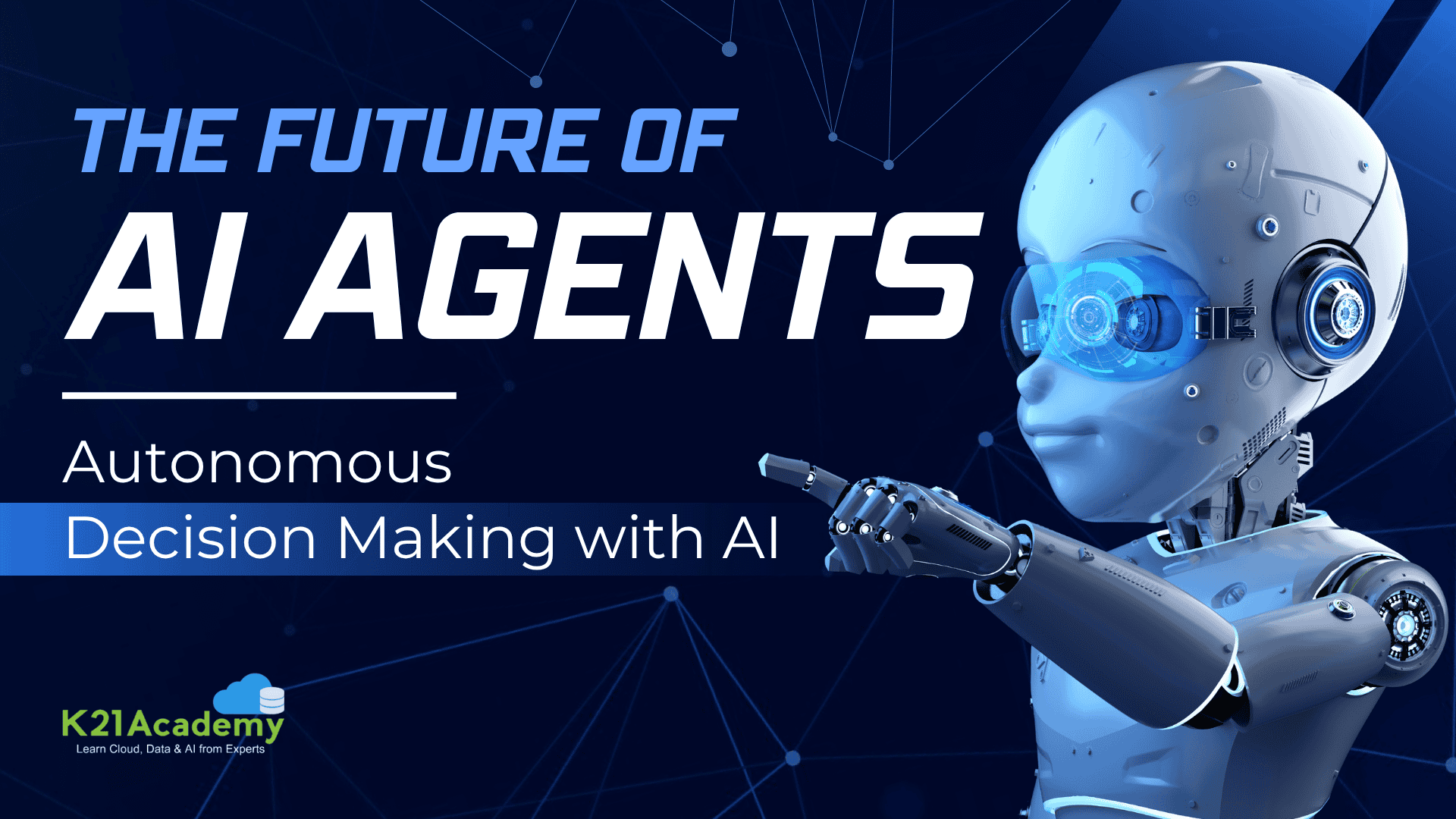




Artificial Intelligence (AI) is advancing rapidly, bringing about major changes in technology. One of the most exciting developments is the creation of AI agents capable of autonomous decision-making, where these systems can analyze data and make decisions on their own without human involvement. This ability to make real-time, data-driven decisions is transforming industries, from healthcare to finance.
In this blog, we’ll explore how autonomous decision-making in AI works, the current uses of AI agents, and what the future might look like for these intelligent systems.
Table of Contents:
What are AI Agents?
AI agents are intelligent systems that can autonomously make decisions based on the data they collect. These agents can be physical—like robots—or virtual, such as software programs. From performing simple tasks like scheduling meetings to more complex operations such as managing supply chains or controlling self-driving cars, AI agents are revolutionizing industries.

At the core of AI agents is the ability to process data and apply specialized algorithms to perform tasks without human intervention. Their main goal is to make smart, data-driven decisions that help achieve specific objectives, such as improving efficiency, saving costs, or enhancing overall performance.
Related Readings: What is Agentic AI?
Autonomous Decision-Making in AI Agents: How They Work and Why It Matters
Autonomous decision-making is the ability of AI agents to make decisions on their own, without needing human input. In traditional systems, humans set rules for the system to follow. But with autonomous systems, AI can analyze data, learn from it, and make decisions by itself.
The big benefit of autonomous AI agents is that they don’t need constant supervision. They can handle tasks like making decisions, predicting outcomes, and solving problems all on their own by processing data in real-time. This is useful because AI can find patterns in data that humans might miss, leading to more accurate and efficient decisions.

For example, in self-driving cars, the car makes decisions about when to stop, go, or turn based on its surroundings, all without a human driver. Similarly, AI chatbots in customer support can answer common questions and provide personalized responses based on past conversations with customers, all without human involvement.
Autonomous decision-making allows these AI agents to work more efficiently, saving time and reducing the chance of errors caused by human oversight.
Related Readings: What is Generative AI & How It Works?
Key Components of Autonomous AI Decision-Making
-
Perception: The AI agent needs to gather information from the environment. This could include data from sensors, cameras, or other data sources that the AI uses to understand its surroundings.
-
Reasoning: Once the data is collected, the agent must process it. This involves analyzing the data, recognizing patterns, and evaluating different possible actions or solutions based on learned models or algorithms.
-
Action: After reasoning, the AI agent takes action. This could be anything from issuing a recommendation to taking a physical action, like steering a car or ordering inventory.
-
Learning and Adaptation: Autonomous AI agents don’t just make one-time decisions. They learn from their experiences, meaning that over time, they adapt their decision-making processes to improve outcomes and performance.

Real-World Applications of Autonomous AI Agents
AI agents are already making autonomous decisions across various industries, revolutionizing business processes and everyday life. Some of the current applications include:
- Autonomous Vehicles
-
Self-driving cars use AI agents to make decisions on steering, braking, and accelerating.
-
Rely on sensors, cameras, and AI algorithms to process real-time data.
-
Aim to eliminate human error and reduce accidents caused by driver inattention.
-
- AI-Powered Virtual Assistants
-
Virtual assistants like Siri, Alexa, and Google Assistant make autonomous decisions based on voice commands.
-
Use Natural Language Processing (NLP) to understand requests and preferences.
-
Examples: Playing a favorite song or setting reminders without manual input.
-
- Healthcare AI
-
AI agents autonomously diagnose medical conditions and suggest treatments.
-
Analyze medical images, interpret data, and predict potential health issues.
-
Example: Detecting abnormalities in X-rays or MRIs, potentially diagnosing diseases like cancer early.
-
- Finance and Trading
-
AI agents manage investments, detect fraud, and optimize trading strategies.
-
Used in algorithmic trading to autonomously execute trades based on market data.
-
React to market changes in real-time, adjusting strategies for opportunities or risks.
-
- Manufacturing and Robotics
-
AI agents optimize production lines, schedule maintenance, and automate tasks.
-
Robotics, powered by AI, autonomously assembles products and inspects quality.
-
Perform tasks like welding, painting, and other repetitive tasks to increase efficiency and reduce human error.
-

The Future of AI Agents: What Lies Ahead
The future of autonomous AI agents looks exciting, but for them to be widely used, we need to overcome some challenges. As AI improves, these agents will become better at handling complex tasks more accurately.
In the next few years, AI agents might not only help with decisions in fields like healthcare, transportation, and finance but also assist in our personal lives. For example, they could help manage our daily schedules, offer mental health support, or even help with tough personal decisions.
As AI becomes a bigger part of daily life, we’ll need to think about how much control humans should have over decisions and the ethical concerns of letting machines make important choices.
Related Readings: Generative AI vs Agentic AI: Key Differences
Challenges and Risks of Autonomous AI Agents
While autonomous AI agents have a lot of potential, some challenges and risks need to be addressed:

-
Data Bias
AI agents make decisions based on the data they are trained on. If the data is biased, the AI will also make biased decisions. This is a big problem in sensitive areas like hiring, healthcare, and law enforcement, where biased decisions can have serious consequences. -
Lack of Accountability
When AI makes autonomous decisions, it’s hard to figure out who is responsible if something goes wrong. If an AI causes harm or damages property, it’s crucial to know who is accountable. Transparency in how AI makes decisions is key to addressing this challenge. -
Lack of Transparency
AI agents often work in ways that are hard to understand. This lack of transparency makes it difficult to know how the AI is making decisions. In sensitive areas, people need clear explanations for AI decisions to trust them. -
Security Risks
AI systems must be secure to prevent bad actors from manipulating them. As AI becomes more involved in critical areas like healthcare and transportation, it’s important to protect these systems from hackers or malicious changes that could lead to harm. -
Ethical Concerns
AI agents making decisions on their own raise important ethical questions. We need to ensure that AI behaves fairly, respects privacy, and doesn’t cause harm. Ethical guidelines are essential to ensure AI acts in a way that is morally acceptable. -
Lack of Adaptability
AI systems need to adapt to changing environments and situations. Developing AI that can handle a wide range of circumstances and adjust to new challenges is a complex task. The AI must be flexible enough to work in real-world scenarios that are constantly evolving.
Conclusion
The future of AI agents in autonomous decision-making is both exciting and transformative. From healthcare and finance to manufacturing and autonomous vehicles, AI agents are set to reshape industries and enhance our lives in ways we can only begin to imagine. While challenges remain, the potential benefits of these intelligent agents are undeniable. By ensuring ethical guidelines, enhancing security, and developing appropriate regulatory frameworks, we can ensure that AI agents become a force for good in society.
Related Readings: MLOps, AIOps and different -Ops frameworks
Frequently Asked Questions (FAQs)
AI agents are systems that can make decisions and perform tasks independently, using AI technologies like machine learning. They gather information, analyze data, and take actions based on their environment without needing human intervention.
AI agents make decisions by gathering data from their surroundings, processing it through advanced algorithms, and using learned patterns to choose the best course of action. They continuously improve as they interact with more data.
While AI agents are becoming more capable, they are unlikely to fully replace humans in all decision-making roles. They are best suited for tasks that involve handling large amounts of data or performing repetitive tasks, but human judgment will still be necessary for complex, emotional, or ethical decisions.
AI agents will likely have a bigger role in personal life in the future. They could help with managing daily tasks, offering health advice, providing mental health support, and making personal decisions based on individual preferences.
As AI technology advances, AI agents will become more sophisticated and integrated into various aspects of our lives. In the future, they may assist with complex decision-making, improving productivity and offering personalized support, but we will need to handle ethical and security issues carefully. What are AI agents?
How do AI agents make decisions?
Can AI agents replace humans in all decision-making roles?
How will AI agents impact personal life?
What does the future hold for AI agents?

![Microsoft Agentic AI Business Solutions Architect [AB-100] | K21 Academy](https://test.k21academy.com/wp-content/uploads/2025/11/Microsoft-Agentic-AI-Business-Solutions-Architect-AB-100-Exam-Overview1.png)