



Artificial intelligence (AI) is set to revolutionize industries by 2025, driving significant transformations in the job market. As AI technologies continue to advance rapidly, their impact will be felt across a wide range of sectors, from automation and machine learning to AI-powered healthcare and edge computing.
With the increasing demand for AI professionals, staying informed about the evolving trends and key skills will be crucial for anyone aiming to thrive in this dynamic field.

The need for skilled professionals in AI is expected to surge as AI adoption accelerates. This is a pivotal moment for career transformations, as new opportunities continue to emerge across industries.
Whether you’re looking to enter the field or switch from another industry, there is a growing demand for individuals equipped with the right skills. 2025 is a key year for anyone wanting to capitalize on these opportunities and build a career in AI.
This article is designed for beginners, individuals looking to change careers, or those eager to pivot into AI-based roles. If you’re looking to take the first step toward a successful career in AI, this guide will provide you with the essential insights you need.

AI Job Roles
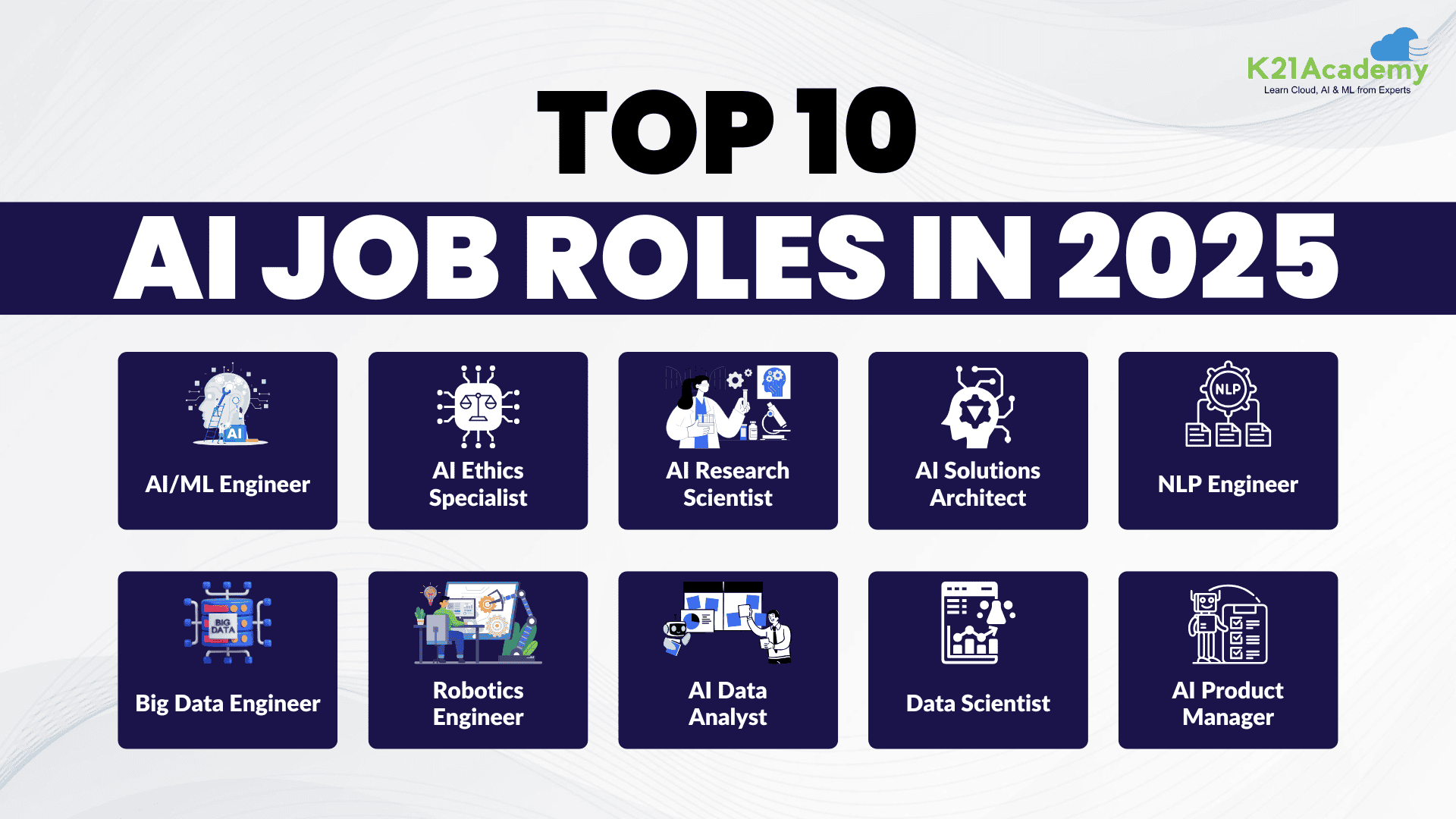
Now let’s look at the AI job roles which are in-demand in today’s times:

1) AI/ML Engineer
2) AI Ethics Specialist
AI Research Scientists focus on advancing AI technologies by conducting deep research and developing innovative algorithms. They explore new AI techniques, improve existing models, and contribute to the foundation of cutting-edge AI advancements. Their work is fundamental to pushing the boundaries of AI applications in areas like natural language processing, computer vision, and robotics.
Key Responsibilities
- Conduct deep research on AI algorithms and methodologies.
- Develop and test new AI models and frameworks.
- Publish research papers and contribute to academic and industry knowledge.
- Collaborate with teams to integrate new research into practical AI applications.
- Stay updated with the latest trends and breakthroughs in AI.
Skills Required
- Strong programming skills: Python, C++, or Java.
- Expertise in AI algorithms, machine learning, and deep learning frameworks (TensorFlow, PyTorch).
- Strong background in statistics, mathematics, and data science.
- Knowledge in specialized AI areas such as NLP, computer vision, or reinforcement learning.
- Research skills: Able to conduct and publish original research.
Salary Range
- U.S. Average: $122,000 annually.
- Global Salary:
-
U.K.: £50K – £90K
-
India: ₹10L – ₹40L
-
Canada: $100K – $180K
-
Ideal for Career Transformers
Perfect for professionals transitioning from academia or research roles, or those with a strong mathematical or scientific background looking to dive deeper into AI.
Certifications to Boost Your Career
4) AI Solutions Architect
AI Solutions Architects design and implement AI systems that align with business needs, ensuring seamless integration, scalability, and efficiency. They work on crafting AI-driven solutions to solve complex challenges while collaborating with data science and engineering teams to integrate these systems into existing IT environments.
Key Responsibilities
- Design AI-based solutions that meet business objectives.
- Integrate AI models into existing infrastructure with a focus on scalability and performance.
- Ensure the deployment of secure, reliable, and efficient AI solutions.
- Collaborate with cross-functional teams to define AI requirements and architectures.
- Guide the adoption of AI best practices and standards across the organization.
Skills Required
- Expertise in cloud platforms (AWS, Azure, GCP).
- Strong knowledge of AI, machine learning, and deep learning algorithms.
- Proficiency in system design, architecture, and cloud-based technologies.
- Experience in microservices, containerization, and orchestration tools like Kubernetes.
- Excellent communication skills to collaborate with technical and non-technical teams.
Salary Range
- U.S. Average: $140,000 annually.
- Global Salary:
-
U.K.: £65K – £120K
-
India: ₹18L – ₹45L
-
Canada: $110K – $200K
-
Ideal for Career Transformers
Ideal for individuals transitioning from software engineering, cloud computing, or enterprise architecture roles, with a strong interest in applying AI to solve business problems.
Certifications to Boost Your Career
- AWS Certified Solutions Architect
- Microsoft Certified: Azure AI Engineer
- Google Cloud Professional Cloud Architect
5) NLP Engineer
NLP or Natural Language Processing Engineers create algorithms that enable computers to comprehend and process human language effectively, powering applications like chatbots and translation services.
Key Responsibilities
- Develop and optimize NLP models for text processing and understanding.
- Work on tasks like text classification, sentiment analysis, and named entity recognition.
- Integrate NLP solutions into applications to enhance user experience.
- Collaborate with data scientists to fine-tune models for accuracy and performance.
- Stay updated on the latest advancements in NLP technologies.
Skills Required
- Strong programming skills in Python, Java, or similar languages.
- Expertise in NLP libraries (e.g., SpaCy, NLTK, Hugging Face Transformers).
- Experience with deep learning frameworks like TensorFlow or PyTorch.
- Solid understanding of machine learning algorithms and text data processing.
- Familiarity with cloud-based NLP services (e.g., AWS Comprehend, Google NLP).
Salary Range
- U.S. Average: $115,000 annually.
- Global Salary:
-
U.K.: £45K – £85K
-
India: ₹8L – ₹30L
-
Canada: $95K – $160K
-
Ideal for Career Transformers
Perfect for those transitioning from software engineering, linguistics, or data science with a keen interest in working with language technologies and AI.
Certifications to Boost Your Career
6) Big Data Engineer
Data Engineers design and develop systems that gather, manage, and transform raw data into actionable insights for data scientists, business analysts, and other professionals. They ensure data is accessible, enabling organizations to use it to assess and improve performance. Data engineering is a versatile field with applications across a wide range of industries.
7) Robotics Engineer
Robotics Engineers design, build, and maintain robots and automated systems that can perform tasks autonomously or semi-autonomously. They work with hardware and software to create intelligent systems used in industries such as manufacturing, healthcare, aerospace, and logistics.
Key Responsibilities
- Design and develop robotic systems and components.
- Program robots to perform specific tasks, integrating sensors, actuators, and control systems.
- Test and optimize robot performance, ensuring reliability and efficiency.
- Collaborate with multidisciplinary teams to integrate robotics into existing processes.
- Stay updated on advancements in robotics technologies and apply new techniques.
Skills Required
- Strong programming skills in languages like C++, Python, or MATLAB.
- Experience with robotics frameworks (e.g., ROS, VEX Robotics).
- Knowledge of hardware components such as sensors, actuators, and control systems.
- Expertise in machine learning, AI, and computer vision for robot autonomy.
- Familiarity with simulation software (e.g., Gazebo, V-REP) for testing robots.
Salary Range
- U.S. Average: $90,000 annually.
- Global Salary:
-
U.K.: £35K – £75K
-
India: ₹6L – ₹20L
-
Canada: $80K – $130K
-
Ideal for Career Transformers
Best for those transitioning from mechanical engineering, electrical engineering, or computer science with a passion for building intelligent machines.
Certifications to Boost Your Career
- Certified LabVIEW Developer (CLD)
- Robotics Certification by Robotics Education & Competition Foundation
- AWS Certified Robotics Engineer
8) AI Data Analyst
AI Data Analysts specialize in analyzing large datasets to extract insights that can be used to improve AI models and drive business decisions. They apply statistical methods and machine learning techniques to process and interpret data, enabling organizations to make data-driven decisions and enhance AI system performance.
Key Responsibilities
- Analyze and interpret large datasets to uncover trends and patterns.
- Clean, preprocess, and transform data for AI model training and optimization.
- Develop and apply statistical models to improve AI system accuracy.
- Collaborate with data scientists and engineers to refine AI models based on data insights.
- Present findings and insights to stakeholders for data-driven decision-making.
Skills Required
- Proficiency in programming languages such as Python, R, or SQL.
- Strong knowledge of data analysis and visualization tools (e.g., Pandas, Matplotlib, Tableau).
- Experience with machine learning algorithms and AI model evaluation.
- Strong statistical analysis and hypothesis testing skills.
- Familiarity with data wrangling and data preprocessing techniques.
Salary Range
- U.S. Average: $85,000 annually.
- Global Salary:
-
U.K.: £40K – £75K
-
India: ₹6L – ₹25L
-
Canada: $80K – $120K
-
Ideal for Career Transformers
Perfect for professionals transitioning from data analysis, business analysis, or software engineering, with an interest in applying AI and machine learning to data-driven problems.
Certifications to Boost Your Career
Related Readings: Data Science vs Data Analytics vs Data Engineer
9) Data Scientist
Data Scientists examine large volumes of raw data to identify patterns that help optimize a company’s processes. They leverage statistical tools and algorithms to extract insights that inform strategic business decisions.
Key Responsibilities
- Analyze large datasets to identify trends, patterns, and insights.
- Build and optimize predictive models using machine learning and statistical techniques.
- Collaborate with stakeholders to understand business needs and translate them into data-driven solutions.
- Communicate findings through data visualizations and reports.
- Continuously improve models and methodologies for better accuracy and efficiency.
Skills Required
- Proficiency in programming languages like Python, R, or SQL.
- Strong knowledge of machine learning algorithms and data processing libraries (e.g., Pandas, Scikit-learn).
- Experience with data visualization tools (e.g., Matplotlib, Tableau, Power BI).
- Strong foundation in statistics, probability, and data analysis techniques.
- Experience with deep learning frameworks (e.g., TensorFlow, Keras) is a plus.
Salary Range
- U.S. Average: $96,000 annually.
- Global Salary:
-
U.K.: £45K – £85K
-
India: ₹8L – ₹30L
-
Canada: $90K – $150K
-
Ideal for Career Transformers
Ideal for individuals transitioning from programming, software engineering, or statistics who want to apply data-driven solutions to solve real-world problems.
Certifications to Boost Your Career
- AWS Certified Machine Learning – Specialty
- Google Professional Data Engineer
- Microsoft Certified: Azure Data Scientist Associate
Related Reading: Data Science Career Roadmap
10) AI Product Manager
Real-World Use Cases
- Recommendation Engines: AI/ML Engineers develop personalized systems like Netflix and Amazon’s recommendation engines, while AI Product Managers oversee their strategic direction and integration.
- Healthcare Diagnostics & AI Ethics: AI/ML Engineers and AI Ethics Specialists collaborate to build diagnostic models for detecting diseases and ensure ethical AI practices in healthcare systems, ensuring compliance with privacy laws.
- Autonomous Vehicles & Robotics: Robotics Engineers design self-driving car algorithms, and AI Solutions Architects integrate AI systems to optimize real-time navigation and decision-making in autonomous vehicles.
- AI-Powered Customer Service: AI Product Managers lead the development of chatbots for companies like Amazon, improving customer support, while NLP Engineers enhance the AI’s ability to understand and respond to human language effectively.
- Fraud Detection & Predictive Maintenance: Big Data Engineers and Data Scientists build systems to detect fraud in banking and predict equipment failure in manufacturing, enhancing business efficiency and security.
Tips for Career Transition into AI
- Starting from Scratch: Begin by learning Python, focusing on Data Science fundamentals, and taking introductory AI/ML courses to build a strong foundation.
- Building a Portfolio: Develop and showcase projects on GitHub or Kaggle to demonstrate your AI skills and attract potential employers.
- Leverage Existing Skills: Transfer your technical or analytical skills to AI roles like Data Scientist or AI Engineer.
- Learn Core AI Concepts: Master key AI principles, including ML algorithms and NLP, to gain proficiency for roles like AI Solutions Architect.
- Pursue Certifications: Earn certifications like AWS Certified Machine Learning or Google Professional AI Engineer to validate your skills.
- Work on Projects: Build real-world AI projects or contribute to open-source AI initiatives to gain practical experience.
- Join AI Communities: Engage with AI forums, meetups, and social networks to network and stay updated on industry trends.
- Develop Analytical Skills: Hone problem-solving abilities by practicing on coding platforms like HackerRank and LeetCode.
Key Skills for AI Professionals in 2025
Skills:
- Understanding of AI/ML concepts and algorithms.
- Excellent analytical and problem-solving skills.
- Proficiency in programming languages, especially Python, and possibly R or Java.
- Experience with machine learning frameworks such as TensorFlow, Keras, PyTorch.
- Familiarity with data manipulation and analysis tools (SQL, Pandas, NumPy).
- Knowledge of big data technologies and distributed computing frameworks (e.g., Hadoop, Spark).
- Experience in scientific software development/analysis.
- Ability to convey technical concepts to non-technical stakeholders.
- Strong attention to detail and ability to work with complex data.
- Experience with natural language processing (NLP), computer vision, or other AI subfields is a plus.
- Familiarity with cloud-based machine learning platforms (AWS SageMaker, Azure Machine Learning).
Tools:
- Machine Learning Frameworks: TensorFlow, Keras, PyTorch
- Data Analysis: SQL, Pandas, NumPy
- Big Data Technologies: Hadoop, Spark
- Development Tools: Jupyter Notebook, GitHub (for MLOps)
- BI Tools: Tableau, PowerBI (for visualizing and presenting data insights)
Conclusion
The field of artificial intelligence is rapidly transforming industries, creating exciting new career opportunities. Whether you’re starting from scratch, looking to switch careers, or seeking to enhance your existing skills, the demand for skilled AI professionals is set to soar by 2025. By focusing on foundational knowledge, hands-on experience, and certifications, you can successfully transition into AI roles such as AI/ML Engineer, Data Scientist, AI Product Manager, and more.
Building a strong portfolio, staying updated with industry trends, and engaging with AI communities will be crucial for your career growth in this dynamic field. As AI continues to evolve, staying adaptable and continuously learning will help you remain competitive in the job market. Now is the time to dive into the world of AI and take advantage of the vast opportunities ahead.
Frequently Asked Questions
Is AI a good future career?
Artificial Intelligence (AI) is rapidly changing the world and offers exciting career opportunities. As technology continues to advance, the demand for skilled AI professionals will only increase
What are the essential skills for AI job seekers?
Core skills include programming (Python, R), machine learning algorithms, data analysis, and familiarity with AI frameworks (e.g., TensorFlow, PyTorch). Strong problem-solving and analytical skills are also crucial.
How can individuals transition from traditional roles to AI careers?
To break into the AI field, start by acquiring relevant skills through online courses or bootcamps. Build a solid portfolio showcasing your AI projects to demonstrate your abilities. Networking with professionals in the AI industry can open valuable opportunities. Additionally, leverage transferable skills such as data analysis or domain expertise to enhance your profile. Consider seeking internships or entry-level positions in AI-related roles to gain hands-on experience and grow your career.
What industries are hiring for AI roles?
AI jobs are in demand across various industries including technology, healthcare, finance, automotive, and entertainment. Companies in these sectors need AI expertise to drive innovation and improve efficiency.
Will AI replace human jobs?
While AI will automate some tasks, it will also create new roles, especially in areas like AI development, ethics, and implementation. Human expertise is essential for overseeing AI systems, interpreting results, and managing complex decision-making.

![Microsoft Agentic AI Business Solutions Architect [AB-100] | K21 Academy](https://test.k21academy.com/wp-content/uploads/2025/11/Microsoft-Agentic-AI-Business-Solutions-Architect-AB-100-Exam-Overview1.png)