

Table of Contents:
- What is DevOps & AI?
- Role of AI in DevOps & Key Benefits
- Best practices for using AI in DevOps
- Challenge in Implementation
- Real World Use-Cases
- Future Trends
Integrating AI into your business is the need of the hour. The intelligent technology is not only changing business processes but, in fact, transforming businesses altogether. Several businesses have reaped the huge windfall benefits of AI integration into their business processes and witnessed skyrocketing growth. The more complex the process, the greater the scope of growth.
Let’s read more about the role of AI in DevOps, how AI is being applied to improve software development process & streamline operations ad job roles available.
What is DevOps & AI?
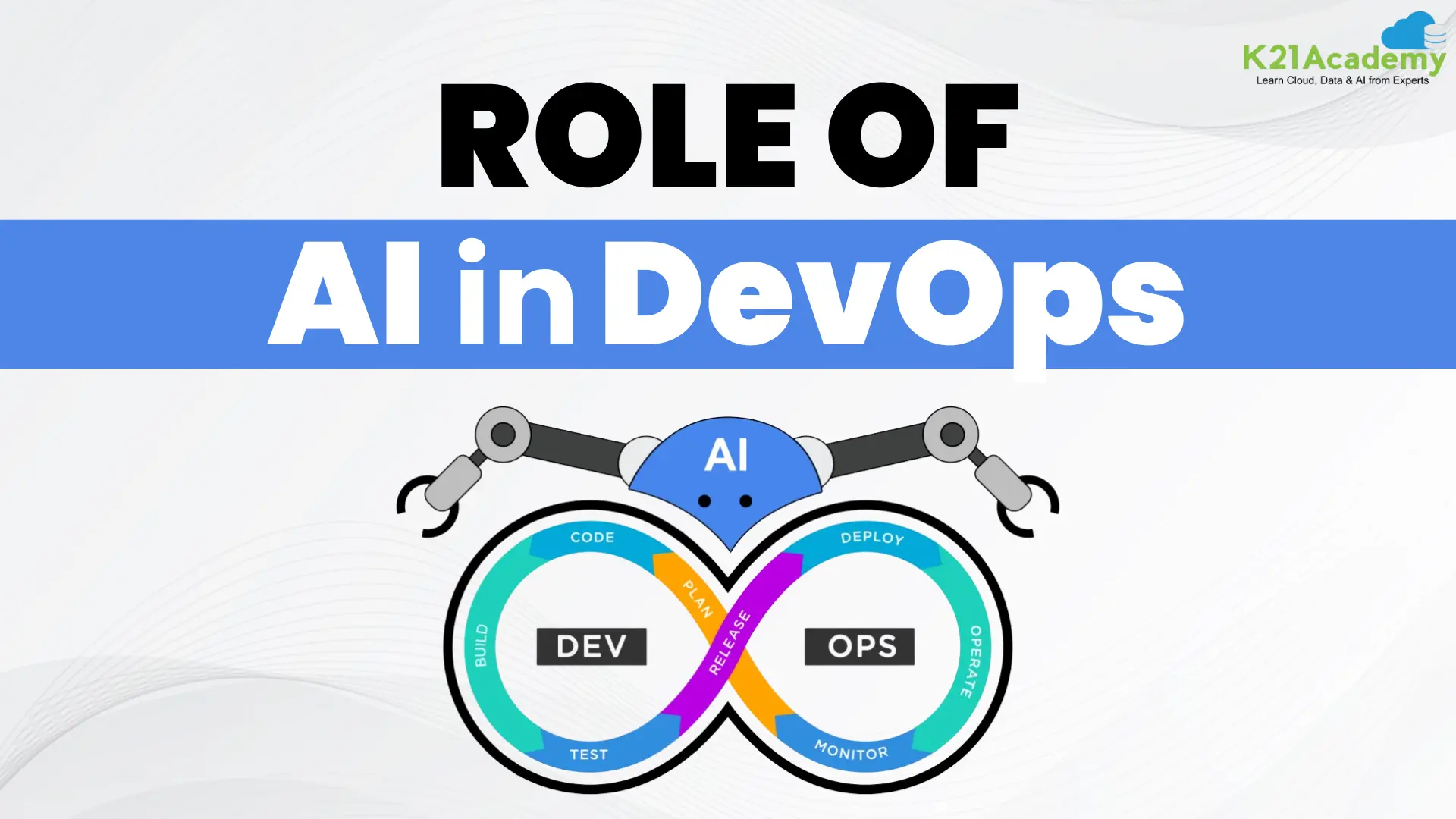
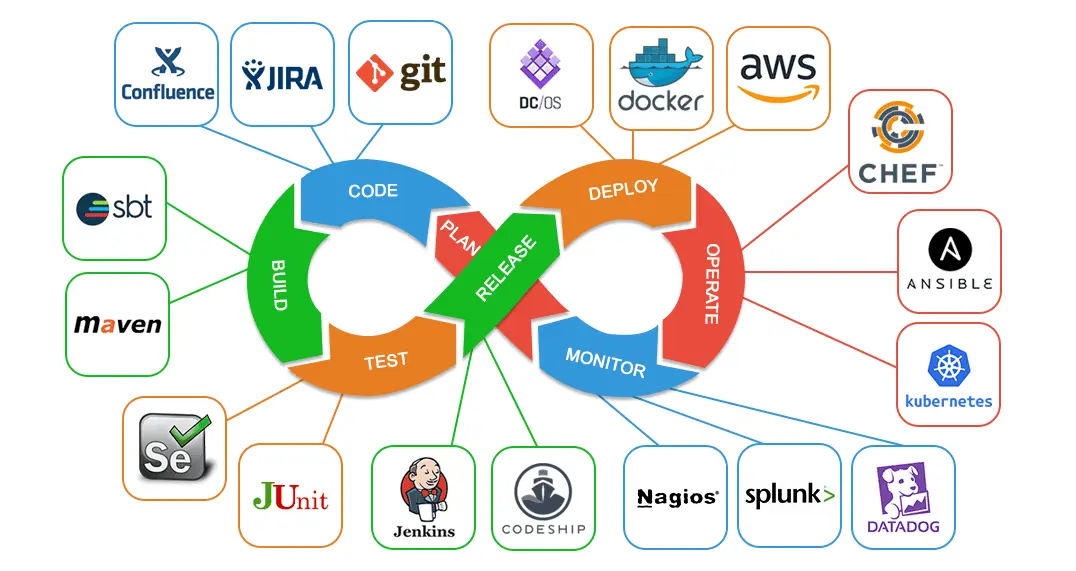
DevOps, a combination of “development” and “operations,” aiming to unify software development and IT operations to enhance the speed and quality of software delivery. The development team is responsible for planning, designing & building a software product. The operations team is responsible for testing, deploying & monitoring the product.
Artificial Intelligence, or AI, is a pathbreaking subfield of computer science that instills machines with intelligence. With this newfound power of AI, machines can perform tasks that otherwise require the intelligence of a human being.

Incorporating Artificial Intelligence (AI) into DevOps can improve efficiency, automate complex tasks, and provide predictive insights. Here’s how AI can be effectively integrated into DevOps workflows.
- Automating routine tasks
- Enhanced Monitoring and Maintenance
- Intelligent Incident Management
- Optimised Development Processes
- Continuous Testing and Quality Assurance
- Security Enhancement

Role of AI in DevOps & Key Benefits
AI and DevOps share a symbiotic relationship, meaning that both of them affect and enhance each other.
Automated Self-Healing CI/CD pipeline
AI automates the CI/CD process of building, testing, and deploying software application code. Hence, any updates to the software are automatically tested, integrated into the existing codebase, and deployed right away. This reduces errors, improves quality and hastens the delivery of the application under development.
AI helps in evolving the system so that it automatically detects and corrects issues without requiring any human intervention. Consequently, it maintains the stability and reliability of the system with its proactive approach.
High App Availability and Reduced Downtime
Since AI automatically analyses the application codes, identifies patterns, and predicts potential issues proactively, automated testing detects issues early in the development cycle. AI uses machine learning development to identify and fix problems in your applications beforehand, making them run better with little to no downtime.
High Code Quality
AI continuously monitors the code ensuring high quality in less time. It helps identifying bugs, critical issues, and gaps in security with high speed and accuracy.
It learns from the huge pile of data from the DevOps processes and builds its vast experience over time. Then, among other things, it uses this experience to set a standard for checking future code.
Cost Reduction
With the data visualisation capability of AI, developers and IT operators can clearly understand even the most complex of issues and use it to improve outcomes, including code efficiency. This not only reduces the running time but also saves almost half of the cost spent on resources.
Optimises Deployment and Release Management
AI optimises deployment strategies by analysing past data on deployment, user behaviour, and system performance. This leads to more efficient and reliable deployment processes while reducing the risks associated with new releases.
Security
AI automated CI/CD pipelines facilitate smooth ongoing improvement and integration into your software applications. This offers two benefits. First, the developers gain confidence of writing secure code infused with the best practises in the space. Second, the process is suitable to identify lacunae at scale.

Best practices for using AI in DevOps
Here are some best practices for using AI in DevOps:
- Engaging the right stakeholders: It’s essential to involve stakeholders including developers, IT operations staff, business leaders, etc from across the organisation when implementing AI in DevOps. They can provide valuable insights and feedback on how AI is being used and its impact on the organisation.
- Continuous Evaluation & Improvement: Evaluate the performance of AI tools and algorithms to ensure they are providing the intended benefits, and make necessary adjustments as needed.
- Ensure Data Quality & Security: When using AI in DevOps, it is important to ensure that the data being used is of high quality and secure. It is necessary to implement data governance policies and use secure data storage solutions.
- Incorporate Human Oversight: AI can automate many tasks in DevOps, however it is important to have human oversight so as to ensure that the AI is making intelligent decisions. In order to ensure optimum processes, ensuring human approval for critical decisions is still required.
- Start small & iterate: When implementing AI in DevOps, it’s often best to start small and iterate. Start by identifying specific areas where AI can provide the most benefit, and then gradually expand AI adoption as you learn more about its effectiveness and limitations.
Related Readings: Transforming DevOps with GenAI
Challenge in Implementation
Integrating AI and ML into DevOps presents several challenges, including managing high-quality data, versioning models, and ensuring scalability. Developers often struggle with integrating AI/ML workflows into existing CI/CD pipelines, monitoring model performance in production, and maintaining security and compliance. Additionally, cross-functional collaboration between DevOps engineers and data scientists can be difficult, while the lack of specialised tools and expertise further complicates the process. To overcome these hurdles, teams can adopt model version control, implement automated monitoring, and use tools like Kubernetes, MLflow, and cloud-based AI platforms to streamline and scale AI/ML workflows effectively.
Related Readings: DevOps Engineer | DevOps Roles and Responsibilities
Real World Use-Case
Here are some use cases of AI in DevOps with real-world examples:
- Test Optimisation: AI prioritises and optimises test cases based on historical data, improving testing efficiency; Facebook uses AI to prioritise tests that are most likely to uncover bugs, speeding up release cycles.
- Automated Incident Management: AI detects and resolves incidents automatically; LinkedIn uses AI-powered systems to detect service disruptions and initiate automated remediation actions, minimizing service interruptions.
- CI/CD Optimization: AI optimizes CI/CD pipelines for faster and more efficient builds; GitLab uses AI to optimize build pipelines by predicting failures and allocating resources dynamically.
- Root Cause Analysis: AI analyzes logs and metrics to identify root causes faster; Atlassian uses machine learning to analyze Jira logs and pinpoint issues in their development workflow.
Future Trends
New trends and technologies are emerging that will further shape the future of AI in DevOps. These include the increased use of machine learning models to predict and optimise resource allocation, the development of more sophisticated AI-driven monitoring and alerting tools, and the integration of AI with other emerging technologies such as edge computing and serverless architectures. As a result, businesses can now attain faster, more efficient, and scalable solutions that redefine the boundaries of innovation within the industry.
To answer “How AI impact future of DevOps”, we would say that with all these ongoing developments and the constantly evolving AI ecosystem, the future of DevOps with AI holds immense possibilities:
- seamless automation
- predictive analytics-driven decision-making
- and adaptive infrastructure
AI will optimise workflows, enhance collaboration, and enable rapid, agile responses to dynamic challenges, transforming DevOps into a powerhouse of efficiency, innovation, and continuous improvement.
Job Roles
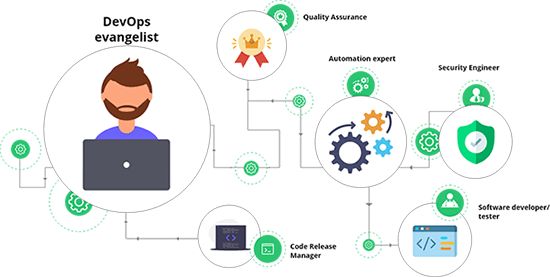
Now the important question is how knowing and adapting AI in your DevOps practice can help you land your dream job. Here are a few job roles related to AI DevOps which are trending in the industry:
AI DevOps Engineer
An AI DevOps engineer is responsible for:
- designing, building, and managing AI/ML pipelines for model training, deployment, and monitoring
- Collaborating with data scientists, ML engineers, and software engineers to ensure smooth deployment and operationalisation of AI models
- Implementing continuous integration and continuous deployment (CI/CD) practices for AI applications
- Monitoring AI models in production for performance degradation and retrain models as necessary
ML Ops Engineer:
MLOps engineer job responsibilities include:
- Managing the scalability and reliability of AI/ML infrastructure on cloud platforms (AWS, Azure, GCP)
- Ensuring reproducibility of AI model experiments and deployments using version control and containerisation technologies
- Monitor model performance in production and implement retraining or updates as needed
- Integrate AI models with data engineering pipelines and optimize the overall workflow
Related Readings: MLOps, AIOps and different -Ops frameworks: Overview & Comparison
AI/ML Model Deployment Specialist:
Job role includes:
- Oversee the deployment of AI models into production environments
- Ensure that models are properly integrated with production systems and can scale as needed
- Monitor models in production for performance issues, data drift, or changes in model behaviour
- Coordinate with the operations team to handle issues related to AI model reliability
 Conclusion
To sum up, integrating AI into DevOps is a complex yet pathbreaking process. With DevOps-AI integration, you can deliver more and better. It gives your software development process a big boost while improving communication and collaboration within teams and better utilising resources to cut costs. Additionally, AI will likely enable new approaches to DevOps, such as autonomously optimising software performance, improving code quality, and even generating code based on high-level requirements or business goals.
Frequently Asked Questions
What is DevOps with AI?
AI in DevOps involves the use of machine learning (ML) & other AI technologies to automate and optimise the software development and delivery process.
What challenges does AI integration bring to DevOps workflows?
Challenges include skill gaps, ethical considerations, managing large datasets, and ensuring AI models align with DevOps goals without causing disruptions.
What benefits does AI integration bring to DevOps teams?
AI integration boosts efficiency through automated workflows, enhances predictive capabilities, improves decision-making, and enables faster responses to issues, leading to more agile and productive DevOps practices.
Can AI replace human roles in DevOps?
No. Although AI augments human capabilities in DevOps by handling repetitive tasks, analysing vast datasets, and offering insights, human oversight and decision-making remain crucial.

![Microsoft Agentic AI Business Solutions Architect [AB-100] | K21 Academy](https://test.k21academy.com/wp-content/uploads/2025/11/Microsoft-Agentic-AI-Business-Solutions-Architect-AB-100-Exam-Overview1.png)