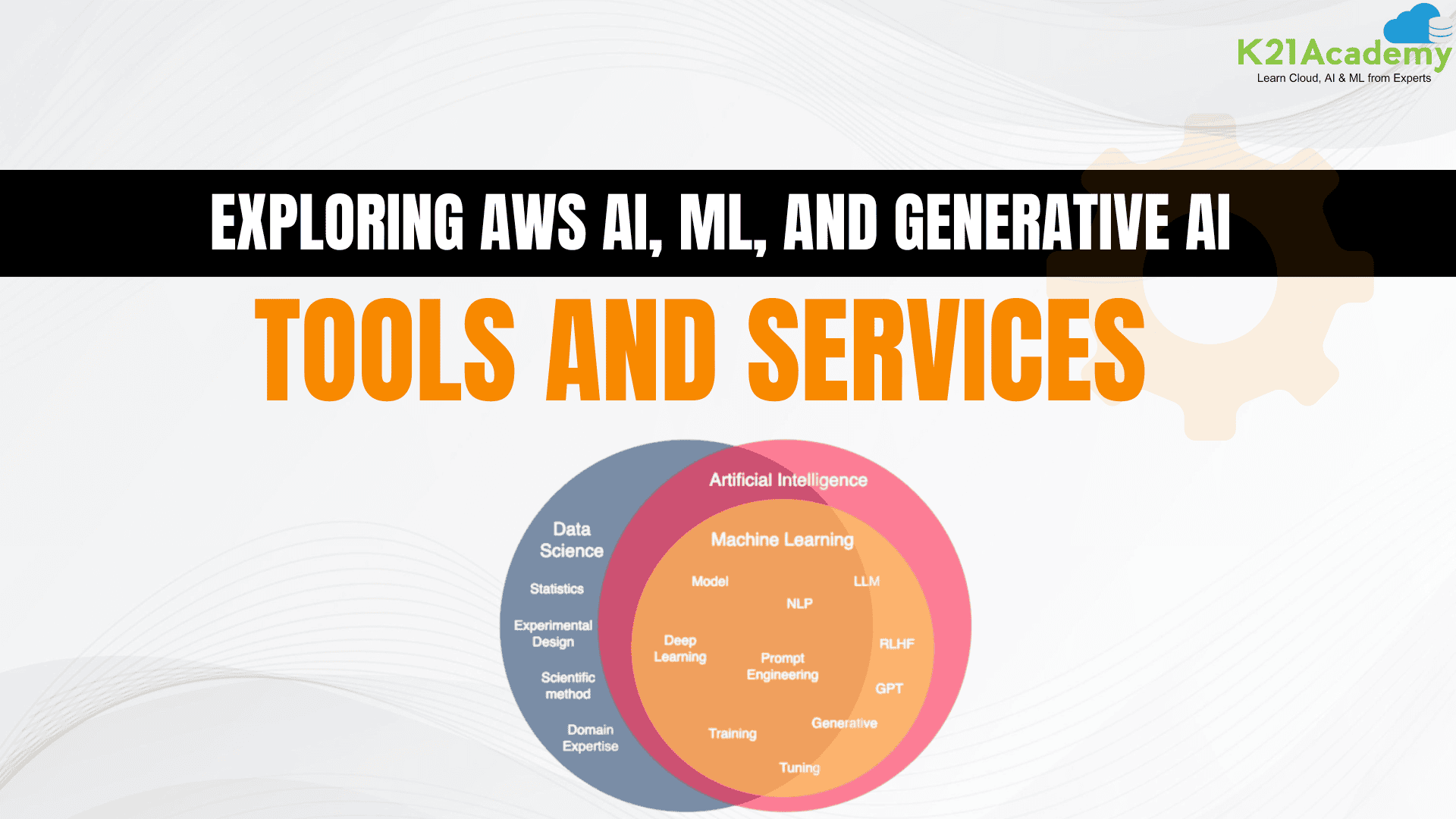





In today’s world, Artificial Intelligence (AI), Machine Learning (ML), and Generative AI are transforming industries across the globe. AWS (Amazon Web Services) provides a wide range of services that make it easier for businesses to harness the power of AI and ML without requiring deep expertise in these areas.
In this blog, we’ll explore AWS’s AI, ML, and Generative AI services, explaining each in detail and providing practical use cases to demonstrate how they can be applied to solve real-world problems.
AWS AI Services: Bringing Intelligence to Your Applications
1. Amazon Rekognition
Amazon Rekognition is a powerful AI service that allows you to analyze images and videos. It can detect objects, people, and scenes, as well as recognize emotions, gender, and age. It also offers content moderation by identifying unsafe or inappropriate content in images and videos.
Use Case: A security company uses Rekognition to monitor live feeds from security cameras, helping detect unauthorized individuals or abnormal activity in real-time, improving security measures.

Source: Amazon Rekognition
Related Readings: Amazon Rekognition Features – Computer Vision On AWS
2. Amazon Polly
Amazon Polly is a text-to-speech service that uses deep learning models to convert text into lifelike speech. With support for a wide variety of languages and voices, Polly allows users to create highly natural-sounding audio outputs for applications like voice assistants, content narration, and accessibility features for visually impaired users.
Use Case: A mobile app for visually impaired users uses Polly to read out daily news updates and notifications, ensuring that the content is accessible to users who cannot see the text on a screen.

Source: Amazon Polly
3. Amazon Comprehend
Amazon Comprehend is a Natural Language Processing (NLP) service that extracts useful insights from text. It can identify sentiment (positive, negative, neutral), entities (such as names and dates), and key phrases from any written content.
Use Case: A customer service team uses Comprehend to categorize and prioritize customer emails based on their content automatically. This allows agents to focus on more urgent requests, improving efficiency.

Source: Amazon Comprehend
Related Readings: What is AWS Comprehend: Natural Language Processing in AWS
4. Amazon Lex
Amazon Lex helps you build conversational interfaces (such as chatbots) for your applications. It uses natural language understanding (NLU) and automatic speech recognition (ASR) to understand and respond to user inputs, either via text or voice.
Use Case: An e-commerce website uses Lex to create a chatbot that helps customers track their orders, find products, and process returns, reducing the need for manual customer service interventions.

Source: Amazon Lex
Related Readings: Amazon Lex Introduction – Conversational AI for Chatbots

5. Amazon Textract
Amazon Textract extracts text, handwriting, and structured data from scanned documents automatically. It saves time and effort by eliminating the need for manual data entry.
Use Case: A law firm uses Textract to extract and organize important information (such as dates, clauses, and parties) from contracts, making it easier to review and search through large volumes of documents.

Source: Amazon Textract
6. Amazon Transcribe
Amazon Transcribe converts spoken language into written text using advanced speech recognition technology. It supports real-time transcription and batch processing, making it ideal for transcribing meetings, customer calls, and other voice data.
Use Case: A podcast creator uses Transcribe to convert podcast episodes into searchable text, making it easier for listeners to find specific segments or quotes within the content.

Source: Amazon Transcribe
7. Amazon Kendra
Amazon Kendra is an intelligent search service that uses machine learning to provide more relevant and accurate search results. It understands natural language queries and returns answers from various data sources like documents, databases, and FAQs.
Use Case: An organization’s HR department uses Kendra to help employees quickly search for policies, forms, and other internal documents. This improves productivity and helps employees find answers quickly.

Source: Amazon Kendra
AWS ML Services: Transforming Data into Insights
Machine Learning (ML) is a type of AI that enables machines to learn from data and make predictions or decisions based on it. AWS provides robust ML services that allow businesses to build and deploy ML models with ease, offering tools to turn data into actionable insights.
1. Amazon SageMaker
A fully managed service for building, training, and deploying machine learning models at scale. It offers tools like SageMaker Studio (a web-based IDE), SageMaker Autopilot (for automated machine learning), and SageMaker Ground Truth (for data labeling).
Use Case: A retail company uses SageMaker to create a demand forecasting model that predicts which products will be in high demand. This helps them optimize their inventory management and reduce stockouts.

Source: Amazon SageMaker
Related Readings: Amazon SageMaker AI For Machine Learning: Overview & Capabilities
2. Amazon Forecast
Amazon Forecast uses ML to predict future values based on historical data. It can handle time-series forecasting for business data, such as sales, weather, or traffic patterns, and incorporates seasonality and holidays.
Use Case: An airline uses Forecast to predict demand for flights on specific routes, enabling them to adjust ticket prices and seat allocations, which helps maximize revenue.

Source: Amazon Forecast
Related Readings: Amazon Forecast: Overview, Workflow, Benefits & Use Cases
3. Amazon Personalize
Amazon Personalize enables businesses to create personalized recommendations based on user behavior. It uses ML to analyze past interactions and deliver tailored product suggestions, content, or services to users.
Use Case: A streaming platform uses Personalize to suggest movies and TV shows to users based on their viewing history, improving engagement and encouraging users to stay on the platform longer.

Source: Amazon Personalize
4. AWS Glue
AWS Glue is a managed ETL (Extract, Transform, Load) service that helps prepare data for machine learning or analytics. It automates data extraction, cleaning, and transformation, making it easier to work with large datasets.
Use Case: A healthcare provider uses Glue to clean and transform patient data from multiple sources before feeding it into an ML model that predicts health risks, improving decision-making for doctors.

Source: AWS Glue
Related Readings: AWS Glue: Overview, Features, Architecture, Use Cases & Pricing
5. AWS Lambda with ML Models
AWS Lambda is a serverless compute service that allows you to run code in response to events. When combined with ML models, Lambda enables real-time predictions and data analysis without the need for dedicated servers.
Use Case: An e-commerce platform uses Lambda to run a sentiment analysis model on customer reviews. It categorizes reviews into positive, negative, or neutral in real-time, helping businesses respond quickly to customer feedback.

Source: AWS Lambda
AWS Generative AI: Creating New Content with AI
Generative AI focuses on creating new content, such as text, images, or music, based on patterns learned from existing data. AWS offers several services in this space, enabling businesses to integrate creative AI capabilities into their applications.
1. Amazon Bedrock
Amazon Bedrock provides access to powerful foundation models (FMs) for generative AI tasks. These models can generate text, summarize content, and create new content based on learned patterns.
Use Case: A marketing agency uses Bedrock to automatically generate social media posts, blog articles, and email campaigns, saving time and streamlining content creation.

Source: Amazon Bedrock
Related Readings: Amazon Bedrock Explained: A Comprehensive Guide to Generative AI
2. Amazon Q – Generative AI Assistant
Amazon Q is a generative AI assistant designed to help users by generating responses to complex queries, creating summaries, and providing insightful information by using foundation models (FMs). It can be leveraged for a variety of tasks, including text generation, summarization, and automated decision-making based on input data.
Use Case: A financial services company uses Amazon Q to generate detailed analysis and summaries of financial reports, providing decision-makers with quick insights without manual intervention.

Source: Amazon Q
Related Readings: Amazon Q: Boosting Productivity with Advanced AI Assistance
3. Amazon Polly for Generative AI
Polly’s voice synthesis capabilities are used for generative AI applications to create realistic human-like speech. It can be used for creating interactive voice experiences and chatbots.
Use Case: An e-learning platform uses Polly to generate voiceovers for online courses, making the content more engaging and accessible to learners worldwide.
4. AWS Lambda with Generative AI Models
AWS Lambda can work with generative AI models to create text, images, or audio in real time. The serverless nature of Lambda makes it ideal for event-driven generative AI tasks.
Use Case: A graphic design platform uses Lambda to generate custom logos for users based on their preferences, providing instant and unique designs.
Related Readings: AWS Lambda: Serverless Compute Service
Conclusion
AWS offers an extensive suite of services across AI, ML, and Generative AI, making it easier than ever for developers and businesses to integrate intelligent features into their applications. Whether you’re looking to build chatbots, analyze data, create personalized recommendations, or generate new content, AWS has the tools you need to bring your ideas to life.
These services help businesses automate processes, enhance customer experiences, and drive innovation—empowering organizations to stay ahead in today’s competitive market.
Frequently Asked Questions
Q1: What is the main purpose of Amazon SageMaker?
A: Amazon SageMaker provides a platform to build, train, and deploy ML models quickly and efficiently, with features like auto-scaling and model monitoring.
Q2: How does Amazon Bedrock assist in Generative AI?
A: Amazon Bedrock gives developers access to powerful foundation models for text, image, and code generation, making it easier to build Generative AI applications.
Q3: What are the key features of Amazon Rekognition?
A: Amazon Rekognition provides deep learning-based image and video analysis, helping businesses detect objects, faces, and even inappropriate content.
Q4: How is Amazon Lex different from Amazon Polly?
A: While Amazon Lex is used to build conversational interfaces like chatbots, Amazon Polly converts text into lifelike speech for applications like voice assistants.
Q5: What is AWS RoboMaker used for?
A: AWS RoboMaker is used to simulate and develop robotic applications, making it easier to build intelligent robots in the cloud.
Next Task For You
Don’t miss our EXCLUSIVE Free Training on Generative AI on AWS Cloud! This session is perfect for those pursuing the AWS Certified AI Practitioner certification. Explore AI, ML, DL, & Generative AI in this interactive session.
Click the image below to secure your spot!

![Microsoft Agentic AI Business Solutions Architect [AB-100] | K21 Academy](https://test.k21academy.com/wp-content/uploads/2025/11/Microsoft-Agentic-AI-Business-Solutions-Architect-AB-100-Exam-Overview1.png)