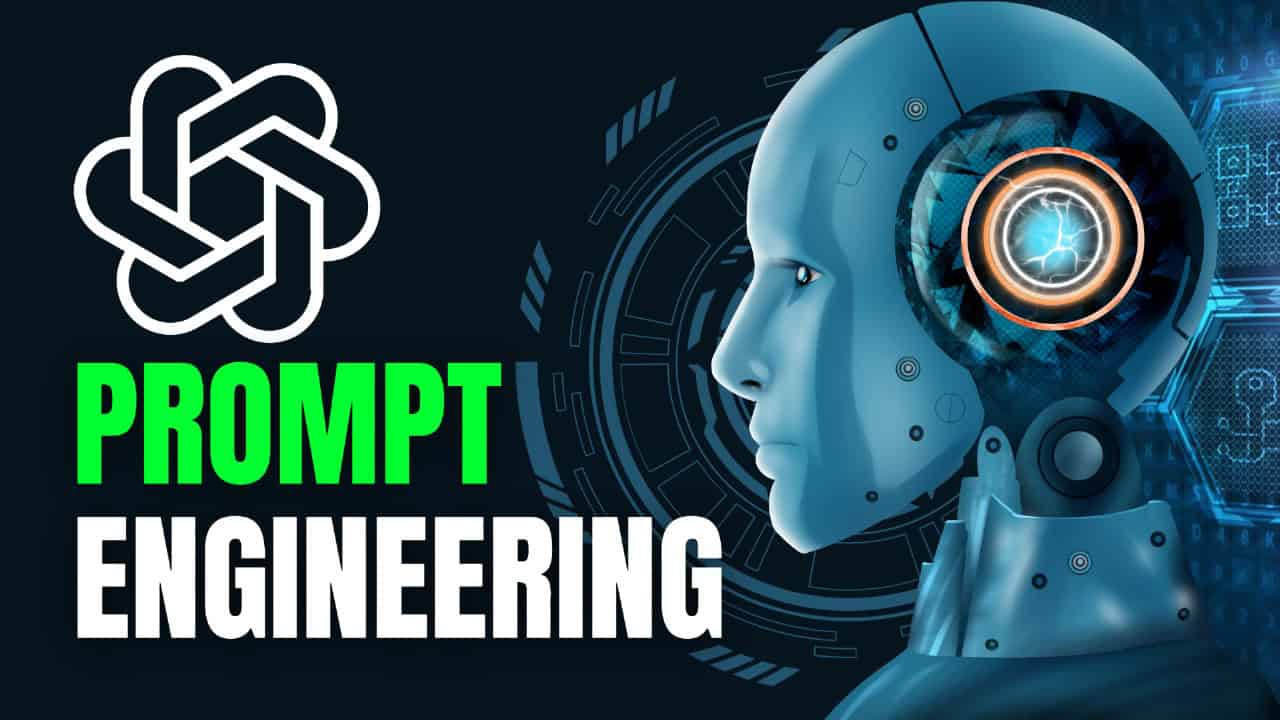





Generative models have drawn a lot of interest in the quickly developing field of artificial intelligence due to its capacity to improve automation, generate content, and simulate scenarios. The art and science of quick engineering are fundamental to maximizing the potential of these models. This blog will explore prompt engineering, its significance, and how to become an expert in order to maximize the benefits of generative AI.
We will learn:
- What is Prompt Engineering?
- The Importance of Prompt Engineering
- How does prompt engineering work?
- Basic Principles of Prompt Engineering
- Use Cases of Prompt Engineering
- Examples and Applications of Prompt Engineering
- Best Practices and Tips
- What is AI Prompt Engineering ?
- Conclusion
- FAQs
What is Prompt Engineering?
The act of creating and improving the input prompts that generative AI models receive in order to produce the intended results is known as prompt engineering. Particularly in tasks involving natural language processing (NLP), these prompts are essential for directing the model’s response. Users can influence the model to produce more precise, pertinent, and helpful results by creating compelling prompts. These prompts might be as short as a few words or as long as paragraphs, phrases, or even lengthier writings.
Prompt engineering’s primary goal is to steer the AI model toward generating the intended result while preserving its relevance and coherence. The input data and the AI model’s capabilities must be carefully considered and understood during this procedure.
Put more simply, prompt engineering is the process of giving the AI model a set of rules or limitations to work within while creating new material. This guarantees that the output produced is in line with the desired task and helps focus its attention on pertinent facts.
Knowing how various text input formats impact an AI model’s performance is a key component of prompt engineering. A single sentence as a stimulus, for example, might produce fewer results, whereas larger texts might produce a wider range of answers.
Choosing relevant keywords or phrases for the work at hand is another crucial aspect of fast engineering. These keywords act as “cues” for the AI model, directing it to produce information about those particular subjects or ideas.
Additionally, prompt engineering entails enhancing prompts by adjusting them in accordance with particular datasets or activities. This procedure uses methods like gradient descent or reinforcement learning algorithms to modify the parameters of prompts according to how well they perform on a particular dataset.
The Importance of Prompt Engineering

The quality of the prompts used has a significant impact on how well generative AI models, like GPT (Generative Pre-trained Transformer), work. Properly written prompts can:
- Boost Accuracy: Provide the model with a clearer understanding of the problem, which will result in more accurate answers.
- Boost Relevance: Make sure the produced material closely relates to the intended topic or context.
- Boost Efficiency: By directing the model to provide better outputs at first, you can lessen the need for lengthy post-processing or corrections.
How does prompt engineering work?
Creating the Prompt: You give the LLM a natural language lesson. This could be a command, a query, or a contextualized statement.
Understanding the LLM: These models comprehend your prompt and produce a response that complies with your instructions based on the vast amounts of data they have been trained on.
Quick Engineering Methods:
Choosing Style and Tone: The LLM can determine the type of answer to write (poem, code, news story) and the tone that is desired (formal, informal, serious, humorous) based on your prompt.
Providing Context: The LLM will comprehend your request more fully if you provide more background information.
Basic Principles of Prompt Engineering
It is crucial to comprehend the fundamentals of rapid engineering in order to completely appreciate the notion. We will go more deeply into these core ideas in this section, which serve as the cornerstone for being proficient in rapid engineering.
1. Clarity and specificity: These two qualities are the foundation of prompt engineering. For the AI model to correctly perceive the prompts, they must be explicit and unambiguous. The model may produce inaccurate or misleading results if the cues are unclear or imprecise. As a result, it is essential to carefully create prompts that specify exactly what output the model is supposed to produce.
2.Relevance: This concept is another crucial one in rapid engineering. The cues ought to be pertinent to the particular task at hand and in line with the AI model’s strengths and weaknesses. For example, your cues should emphasize language-related activities rather than unrelated tasks like image recognition if you are training a language generating model.
3. Consistency: When it comes to prompt engineering, consistency is essential. Every time the same set of prompts is utilized, the AI model ought to produce consistent outcomes. This makes it possible to comprehend and assess the model’s performance versus various inputs more effectively.
4. Adaptability: Having a set of flexible prompts that may be modified in response to changing input data or intended results is another requirement for prompt engineering. As a result, it is simpler to modify models for various use cases without having to start from scratch every time.
5. Ethical issues: When it comes to rapid engineering in the development of generative AI, ethical considerations are a fundamental principle. Models’ outputs and behavior are greatly influenced by the prompts they get. The possible ethical ramifications of the cues used to train these models must thus be carefully considered.
Use Cases of Prompt Engineering
Prompt engineering has a wide range of use cases, especially in leveraging large language models (LLMs) effectively for various applications:
- Content Creation: By crafting specific prompts, writers and marketers can generate blog posts, product descriptions, social media content, and more, tailored to brand voice or audience needs.
- Customer Support: Prompts can be designed to simulate customer interactions, enabling AI-driven chatbots to handle queries, troubleshoot issues, and offer personalized responses, improving user experience.
- Data Augmentation: In machine learning, prompt engineering helps generate synthetic data to train models in low-resource scenarios, providing diverse inputs and enhancing model robustness.
- Educational Tools: Educators can use prompt engineering to create practice questions, summaries, or explanations, making AI a valuable assistant in personalized and interactive learning environments.
- Code Generation and Debugging: For developers, prompts can guide AI to write, refactor, or debug code snippets, boosting productivity and assisting in tackling complex programming tasks.
- Sentiment Analysis and Opinion Mining: By designing prompts for specific tones or sentiments, companies can analyze customer feedback or social media data to gain insights into public perception and preferences.
These use cases illustrate how prompt engineering optimizes AI’s responses, making it adaptable across fields like marketing, customer service, education, and software development.
Examples and Application of Prompt Engineering
From crafting engaging marketing copy to generating intricate ASCII (American Standard Code for Information Interchange) art, the applications of prompt engineering are boundless. Whether it’s refining text, crafting code snippets, or generating images, the versatility of this technique knows no bounds.

Consider a writer experimenting with different prompts to elicit varied styles of text or a developer seeking code completion suggestions tailored to their project. Each instance showcases the transformative potential of prompt engineering in unlocking AI’s creative capacities.
- Crafting Engaging Marketing Copy: Prompt engineering enables marketers to experiment with different prompts, generating diverse variations of product descriptions, advertisements, and brand messaging to appeal to various audiences and platforms.
- Generating Intricate ASCII Art: Artists utilize prompt engineering to create ASCII art by providing prompts that guide the arrangement of characters, allowing for the creation of complex and detailed visual compositions using text characters.
- Refining Text: Writers leverage prompt engineering to refine and enhance their writing by experimenting with different prompts to evoke varied tones, styles, and narrative structures, leading to the creation of captivating stories, articles, and content.
- Crafting Code Snippets: Developers employ prompt engineering to receive tailored code completion suggestions, helping them write efficient and error-free code by providing prompts related to their specific programming tasks, languages, and frameworks.
- Generating Images: With prompt engineering, users can generate images by providing prompts that specify desired characteristics such as style, perspective, resolution, and content, enabling the creation of custom images for various purposes including illustrations, designs, and visualizations.
These examples demonstrate the diverse applications of prompt engineering across industries and domains, highlighting its role in enhancing AI-powered services, improving user experiences, and driving innovation.
Learn about What is Generative AI & How It Works?
Best Practices and Tips
Mastering prompt engineering requires a blend of experimentation and precision. By exploring diverse phrasings, input types, and modifiers, users can unlock the full potential of generative AI tools. Specialized prompt engineering IDEs offer a structured environment for refining prompts and optimizing results, streamlining the process for engineers and users alike.
- Experimentation and Precision: Mastering prompt engineering involves a combination of experimentation and precision. Users should explore diverse phrasings, input types, and modifiers to uncover the optimal configurations that yield desired outputs.
- Diverse Phrasings: Users should experiment with different ways of phrasing prompts to elicit varied responses from generative AI tools. This exploration helps uncover nuances in language that can influence the output.
- Input Types and Modifiers: Understanding the impact of different input types (e.g., text, images) and modifiers (e.g., style, perspective) is crucial. Experimenting with these elements allows users to tailor prompts for specific use cases and desired outcomes.
- Specialized Prompt Engineering IDEs: Utilizing specialized prompt engineering Integrated Development Environments (IDEs) provides a structured environment for refining prompts and optimizing results. These tools streamline the prompt engineering process for both engineers and users, enhancing productivity and efficiency.
What is AI Prompt Engineering ?
AI prompt engineering involves crafting specific and effective prompts to guide AI models like GPT in producing accurate, contextually relevant, and high-quality responses. It plays a critical role in optimizing the output by fine-tuning the wording and structure of prompts to align with desired results. This skill is essential for improving interactions across applications, such as chatbots, content generation, and data analysis tools, ensuring the AI delivers outputs that meet user expectations and business goals.
Conclusion
Prompt engineering is a crucial skill in leveraging the full potential of generative AI. By understanding and mastering the art of crafting effective prompts, you can significantly enhance the performance, relevance, and utility of AI models. As AI continues to evolve, prompt engineering will remain a vital tool in guiding AI to produce better, more accurate, and more ethical outputs.
FAQs
What is prompt engineering?
The practice of creating and improving prompts to communicate with language models such as GPT-4 is known as prompt engineering. The objective is to get the model to provide the most accurate, pertinent, and logical answers.
Why is prompt engineering important?
Responses produced by AI models are more relevant and of higher quality when prompt engineering is done well. It can greatly enhance AI's performance in a number of applications, including data analysis, content production, and customer service.
Can prompt engineering reduce biases in AI responses?
Yes, by using inclusive and neutral language, establishing clear guidelines, and offering a variety of examples, well-written prompts can help reduce biases. It is not a comprehensive remedy, though, and ought to be a component of a larger plan to deal with biases.
How might prompt engineering help industries, such as banking, serve clients more efficiently?
Prompt engineering can help industries like banking streamline client interactions by enabling more accurate and relevant responses from AI systems. For instance, banks can use customized prompts to handle customer inquiries, detect fraud patterns, and provide financial advice swiftly, reducing wait times and enhancing customer satisfaction. This efficiency allows banks to serve more clients effectively while personalizing their experience.
What impact will prompt engineering have on existing employees?
Prompt engineering can empower existing employees by enhancing their productivity and enabling them to leverage AI more effectively in daily tasks. It reduces repetitive work and helps employees focus on higher-value activities by improving the accuracy and relevance of AI-generated responses. However, it may require upskilling, as employees will need to learn how to craft effective prompts to maximize AI's potential.
Are organizations hiring prompt engineers?
Yes, organizations are increasingly hiring prompt engineers as the demand for effective AI implementation grows. These roles focus on designing and optimizing prompts to improve AI responses, enhancing applications in customer service, marketing, and data analysis. As AI becomes integral across industries, prompt engineering is emerging as a valuable, specialized skill.
Related/References
- Visit our YouTube channel “K21Academy”
- Join Our Generative AI Whatsapp Community
- What is Generative AI & How It Works?
Next Task: Enhance Your Azure AI/ML Skills


![Microsoft Agentic AI Business Solutions Architect [AB-100] | K21 Academy](https://test.k21academy.com/wp-content/uploads/2025/11/Microsoft-Agentic-AI-Business-Solutions-Architect-AB-100-Exam-Overview1.png)