


Are you curious about cloud technology and want to become a Cloud Architect? Our guide is here to help you start your journey. As more businesses move to the cloud, the demand for skilled Cloud Architects grows fast.
In this blog, we’ll break down the essential things you need to know, from what to learn to how to gain practical experience and get certified. Let’s explore the amazing opportunities waiting for people who want to become Cloud Architects.
Table of Contents
- Introduction to Cloud Technology Careers
- Essential Qualifications for Cloud Architects
- Core Skills and Knowledge for Cloud Architects
- The Dynamic Role of a Cloud Architect
- The Path to Becoming a Cloud Architect
- Conclusion
- Frequently Asked Questions
Introduction to Cloud Technology Careers
The demand for skilled professionals in cloud technology is soaring. Cloud Architects, in particular, play a pivotal role in designing and implementing cloud solutions for businesses. If you’re new to the world of cloud and eager to embark on a journey towards a lucrative career, this guide is for you.

Understanding the basics of cloud computing and the various cloud providers is essential for anyone starting in this field. To give you a comprehensive overview, we’ve included a video that covers the fundamentals of cloud computing and compares the major cloud service providers.
Watch the video below to grasp the fundamentals of cloud computing and determine which cloud provider suits your needs best
This video provides:
- An introduction to cloud computing concepts
- An overview of major cloud providers such as AWS, Azure, Google Cloud, and Oracle Cloud
- A comparison of the strengths and weaknesses of each provider
By understanding these basics and differences, you can better navigate your journey towards becoming a Cloud Architect.
Essential Qualifications for a Cloud Architect
To become a successful Cloud Architect, several qualifications and skills are essential. These range from formal education to practical experience and communication skills. Below are the key qualifications you need to focus on:
1) Formal Training and Experience
While formal education in computer science, information technology, or related fields can be beneficial, having extensive IT experience is not essential to start learning cloud architecture. Practical skills can be acquired through internships or entry-level positions, allowing individuals to understand the basics of implementing cloud solutions.
2) Effective Communication Skills
Cloud Architects must articulate complex technical concepts clearly to both technical and non-technical stakeholders, facilitating seamless collaboration across teams.
 3) Practical Experience
Gaining practical experience through handling projects helps individuals familiarize themselves with cloud technologies and best practices. At K21 Academy, we provide numerous labs to aid in this learning process, enabling individuals to advance to senior roles overseeing complex cloud deployments gradually. For an overview of all the labs we offer, check out the blog
4) Certifications
Acquiring industry-recognized certifications, like the AWS Certified Solutions Architect Associate, Azure Solutions Architect Expert, Google Cloud Professional Architect, or Oracle Cloud Infrastructure Architect, not only validates your skills but also boosts your credibility with employers.
Core Skills and Knowledge for Cloud Architects

In addition to qualifications, Cloud Architects must possess a specific set of core skills and knowledge areas. These are crucial for designing and implementing effective cloud solutions:
1)Fundamental Understanding of Cloud Computing
Cloud Architects should thoroughly understand cloud computing concepts, including different deployment and service models, forming the foundation for designing and implementing cloud solutions.
2) Performance Monitoring and Optimization
Continuous monitoring of the cloud environment is essential to ensure optimal performance. Cloud Architects should analyze performance metrics, identify bottlenecks, and implement optimization strategies such as scaling services, adjusting resources, and leveraging automation to enhance efficiency and reduce costs.
3) Computing Knowledge
Understanding computing principles is essential for assessing computational requirements and selecting appropriate instances or virtual machines to meet application performance needs.
4) Storage Infrastructure Expertise
Cloud Architects should possess expertise in storage infrastructure, including knowledge of storage types, protocols, and technologies such as block storage, object storage, and file systems.
5) Security Principles
Architects must be well-versed in security principles and best practices, including authentication, authorization, encryption, and compliance requirements.
6) Cost Management
Cloud Architects should have skills in cost management, including optimizing resource usage, selecting cost-effective services, and implementing budget controls to ensure efficient spending in cloud environments.
7) Architectural Design & Disaster Recovery
Architects need to design scalable and resilient architectures that can withstand failures and disasters. This includes planning for disaster recovery, implementing backup strategies, and architecting systems for high availability and fault tolerance.
8) Network Design and Deployment
Cloud Architects should possess expertise in network design and deployment, including knowledge of subnets, VLANs, routing protocols, and network security mechanisms.
The Dynamic Role of a Cloud Architect
 The role of a Cloud Architect is dynamic and involves various responsibilities. From strategic planning to technical development, here are the key aspects of the role.
1) Design and Strategy Planning
A Cloud Architect’s primary responsibility is to develop a comprehensive cloud strategy that aligns with the organization’s goals, understand business requirements, and design a cloud environment that enhances business efficiency and agility.
2) Technical Expertise and Architecture Development
Cloud Architects are responsible for creating the architecture of the cloud solution, deciding on the right cloud service provider, choosing appropriate cloud services, and designing the network and storage architecture.
3) Project and Resource Management
Cloud Architects often lead project teams, coordinating with developers, IT staff, and business leaders. They oversee the cloud architecture implementation and optimize resources for cost-effectiveness and performance.
4) Security and Compliance
Ensuring the security of the cloud infrastructure is a critical responsibility of a Cloud Architect, including setting up firewalls, IAM policies, and encryption protocols to protect data and applications, ensuring compliance with industry standards and regulations.
5) Disaster Recovery and Business Continuity Planning
Cloud Architects develop disaster recovery and business continuity plans, creating strategies to back up data and applications and ensuring quick recovery in case of system failures, cyber-attacks, or natural disasters.
6) Performance Monitoring and Optimization
Continuous monitoring of the cloud environment is essential to ensure optimal performance, analyzing performance metrics to identify bottlenecks and areas for improvement, adjusting resources, scaling services, and implementing automation to enhance efficiency and reduce costs.
7) Innovation and Emerging Technologies
Staying on top of the latest trends and advancements in cloud technologies is important for exploring new tools and services that can enhance the cloud infrastructure and provide competitive advantages to the organization.
8) Stakeholder Engagement and Advisory
Cloud Architects serve as the bridge between technical teams and business stakeholders, providing expert advice on cloud technologies and best practices, and educating and training team members and other stakeholders about cloud computing and its benefits.
9) Vendor Management
Cloud Architects work closely with cloud service providers and other vendors, negotiating contracts, managing relationships, and ensuring that the services provided meet the organization’s requirements and standards.
The Path to Becoming a Cloud Architect
 Becoming a Cloud Architect requires extensive IT experience and a deep understanding of various aspects of building application infrastructures. It’s a challenging yet rewarding journey filled with opportunities for continuous learning and skill development.
If you’re deliberating between cloud computing platforms and weighing the pros and cons of AWS, Azure, and Google Cloud, you might find our comparison blog post helpful.
It provides an in-depth analysis of each platform’s features, pricing, and performance, helping you decide which cloud provider aligns best with your requirements.
DevOps vs Architect: Which One Should You Choose?
Choosing between a career in DevOps and Cloud Architecture can be challenging. Each role has distinct responsibilities and skill requirements. To help you make an informed decision, check out our detailed video on
DevOps vs Architect: Which One Should You Choose?
This video provides an in-depth comparison of the two roles, highlighting their unique aspects and career paths.
Take Your Tech Career to the Next Level
To excel in your tech career and prepare for the role of a Cloud Architect, consider on-demand training, live training programs, and challenge labs. These resources provide hands-on experience with real-world projects and scenario-based exercises, enabling you to build job-ready cloud skills and unlock exciting career opportunities.
If you want to know more about the AWS Solutions Architect exam, including recent updates, consider checking out this informative blog post.
It covers the latest changes and exam details comprehensively.
At K21 Academy, we offer comprehensive training programs for AWS, Azure, Google Cloud, and Oracle certifications, including courses specifically tailored to prepare you for exams such as AWS Certified Solutions Architect Associate, Azure Solutions Architect Expert, Google Cloud Professional Architect, or Oracle Cloud Infrastructure Architect.
Check out our blog posts on interview questions to help you get ready for your next big opportunity:
- AWS Solutions Architect Interview Questions and Answers
- Microsoft Azure Solution Architect Interview Questions and Answers
- GCP Interview Questions and Answers
Conclusion
Becoming a Cloud Architect is a challenging yet rewarding journey that requires a multifaceted skill set, practical experience, and continuous learning. By acquiring the essential qualifications, core skills, and knowledge areas outlined in this guide, you can navigate towards a successful career as a Cloud Architect and contribute to the advancement of cloud technology in the modern IT landscape.
Frequently Asked Questions
1. How important are certifications in the journey to becoming a Cloud Architect?
Certifications are crucial because they demonstrate to employers that you possess the skills and knowledge required to work with cloud technology. Credentials like AWS Certified Solutions Architect or Microsoft Certified: Azure Solutions Architect make you a more appealing job candidate and can propel your career forward. Equally important are the hands-on labs, which provide practical experience and reinforce the theoretical knowledge gained through certifications.
2. What are the key challenges faced by Cloud Architects in their roles?
Cloud Architects face challenges like keeping cloud solutions secure and making sure they follow industry rules. They also need to manage costs while making sure the cloud services run well. Integrating cloud solutions with existing systems can be tricky, and staying updated with new technologies is always a challenge. Planning for disaster recovery to ensure quick recovery from failures or attacks is also crucial.
3. How can a Cloud Architect stay updated with the latest trends and technologies?
To stay updated, Cloud Architects should continuously learn and engage with the tech community. This can be done by attending conferences, webinars, and joining online forums. They should also take new training courses and get updated certifications. Following industry leaders on social media and reading tech blogs helps too.
4. What role does practical experience play in becoming a successful Cloud Architect?
Practical experience is essential because it lets you apply what you've learned in real-world situations. Working on actual cloud projects helps you understand the challenges and best practices of cloud architecture. It also builds problem-solving skills that are crucial for the job.
5. How can a Cloud Architect ensure cost-efficiency in cloud solutions?
To keep costs down, Cloud Architects should regularly monitor how resources are being used and make adjustments as needed. Using cost management tools provided by cloud services helps track expenses. Designing scalable solutions that grow efficiently with demand and educating team members on cost-saving practices are also important.
Related References
- AWS Certified Solutions Architect Associate SAA-C03
- Create an AWS Free Tier Account
- AWS Certified Solutions Architect
- Learn how to create a Free Microsoft Azure Trial Account
- GCP Professional Cloud Architect: Everything You Need To Know
- Google Cloud Architecture: Zonal, Regional, Multi-Regional, and Global Resources
Next Task For You
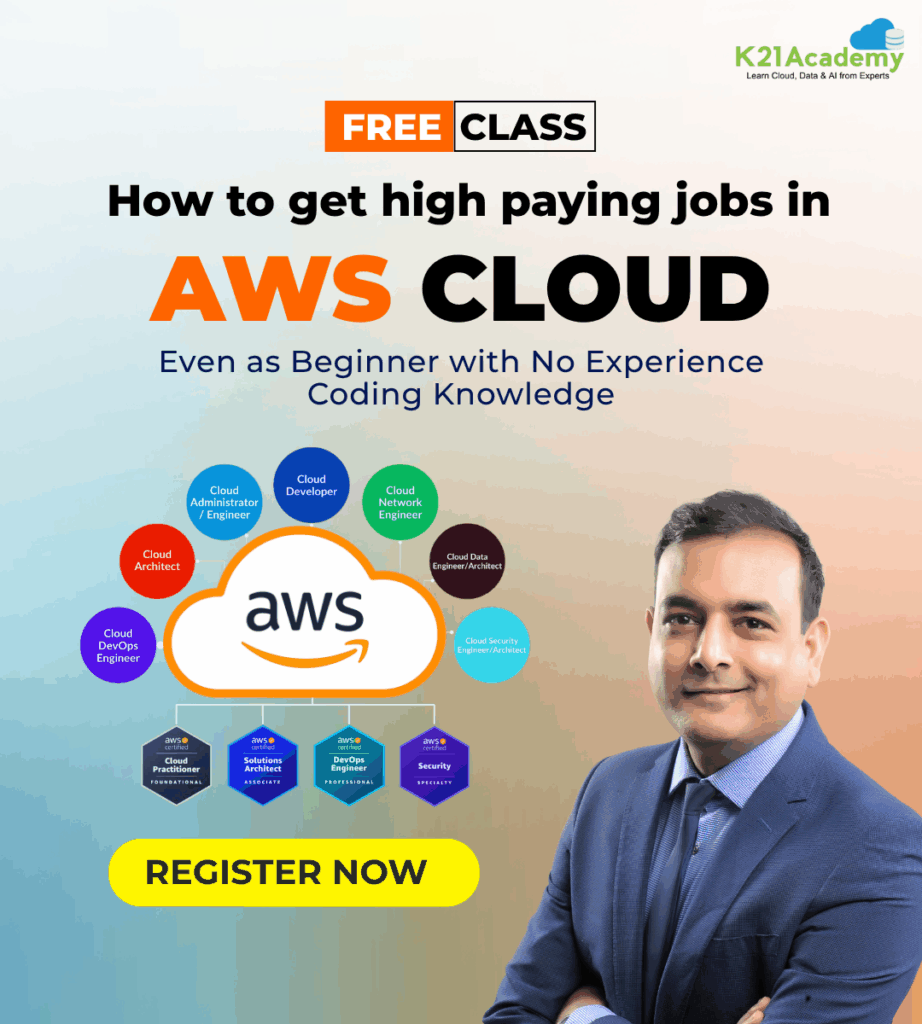
Join our FREE CLASS to explore the cloud platforms, discover in-demand job opportunities, and gain insights into essential hands-on labs and projects.
Register now by clicking the image below to build in-demand skills and secure high-paying jobs.


![Microsoft Agentic AI Business Solutions Architect [AB-100] | K21 Academy](https://test.k21academy.com/wp-content/uploads/2025/11/Microsoft-Agentic-AI-Business-Solutions-Architect-AB-100-Exam-Overview1.png)