


Are you a complete beginner looking to dive into the world of Azure cloud engineering? You’ve come to the right place! This blog, titled “Azure Free Full Course for Beginners,” is designed to provide you with a comprehensive overview of the essential topics needed to start your career in the Azure field and secure a high-paying job.
We will cover everything from Azure’s global infrastructure to advanced services, ensuring you gain a solid foundation and the confidence to explore the Azure ecosystem.
Topics Covered in this blog:
- Azure Global Infrastructure
- Azure Resources
- Azure Management Tools
- Azure Compute Services
- Azure Networking Services
- Azure Storage Service
- Entra ID (Azure Active Directory)
- Cost Management & Billing
- Governance, Compliance & Monitoring
- Azure Certifications
- Conclusion
1. Azure Global Infrastructure
Understanding Azure’s global infrastructure is essential for maximizing its capabilities. In this section, we’ll explore:
- Regions & Paired Regions (including Government and Sovereign Regions)
- Availability Zone (AZ)
- Update Domain (UD)
- Fault Domain (FD)
 Azure Global Infrastructure refers to Microsoft’s expansive network of data centers strategically located around the world. This infrastructure provides robust, scalable, and secure cloud services, ensuring high availability, low latency, and compliance with local regulations for businesses and developers. Azure’s global reach allows users to deploy applications and services closer to their end-users, enhancing performance and reliability.
Read more at Microsoft Azure Architecture
2. Azure Resources
Organizing your resources effectively is key to managing your Azure environment. This part covers:
- Management Groups
- Subscriptions
- Resources
- Resource Groups

Azure Resources are the fundamental building blocks of Microsoft’s Azure cloud platform, encompassing services such as virtual machines, databases, storage accounts, and networking components.
These resources can be provisioned, managed, and scaled to meet the specific needs of applications and services, providing flexibility and control over cloud infrastructure.
Read More at Azure Resource Group, Resource Manager & ARM Template
3. Azure Management Tools
Familiarize yourself with the tools you’ll use to manage Azure:
- Azure Portal
- Cloud Shell
- Bash
- PowerShell
- Command Line Interface (CLI)
- Azure SDK
- Infrastructure as Code (IaC)
- ARM Templates
- Azure Bicep

Azure Management Tools provide various ways to efficiently manage and interact with your cloud resources. These include the Azure Portal for web-based management, Cloud Shell for integrated command-line tasks, and Bash and PowerShell for scripting.
The Command Line Interface (CLI) supports cross-platform management, and the Azure SDK allows for programmatic interactions. Also, Infrastructure as Code (IaC) tools like ARM Templates and Azure Bicep enable declarative resource deployments, automating and maintaining your Azure environment.
Read More at Microsoft Azure Management Tools
4. Azure Compute Services
Learn about Azure’s compute services and how they can power your applications:
- Virtual Machines
- Single
- Scale Set
- Availability Set
- App Services
- Azure Container Service
- Azure Kubernetes Service
- Azure Functions (Serverless)
- Azure Virtual Desktop

Azure Compute services power your applications and workloads in the cloud. This includes Virtual Machines for scalable compute resources, Virtual Machine Scale Sets for automatic scaling, and Availability Sets for enhanced reliability.
App Services provide a platform for building and hosting web applications, while Azure Container Service and Azure Kubernetes Service (AKS) support containerized applications. Azure Functions offers serverless compute options, and Azure Virtual Desktop delivers a full desktop experience in the cloud. These services are essential for running and managing your applications efficiently in Azure.
Read More at Understanding Azure Compute Services
5. Azure Networking Services
Networking is the backbone of cloud infrastructure. This section includes:
- Virtual Network (VNet) & VNet Peering
- Subnets
- Virtual Private Network (VPN)
- S2S
- P2S
- Azure ExpressRoute
- Gateways
- Internet
- NAT
- VPN
- Firewall
- NSG
- Azure Firewall
- Azure DNS
- Load Balancers

Azure Networking services connect and secure your cloud resources. This includes Virtual Networks (VNet) for isolated networking, VNet Peering for seamless connectivity, and Subnets for network segmentation. Virtual Private Networks (VPN) offer secure connections, with Site-to-Site (S2S) and Point-to-Site (P2S) options. Azure ExpressRoute provides dedicated, private connections.
Additional services include Gateways, NAT, Firewalls, Network Security Groups (NSG), Azure DNS, and Load Balancers, which enhance security, routing, and traffic management in your Azure environment. These tools ensure robust, scalable, and secure network infrastructure.
Read More at Azure Networking
6. Azure Storage Service
Explore Azure’s storage options and how to manage your data:
- Blob
- Table
- Queue
- Azure File
- NFS
- SMB
- VM Disks
- Azure Data Lake Storage (ADLS) Gen 2
- Storage Tiers
- Hot
- Cold
- Archive
- Data Box
- File Management Options
- azCopy
- Storage Explorer
- File Sync

Azure Storage offers scalable, durable, and secure storage solutions for your data. This includes Blob Storage for unstructured data, Table Storage for key-value pairs, Queue Storage for message queuing, and Azure Files for shared file storage with NFS and SMB support. VM Disks provide persistent storage for virtual machines, while Azure Data Lake Storage (ADLS) Gen 2 is optimized for big data analytics.
Storage tiers like Hot, Cool, and Archive help manage costs based on data access patterns. Tools like azCopy, Storage Explorer, and File Sync simplify file management, ensuring efficient data handling and storage operations.
Read More at Microsoft Azure Storage Account: A Comprehensive Guide
7. Entra ID (Azure Active Directory)
Learn about Azure’s identity and access management services:
- EntraID
- ADConnect
- MFA
- External Identity
- B2B
- B2C
- Conditional Access
- Role-Based Access Control
- Microsoft Defender for Cloud
- Licenses

EntraID, also known as Azure Active Directory (Azure AD), is Microsoft’s cloud-based identity and access management service. It helps secure access to your applications and resources by enabling features like single sign-on (SSO), multi-factor authentication (MFA), and conditional access.
EntraID supports external identities with B2B and B2C services, allowing secure collaboration and customer access. It integrates with the on-premises Active Directory through AD Connect, providing a seamless hybrid identity solution. Role-Based Access Control (RBAC) and Microsoft Defender for Cloud enhance security and compliance, ensuring robust identity management and protection.
Read More at Microsoft Entra ID
8. Cost Management & Billing
Manage and optimize your Azure spending:
- Cost Management
- Azure Marketplace
- Azure Pricing Calculator
- Billing & How Tag Helps

Azure Cost Management & Billing provides tools to monitor, manage, and optimize cloud spending. It includes features for tracking and analyzing usage, setting budgets, and identifying cost-saving opportunities.
The Azure Pricing Calculator helps estimate costs for new services, while tags allow for detailed cost allocation and reporting. Azure Marketplace offers a catalog of third-party solutions with transparent pricing. These tools ensure you stay within budget and maximize the value of your Azure investments.
Read More at Effective Cost-Saving Tips for Microsoft Azure Cloud
9. Governance, Compliance & Monitoring
Ensure compliance and monitor your Azure environment:
- Azure Policy
- Azure Blueprint
- Locks
- Service Trust Portal
- Azure Advisor
- Azure Service Health
- Azure Monitor
- Azure Alerts

Azure provides essential tools for governance, compliance, and monitoring to meet organizational and regulatory standards. Azure Policy enforces resource rules, and Azure Blueprint helps set up compliant environments. Resource Locks prevent accidental changes, while the Service Trust Portal offers compliance information.
Azure Advisor provides optimization recommendations, and Azure Service Health, Azure Monitor, and Azure Alerts ensure you can proactively manage and resolve issues quickly.

Read More at Microsoft Azure Governance, Privacy & Compliance And Data Protection, Azure Cloud Infrastructure Monitoring
10. Azure Certifications
Advance your knowledge and credentials with Azure certifications:
Azure Infrastructure
- Fundamental
- AZ-900
- Associate
- AZ-104
- AZ-204
- Expert
- AZ-305
- AZ-400
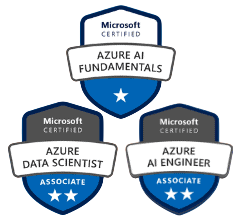
Azure Data, AI & ML
- Fundamental:
- DP-900
- AI-900
- Associate:
- DP-203
- PL-300
- DP-100
- DP-300

Read More at Microsoft Azure Certification Path
Conclusion
Completing this Azure Free Full Course will give you the essential skills to navigate Azure’s ecosystem, from its global infrastructure to advanced services. By mastering these topics, you’ll gain the confidence to tackle real-world cloud engineering challenges and become a valuable asset in the job market. This guide will help you build a strong career in Azure cloud computing and qualify for high-paying roles in the growing field of cloud technology.
Frequently Asked Questions
How can this course help me in my career?
You will get practical skills and foundational knowledge in Azure with this course, which will improve your chances of landing a job in the IT industry and position you as a strong candidate for a variety of cloud-related professions.
What job roles can I apply for after completing this course?
You can apply for jobs as an Azure Administrator, Cloud Engineer, Azure Developer, and Cloud Support Associate after finishing the course.
How do I optimize my Azure resources to reduce costs?
Finding and removing unused or idle resources, right-sizing virtual machines, utilising auto-scaling technologies, and applying cost management are all part of resource optimisation.
What are the different ways to save costs in Azure?
Using Azure Reserved Instances, creating budgets and warnings, optimising resource utilisation, and utilising spot virtual machines are some cost-saving techniques.
Related/References
- Activity Guides/Hands-on Lab & Projects
- Cloud Services Model
- Cloud Computing – Overview & Benefits
- Azure Region and Availablity Zone
- How to create a free tier account on Azure
- Microsoft Azure Core Services For Beginners
Next Task For You
Begin your journey toward Mastering Azure Cloud and landing high-paying jobs. Just click on the register now button on the below image to register for a Free Class on Mastering Azure Cloud: How to Build In-Demand Skills and Land High-Paying Jobs. This class will help you understand better, so you can choose the right career path and get a higher paying job.


![Microsoft Agentic AI Business Solutions Architect [AB-100] | K21 Academy](https://test.k21academy.com/wp-content/uploads/2025/11/Microsoft-Agentic-AI-Business-Solutions-Architect-AB-100-Exam-Overview1.png)