




Serverless computing revolutionizes traditional IT infrastructure by allowing developers to focus solely on code, without managing servers. Paired with DevOps practices, it enhances agility and collaboration, enabling seamless development, deployment, and scaling. Welcome to the dynamic intersection of code and cloud deployment! In this blog, we explore the Serverless DevOps paradigm for agile, scalable, and transformative insights, optimizing development efficiency effortlessly. Join us on this exploration of unparalleled efficiency and scalability in the modern development landscape.
In this blog, we will cover
- Understanding Serverless Computing
- Serverless Architecture and Its Benefits
- Industry leaders harnessing Serverless potential for peak performance
- Integration of DevOps in Serverless Environments
- Key Benefits of Serverless DevOps
- Case Study: Start-up Agility with Serverless DevOps
- Conclusion
Understanding Serverless Computing
Serverless computing, a revolutionary cloud model, enables developers to deploy applications effortlessly without managing servers. This server-free architecture, offered by leading cloud providers, streamlines development, enhances scalability, and eliminates the hassle of server maintenance. With automatic resource allocation and pay-as-you-go pricing, serverless computing optimizes costs. Elevate your development experience with this innovative and efficient cloud solution.
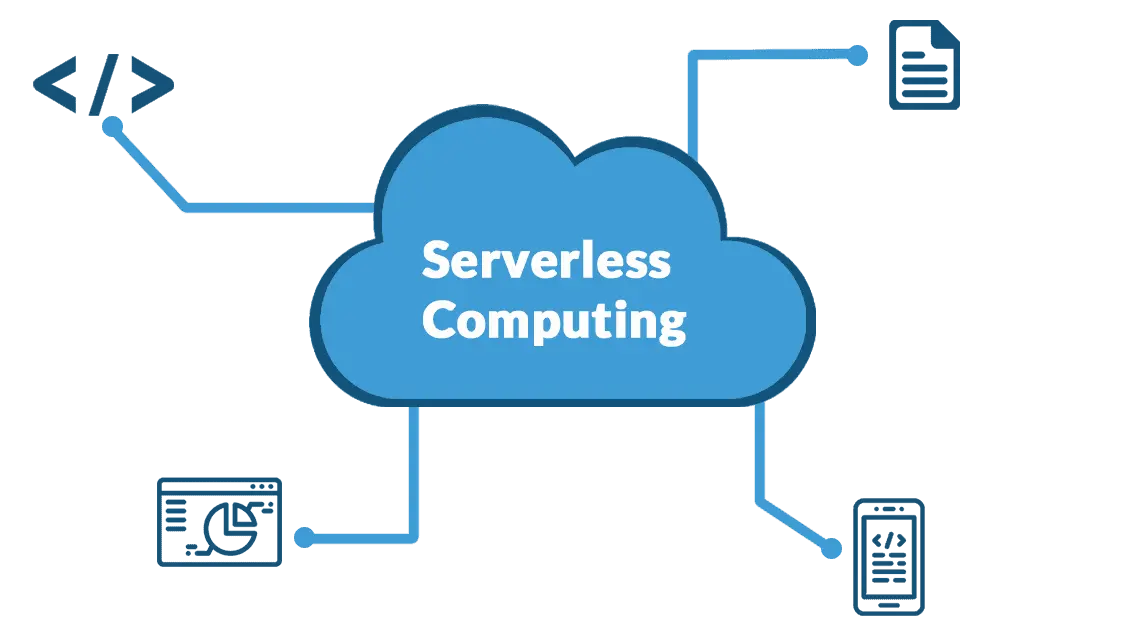
Characteristics of Serverless
Serverless Architecture and Its Benefits
Serverless architecture, also known as Function as a Service (FaaS), is a cloud computing model that allows developers to build and run applications without managing the underlying infrastructure. Here are few key benefits of serverless architecture:
- Cost Efficiency: Serverless computing follows pay-as-you-go model, eliminating upfront costs. Ideal for applications with sporadic usage patterns, ensuring cost-effectiveness.
- Scalability: Serverless platforms automatically scale applications in response to demand, handling varying workloads effectively. No manual intervention is needed for scaling processes.
- Faster Time-to-Market: Rapid deployment of functions without managing infrastructure accelerates development cycles. Enables quicker releases, efficient feature updates and faster iterations.
- Automatic High Availability: Built-in redundancy and failover mechanisms ensure high availability. Functions are distributed across servers and data centers, providing reliability without explicit developer configuration.
- Microservices Architecture: Serverless supports a microservices approach, breaking down applications into manageable functions. This modular design simplifies development, testing, and maintenance, promoting flexibility and resilience.
Also read: What is DevOps
Industry leaders harnessing Serverless potential for peak performance
Pioneering industry leaders are optimizing performance using serverless computing, with AWS Lambda, Google Cloud Functions, and Azure Functions, ensuring efficient resource utilization and dynamic scalability for unparalleled agility.
- Real-Time Event-Driven Architecture with Google Cloud Functions at Spotify: Spotify integrates Google Cloud Functions into its architecture to drive real-time responses to user interactions. Whether users create playlists or share music, serverless functions respond instantly. This approach enables Spotify to manage millions of concurrent events effortlessly, eliminating the need for manual server provisioning and management.
- Efficient Marketing Campaigns Powered by Microsoft Azure Functions at Coca-Cola: Coca-Cola relies on Azure Functions, a core element of Microsoft’s serverless ecosystem, to handle backend processes for dynamic marketing campaigns. This serverless setup ensures smooth scalability during promotional periods, guaranteeing a cost-effective and responsive execution of interactive marketing initiatives.
- Optimizing Video Processing at Scale with AWS Lambda in Netflix’s Pipeline: Netflix harnesses the power of AWS Lambda, a key component in Amazon Web Services’ serverless suite, to seamlessly encode videos in their pipeline. Lambda’s automatic scaling ensures efficient processing and encoding of video files in various formats, all without the hassle of managing infrastructure.
Also read our blog on: Azure Serverless Computing
Integration of DevOps in Serverless Environments
The fusion of DevOps and Serverless computing optimizes software development with automated infrastructure provisioning, continuous deployment, and collaborative approaches. Using tools such as Terraform and AWS SAM, organizations automate the testing and deployment of Serverless functions in CI/CD pipelines, ensuring robust version control, security, and scalability. This integration fosters agility, transparency, and cost-effective application development, aligning development and operations teams for streamlined, high-performance outcomes.
Challenges and Solutions
DevOps in serverless faces challenges like cold starts, dependency management, and security. Solutions involve optimizing, using specific tools, and securing access, below is the detailed view of the challenges and their potential solutions.
| Challenge | Description | Solution |
|---|---|---|
| Cold Start Latency | Serverless functions may experience latency during the initial invocation, known as cold start latency, due to the need to initialize resources. | Optimize function size, use provisioned concurrency, and implement warm-up for efficient deployment and performance. |
| Dependency Management | Managing external dependencies in serverless functions can be challenging, leading to issues with versioning and consistency. | Use serverless dependency tools, implement version control, freeze dependencies for consistency in serverless function deployment. |
| Security Concerns | Security considerations in serverless environments, including managing function permissions and handling sensitive data, pose unique challenges. | Adopt least privilege, secure data, and audit regularly for robust serverless function security practices. |
Key Benefits of Serverless DevOps
Serverless DevOps offers several key benefits that can enhance the development and deployment process. Here are some of the primary advantages:
Case Study: Start-up Agility with Serverless DevOps
- Background: Company X, a forward-thinking start-up, aimed to overcome development bottlenecks by adopting a robust DevOps culture. Seeking agility, the company opted for a Serverless DevOps approach.
- DevOps Approach: Breaking down silos, Company X embraced collaboration and automation. CI/CD pipelines streamlined development, while monitoring tools ensured real-time insights, fostering a proactive, efficient development lifecycle.
- Serverless Integration: Transitioning to serverless platforms like AWS Lambda, Company X restructured its architecture into microservices. Automatic scaling and event-driven design empowered the team to focus on innovation rather than infrastructure management.
- Results: Serverless DevOps led to transformative outcomes for Company X. Reduced time-to-market, cost optimization, enhanced scalability, improved reliability, and accelerated innovation positioned the start-up competitively in the dynamic digital landscape.
Conclusion
In conclusion, the fusion of Serverless Computing and DevOps emerges as a powerful paradigm, reshaping how businesses approach development and operations. With its scalable architecture, cost efficiency, and collaborative workflows, the integration of serverless and DevOps proves to be a transformative force, as evidenced by real-world successes and industry best practices. Embrace this dynamic alliance to unlock enhanced performance and agility in the ever-evolving landscape of IT solutions.
Frequently Asked Questions
How does Serverless enhance DevOps workflows?
Serverless allows automatic scaling, reducing manual intervention. This aligns with DevOps principles, fostering faster development cycles and efficient resource utilization.
Can traditional DevOps tools integrate with Serverless platforms?
Yes, many tools support Serverless integration. Adopting solutions like AWS Lambda or Azure Functions ensures compatibility, enabling seamless incorporation into existing DevOps workflows.
How does Serverless impact continuous integration and continuous deployment (CI/CD)?
Serverless promotes event-driven architecture, enhancing CI/CD. Developers can deploy functions independently, ensuring efficient testing and deployment pipelines, leading to faster release cycles and increased reliability.
How does Serverless impact the cost structure of DevOps processes?
Serverless follows a pay-as-you-go model, reducing costs. With efficient resource utilization and automatic scaling, DevOps teams can optimize expenses while maintaining performance and reliability.
What benefits does Serverless bring to DevOps automation?
Serverless streamlines deployment and resource management, improving automation. It facilitates microservices architecture, enabling independent deployments and enhancing the overall agility and speed of DevOps processes.
How does Serverless impact team collaboration within a DevOps environment?
Serverless fosters collaboration by enabling teams to focus on specific functions. This microservices approach enhances communication and collaboration, supporting the DevOps ethos of cross-functional teamwork for faster and efficient development.
Related/References
- What Is DevOps | DevOps Principles | Advantages Of DevOps | Why DevOps?
- Agile Methodology and DevOps | DevOps and Agile Relationship
- DevOps Best Practices
- What Is DevOps? AWS DevOps For Beginners
- [AZ-400] Microsoft Azure DevOps Certification Exam: Everything You Need To Know
- Certified Kubernetes Administrator (CKA) Certification Exam: Everything You Must Know
Next Task For You
Begin your journey towards becoming a DevOps Expert and earn a lot more by landing a high-paying job.
Join FREE CLASS to learn more about the DevOps Roles and Responsibilities, Job opportunities related to DevOps in the market, and what to study Including Hands-On labs and projects you must perform to get your Dream job.
Click on the below image to Register for Our FREE Class on Mastering DevOps on Cloud: How to Build In-Demand Skills and Land High-Paying Jobs


![Microsoft Agentic AI Business Solutions Architect [AB-100] | K21 Academy](https://test.k21academy.com/wp-content/uploads/2025/11/Microsoft-Agentic-AI-Business-Solutions-Architect-AB-100-Exam-Overview1.png)