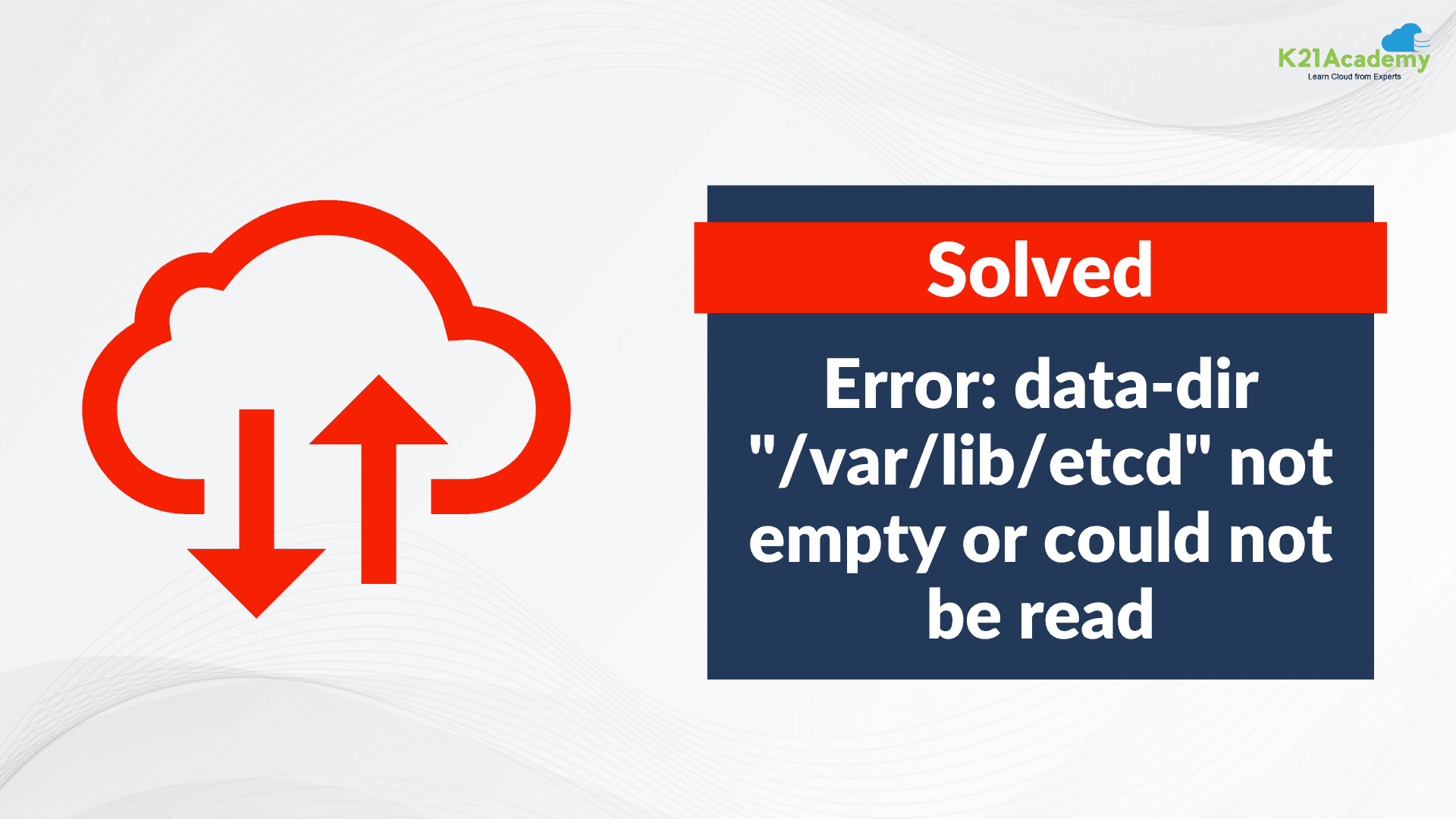




This blog post explores an issue and its resolution that has been encountered by only a few individuals when executing the ETCD restore command. A common error arises during this process: Error: data-dir “/var/lib/etcd” not empty or could not be read.
Ever encountered an error message while performing etcd restore in Kubernetes?
ETCDCTL_API=3 etcdctl snapshot restore snapshot.db --endpoints=https://127.0.0.1:2379 --cacert=/etc/kubernetes/pki/etcd/ca.crt --cert=/etc/kubernetes/pki/etcd/server.crt --key=/etc/kubernetes/pki/etcd/server.key --name=master  --data-dir=/var/lib/etcd --initial-cluster=master=https://10.1.0.4:2380 --initial-cluster-token=etcd-cluster-1 --initial-advertise-peer-urls=https://10.1.0.4:2380

Error: data-dir "/var/lib/etcd" not empty or could not be read
Issue Encountered- Error: data-dir “/var/lib/etcd” not empty or could not be read
This is a common issue when you run the etcd restore command to restore configuration data from a snapshot file.

Note: Check out our blog for a quick guide on Etcd backup and restore in Kubernetes.
Root Cause of Error
Restoring an ETCD cluster in Kubernetes involves several key steps to recover its state from a previous backup. The restoration typically includes removing existing data directories and then restoring the data from a backup. This backup should contain all critical ETCD data, such as the cluster state and configurations.
After removing the /var/lib/etcd data directory, there’s no need to execute any commands other than the restore command. However, if we run kubectl commands such as ‘kubectl get nodes’ or ‘kubectl get pods,’ or any other kubectl command, ETCD stores this data in the /var/lib/etcd directory. This, in turn, leads to an error: ‘Error: data-dir “/var/lib/etcd” not empty or could not be read when executing the etcd restore command.
Fix the Error
To fix this issue, you need to remove the files and directories in the /var/lib/etcd directory.
$ rm -rf /var/lib/etcd/*

Kudos! The etcd restoration was successful after clearing out the directories and files in /var/lib/etcd.
Note: The etcd data directory is typically located at /var/lib/etcd on Linux systems. If you have a different location serving as the etcd data directory, please remove the file to restore the snapshot.
Check Out: Managed Kubernetes services AKS & EKS. Click here
Frequently Asked Questions
How do I restore my etcd data?
To restore etcd data, use the etcdctl utility with the snapshot restore command, specifying the snapshot file and target data directory. This process reinstates the previous state of the etcd cluster.
How do I reset my etcd database?
Resetting the etcd database involves stopping the etcd service and deleting its data directory. Afterward, restart the service to initiate a fresh database.
Where is etcd data directory?
The etcd data directory is typically located at /var/lib/etcd on Linux systems. It stores the database and snapshot files essential for etcd's functioning.
How do I clean my etcd database?
Cleaning the etcd database involves stopping the etcd service and manually removing the contents of the data directory. Ensure a backup is created before performing this operation.
How is the data stored in etcd?
Etcd stores data in a distributed key-value store. Each piece of data is identified by a unique key, and these keys and values are organized hierarchically in a consistent and fault-tolerant manner across the etcd cluster.
Related Post
- Kubernetes for Beginners
- Install Docker on Windows, Ubuntu, and Mac: A Complete Step-by-Step Guide
- How To Setup A Multi-Node Kubernetes Cluster on SUSE Linux: Step By Step Guide
- Visit our YouTube channel on “Docker & Kubernetes”
- Certified Kubernetes Administrator (CKA) Certification Exam: Everything You Must Know
- Certified Kubernetes Administrator (CKA) Certification: Step By Step Activity Guides/Hands-On Lab Exercise
Next Task For You
Discover the Power of Kubernetes, Docker & DevOps – Join Our Free Masterclass. Unlock the secrets of Kubernetes, Docker, and DevOps in our exclusive, no-cost masterclass. Take the first step towards building highly sought-after skills and securing lucrative job opportunities. Click on the below image to Register Our FREE Masterclass Now!


![Microsoft Agentic AI Business Solutions Architect [AB-100] | K21 Academy](https://test.k21academy.com/wp-content/uploads/2025/11/Microsoft-Agentic-AI-Business-Solutions-Architect-AB-100-Exam-Overview1.png)