


In this blog, we will cover the Q&As from Day 1 of Migrate Apps & Database to Cloud (AWS Workshop) covering Introduction To AWS Services FAQs. This blog will help you to get started with AWS Cloud Migration.
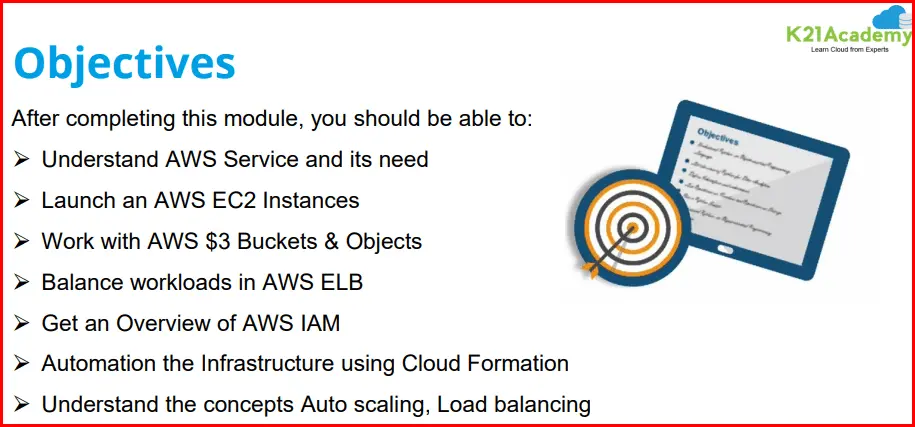
In this session, We covered Module 1: Introduction to AWS Services which covers the following objectives.
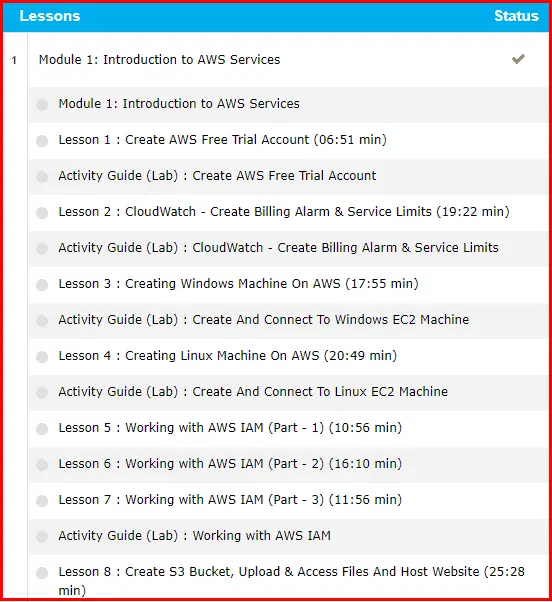
The course which is available on the Portal looks like below. We encourage trainees to go through the well-done recorded videos before coming to the Live session so that they can come prepared with their doubts & can clear the doubts during the session to make it more Interactive.
[Q/A] Related to Introduction to AWS Services
Q1. What is AWS infrastructure?
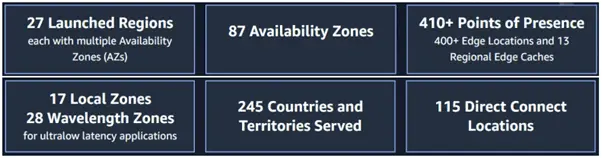
A1. The AWS Global Cloud Infrastructure is the most secure, broad, and dependable cloud stage, offering more than 175 fully featured services from the data centers globally. With millions of active customers and tens of thousands of partners globally, AWS has the biggest and most powerful biological system.
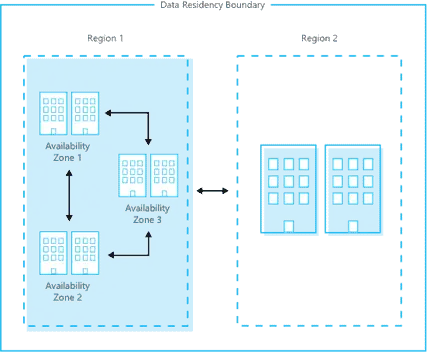
Q2. What is the difference between the AWS Region and Availability Zone?
A2. AWS Cloud computing resources are housed in highly available data center facilities. AWS Regions are huge and generally scattered into independent geographic areas. Availability Zones are distinct locations within an AWS Region that are designed to be isolated from failures in other Availability Zones.
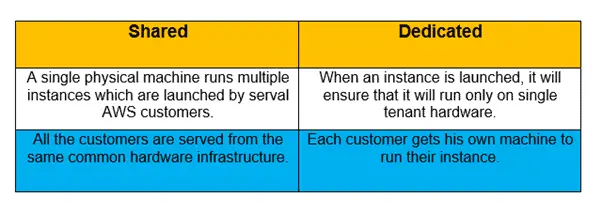
Q3. What is EC2 Hardware Tenancy?
A3. Tenancy defines how EC2 instances are distributed across physical hardware and affect pricing. There are two tenancy options available:
- Shared Tenancy
- Dedicate
Q4. Can I use spot and on-demand instances with an Autoscaling group?
A4. When you specify the settings as part of the Auto Scaling group, you can demand to launch Spot Instances only after launching a certain number of On-Demand Instances and afterward continue to launch some combination of On-Demand Instances and Spot Instances as the group scales.
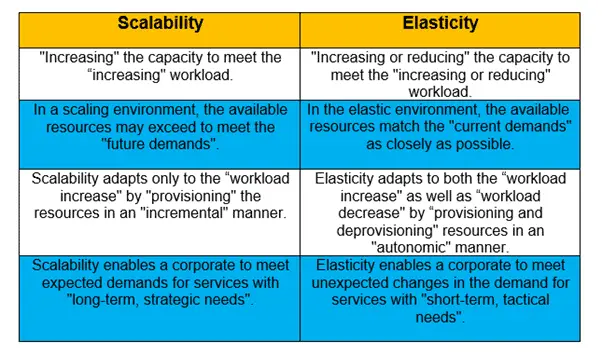
Q5. What is the difference between scalability and elasticity?
A5. The differences are as follows: –
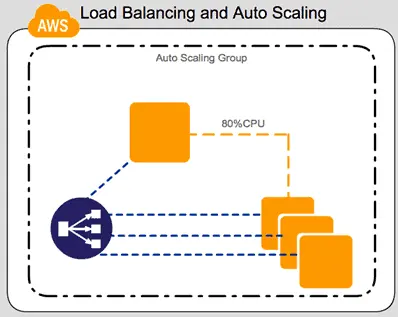
Q6. What is the difference between auto-scaling and load balancing?
A6. The purpose of auto-scaling is to maintain system performance while lowering expenses by only employing resources that are actually required. A Load Balancer, on the other hand, is a device that distributes network or application traffic over many servers.
Q7. How many auto-scaling groups can you have per region?
A7. You can have 200 Auto Scaling Groups per region. (Defined by AWS)
Q8. Difference between Horizontal and Vertical autoscaling?
A8. In general, the major distinction between vertical and horizontal autoscaling in AWS is that vertical autoscaling increases the capacity or size of the instance as needed, whereas horizontal autoscaling expands the number of instances under the load balancer as needed.
Q9. What is the difference between terminating and stopping the EC2 Instances?
A9. Stopping Instance- When you stop an instance, you shut it down. You won’t be charged for the usage of a stopped instance or data transfer fees, but you shall be charged for the storage of any Amazon EBS volumes.
Terminate Instance- You can delete your instance when you no longer need it. This is referred to as terminating your instance. You can’t connect to or start an instance after you’ve terminated it.
Q10. What is a VPC subnet?
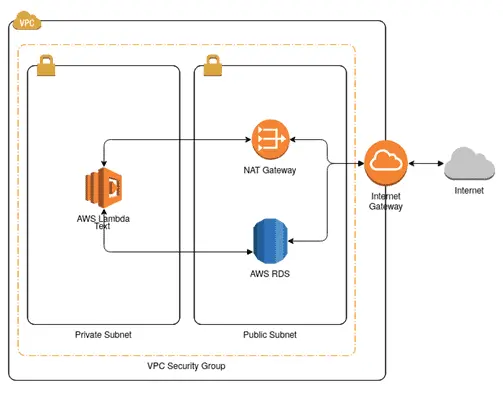
A10. A subnet is a key component in VPC. A VPC can contain all public subnets or public/private subnet combinations. A private Subnet is a subnet that does not have a route to the internet gateway. A subnet can be configured as a VPN-only subnet by routing traffic via a virtual private gateway.
Q11. Can we change the region of the EC2 instance after launching?
A11. It’s not possible to move an existing instance to another subnet, Availability Zone, or VPC. Instead, you can manually migrate the instance by creating a new Amazon Machine Image (AMI) from the source instance. Then, launch a new instance using the new AMI in the desired subnet, Availability Zone, or VPC.
Q12. What is RDP?
A12. RDP is a secure network communication protocol developed by Microsoft to enable the remote management of and access to virtual desktops and applications.
Q13. What are Auto Scaling groups?
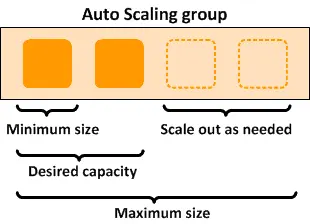
A13. An Auto Scaling group contains a collection of Amazon EC2 instances that are treated as a logical grouping for the purposes of automatic scaling and management. Both maintaining the number of instances in an Auto Scaling group and automatic scaling are the core functionality of the Amazon EC2 Auto Scaling service.
 Related Links/References:
- 5 Steps for a Cost-efficient Migration to AWS Cloud
- Top 10 Must-Have AWS Cloud Migration Tools in 2023
- AWS Database Migration Service: Everything You Need To Know
- Application Migration to AWS & Its 6 Phases
- AWS Server Migration Service
- AWS Database Migration Service
- AWS Training and Certification
- Top 100+ AWS Interview Questions for 2023
- Data Center Pre-Migration Assessment
Next Task For You
Begin your journey towards an AWS Cloud by joining our FREE Informative Class on Amazon Cloud Free Class by clicking on the below image.


![Microsoft Agentic AI Business Solutions Architect [AB-100] | K21 Academy](https://test.k21academy.com/wp-content/uploads/2025/11/Microsoft-Agentic-AI-Business-Solutions-Architect-AB-100-Exam-Overview1.png)