




In this blog post, we will delve into the concept of Shielded Instances, explore their significance, and discuss how they contribute to a fortified cloud infrastructure.
In today’s world, keeping data safe is super important for businesses. They’re always looking for strong ways to protect their important information. Oracle Cloud, a big player in the computer cloud world, takes on this challenge with its cool Shielded Instances. These instances are like extra bodyguards for your important work, making sure it stays private and safe.
In this blog post we will cover :
- Overview of the Compute Service
- Key Features & Components
- Instance Types
- Working of Shielded Instances
- Features of Shielded Instance
- Advantages of Oracle Cloud Shielded Instances
- Conclusion
Overview of the Compute Service
Oracle Cloud Infrastructure Compute permits you to provision and manages to compute hosts, named as instances. you’ll be able to create instances as needed to satisfy your compute and application necessities. once you create an associate instance, you’ll access it firmly from your laptop, restart it, attach and detach volumes, and terminate it once you’re through with it. Any changes created to the instance’s local drives are lost once you terminate it. Any saved changes to volumes connected to the instance are preserved.
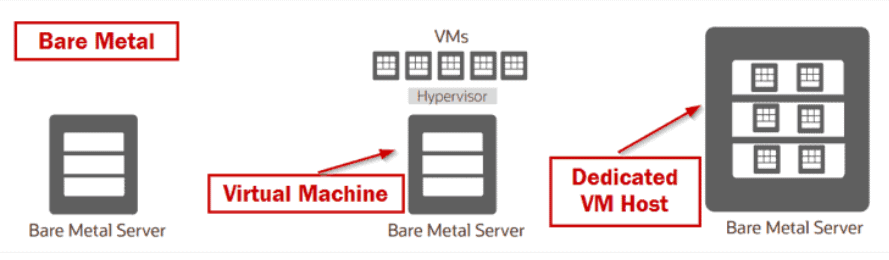
Oracle Cloud Infrastructure offers each bare metal and virtual machine instance:
- Bare Metal: A bare metal computes instance provides you dedicated physical server access for the most effective performance and powerful isolation.
- Virtual Machine: A virtual machine (VM) is associate with freelance computing surroundings that run on top of physical bare-metal hardware. The virtualization makes it potential to run multiple VMs that are isolated from one another.
An Oracle Cloud Infrastructure VM compute instance runs on equivalent hardware as a bare metal instance, leverage similar cloud-optimized hardware, firmware, software stack, and networking infrastructure.
Key Features & Components:
- UEFI Secure Boot: Shielded Instances utilize Unified Extensible Firmware Interface (UEFI) Secure Boot, a security standard that ensures the integrity of the boot process. This feature prevents the loading of unauthorized boot loaders or operating systems, safeguarding the VM from potential compromise during startup.
- Trusted Platform Module (TPM): Oracle Cloud Shielded Instances incorporate TPM, a hardware-based security feature that provides a secure environment for key generation, storage, and cryptographic operations. TPM enhances the overall security posture by protecting sensitive information, such as encryption keys, from unauthorized access.
- Virtual Trusted Platform Module (vTPM): The virtual TPM feature extends the benefits of TPM to virtualized environments. Shielded Instances leverage vTPM to enhance the security of VMs, ensuring that cryptographic operations within the virtualized space remain protected.
- Attestation Service: Oracle Cloud Shielded Instances include an attestation service that verifies the integrity of the hypervisor and other components during the VM boot process. This service helps in establishing trust and ensuring that the VM is running in a secure environment.
Instance Types
1. Secure Boot
Secure Boot is a Unified Extensible Firmware Interface (UEFI) feature that forestalls unauthorized boot loaders and operating systems from booting. Secure Boot validates that the signed firmware’s signature is correct before booting to stop rootkits, boot kits, and unauthorized software packages from running before the OS loads.
Rootkits are low-level malware that runs in kernel mode. Bootkits change the system bootloader and the system boots with the bootkit instead of the bootloader. Rootkits and bootkits have equivalent privileges as the OS and can record functions like keystrokes and native sign-ins.
2. Measured Boot
Measured Boot is complementary to Secure Boot. To provide the strongest security, enable both Measured Boot and Secure Boot. Secure Boot ensures that each component in the boot process features a signature that’s in the list of valid signatures. Measured Boot allows you to track boot measurements so as to know what firmware you’ve got and when it changes.
Measured Boot enhances boot security by storing measurements of boot components, like bootloaders, drivers, and operating systems. The first time you boot a shielded instance, Measured Boot uses the initial measurements to make a baseline. The baseline measurements also are referred to as golden measurements.
It uses a Trusted Platform Module (TPM) to store its measurements firmly.
3. Trusted Platform Module
Trusted Platform Module (TPM), a specialized security chip utilized by Measured Boot to store the boot measurements. On VM instances, once you change Measured Boot, the trusted Platform Module is instinctively enabled, as TPM is essential by Measured Boot.
Measurements taken by Measured Boot are kept in Platform Configuration Registers (PCRs) within the TPM. A PCR is also a memory location inside the TPM used to hold a value that summarizes all the results that were given to it in the order they were presented.
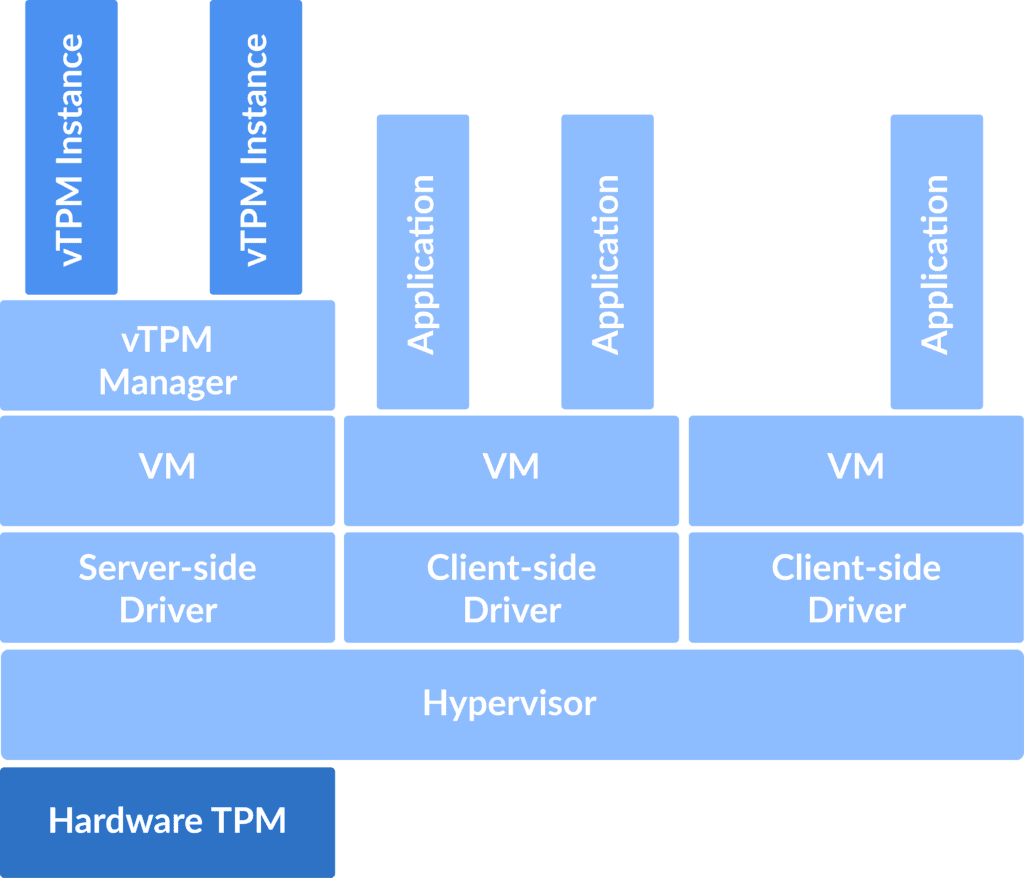
Working of Shielded Instances
- Secure Boot and Trusted Platform Module (TPM) are accessible on all supported bare metal and VM instances.
- Measured Boot is only available on VM instances. If you wish to use Measured Boot on a bare metal instance, you can use an associate degree open-source solution.
- On bare metal instances, you can enable Secure Boot and the TPM together or independently.
- On VM instances, Measured Boot and the TPM should be used with Secure Boot. Therefore, once you enabled Measured Boot on a VM instance, Secure Boot and TPM are enabled.

Features of Shielded Instance
- Verifiable integrity with the secure and measured boot.
- Virtual Trusted Platform Module (vTPM) exfiltration resistance.
- Trusted Unified Extensible Firmware Interface (UEFI).
- Live migration and patching.
Check Out: Our blog post on oci tenancy.
Advantages of Oracle Cloud Shielded Instances
- Protection Against Malicious Attacks: Shielded Instances provide a robust defense against various cyber threats, including malware, rootkits, and other forms of malicious software that may attempt to compromise the integrity of VMs.
- Enhanced Regulatory Compliance: With security features like UEFI Secure Boot, TPM, and attestation services, Shielded Instances contribute to meeting regulatory compliance requirements, making them suitable for industries with stringent security and data protection standards.
- Secure Multi-Tenancy: Oracle Cloud Shielded Instances offer an added layer of security for multi-tenant environments. This ensures that VMs belonging to different customers are isolated and protected, mitigating the risk of security breaches or data leakage.
- Secure Bootstrapping: The secure bootstrapping process facilitated by Shielded Instances establishes a trustworthy foundation for VMs, minimizing the risk of compromise during the initial stages of deployment.
Conclusion
Oracle Cloud Shielded Instances stand out as a formidable solution for organizations seeking top-tier security for their cloud infrastructure. By integrating cutting-edge security technologies such as UEFI Secure Boot, TPM, and attestation services. As businesses increasingly migrate to the cloud, the adoption of Shielded Instances represents a proactive step toward fortifying the digital fortress that protects valuable assets and sensitive information.
FAQs
Are Shielded Instances available for all Oracle Cloud regions?
Availability may vary by region and over time. Check the Oracle Cloud documentation or contact Oracle Support for the latest information on Shielded Instance availability in specific regions.
Is there additional cost associated with using Shielded Instances?
Shielded Instances may have associated costs, and it's important to review the Oracle Cloud pricing documentation for details. Consider the security benefits and potential cost implications when deciding to use Shielded Instances.
Can I migrate existing instances to Shielded Instances?
Migrating existing instances to Shielded Instances may not be a straightforward process and may require careful planning. Evaluate the specific requirements of your workloads before attempting migration.
How can I get support for Shielded Instances-related issues?
If you encounter any issues or have questions related to Shielded Instances, you can reach out to Oracle Support through the Oracle Support Portal or contact their support team via phone for assistance.
References
Begin Your Cloud Journey
Begin your journey towards becoming an Oracle Cloud Expert and earn a lot more in 2024 by joining our FREE CLASS. You will also know more about the Roles and Responsibilities, Job opportunities for OCI Architects, Admins in the market, and what to study Including Hands-On labs you must perform to get the Higher Paying jobs.
Click on the below image to Register for Our FREE Class on MASTERING ORACLE CLOUD FOR DBAs, APPs DBAs, ARCHITECTS & SYS ADMINS


![Microsoft Agentic AI Business Solutions Architect [AB-100] | K21 Academy](https://test.k21academy.com/wp-content/uploads/2025/11/Microsoft-Agentic-AI-Business-Solutions-Architect-AB-100-Exam-Overview1.png)